
How to Improve Website Ranking: Proven SEO Strategies That Actually Work
Improving your website ranking means increasing your position in search engine results pages (SERPs) so more people find your content organically. Higher rankings directly translate to more traffic, more leads, and more revenue. According to a 2025 Backlinko study, the first result on Google receives approximately 27.6% of all clicks, making that top spot enormously valuable for any website owner.
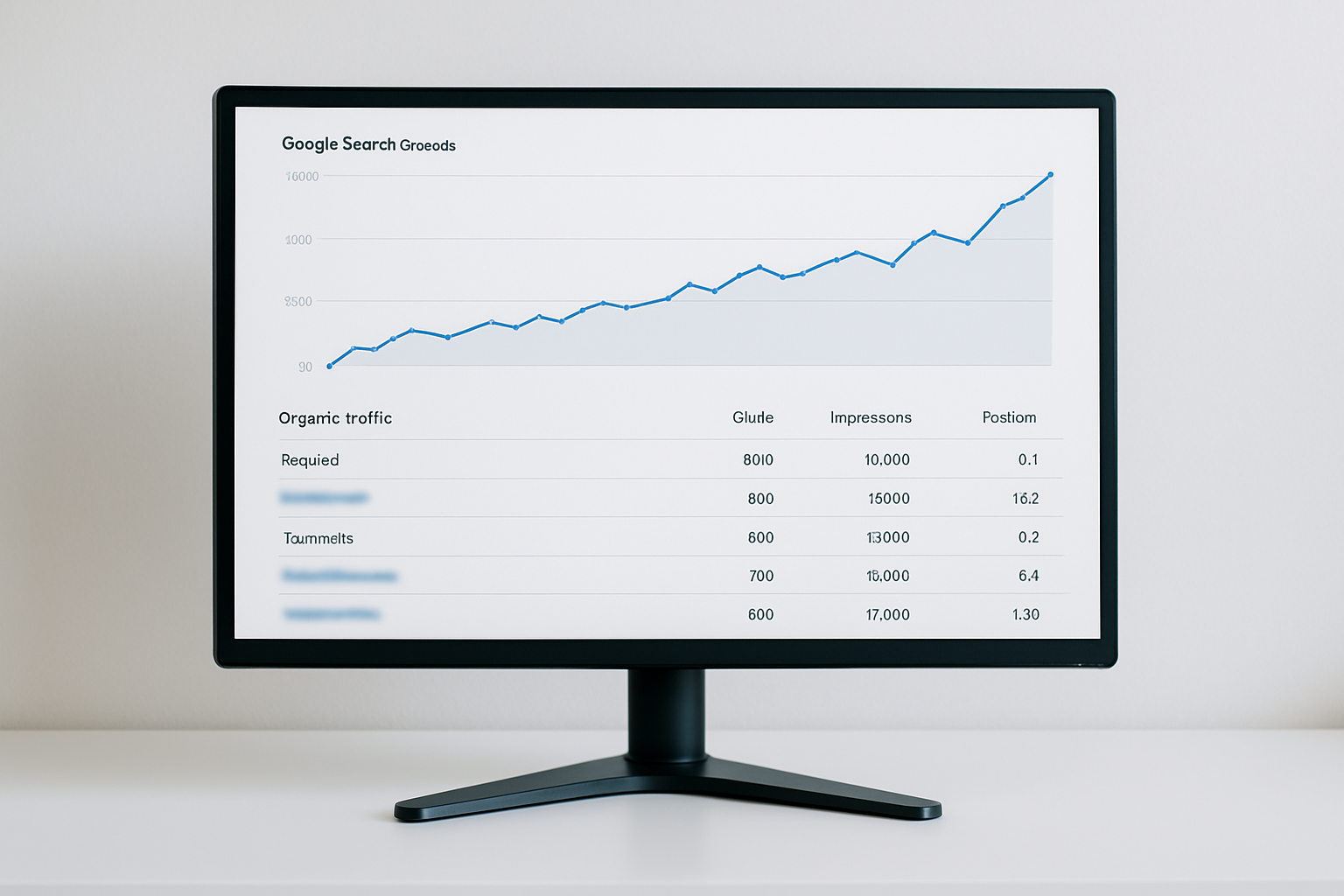
Search engine optimization (SEO) is defined as the practice of optimizing a website so search engines like Google rank it higher in relevant search results. SEO covers everything from the words on your page to the sites linking back to you. Understanding the fundamentals gives you a serious edge over competitors who treat optimization as an afterthought.
The best way to improve website ranking is to align your content with what your audience is genuinely searching for, then make that content technically flawless and easy to share. This two-pronged approach — relevance plus technical quality — is what Google’s algorithms consistently reward. Let’s walk through exactly how to do that, step by step.
What Is On-Page SEO and Why Does It Matter So Much?
On-page SEO is defined as the process of optimizing individual web pages to rank higher and earn more relevant traffic through elements you directly control on your site. This includes your headings, body content, images, internal links, and meta tags. Getting these elements right is the foundation of any strategy to improve website ranking.
Your title tag and meta description are the first things searchers see in Google results. A compelling, keyword-rich title tag can dramatically increase your click-through rate (CTR). Studies show that pages with a CTR improvement of even 2–3% can climb several positions in rankings over time, according to SEMrush’s 2025 ranking factors report.
Use your primary keyword naturally in the first 100 words of your page. Place it in your H1, at least one H2, and a few times throughout the body copy. Avoid keyword stuffing — Google’s algorithms are sophisticated enough to penalize unnatural repetition.
How Should You Structure Your Content for Better Rankings?
Structure your content using a clear hierarchy of H1, H2, and H3 headings. This helps both readers and search engine crawlers understand the organization of your page. A well-structured page signals authority and comprehensiveness, two qualities Google rewards.
Use short paragraphs, bullet points, and numbered lists wherever possible. These formats improve readability and increase the chance that Google will feature your content in a rich snippet or featured snippet box. Featured snippets alone can push your effective ranking to position zero — above all standard organic results.
- Place your target keyword in the H1 heading
- Use related keywords in H2 and H3 subheadings
- Write an engaging meta description under 160 characters
- Add descriptive alt text to every image
- Include internal links to related pages on your site
How Does Technical SEO Impact Your Search Engine Rankings?
Technical SEO is defined as the process of optimizing a website’s infrastructure so that search engines can crawl, index, and render it efficiently. Without solid technical SEO, even your best content may never get found. Think of it as the foundation your entire ranking strategy is built upon.
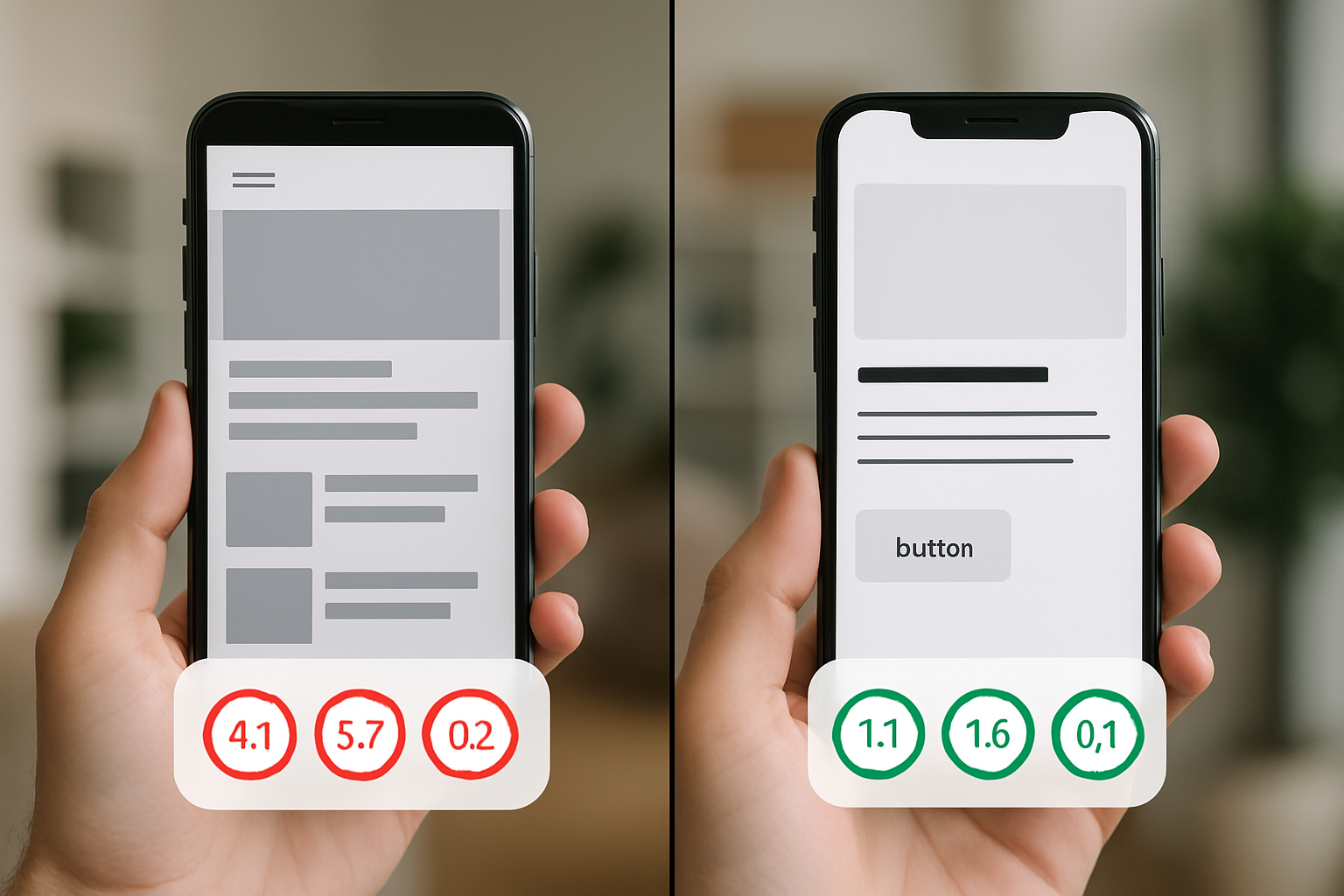
Page speed is one of the most critical technical factors. Google’s Core Web Vitals data from 2025 shows that pages loading in under 2.5 seconds for Largest Contentful Paint (LCP) significantly outperform slower competitors in mobile search rankings. Use tools like Google PageSpeed Insights or GTmetrix to identify and fix speed bottlenecks.
Mobile-friendliness is no longer optional. Google has used mobile-first indexing since 2019, meaning it primarily uses the mobile version of your site for ranking. Test your site with Google’s Mobile-Friendly Test tool and fix any issues immediately.
What Technical Issues Should You Fix First?
Start with crawlability — make sure Google can actually access your pages. Check your robots.txt file and XML sitemap to ensure nothing important is accidentally blocked. Submit your sitemap in Google Search Console to speed up indexing of new and updated content.
- Fix broken links (404 errors) — They waste crawl budget and frustrate users
- Implement HTTPS — Google uses SSL as a confirmed ranking signal
- Remove duplicate content — Use canonical tags to point to preferred versions
- Improve Core Web Vitals — Focus on LCP, FID, and CLS scores
- Enable structured data markup — Schema.org helps Google understand your content
Structured data markup is a code format (typically JSON-LD) that labels your content so search engines understand it contextually. Adding schema for articles, FAQs, products, or local businesses can unlock rich results that make your listing stand out visually in SERPs.
Why Is Keyword Research the Starting Point for Ranking Success?
Keyword research is the process of discovering the exact words and phrases your target audience types into search engines. Without it, you’re essentially guessing what content to create. Strategic keyword research ensures every page you publish has genuine search demand behind it.
Focus on a mix of short-tail and long-tail keywords. Short-tail keywords like “SEO tips” have high search volume but fierce competition. Long-tail keywords like “how to improve website ranking for a small business” have lower volume but significantly higher conversion intent and are much easier to rank for.
Use tools like Google Keyword Planner, Ahrefs, or Semrush to find keyword opportunities. Look for keywords with a good balance of monthly search volume and manageable keyword difficulty (KD). A KD score under 40 is generally considered a realistic target for newer or mid-authority websites.
How Do You Map Keywords to the Right Pages?
Keyword mapping means assigning specific target keywords to specific pages on your website to avoid internal competition. Each page should target one primary keyword and a handful of related secondary keywords. This strategy creates a logical, organized site architecture that search engines love.
Group related keywords by search intent — informational, navigational, commercial, or transactional. Informational intent suits blog posts and guides. Transactional intent suits product and service pages. Matching content format to intent is one of the fastest ways to improve website ranking without building new content from scratch.
What Role Does Link Building Play in Improving Website Ranking?
Link building is the process of acquiring hyperlinks from other websites that point back to your own, commonly called backlinks. Backlinks act as votes of confidence in the eyes of search engines. The more authoritative and relevant those linking sites are, the more ranking power they pass to your pages.
X (formerly Twitter), LinkedIn, and industry publications are all excellent sources of natural backlinks when you produce genuinely valuable content. According to Ahrefs’ 2025 data, 66.5% of all pages have zero backlinks, meaning that even a modest link-building effort can give you a significant competitive advantage. Focus on quality over quantity — one link from a domain authority (DA) 70 site beats ten links from DA 20 sites.
Effective link-building strategies include guest posting on reputable industry blogs, creating linkable assets like original research or infographics, and using digital PR to earn mentions in online news coverage. Avoid buying links or participating in link schemes — Google’s Spam Brain system is increasingly skilled at detecting and penalizing manipulative link practices.
How Can Internal Linking Boost Your Rankings?
Internal linking connects pages within your own website, distributing “link equity” — the ranking power passed through links — across your content. A strong internal linking strategy helps Google discover your pages faster and understand their relative importance. It also keeps visitors on your site longer, improving engagement signals.
Link from your highest-authority pages to the pages you most want to rank. Use descriptive, keyword-rich anchor text rather than generic phrases like “click here.” Aim to give every important page at least three to five internal links from relevant content elsewhere on your site.
Why Is Content Quality the Non-Negotiable Core of Ranking?
Content quality is the single most important factor in Google’s ranking algorithm, according to Google’s own Search Quality Evaluator Guidelines. High-quality content is defined as content that demonstrates Expertise, Authoritativeness, and Trustworthiness — collectively known as E-E-A-T (Experience, Expertise, Authoritativeness, Trust). Without strong E-E-A-T signals, even technically perfect pages struggle to rank competitively.
Write content that genuinely answers user questions better than anything else on the first page of results. Go deeper, include original insights, add expert quotes, and update your content regularly. Google’s Helpful Content System actively demotes content that appears created primarily to rank rather than to help real people.
Publish content consistently to signal that your site is active and authoritative. A content calendar helps you plan topics strategically around your keyword research. Aim for depth over frequency — one comprehensive, well-researched article beats five thin, superficial posts every time.
How Do You Optimize Existing Content to Improve Rankings Faster?
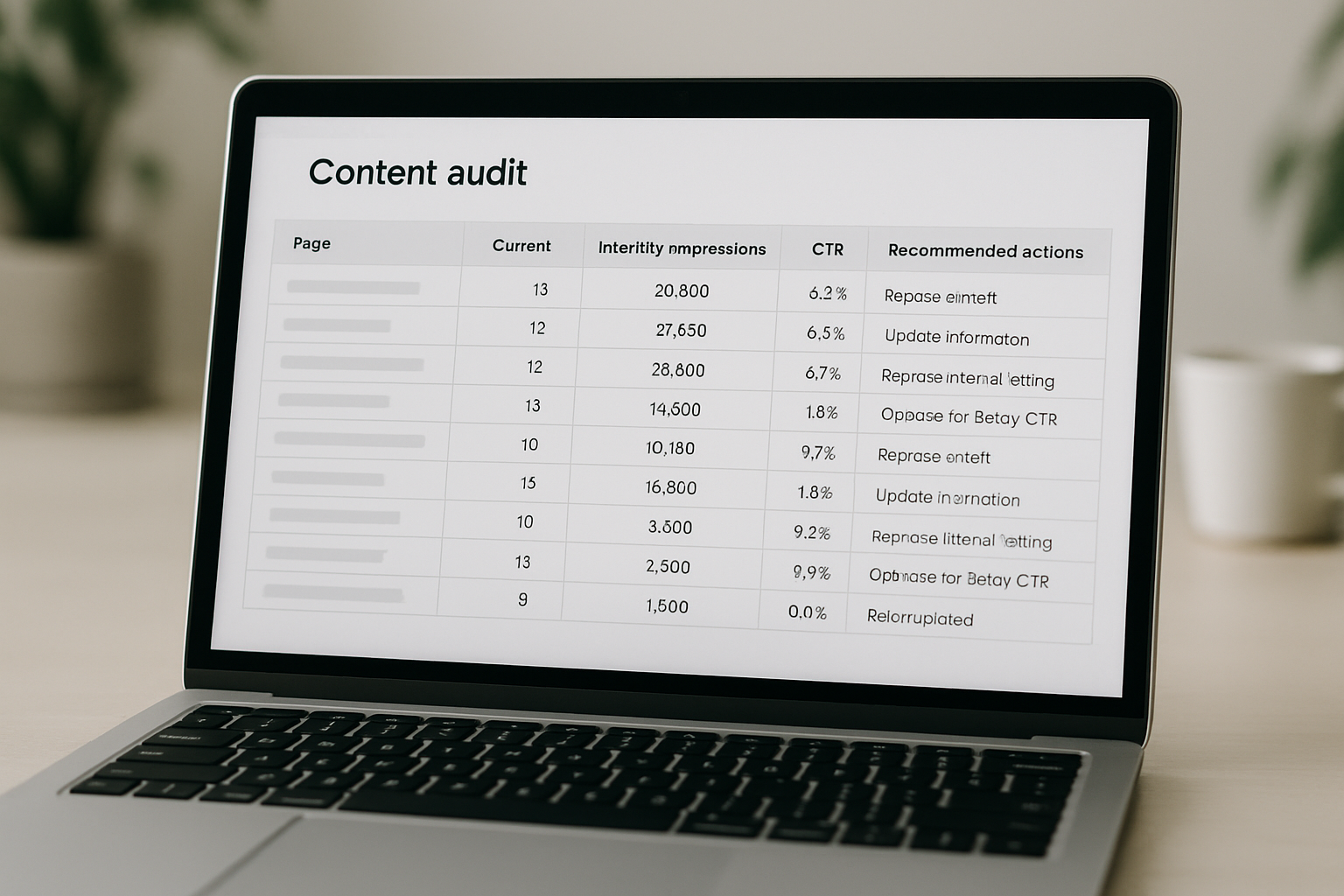
Updating existing content is often faster and more effective than creating entirely new pages. Audit pages ranking on page two or three of Google — these are your best opportunities. Adding new information, improving structure, expanding word count, and refreshing statistics can push these pages onto page one relatively quickly.
Use Google Search Console’s Performance report to find queries where you’re getting impressions but few clicks. These are keywords where you already have partial relevance — optimizing those pages for those specific queries can yield ranking improvements within weeks. This approach is sometimes called “query expansion optimization.”
How Does User Experience (UX) Affect Your Website Ranking?
User experience (UX) refers to how visitors feel when they interact with your website, including how easy it is to navigate, read, and use. Google increasingly uses behavioral signals — such as time on site, bounce rate, and pages per session — as indirect ranking factors. A poor UX drives users away quickly, sending negative signals to Google about your page’s value.
Make navigation intuitive with a clear menu structure. Ensure your font sizes are readable on all devices and that contrast ratios meet accessibility standards. A site that is pleasant to use earns more return visits, more shares, and more natural backlinks — all of which compound your ranking improvements over time.
Reduce your bounce rate by delivering on the promise of your title and meta description immediately. If a user clicks expecting a specific answer and doesn’t find it within seconds, they leave. That “pogo-sticking” behavior tells Google your page didn’t satisfy the query, which can hurt your position in rankings.
What Local SEO Strategies Can Improve Rankings for Location-Based Businesses?
Local SEO is defined as the practice of optimizing a website to appear in search results for location-specific queries, such as “SEO agency near me” or “best coffee shop in Austin.” For businesses with a physical presence or geographic service area, local SEO is essential. It connects you with high-intent local searchers who are ready to take action.
Claim and fully optimize your Google Business Profile (formerly Google My Business). Include accurate business name, address, phone number (NAP), hours, photos, and categories. Respond to reviews consistently — businesses that actively engage with reviews tend to rank higher in Google’s local 3-pack results.
Build local citations by listing your business in relevant online directories like Yelp, Bing Places, and industry-specific platforms. Ensure your NAP information is perfectly consistent across all listings. Even minor discrepancies — like “St.” versus “Street” — can confuse Google’s local ranking algorithm and dilute your local authority.
Frequently Asked Questions
How long does it take to improve website ranking on Google?</strong>
Most SEO improvements take between 3 to 6 months to show significant results, though some technical fixes can produce changes within weeks. Consistency and patience are essential — SEO is a long-term investment, not an overnight solution.
<strong>Q: How many keywords should I target on a single page?</strong>
A: Each page should target one primary keyword and five to ten closely related secondary keywords. Trying to rank a single page for too many unrelated terms dilutes your focus and confuses both search engines and readers.
<strong>Q: Does social media activity help improve website ranking?</strong>
A: Social media is not a direct Google ranking factor, but it indirectly boosts rankings by increasing content visibility, driving traffic, and generating backlinks from people who discover your content through social platforms. A strong social presence amplifies your SEO efforts significantly.
<strong>Q: Is it possible to improve website ranking without building backlinks?</strong>
A: Yes, especially in low-competition niches — strong on-page SEO, technical optimization, and high-quality content can rank pages without external backlinks. However, in competitive industries, a solid backlink profile is almost always necessary to reach and sustain top positions.
<strong>Q: How often should I update my website content to maintain good rankings?</strong>
A: Review and refresh your most important pages at least every six months, or whenever significant industry changes occur. Google favors fresh, accurate content — outdated statistics, broken links, or obsolete information can gradually cause rankings to slip.
Start Improving Your Website Ranking Today
Improving your website ranking is not a single task — it is an ongoing process that rewards consistency, strategy, and a genuine commitment to helping your audience. The strategies covered in this guide — on-page SEO, technical optimization, keyword research, link building, content quality, UX, and local SEO — work together as a system. Neglecting one area weakens the others.
The most important step is to start. Run a site audit today using a free tool like Google Search Console or Screaming Frog. Identify your three biggest weaknesses and create a 90-day action plan to address them. Small, consistent improvements compound into dramatic ranking gains over time.
Ready to take your rankings to the next level? Bookmark this guide, share it with your team, and revisit your SEO strategy every quarter. The websites that dominate Google in the long run are not the ones with the biggest budgets — they’re the ones that commit to learning, adapting, and consistently delivering value to their audience. Your higher ranking is waiting. Go claim it.