
SEO, or Search Engine Optimization, is the practice of improving your website so that search engines like Google rank it higher in organic search results. If you are just starting out, the world of SEO can feel overwhelming — there are dozens of terms, strategies, and tools competing for your attention. The good news is that mastering a handful of core principles can dramatically improve your visibility online, even without a big budget or a team of experts.

Studies show that the first five organic results on Google’s first page capture approximately 67.6% of all clicks on a given search query. That means if your website is not appearing on page one, you are missing the vast majority of potential visitors. Understanding and applying even basic SEO tips for beginners can make a measurable difference in how much traffic your site receives.
This guide walks you through the most important SEO fundamentals in plain language, with actionable steps you can take immediately. Whether you run a blog, a small business website, or an e-commerce store, these strategies will help you build a strong foundation for long-term search success.
What Is SEO and Why Does It Matter for Your Website?
SEO is defined as the process of optimizing a website’s content, structure, and authority so that search engines understand its relevance and rank it for specific search queries. Unlike paid advertising, SEO drives organic traffic — meaning visitors find you naturally through search results rather than through a paid placement. This makes SEO one of the most cost-effective long-term marketing strategies available.
Search engines use complex algorithms to evaluate hundreds of signals before deciding where to rank a page. These signals include keyword relevance, page loading speed, mobile-friendliness, backlink quality, and content depth. When you optimize for these signals, you increase the likelihood that Google will trust your site and recommend it to users.
If you want a deeper foundation before diving into tactics, read this thorough explanation of what SEO is and how it drives organic traffic to your website — it covers the mechanics of how search engines work in detail. Understanding the “why” behind SEO makes every tactical tip far more effective. Once you grasp the fundamentals, applying them becomes intuitive rather than mechanical.
How Do You Choose the Right Keywords as a Beginner?
Keyword research is defined as the process of identifying the specific words and phrases your target audience types into search engines when looking for information, products, or services like yours. Choosing the right keywords is arguably the single most important decision you will make as an SEO beginner. Target the wrong keywords and all your other efforts may generate zero results.
Start by thinking like your audience. Ask yourself: what exact words or questions would someone type into Google if they needed what I offer? Write down at least 20 to 30 ideas before narrowing them down. This brainstorming phase often surfaces keyword opportunities that tools alone would never reveal.
Once you have a list, evaluate keywords using three main criteria:
- Search volume: How many people search for this term each month? A term with 500 monthly searches is more realistic for a beginner than one with 500,000.
- Keyword difficulty: How competitive is the term? Lower-difficulty keywords give beginners a realistic chance to rank.
- Search intent: Does the keyword match what your page actually offers? A visitor searching “how to bake bread” wants a tutorial, not a store page selling flour.
Long-tail keywords — phrases of three or more words — are especially valuable for beginners. According to research, long-tail keywords account for approximately 70% of all web searches. They are less competitive, easier to rank for, and often attract visitors with very specific needs who are closer to taking action.
How Does On-Page SEO Work and What Should Beginners Focus On?
On-page SEO refers to all the optimizations you make directly on your web pages to help search engines understand your content. This includes how you structure your content, where you place your keywords, and how you write elements like titles and meta descriptions. Getting on-page SEO right is the fastest way to see measurable improvements without needing outside resources.
How Should You Optimize Your Title Tags and Meta Descriptions?
The title tag is defined as the HTML element that specifies the title of a web page, displayed as the clickable headline in Google search results. Your title tag should include your primary keyword naturally and stay within 50 to 60 characters to avoid being cut off in search results. A well-written title tag is often the difference between someone clicking on your result or scrolling past it.
Meta descriptions are the short summaries that appear below your title in search results. While they do not directly influence rankings, they significantly affect click-through rates. Write a meta description that answers the searcher’s question in 150 to 160 characters and includes a compelling reason to visit your page.
How Should You Use Headings and Keywords in Your Content?
Headings (H1, H2, H3) help both readers and search engines understand the structure of your page. Use your primary keyword in your H1 heading — and only have one H1 per page. Use H2 and H3 headings to organize subtopics, naturally including related keyword variations where they fit.
Keyword placement matters, but keyword stuffing — the practice of unnaturally overloading content with keywords — will hurt your rankings rather than help them. Aim for a natural keyword density of around 1% to 2%, which means using your main keyword roughly once every 100 to 200 words. Read the page aloud: if it sounds awkward, you have used the keyword too many times.
Also optimize your image alt text, URL slugs, and internal links. Every element of your page is an opportunity to communicate relevance to search engines without overwhelming your readers.

Why Is High-Quality Content the Foundation of Every Successful SEO Strategy?
Content is the single most important ranking factor across all SEO strategies, regardless of industry or niche. Google’s core mission is to provide users with the most helpful, accurate, and relevant results for any given query. When your content genuinely answers a searcher’s question better than any competing page, Google has every reason to rank it highly.
High-quality content for SEO means more than just being well-written. It means being comprehensive enough to fully address the topic, structured in a way that is easy to scan, and updated regularly to reflect current information. A 2026 content benchmark study found that long-form content averaging 1,800 words or more earns significantly more backlinks and social shares than shorter content — reinforcing that depth matters.
Beginners often make the mistake of writing content purely for search engines rather than for real people. The best approach is to write primarily for your audience, then optimize for search engines second. If your readers find your content genuinely useful, search engines will notice through engagement signals like time on page, low bounce rates, and return visits.
Artificial intelligence tools can help beginners create well-structured, research-backed content at scale. Learn how to use AI to write SEO articles for your business and rank on Google — it is a practical guide for anyone who wants to produce consistent content without sacrificing quality.
How Does Technical SEO Affect Your Rankings as a Beginner?
Technical SEO is defined as the process of optimizing your website’s infrastructure so that search engines can efficiently crawl, index, and understand your content. Even the best-written content will struggle to rank if search engines cannot properly access your pages. Technical SEO is the invisible foundation that makes everything else work.
As a beginner, focus on these essential technical SEO elements:
- Page speed: Google uses page speed as a direct ranking factor. According to Google’s own data, 53% of mobile users abandon a page that takes longer than 3 seconds to load. Compress images, use browser caching, and consider a content delivery network (CDN) to speed up your site.
- Mobile-friendliness: Google uses mobile-first indexing, meaning it primarily evaluates the mobile version of your site for ranking purposes. Use a responsive design that adapts cleanly to any screen size.
- HTTPS security: Websites without SSL certificates (those starting with HTTP rather than HTTPS) are flagged as “not secure” by browsers. Google treats HTTPS as a ranking signal, and users trust secure sites more.
- Crawlability: Make sure your robots.txt file and XML sitemap are correctly configured so search engines can find and index your pages. Blocking important pages by mistake is a surprisingly common beginner error.
- Core Web Vitals: Google measures user experience through three key metrics — Largest Contentful Paint (loading), First Input Delay (interactivity), and Cumulative Layout Shift (visual stability). Improving these metrics directly boosts your rankings.
You do not need to be a developer to address most technical SEO issues. Many website platforms and modern SEO tools now surface these problems automatically and suggest specific fixes. The key is to audit your site regularly rather than treating technical SEO as a one-time task.
Why Are Backlinks Still One of the Most Powerful SEO Ranking Factors?
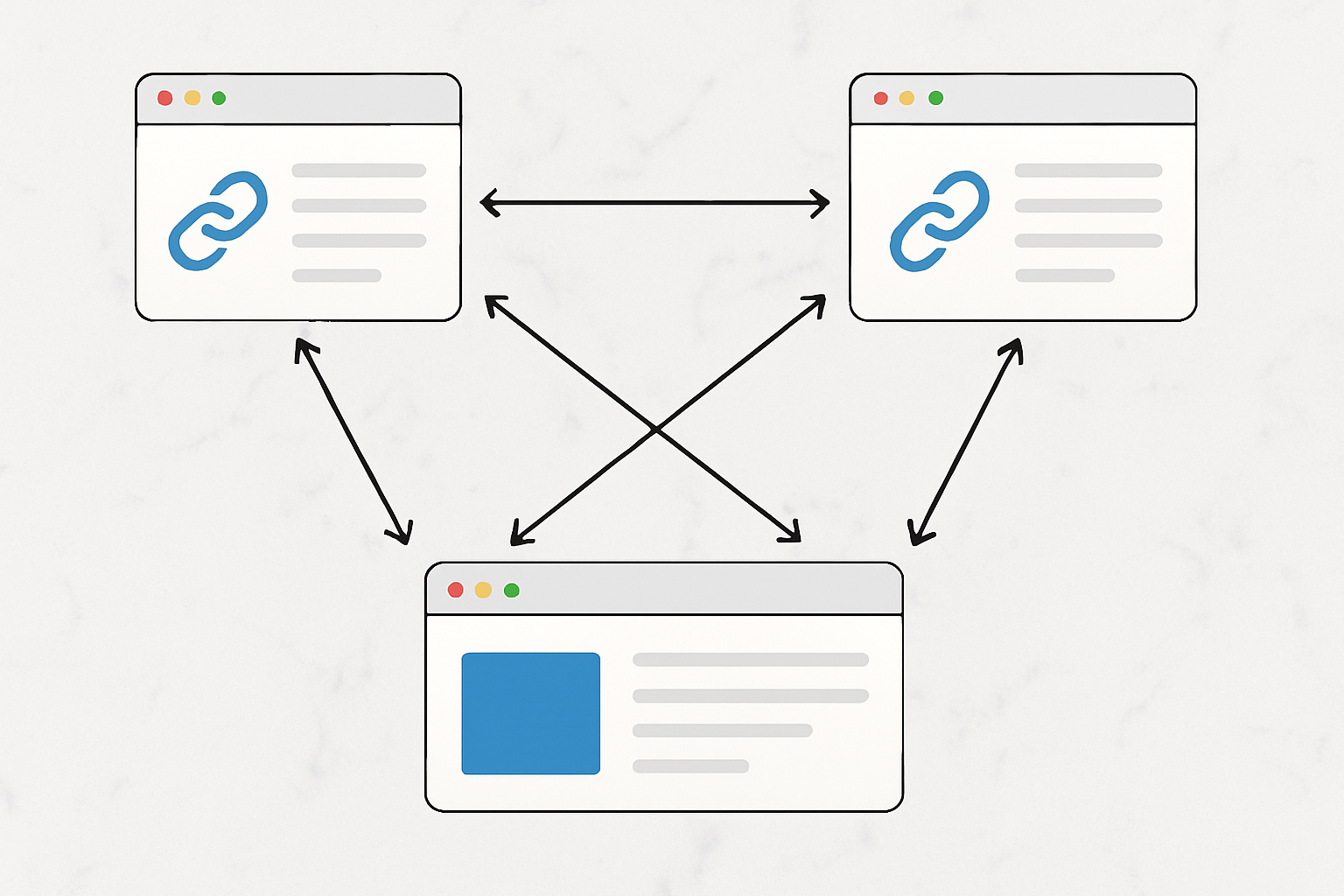
Backlinks are links from other websites that point to your site, and they function as votes of confidence in the eyes of search engines. The more high-quality, relevant websites that link to your content, the more authority your site gains in Google’s algorithm. This authority is commonly referred to as “domain authority” or “link equity,” and it directly influences how well your pages rank for competitive keywords.
Building backlinks as a beginner does not require a large budget or industry connections. Some of the most effective beginner-friendly link-building strategies include:
- Guest posting: Write articles for reputable blogs in your niche in exchange for a link back to your site.
- Creating linkable assets: Original research, comprehensive guides, infographics, and free tools attract natural backlinks over time.
- Broken link building: Find broken links on other websites and suggest your content as a replacement — website owners appreciate having broken links fixed.
- Getting listed in directories: Niche-specific directories and local business listings provide relevant backlinks with relatively little effort.
Focus on quality over quantity when building links. One backlink from a well-respected, high-traffic website in your industry is worth far more than 50 links from low-quality or unrelated sites. Avoid purchasing links or participating in link schemes — Google’s algorithm is sophisticated enough to identify and penalize these tactics.
How Can Beginners Track Their SEO Progress and Know What Is Working?
The best way to improve your SEO is to measure your results consistently so you understand what is working and what needs adjustment. Without tracking, you are essentially optimizing blindly — spending time and effort without knowing whether your actions are producing results. Even basic measurement habits separate beginners who grow quickly from those who plateau.
Start by setting up Google Search Console (a free tool from Google) and connecting it to your website. Search Console shows you which keywords your site is ranking for, how many impressions and clicks each page receives, and whether Google has identified any indexing or technical issues. It is the most direct and accurate source of organic search data available to website owners.
Track these key metrics monthly to monitor your SEO progress:
- Organic traffic: The total number of visitors arriving from search engines each month.
- Keyword rankings: Your position in search results for your target keywords.
- Click-through rate (CTR): The percentage of users who see your result and actually click on it.
- Bounce rate: The percentage of visitors who leave without interacting further — a high bounce rate may signal a content-relevance problem.
- Domain authority growth: A general indicator of how your overall site trust and link profile are improving over time.
Modern AI-powered platforms now make tracking far more intelligent than traditional SEO tools ever allowed. Instead of manually checking dozens of reports, platforms like RankBloom SEO can surface the insights that matter most automatically, helping beginners act on data without needing years of analytical experience.
What Are the Most Common SEO Mistakes Beginners Make?
Understanding common pitfalls is just as valuable as knowing the right tactics. Many beginners make the same avoidable mistakes that slow their progress and, in some cases, actively harm their rankings. Awareness of these errors is the first step to avoiding them.
The most frequent beginner SEO mistakes include:
- Targeting keywords that are too competitive: Competing with massive authority sites on broad keywords is a losing battle for new websites. Start with niche, long-tail keywords and build authority gradually.
- Publishing thin content: Pages with fewer than 300 words and little depth rarely rank for anything meaningful. Every page should provide genuine value.
- Ignoring internal linking: Linking between your own pages distributes authority across your site and helps search engines understand your site structure. Neglecting internal links is a missed opportunity.
- Expecting immediate results: SEO is a long-term strategy. Most websites take three to six months to see significant movement in rankings after implementing changes. Patience and consistency are essential.
- Copying competitor content: Duplicate content confuses search engines and can lead to penalties. Always create original, unique material even when covering similar topics to competitors.
- Neglecting local SEO: If your business serves a specific geographic area, optimizing for local search terms and claiming your Google Business Profile is critical for visibility in your community.
Frequently Asked Questions About SEO Tips for Beginners
Frequently Asked Questions
How long does it take to see results from SEO as a beginner?</strong><br>
Most beginners start seeing noticeable improvements in rankings and organic traffic within three to six months of consistently applying SEO best practices. Some competitive niches may take longer, while low-competition keyword targets can show movement in as little as four to eight weeks.</p>
<p><strong>Q: Do I need to spend money on SEO tools as a beginner?</strong><br>
A: No — Google Search Console and Google Analytics are both free and provide excellent data for beginners to start with. As your site grows and your needs become more sophisticated, investing in a platform like RankBloom SEO that automates tracking and surfaces actionable insights becomes increasingly worthwhile.</p>
<p><strong>Q: How often should I publish new content for SEO?</strong><br>
A: Consistency matters more than frequency. Publishing one well-researched, optimized article per week is far more effective than publishing five thin, rushed pieces. Focus on quality and a sustainable publishing schedule you can maintain long-term.</p>
<p><strong>Q: Is it still important to build backlinks in 2026?</strong><br>
A: Yes — backlinks remain one of Google’s strongest ranking signals. The focus has shifted toward earning high-quality, relevant links through genuinely valuable content rather than through mass link-building schemes. Even a small number of authoritative backlinks can significantly improve your rankings.</p>
<p><strong>Q: Can I do SEO myself without hiring an agency or expert?</strong><br>
A: Absolutely. Many website owners successfully manage their own SEO by learning the fundamentals, using the right tools, and staying consistent. Modern AI-powered platforms have made self-managed SEO significantly more accessible by automating complex analysis and surfacing clear, actionable recommendations.</p>
Start Your SEO Journey With the Right Tools and Strategy
SEO success for beginners comes down to mastering the fundamentals and applying them consistently over time. Focus on thorough keyword research, high-quality content, clean technical foundations, and steady link building — and you will be ahead of the majority of websites competing for the same traffic. None of these strategies require an unlimited budget or years of expertise to begin.
As you grow more comfortable with SEO basics, the right platform can accelerate your results dramatically. RankBloom SEO is built specifically to make SEO smarter and more efficient — offering AI-powered keyword tracking, automated insights, and content optimization guidance that replaces the fragmented, manual workflows of traditional SEO tools. Whether you are managing a single blog or scaling a growing business, RankBloom SEO gives you the clarity and direction you need to rank faster and grow sustainably.
Ready to take your SEO from beginner to confident? Explore RankBloom SEO today and start building the organic visibility your website deserves.