
If you’ve just launched a website or started a blog, you’ve probably heard the term SEO thrown around a lot. But what exactly is it, and where do you even begin? Don’t worry — you’re in the right place. This guide breaks down the most important SEO tips for beginners in a simple, actionable way so you can start driving real organic traffic to your site without feeling overwhelmed.
What Is SEO and Why Does It Matter?
SEO stands for Search Engine Optimization. It’s the practice of improving your website so that search engines like Google can find, understand, and rank your content higher in search results. The higher you rank, the more people see your site — and the more free, organic traffic you get.
Here’s the exciting part: you don’t need to be a tech wizard to do SEO. With the right foundational knowledge and a consistent effort, even complete beginners can achieve remarkable results over time.

1. Start With Keyword Research
Keyword research is the backbone of any successful SEO strategy. Before you write a single word, you need to know what your audience is actually searching for.
How to Find the Right Keywords
- Use free tools like Google Keyword Planner, Ubersuggest, or AnswerThePublic to discover relevant search terms.
- Focus on long-tail keywords — phrases with three or more words (e.g., “best SEO tips for beginners”) that are less competitive but highly targeted.
- Check search intent — ask yourself whether the user wants information, a product, or a specific website.
- Analyze the competition — look at what keywords your competitors rank for and find gaps you can fill.
Pro tip: As a beginner, target keywords with low to medium competition and a decent search volume. Trying to rank for highly competitive terms right away is like running a marathon before learning to walk.
2. Optimize Your On-Page SEO
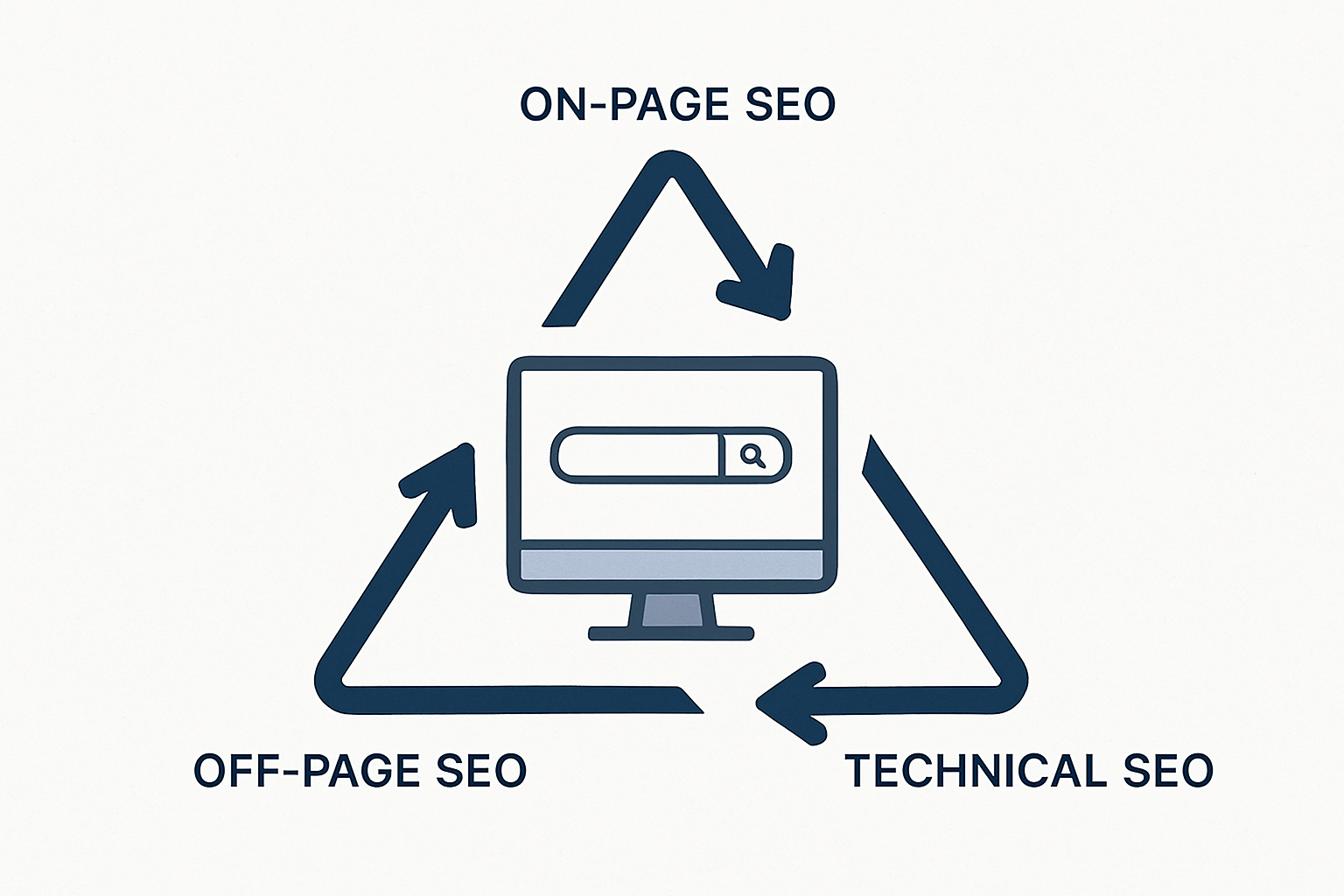
On-page SEO refers to everything you can control directly on your web pages. Getting this right is crucial for both search engines and your readers.
Key On-Page SEO Elements
- Title Tag: Include your primary keyword near the beginning. Keep it under 60 characters.
- Meta Description: Write a compelling 150–160 character summary that includes your keyword and encourages clicks.
- Headings (H1, H2, H3): Use a clear heading hierarchy. Your H1 should include your main keyword and appear only once per page.
- URL Structure: Keep URLs short, descriptive, and keyword-rich (e.g., /seo-tips-for-beginners).
- Keyword Placement: Naturally include your target keyword in the first 100 words, headings, and throughout the content — but never stuff it unnaturally.
- Image Alt Text: Describe every image using relevant keywords to help search engines understand your visuals.
3. Create High-Quality, Helpful Content
Google’s number one priority is delivering useful content to its users. That means content quality is non-negotiable. No amount of technical tweaking will save a page that doesn’t genuinely help people.
What Makes Content “High Quality”?
- It answers the user’s question thoroughly and clearly.
- It’s original — not copied or spun from other sources.
- It’s well-structured with headings, bullet points, and short paragraphs for easy readability.
- It’s regularly updated to stay accurate and relevant.
- It includes internal links to other relevant pages on your site.
Aim to create content that is 10x better than what’s currently ranking for your target keyword. Ask yourself: “Does this page truly deserve to be on the first page of Google?” If you can honestly say yes, you’re on the right track.
4. Build a Strong Technical SEO Foundation
Technical SEO ensures that search engines can crawl and index your site without any issues. Even the best content won’t rank if Google can’t access it properly.
Technical SEO Checklist for Beginners
- Mobile-friendliness: Over 60% of searches happen on mobile devices. Use Google’s Mobile-Friendly Test tool to check your site.
- Page speed: Slow pages frustrate users and hurt rankings. Compress images, use caching, and consider a fast hosting provider.
- HTTPS: Make sure your site has an SSL certificate (the padlock in the browser bar). Google treats HTTPS as a ranking signal.
- XML Sitemap: Submit a sitemap to Google Search Console to help Google discover and index all your pages.
- Fix broken links: Regularly audit your site for 404 errors and redirect them properly.
5. Earn Quality Backlinks
Backlinks — links from other websites pointing to yours — are one of the most powerful ranking factors in SEO. Think of each backlink as a vote of confidence from another website, telling Google that your content is trustworthy and valuable.
Beginner-Friendly Ways to Build Backlinks
- Guest blogging: Write articles for reputable sites in your niche and include a link back to your site.
- Create shareable content: Infographics, original research, and comprehensive guides naturally attract links.
- Reach out to bloggers: If you mention someone’s work in your content, let them know — they may share or link back to you.
- List your site in reputable directories: Industry-specific directories can provide valuable early links.
Remember: quality always beats quantity when it comes to backlinks. One link from a well-respected website is worth far more than dozens of links from low-quality or spammy sites.
6. Track Your Progress and Keep Improving
SEO is not a set-it-and-forget-it strategy. You need to monitor your performance, learn from the data, and continually refine your approach.
- Set up Google Search Console (free) to monitor your impressions, clicks, and keyword rankings.
- Install Google Analytics to understand your traffic sources and user behavior.
- Review your top-performing pages regularly and update old content to keep it fresh.
- Pay attention to your bounce rate — if users leave quickly, your content may not be meeting their expectations.
Celebrate small wins and stay patient. SEO is a long-term game, and results typically take three to six months to become noticeable. Consistency and persistence are your greatest tools.
Final Thoughts
Learning SEO as a beginner can feel like drinking from a firehose — there’s a lot to take in. But by focusing on these core fundamentals — keyword research, on-page optimization, quality content, technical health, and backlink building — you’ll build a solid foundation that compounds over time.
Start small, stay consistent, and never stop learning. The websites you see dominating Google’s first page all started exactly where you are right now.
[FAQ_START]
Frequently Asked Questions About SEO for Beginners
How long does it take to see results from SEO?
SEO typically takes 3 to 6 months to show significant results, though this varies depending on your niche, competition level, and how consistently you apply best practices. Newer websites may take longer to gain traction, while sites in less competitive niches can see improvements sooner.
Is SEO free?
The practice of SEO itself is free — you don’t pay Google to rank higher organically. However, you may invest in paid tools (like Ahrefs or SEMrush), content creation, or professional help. Many excellent free tools exist for beginners, including Google Search Console, Google Analytics, and Ubersuggest.
What is the most important SEO factor for beginners to focus on?
If you can only focus on one thing, prioritize creating high-quality, helpful content targeting the right keywords. Content is the foundation everything else is built upon. Without valuable content, no amount of technical optimization or link building will deliver lasting results.
Do I need to know how to code to do SEO?
No! Basic SEO requires no coding knowledge. Platforms like WordPress, Wix, and Squarespace make it easy to optimize your site with user-friendly plugins and settings. As you advance, a basic understanding of HTML can be helpful, but it’s absolutely not a requirement to get started.
What is the difference between on-page and off-page SEO?
On-page SEO refers to optimizations you make directly on your website — like content, keywords, headings, and page speed. Off-page SEO refers to actions taken outside your website to improve its authority, primarily through earning backlinks from other reputable sites. Both are essential for a well-rounded SEO strategy.
[FAQ_END]