
Local SEO for plumbers content strategy is the structured approach of creating, publishing, and optimizing blog posts and web pages so that plumbing businesses appear in local search results when nearby customers need help. Most plumbers rely on word-of-mouth or paid ads, but organic search traffic through smart content creation delivers leads around the clock. In 2026, automated blogging tools have made it easier than ever to maintain a consistent publishing schedule without hiring a full-time writer.
Studies show that 97% of consumers use the internet to find local businesses, and plumbing is one of the top service categories searched in local queries. That means your potential customers are typing phrases like “burst pipe repair in [your city]” or “licensed plumber near me” every single day. If your website does not appear in those results, a competitor is getting that call instead of you.
The best way to build long-term local search visibility is to publish consistent, location-specific blog content that answers the exact questions your customers are asking. This strategy works because Google rewards websites that demonstrate expertise, authority, and trustworthiness — commonly known as E-E-A-T. Automated content tools now allow plumbing businesses to produce that content at scale without sacrificing quality.
What Is Local SEO for Plumbers and Why Does It Matter?
Local SEO is defined as the process of optimizing a business’s online presence so it appears prominently in geographically targeted search results. For plumbers, this means showing up when someone searches for plumbing services in a specific city, neighborhood, or zip code. It includes your Google Business Profile, your website content, online reviews, and local citations.
Plumbing is an inherently local business — nobody calls a plumber from another state. This makes local SEO the single most cost-effective marketing channel available to plumbing companies. Unlike paid ads that stop working the moment you pause your budget, well-optimized content continues driving traffic for months or even years.
A content strategy is defined as a planned approach to creating and distributing content that serves both your audience’s needs and your business goals. For plumbers, a strong content strategy means publishing blog posts that answer common questions, highlight local service areas, and demonstrate real-world expertise. When executed consistently, this approach builds the trust signals Google needs to rank your site above competitors.
How Does Automated Blog Content Support a Plumber’s SEO Goals?
Automated blog content uses AI-powered writing tools and content scheduling platforms to produce and publish SEO-optimized articles on a consistent basis. These tools can generate location-specific posts about topics like water heater repair, drain cleaning, pipe installation, and seasonal plumbing tips. The automation handles the heavy lifting so plumbing business owners can focus on running their operations.
The key advantage is consistency. Google’s algorithm favors websites that publish fresh, relevant content regularly over those that post sporadically. A plumber who publishes two blog posts per week will build significantly more topical authority than one who updates their site once every few months.
Automated content platforms can also be configured to naturally include local keywords — city names, neighborhood references, service-specific terms — throughout each article. This localization is what separates a generic plumbing blog from one that actually ranks for “sewer line repair in Austin” or “tankless water heater installation in Phoenix.” The combination of frequency and localization is what powers real lead generation growth.
What Topics Should Plumbers Write About to Rank Locally?
The most effective local SEO for plumbers content strategy focuses on three main content categories: service pages, location pages, and educational blog posts. Each category serves a different purpose in the buyer journey and targets different stages of search intent. Together, they create a comprehensive web of content that captures leads at every level.
Service-Specific Blog Posts
Service-specific posts target customers who already know they have a problem and are looking for a solution. Examples include “How to Fix a Leaking Faucet in [City]” or “Signs You Need Emergency Drain Cleaning.” These posts should include a clear call to action like a phone number or booking link in the first and last paragraph.
- Emergency plumbing repairs (burst pipes, overflowing toilets)
- Water heater installation and maintenance
- Drain cleaning and sewer line services
- Bathroom and kitchen plumbing upgrades
- Pipe inspection and repiping
Seasonal and Preventive Content
Seasonal posts capture customers searching for tips at specific times of year. “How to Winterize Your Pipes in [City]” or “Spring Plumbing Checklist for Homeowners” are high-intent searches that signal a customer is actively preparing for a service. Plumbers who publish this content before the season arrives can dominate local search results for weeks at a time.
Location and Neighborhood Pages
Location pages are dedicated pages or posts targeting specific cities, suburbs, or zip codes your business serves. A plumber based in Dallas, for example, might create individual pages for Plano, Irving, Garland, and Mesquite. Each page should include neighborhood-specific references, local landmarks, and unique service information to avoid duplicate content penalties.
How Do You Build a Local SEO Content Calendar for a Plumbing Business?
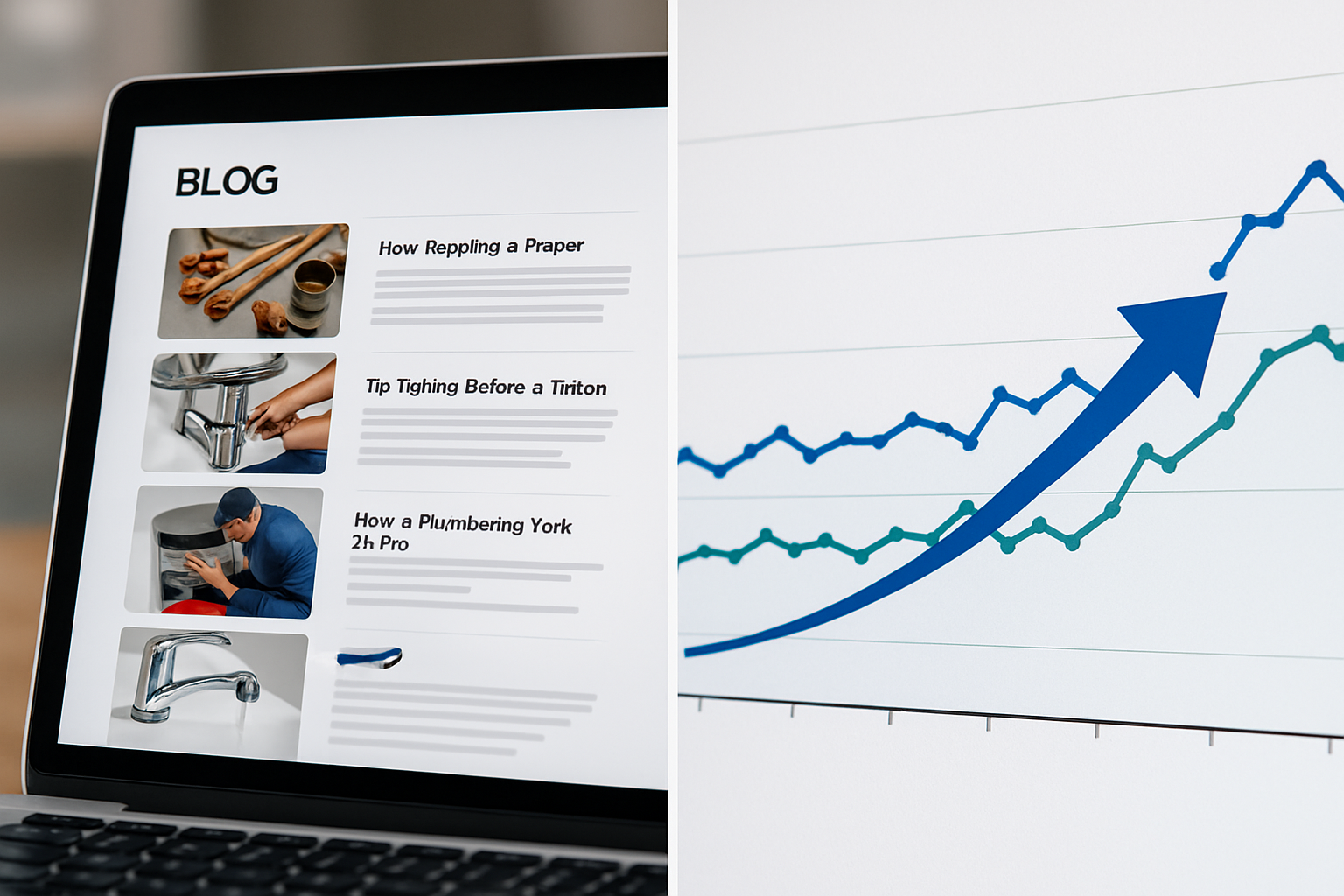
A content calendar is defined as a scheduled plan that outlines what content will be published, on what date, and targeting which keywords or topics. For plumbing businesses, an effective content calendar balances evergreen educational posts with timely seasonal content. A simple structure is to publish two posts per week — one service-focused and one educational or seasonal.
Here is a straightforward process to build your plumbing content calendar:
- Keyword Research: Use tools like Google Search Console, Ahrefs, or Semrush to find local plumbing search terms with real volume.
- Topic Clustering: Group related keywords into topic clusters — for example, all “water heater” topics together — to build topical authority.
- Localization: Assign city or neighborhood modifiers to each topic so every post targets a specific geographic area.
- Scheduling: Map topics to a weekly publishing schedule, prioritizing high-volume seasonal searches ahead of their peak period.
- Automation: Configure your content tool to auto-publish on schedule so the process runs without daily manual input.
- Review and Optimize: Monthly, review your Google Search Console data and update underperforming posts with fresher information.
Studies show that businesses publishing 16 or more blog posts per month receive 3.5 times more website traffic than those publishing fewer than four posts monthly. For a plumbing company, that volume is nearly impossible to achieve manually without a content team. Automated blog content solves this problem by making high-frequency publishing realistic and affordable for small business owners.
Why Does Google Business Profile Work Better With Supporting Blog Content?
Google Business Profile (GBP) is the free business listing that appears in Google Maps and the local pack — the three businesses shown at the top of local search results. Most plumbers know they need a GBP listing, but many do not realize that their website content directly influences how well that listing performs. Google uses signals from your website to validate and rank your GBP profile.
When your website has consistent, keyword-rich content about plumbing services in a specific city, Google gains more confidence that your business genuinely serves that area. This confidence translates into higher rankings in the local map pack. Plumbing companies with active blogs and optimized service pages consistently outperform competitors whose websites have thin or outdated content.
You can also amplify your GBP performance by publishing Google Posts — short updates directly in your business profile — that link back to your most recent blog articles. This creates a content loop where your blog feeds your GBP, and your GBP drives clicks back to your blog. The more interactions Google sees across both platforms, the more authoritative your business appears in local results.
How Do Plumbers Measure Whether Their Content Strategy Is Working?
X is not a strategy if it cannot be measured — and the same is true for local SEO content. The most important metrics for a plumbing content strategy are organic search traffic, keyword rankings, and phone call conversions. These three numbers tell you whether your content is reaching the right people and turning them into actual customers.
Key performance indicators (KPIs) to track monthly include:
- Organic sessions: Total visits from unpaid search results in Google Analytics
- Keyword rankings: Position tracking for your target local keywords in Ahrefs or Semrush
- Google Business Profile calls: Phone calls attributed directly to your GBP listing
- Click-through rate (CTR): Percentage of searchers who click your result after seeing it
- Conversion rate: Percentage of blog visitors who contact your business
According to BrightLocal’s 2025 Local Consumer Review Survey, 87% of consumers read online reviews for local businesses, and businesses with regular fresh content on their sites see significantly higher trust scores. Tracking these metrics monthly allows you to identify which blog topics are generating the most calls and double down on producing more of that content. Data-driven content adjustments are what separate high-performing plumbing SEO campaigns from those that plateau.
What Are the Most Common Mistakes Plumbers Make With Local SEO Content?
The most damaging mistake plumbers make is publishing generic blog posts that could apply to any plumber in any city. Content that lacks local specificity — no city names, no neighborhood references, no mention of local conditions like hard water or older pipe infrastructure — fails to rank in local search. Every post needs at least two or three natural local references to be geographically relevant to Google.
Other common content mistakes include:
- Keyword stuffing — overusing the target keyword in a way that reads unnaturally
- Thin content — publishing posts under 500 words that lack depth or genuine value
- Ignoring internal linking — failing to connect blog posts to relevant service pages
- No calls to action — writing informative posts without prompting readers to call or book
- Inconsistent publishing — posting frequently for a month then going silent for three months
Another critical error is neglecting to optimize meta titles and meta descriptions for each blog post. These are the first things a searcher sees in Google results, and a compelling, keyword-rich meta description dramatically increases your click-through rate. Automated content platforms that include on-page SEO optimization features eliminate most of these mistakes by building best practices directly into the publishing workflow.
How Can Plumbers Get Started With an Automated Content Strategy Today?
Getting started with an automated local SEO content strategy for your plumbing business does not require a large budget or technical expertise. The core requirements are a WordPress website, a reliable AI content platform configured for local SEO, and a clear list of your target service areas and primary services. From those three components, an automated system can begin producing and publishing targeted local content within days.
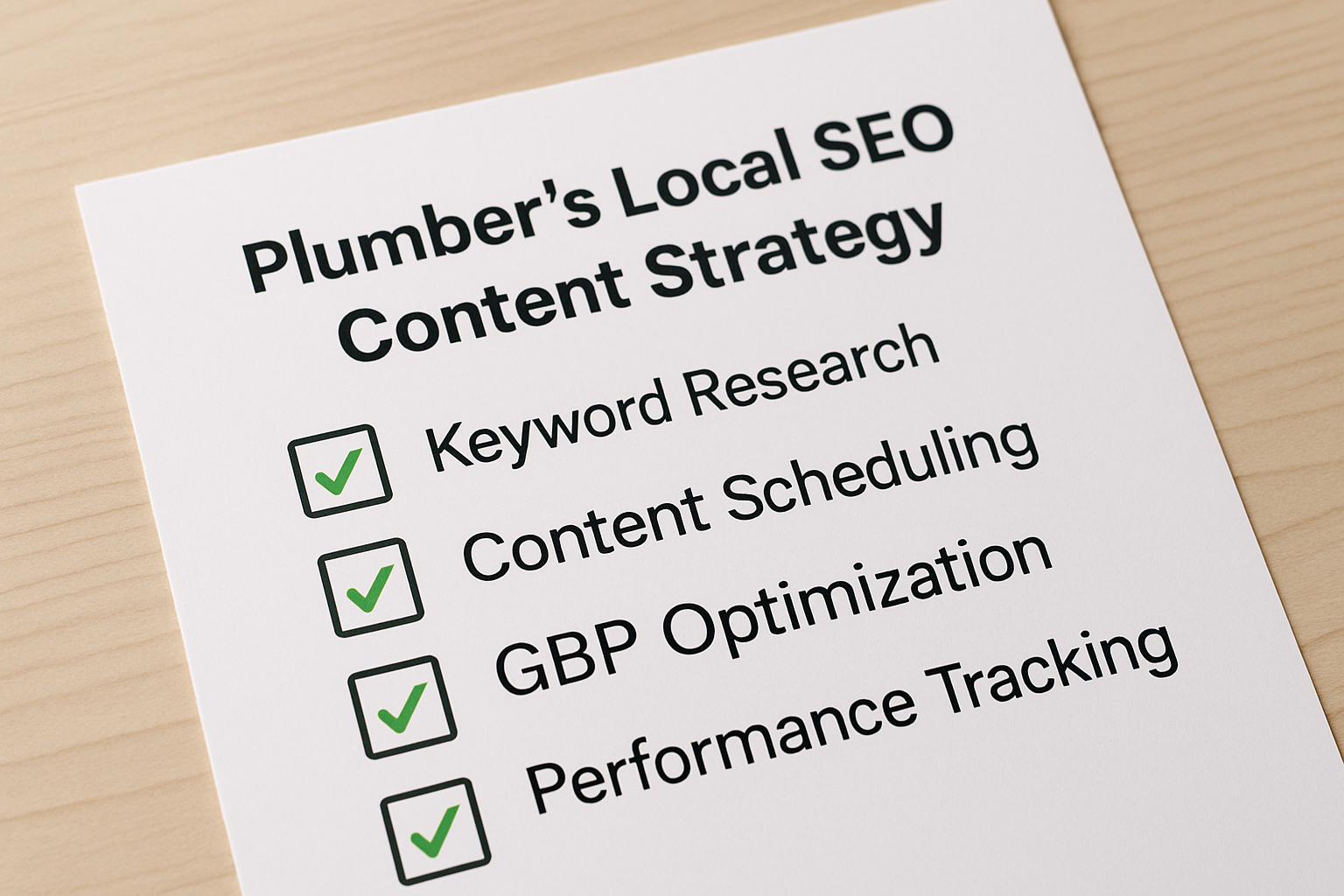
A practical starting plan for plumbing businesses looks like this:
- Audit your existing website — identify service pages that need refreshing and gaps in your blog content.
- Define your top five service areas and top five plumbing services as your initial content targets.
- Select a content automation platform that includes local SEO optimization and direct-to-WordPress publishing.
- Set a publishing cadence of at least two posts per week to build momentum in Google’s index.
- Connect Google Search Console and Google Analytics to monitor performance from day one.
- Review and adjust your content topics at the 60-day mark based on early ranking data.
Plumbing businesses that commit to a consistent automated content strategy typically begin seeing measurable organic traffic growth within 90 to 120 days. The investment pays off compoundingly — each new article adds permanent search visibility that builds on what came before. In a competitive local market, the plumber who starts this strategy today will be six months ahead of every competitor who waits.
Frequently Asked Questions
How many blog posts does a plumbing company need to see SEO results?
Most plumbing businesses start seeing measurable organic traffic improvements after publishing 20 to 30 well-optimized local blog posts, which typically takes 60 to 90 days at a consistent publishing pace.
Does automated blog content hurt SEO if it is AI-generated?
AI-generated content does not hurt SEO as long as it is accurate, genuinely helpful, and properly optimized for local search terms. Google evaluates content quality and relevance, not the method used to create it.
What is the difference between a service page and a blog post for plumbing SEO?
A service page targets high-intent commercial keywords like “drain cleaning in Houston” and is designed to convert visitors into customers, while a blog post targets informational queries and educates readers to build trust and topical authority.
How important are online reviews compared to blog content for local plumbing SEO?
Both are critical — reviews influence your Google Business Profile ranking and consumer trust, while blog content drives organic website traffic. The strongest local SEO strategies use both together to dominate local search results.
Can a small plumbing company with one location compete against large franchises using content strategy?
Yes — local content strategy actually favors independent plumbers because they can create hyper-localized content about specific neighborhoods and local conditions that national franchise websites cannot replicate at scale.
Start Building Your Local Search Presence Today
Local SEO for plumbers content strategy is one of the highest-ROI investments a plumbing business can make in 2026. Every blog post you publish is a permanent asset that works for you 24 hours a day, driving qualified local leads directly to your phone. Automated content tools have removed the biggest barrier — time — making it possible for any plumbing company to compete effectively in local search.
The plumbers winning the most service calls in their markets are not necessarily the most experienced or the most affordable — they are the ones who show up first in Google when a homeowner has a problem at 11pm on a Sunday. That visibility is built through consistent, strategic, locally-optimized content published week after week. Your competitors are either doing this already or falling behind those who are.
Ready to put your plumbing business on the first page of local search results? Start by identifying your top five target cities and your five most profitable services, then build your first month of automated blog content around those combinations. The best time to start your local SEO content strategy was six months ago — the second best time is right now. Take action today and let every blog post you publish become a new pathway for customers to find and call your business.