
Ranking higher on Google has always been the goal, but the path to the top has changed dramatically. AI tools now give marketers, content creators, and business owners the ability to analyze, optimize, and publish faster than ever before. Understanding how to use these tools strategically — not just as shortcuts — is what separates websites that climb the rankings from those that stay stuck on page two.

AI-powered SEO is defined as the application of artificial intelligence and machine learning algorithms to automate, enhance, and scale search engine optimization tasks. This includes keyword research, content creation, technical audits, competitor analysis, and performance tracking. As of 2026, AI tools have become a standard part of the professional SEO toolkit, not a luxury reserved for enterprise teams.
Studies show that websites using AI-assisted SEO workflows publish content up to 68% faster than those relying solely on manual processes. Speed matters in SEO because Google rewards fresh, relevant, and frequently updated content. Faster content production combined with smarter optimization directly translates to more ranking opportunities.
What Is AI-Powered SEO and Why Does It Matter for Google Rankings?
AI-powered SEO is the use of machine learning, natural language processing, and predictive analytics to make smarter SEO decisions at scale. Traditional SEO required hours of manual keyword research, link analysis, and content audits. AI tools compress that timeline into minutes while delivering deeper insights than legacy platforms can offer.
Google itself uses AI extensively — including systems like RankBrain and the Helpful Content System — to evaluate the quality, relevance, and intent alignment of web content. To rank higher on Google with AI tools, you need to understand how Google thinks and use your own AI tools to match that thinking. This is no longer optional for competitive industries.
The practical benefit is clear: AI tools help you identify what your target audience is searching for, what format they prefer, and what depth of content satisfies their intent. When your content strategy aligns with user intent at every level, your rankings improve consistently over time.
How Does Keyword Research Work When Using AI Tools?
Keyword research is defined as the process of identifying search terms your target audience uses to find information, products, or services relevant to your business. AI tools have transformed this process by automating pattern recognition across millions of search queries simultaneously. What used to take a full day of manual spreadsheet work now takes under an hour with the right platform.
Modern AI keyword tools go beyond simple search volume and competition metrics. They analyze semantic relationships between topics, identify content gaps in your niche, and predict which keywords are trending upward before they become saturated. This predictive capability gives early movers a significant competitive advantage.
- Cluster keywords by topic: Group related terms around core topics to build topical authority rather than targeting isolated keywords.
- Prioritize long-tail keywords: Long-tail keywords typically have lower competition and higher conversion intent, making them ideal targets for newer or mid-authority sites.
- Analyze search intent: AI tools classify keywords by intent — informational, navigational, transactional, or commercial — so you can match content type to user expectations.
- Monitor keyword trends: AI platforms detect seasonal patterns and emerging queries before they peak, giving you time to publish optimized content ahead of the curve.
Learning how to use a keyword tracking tool to monitor rankings and grow organic traffic is one of the most high-leverage skills you can develop as an SEO practitioner. Consistent monitoring tells you which keywords are gaining traction, which need more content support, and which should be replaced with better opportunities.
How Does AI Content Creation Help You Rank Higher on Google?
AI content creation tools help you produce optimized, intent-aligned articles, product pages, and landing pages at a pace that manual writing cannot match. The key distinction is that effective AI content is not just fast — it is structurally designed to satisfy both Google’s ranking algorithms and real human readers. These two goals are now more aligned than ever under Google’s Helpful Content guidelines.
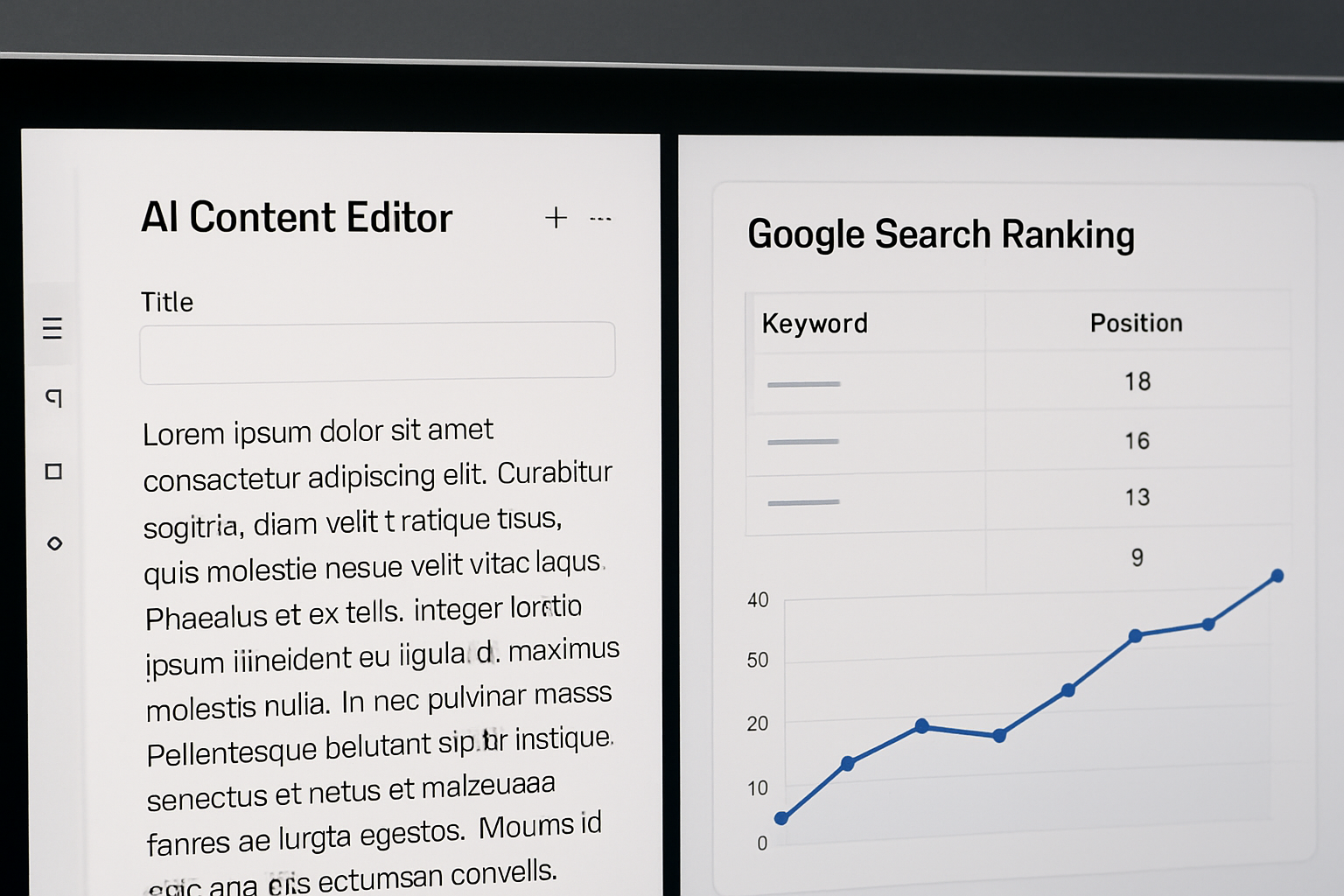
According to industry research, content produced with AI assistance and then reviewed by a human editor performs comparably to fully human-written content in Google rankings — and in some studies, outperforms it due to more consistent structural optimization. The human review step remains essential to ensure accuracy, brand voice, and E-E-A-T (Experience, Expertise, Authoritativeness, and Trustworthiness) signals. AI does the heavy lifting; humans add the credibility layer.
E-E-A-T is defined as Google’s quality evaluation framework that assesses a piece of content based on the author’s first-hand experience, demonstrated expertise, established authority, and overall trustworthiness. Pages that score high on E-E-A-T signals consistently outperform thin or generic content in competitive search results. AI tools can help you structure content for E-E-A-T, but your unique insights and credentials must still be woven in.
What Types of Content Should You Prioritize with AI Tools?
Not all content types benefit equally from AI assistance. The highest-value use cases include long-form informational articles, FAQ pages, product comparison guides, and technical how-to content. These formats align naturally with the structured, intent-focused output that AI writing tools excel at producing.
- Long-form pillar content: Use AI to generate comprehensive, 2,000+ word guides that build topical authority around your core subject area.
- FAQ pages: AI tools can generate question-and-answer content that directly targets featured snippet opportunities and voice search queries.
- Product and service pages: AI helps you write benefit-focused, keyword-rich copy that converts visitors while satisfying search intent.
- Content refreshes: Use AI to update older articles with new data, expanded sections, and improved internal linking structures.
If you want to go deeper on scaling content production intelligently, exploring how an automated SEO content creation tool helps you produce optimized content at scale and rank faster is an excellent next step. Scaling content is not just about volume — it is about maintaining quality and relevance across every piece you publish.
Why Should You Use AI for Technical SEO Audits?
Technical SEO is defined as the process of optimizing a website’s infrastructure so that search engine crawlers can efficiently access, index, and understand every page. Without a technically sound foundation, even the best content will struggle to rank. AI-powered technical audit tools identify critical issues far faster and more accurately than manual inspection or older rule-based crawlers.
Traditional technical audits using legacy platforms could take days to complete on large websites, and even then, the prioritization of fixes was often left to guesswork. AI tools automatically prioritize technical issues by their estimated impact on rankings, directing your team’s time toward the changes that will move the needle most. This ROI-focused approach is one of the biggest advantages of modern AI SEO platforms.
Common technical issues that AI auditing tools detect and prioritize include:
- Core Web Vitals failures: Pages with poor LCP, INP, or CLS scores are flagged for performance optimization because Google uses these as direct ranking signals.
- Crawl budget waste: AI identifies pages consuming crawl budget without contributing to rankings, such as duplicate content, thin pages, or URL parameter variations.
- Broken internal and external links: Systematic link errors erode user experience and dilute PageRank flow through your site architecture.
- Schema markup gaps: AI tools identify where structured data markup is missing or incorrect, costing you rich result eligibility in the SERPs.
- Mobile usability issues: Since Google indexes mobile-first, technical problems that appear only on mobile devices can significantly suppress rankings.
How Do AI Analytics Tools Improve Your SEO Decision-Making?
The best way to improve your Google rankings consistently is to make decisions based on accurate, real-time data rather than intuition or outdated reports. AI analytics platforms transform raw traffic data into actionable intelligence, revealing patterns that human analysis would take weeks to uncover. This speed of insight is what allows high-performing SEO teams to iterate faster than their competitors.
Data shows that organizations using AI-enhanced analytics dashboards identify ranking opportunities and traffic drops an average of 3x faster than those using standard reporting tools. This faster detection means faster response — whether that means fixing a technical issue, updating content, or capitalizing on a trending keyword. In SEO, timing frequently determines whether you capture the traffic or your competitor does.
Understanding how to use an SEO analytics dashboard to track, analyze, and grow your organic traffic gives you the visibility needed to make smarter, faster strategic decisions. Without that visibility, you are essentially optimizing blindfolded.
What Metrics Should You Track with AI SEO Tools?
Tracking the right metrics is as important as tracking any metrics at all. AI platforms help you move beyond vanity metrics like raw traffic volume toward performance indicators that actually reflect ranking health and business impact.
| Metric | Why It Matters | AI Tool Advantage |
|---|---|---|
| Keyword ranking positions | Directly measures your visibility in Google search results | Tracks changes daily and alerts you to significant drops |
| Organic click-through rate (CTR) | Indicates how compelling your title tags and meta descriptions are | Identifies underperforming pages and suggests improvements |
| Core Web Vitals scores | Used by Google as direct ranking signals for page experience | Flags regressions immediately before rankings are affected |
| Backlink acquisition rate | Reflects your domain authority growth over time | Detects toxic links and new link-building opportunities automatically |
| Content decay rate | Identifies pages losing ranking positions due to outdated content | Prioritizes refresh opportunities by traffic impact |
How Can AI Tools Help You Build a Stronger Link Profile?
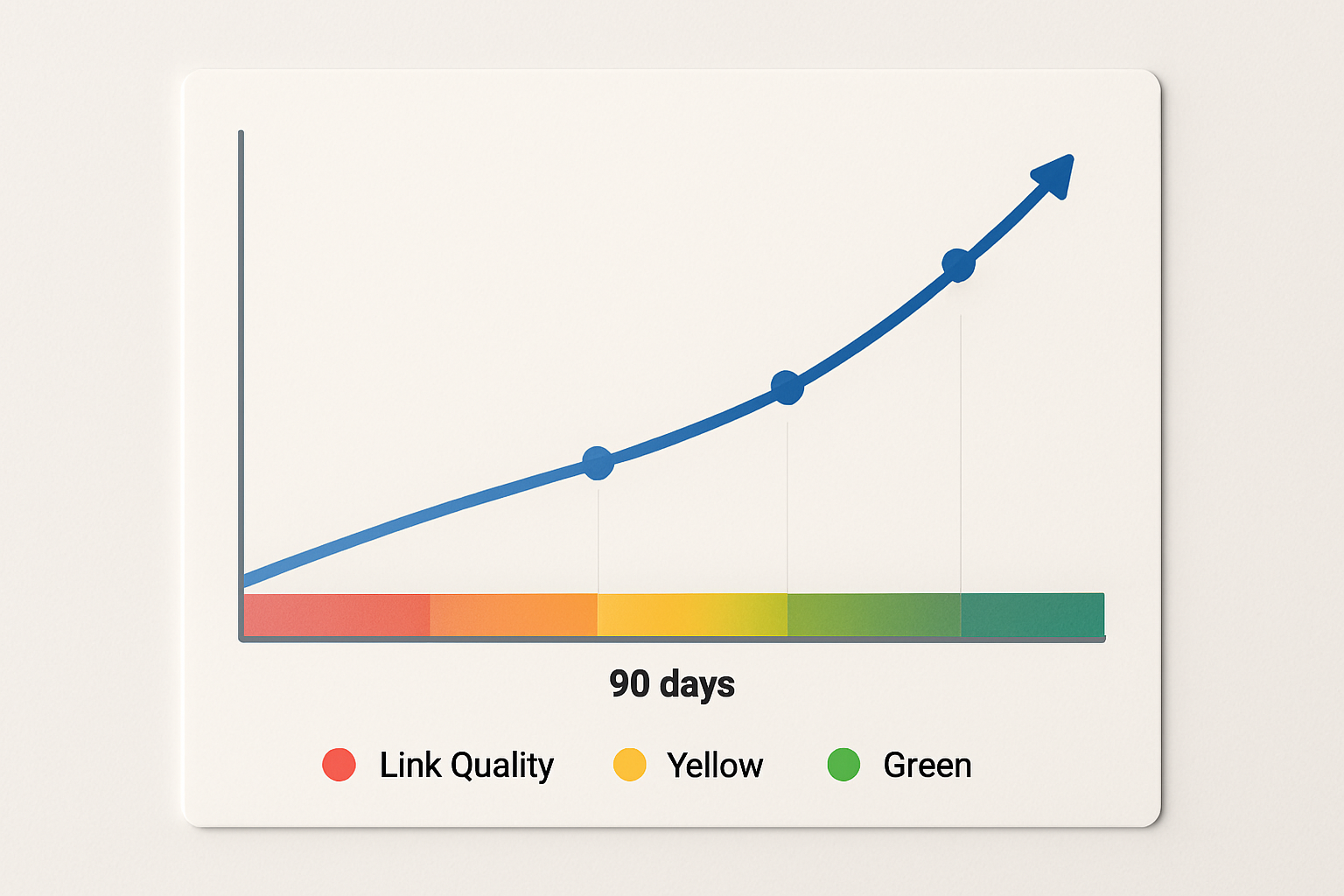
Link building remains one of Google’s most heavily weighted ranking factors in 2026, and AI tools have made the process significantly more strategic and scalable. AI-powered link analysis tools evaluate the quality, relevance, and authority of potential link sources far more accurately than manual review. This precision helps you focus outreach efforts on links that will genuinely improve your domain authority.
Studies indicate that relevance now outweighs raw domain authority in Google’s link evaluation, meaning a link from a highly relevant but mid-authority site often delivers more ranking benefit than a high-authority link from an unrelated industry. AI tools map topical relevance automatically, helping you identify the right outreach targets in your niche. This is a fundamental shift from how link building was approached even three years ago.
AI also supports link building by generating personalized outreach templates, identifying broken link opportunities on relevant sites, and monitoring your existing backlink profile for toxic links that could trigger Google penalties. These capabilities allow even small SEO teams to execute link-building campaigns that previously required significantly larger resources.
How Do You Scale AI-Powered SEO Across an Entire Organization?
Scaling SEO with AI tools is not just a challenge for enterprise companies — any growing business eventually needs to systematize its optimization workflows. The transition from ad hoc SEO tasks to a structured, AI-assisted operation requires both the right technology and a clear strategic framework. Without that framework, even the best AI tools produce inconsistent and fragmented results.
For organizations managing large websites or multiple properties, the stakes are especially high. A single misconfigured AI workflow can introduce duplicate content at scale or push hundreds of under-optimized pages into the index simultaneously. If your organization is at that scale, understanding how to use an enterprise SEO automation platform to scale organic growth across large organizations is essential reading before expanding your AI workflows.
Smaller teams can also benefit from a systematic approach. Start with one AI-powered workflow — such as content briefs or technical audits — and refine it before adding more. Building good habits with AI tools at a smaller scale makes expansion much smoother and more effective.
What Should You Look for When Choosing the Best AI SEO Tools?
Not all AI SEO tools deliver on their promises, and choosing the wrong platform can waste significant time and budget. The best AI SEO software combines keyword intelligence, content optimization, technical auditing, and performance analytics in a unified platform. Fragmented tools that don’t communicate with each other create data silos that slow down decision-making rather than accelerating it.
When evaluating platforms, prioritize tools that offer transparent AI recommendations you can understand and act on immediately. Black-box AI that cannot explain why it recommends a particular action is difficult to trust and impossible to learn from. Explainable AI insights are a hallmark of mature, well-designed platforms built for professional SEO use.
For a detailed breakdown of what to look for, the guide on the best AI SEO software for digital marketers, including top features, benefits, and selection criteria covers the evaluation framework in depth. Choosing the right tool from the start saves you the costly mistake of migrating platforms six months into a campaign.
Key Features to Prioritize in an AI SEO Platform
- Unified dashboard: All core SEO data — rankings, traffic, technical health, and content performance — accessible in one place without switching between tools.
- Automated reporting: Scheduled reports with AI-generated insights that surface what matters most without requiring manual data analysis.
- Content brief generation: AI-powered briefs that outline optimal structure, target keywords, semantic topics, and competitor gaps before a single word is written.
- Real-time rank tracking: Daily or near-daily keyword position monitoring with automated alerts for significant changes.
- Scalable workflows: Ability to manage hundreds or thousands of pages, keywords, and content assets without degrading performance or usability.
- Integrations: Native connections to Google Search Console, Google Analytics, and CMS platforms for seamless data flow.
Frequently Asked Questions
Start Ranking Higher on Google with Smarter AI Tools Today
The gap between websites that use AI strategically and those that rely on outdated manual workflows is growing every month. Ranking higher on Google with AI tools is not about replacing human creativity or expertise — it is about giving your knowledge a faster, smarter, and more scalable engine to run on. The strategies covered in this article — from AI keyword research and content creation to technical auditing and link analysis — work best when applied together as a cohesive system.
If you are ready to put these strategies into practice, RankBloom SEO is built to support exactly that kind of integrated, intelligent approach to organic growth. RankBloom SEO combines AI-driven keyword intelligence, automated content workflows, technical health monitoring, and real-time rank tracking in a single platform designed for marketers and SEO professionals who want results without the complexity of juggling a dozen separate tools.
The best time to start optimizing smarter was six months ago. The second best time is right now. Explore what RankBloom SEO can do for your rankings and take the first step toward sustainable, AI-powered organic growth today.