
An automated SEO content creation tool is software that uses artificial intelligence and natural language processing to generate search-engine-optimized content with minimal human effort. These tools analyze top-ranking pages, identify keyword gaps, and produce structured drafts that are ready for publishing or light editing. In 2026, businesses that rely on manual content workflows are falling behind competitors who publish faster, smarter, and more consistently.

Studies show that companies publishing 16 or more blog posts per month generate 3.5 times more traffic than those publishing four or fewer. That volume is nearly impossible to maintain with a purely human writing team. Automated SEO content creation tools bridge that gap by handling research, structure, and optimization in minutes rather than days.
The best way to understand these tools is to see them not as replacements for human creativity, but as powerful assistants that handle the repetitive, data-heavy parts of content production. Writers can then focus on brand voice, storytelling, and strategic decisions. This article explains how these tools work, what features to look for, and how to integrate them into a winning content strategy.
What Is an Automated SEO Content Creation Tool and How Does It Work?
An automated SEO content creation tool is defined as a platform that combines AI-generated writing, keyword analysis, and on-page optimization into a single workflow. It eliminates the need to switch between separate keyword research tools, outline builders, and word processors. The result is a faster, more consistent content production pipeline.
These tools typically follow a structured process when generating content:
- Crawl and analyze top-ranking pages for the target keyword
- Identify common topics, subtopics, and semantic keywords used by competitors
- Generate a content outline with suggested headings and word counts
- Produce a draft article with naturally integrated keywords
- Score the draft against on-page SEO benchmarks like readability, keyword density, and internal linking opportunities
Natural language processing (NLP) is defined as a branch of artificial intelligence that enables computers to understand, interpret, and generate human language. NLP is the engine behind most automated content tools, allowing them to write sentences that sound natural rather than robotic. This is what separates modern AI writing platforms from older template-based generators.
The AI draws on large datasets of high-performing content to understand what search engines reward. It identifies patterns in structure, vocabulary, and topic depth that correlate with strong rankings. This data-driven approach helps ensure the content meets both user intent and search engine requirements from the very first draft.
Why Are Businesses Switching to Automated SEO Content Creation?
Content marketing is defined as a strategic approach focused on creating and distributing valuable, relevant content to attract and retain a clearly defined audience. Doing this consistently at scale has historically required large teams and significant budgets. Automated tools have changed that equation dramatically.
According to recent industry research, 67% of marketers report that content creation is their biggest time sink, often consuming more hours than strategy, distribution, and analytics combined. Automation directly addresses this bottleneck by compressing the research and writing phases into a fraction of the time. Teams that previously published two articles per week can realistically scale to ten or more.
There are several compelling reasons businesses are making the switch:
- Speed: Generate a fully optimized 2,000-word draft in under 10 minutes
- Consistency: Every piece follows the same SEO checklist, reducing human error
- Scalability: Produce content for dozens of keywords simultaneously
- Cost efficiency: Reduce reliance on large freelance networks or in-house writing teams
- Data-driven quality: Drafts are benchmarked against real ranking pages, not guesswork
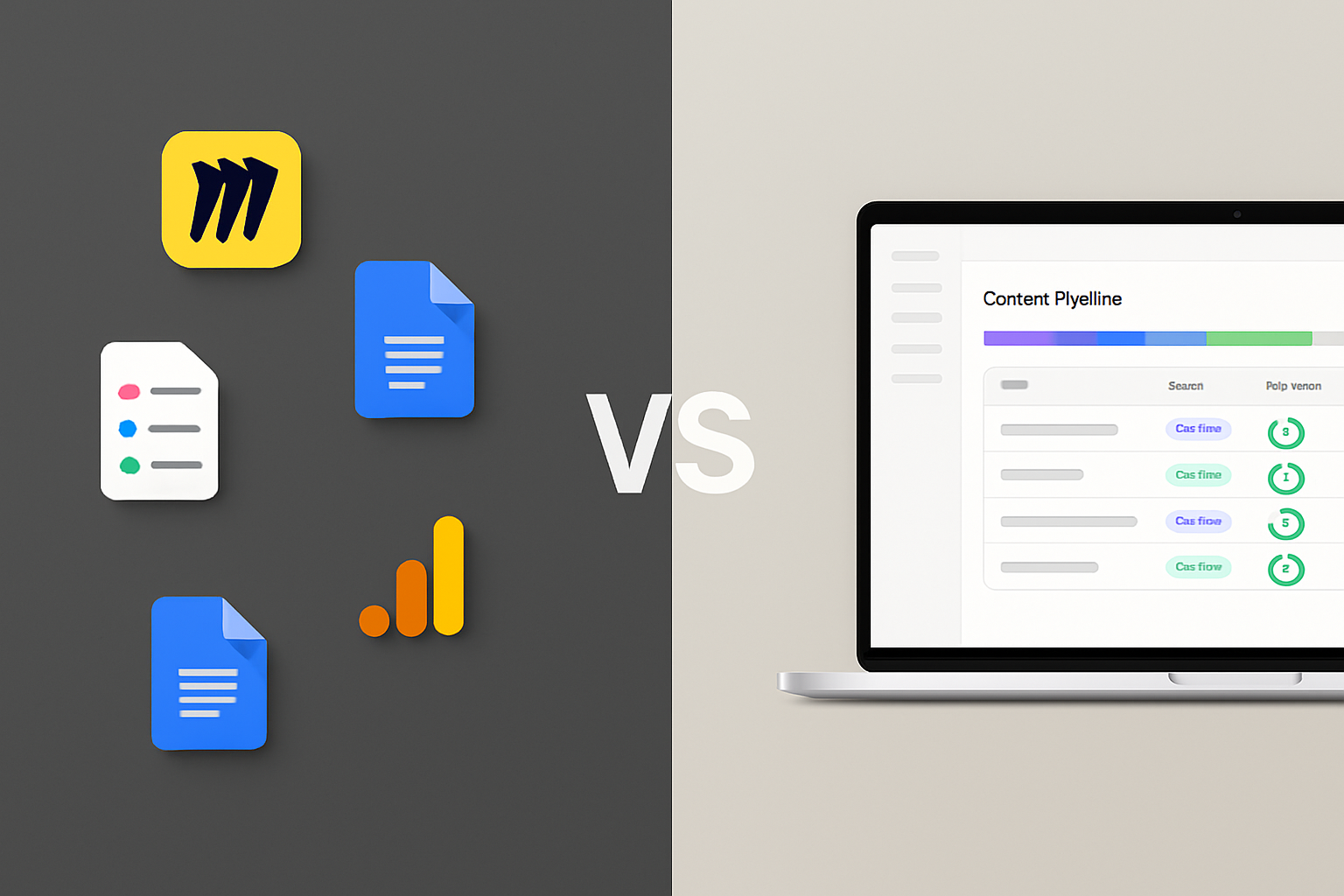
Legacy platforms and traditional SEO tools often require users to toggle between five or six different apps just to complete one content brief. Modern automated solutions consolidate keyword research, competitor analysis, and content generation into one seamless experience. This unified approach saves hours per article and reduces costly context-switching.
What Features Should You Look for in an Automated SEO Content Creation Tool?
Not all automated content tools are built the same, and choosing the wrong one can waste significant time and budget. The most effective platforms combine several core capabilities that work together rather than in isolation. Here is what to prioritize when evaluating your options.
Keyword Research and Semantic Coverage
The tool should identify not just your primary keyword but also related terms, questions, and entities that signal topical authority to search engines. Semantic coverage is the practice of addressing a topic comprehensively enough that search engines recognize your page as authoritative. Without it, even well-written content can underperform in search rankings.
Look for tools that surface long-tail keyword variations and related questions automatically. These are often easier to rank for and attract highly targeted traffic with strong conversion intent. A good tool surfaces these opportunities without requiring manual research on your part.
Content Scoring and On-Page Optimization
Real-time content scoring gives writers immediate feedback as they edit, rather than requiring a separate audit after publishing. Scores should factor in keyword usage, heading structure, readability, internal linking, and semantic depth. This feedback loop accelerates the editing process and improves consistency across your entire content library.
SERP Analysis and Competitor Insights
The best automated SEO content creation tools analyze the top 10 or 20 results for your target keyword and extract structural patterns. This means knowing how long the top-ranking articles are, which subtopics they cover, and what questions they answer. Your generated content can then be positioned to outperform these benchmarks from the start.
Integration with Your Existing Workflow
A great tool should connect with your CMS, analytics platform, and publishing workflow through APIs or native integrations. Friction in the publishing process leads to delays and inconsistencies that undermine your content calendar. Seamless integration ensures that generating content and publishing it happen without manual file transfers or reformatting.
How Does Automated Content Creation Impact SEO Performance?
X is only as effective as the strategy behind it — and this is especially true for automated content. When used correctly, an automated SEO content creation tool can dramatically accelerate organic traffic growth by enabling topical cluster strategies that would be too time-consuming to execute manually. Topical authority is one of the strongest ranking signals in modern search algorithms.
Research from leading content marketing analysts found that websites implementing topical cluster models experienced an average of 40% increase in organic traffic within six months. These clusters require dozens of interlinked articles covering a topic from multiple angles. Automated tools make building these clusters feasible even for small teams with limited resources.
To understand how automated content connects to broader SEO strategy, it helps to explore how these tools integrate with other key systems. For example, pairing your content tool with a robust SEO analytics dashboard that tracks organic performance and ranking changes allows you to measure which content clusters are driving the most growth. Data from analytics feeds back into your content strategy, creating a continuous improvement loop.
Similarly, integrating your automated content workflow with a keyword tracking tool that monitors your live rankings helps you identify which published articles need updating versus which are already climbing the SERPs. This prevents wasted effort on content that is already performing well. It also ensures that underperforming content receives timely optimization before it loses relevance.
What Are the Common Mistakes to Avoid When Using Automated SEO Content Tools?
Automation is powerful, but it comes with pitfalls that can actually hurt your SEO if left unaddressed. Understanding these mistakes upfront helps you build a workflow that captures the benefits of automation without sacrificing quality. Here are the most critical errors to avoid.
Publishing Without Human Review
AI-generated drafts are starting points, not finished products. They can contain factual inaccuracies, generic statements, or tone mismatches that human editors need to catch and correct. Always build a review step into your workflow, even if it only takes 15 to 20 minutes per article.
Ignoring Search Intent
Search intent is defined as the underlying reason a user performs a specific search query. An automated tool may generate technically optimized content that fails to match what the searcher actually wants to find. Always verify that the generated content format — whether informational, transactional, or navigational — aligns with the dominant intent behind your target keyword.
Over-Optimizing for Keywords
Some automated tools default to aggressive keyword insertion that reads unnaturally and triggers spam signals in search algorithms. Keyword density should typically remain between 1% and 2%, with the keyword appearing in key positions like the title, first paragraph, and a few subheadings. Over-stuffing keywords is a penalty risk, not a ranking advantage.
Neglecting Internal Linking
Automated drafts rarely include internal links because the tool does not have context about your existing content library. Adding strategic internal links manually is one of the highest-impact edits you can make to AI-generated content. This strengthens topical clusters and distributes link equity across your site.
Skipping Content Refresh Cycles
Automated tools make it easy to produce new content, but older articles also need periodic updates to maintain rankings. A strong content strategy balances new publication with regular refreshes of existing high-performing pages. Set a quarterly audit schedule to identify articles that need updated statistics, new sections, or improved optimization.
How Can Small Businesses Benefit from an Automated SEO Content Creation Tool?
Small businesses often face the steepest content marketing challenges because they have the fewest resources. An automated SEO content creation tool levels the playing field by giving small teams the output capacity of a much larger organization. This is not a minor advantage — it is a structural shift in what’s possible with a lean team.
For small businesses especially, the ROI on automated content compounds over time. Each piece of content is a long-term asset that generates traffic, leads, and conversions for months or even years after publication. Producing more assets faster means building a larger, more powerful content library without proportional increases in cost.
If you are a small business owner exploring your options, reading about the best SEO software tools designed specifically for small business growth can help you identify platforms that fit your budget and workflow. Many modern tools offer tiered pricing that scales with your team size and output volume. Starting small and scaling up as results come in is a perfectly valid approach.

What Does the Future of Automated SEO Content Creation Look Like?
The trajectory of AI-powered content tools points toward even deeper integration between content generation, search data, and user behavior analytics. Future tools will not just create content — they will predict which topics are about to trend before they appear in keyword research data. This predictive capability will allow early movers to publish authoritative content before competition intensifies.
Multimodal AI is another emerging development, enabling tools to generate not just text but also structured data, image alt text, video scripts, and schema markup simultaneously. This means a single workflow could produce an entire page — including all its SEO elements — from one prompt. The lines between content creation, technical SEO, and user experience optimization are blurring rapidly.
To stay ahead of these developments, it helps to understand the broader landscape of how AI-powered SEO platforms are transforming how businesses compete for organic visibility. The businesses investing in these systems today are building compounding advantages that will be increasingly difficult for late adopters to overcome. Now is the right time to integrate automation into your content strategy.
Frequently Asked Questions
What is an automated SEO content creation tool?
An automated SEO content creation tool is software that uses artificial intelligence to research keywords, generate optimized article drafts, and score content against on-page SEO benchmarks — all within a single platform. It significantly reduces the time needed to produce publish-ready content.
Can automated content creation tools replace human writers?
Automated tools are best used as writing assistants rather than full replacements. They handle research, structure, and keyword optimization, while human writers add brand voice, accuracy checks, and creative depth that AI alone cannot fully replicate.
How accurate is AI-generated SEO content?
AI-generated content can be highly accurate in structure and optimization, but it occasionally produces factual errors or generic statements. A human review step of 15 to 30 minutes per article is recommended to catch and correct any inaccuracies before publishing.
Will search engines penalize AI-generated content?
Search engines evaluate content based on quality, relevance, and user value — not solely on whether it was AI-generated. Content that is well-researched, accurate, and genuinely helpful to readers can rank well regardless of how it was produced.
How many articles can an automated SEO content tool produce per day?
Most modern automated SEO content creation tools can generate dozens of optimized drafts per day, depending on your subscription tier and workflow setup. In practice, the bottleneck shifts from writing to human review and publishing capacity.
Start Publishing Smarter with RankBloom SEO
Automated SEO content creation is no longer a luxury reserved for enterprise marketing teams — it is an accessible, proven strategy for any business that wants to grow organic traffic without burning out its team. The tools available today are sophisticated enough to handle keyword research, content generation, and on-page optimization in a fraction of the time traditional methods require. The competitive advantage belongs to those who act now.
RankBloom SEO is built precisely for this challenge, offering an integrated platform that combines automated content generation, keyword tracking, and performance analytics into one clean workflow. Whether you are a solo entrepreneur or managing a multi-site content operation, RankBloom SEO gives you the tools to publish more, rank faster, and grow smarter. It is the modern alternative to juggling multiple legacy platforms that were never designed to work together.
Ready to transform your content strategy? Explore how RankBloom SEO can help you build a high-performing content engine that works while you focus on what matters most — growing your business. The future of SEO content creation is automated, intelligent, and available to you right now.