
AI SEO software is defined as a category of digital marketing tools that use artificial intelligence and machine learning to automate, analyze, and optimize search engine optimization tasks at scale. Digital marketers today face increasing pressure to produce more content, track more keywords, and outperform smarter competitors — all with limited time and budgets. The best AI SEO software for digital marketers solves this challenge by handling complex, data-heavy tasks that would otherwise require entire teams of specialists.

Studies show that over 68% of online experiences begin with a search engine, making SEO one of the highest-ROI digital marketing channels available. AI-powered platforms are transforming how marketers approach that channel, moving from manual guesswork to data-driven, automated precision. Understanding which tools offer the right combination of features is now a core competency for any serious digital marketer.
The best way to evaluate AI SEO software is to focus on the specific outcomes it delivers — higher rankings, faster content production, smarter keyword targeting, and clearer performance reporting. This guide breaks down everything you need to know to make that evaluation confidently. Whether you are a solo marketer or part of an enterprise team, the right platform can fundamentally change how efficiently you grow organic traffic.
What Is AI SEO Software and How Does It Differ From Traditional Tools?
AI SEO software is a platform that applies artificial intelligence, natural language processing (NLP), and predictive analytics to automate and enhance search engine optimization workflows. Traditional SEO tools typically required users to manually input data, interpret spreadsheets, and make decisions based on static metrics. AI-powered platforms, by contrast, learn from data patterns, make recommendations automatically, and continuously adapt to algorithm changes.
Legacy platforms were built for a slower, less competitive digital landscape. They often provide raw data without telling marketers what to do with it, leaving interpretation entirely to the user. Modern AI SEO software closes that gap by translating data into clear, prioritized action plans.
Natural language processing (NLP) is defined as a branch of artificial intelligence that enables software to understand, interpret, and generate human language in a way that is meaningful and contextually accurate. In SEO, NLP allows tools to analyze content relevance, identify semantic gaps, and predict how search engines will evaluate a page. This capability alone makes AI platforms significantly more powerful than their rule-based predecessors.
Why Should Digital Marketers Choose AI-Powered SEO Platforms Over Manual Methods?
Digital marketers who use AI SEO software consistently report faster results and better resource efficiency than those relying on manual processes. According to a 2026 industry report, marketers using AI-assisted SEO tools save an average of 12 hours per week on research and reporting tasks alone. That recovered time can be redirected toward strategy, client communication, and creative work.
Manual SEO methods are simply not scalable in today’s content-driven environment. A single website may need hundreds of optimized pages, thousands of tracked keywords, and daily monitoring of competitor movements. No human team can match the speed and consistency of an AI-driven workflow.
AI platforms also reduce the risk of costly mistakes. They catch technical SEO errors, flag content that may trigger algorithmic penalties, and identify missed ranking opportunities before they cost you traffic. For digital marketers responsible for measurable results, that level of proactive intelligence is invaluable.
What Core Features Should the Best AI SEO Software for Digital Marketers Include?
The best AI SEO software for digital marketers should include a well-rounded set of features that cover every stage of the SEO process, from research and planning to execution and reporting. Not all platforms are created equal, and knowing which features are non-negotiable will help you avoid paying for tools that only solve part of your problem.
Intelligent Keyword Research and Clustering
Keyword clustering is defined as the process of grouping related keywords into thematic clusters so that a single page or content hub can rank for multiple related queries simultaneously. AI-powered keyword clustering goes far beyond simple grouping — it analyzes search intent, semantic relationships, and ranking difficulty to create content strategies that are both comprehensive and achievable. This feature alone can dramatically improve your content planning efficiency.
Look for platforms that not only surface keyword ideas but also predict ranking potential based on your domain’s current authority. The combination of keyword discovery and competitive gap analysis helps digital marketers prioritize effort where it will have the greatest impact. Without this intelligence, many marketers waste months targeting keywords that are either too competitive or too low-volume to matter.
AI-Driven Content Optimization
Content optimization features should analyze your existing pages against top-ranking competitors and provide specific, actionable recommendations for improvement. The best tools go beyond simple keyword density checks and evaluate topical depth, readability, internal linking opportunities, and semantic coverage. If you want to explore this capability in depth, this guide to automated SEO content creation for producing optimized content at scale explains exactly how AI tools can transform your publishing workflow.
Real-time content scoring as you write is a particularly valuable feature for content teams. It eliminates the need for separate editing passes and allows writers to optimize in the moment rather than after the fact. This speeds up production significantly without sacrificing quality.
Technical SEO Auditing and Monitoring
A comprehensive technical SEO audit scans your entire website for issues that prevent search engines from crawling, indexing, or ranking your pages effectively. AI-powered auditing tools go a step further by prioritizing issues based on their likely impact on rankings, so your team always knows where to focus first. Common issues flagged include broken links, duplicate content, slow page load times, and missing structured data.
Continuous monitoring is equally important — SEO issues can appear at any time as a result of site updates, server changes, or new content being published. The best platforms alert you to new technical problems in real time rather than waiting for your next scheduled audit. This proactive approach prevents small issues from compounding into serious ranking losses.
Rank Tracking and Competitive Intelligence
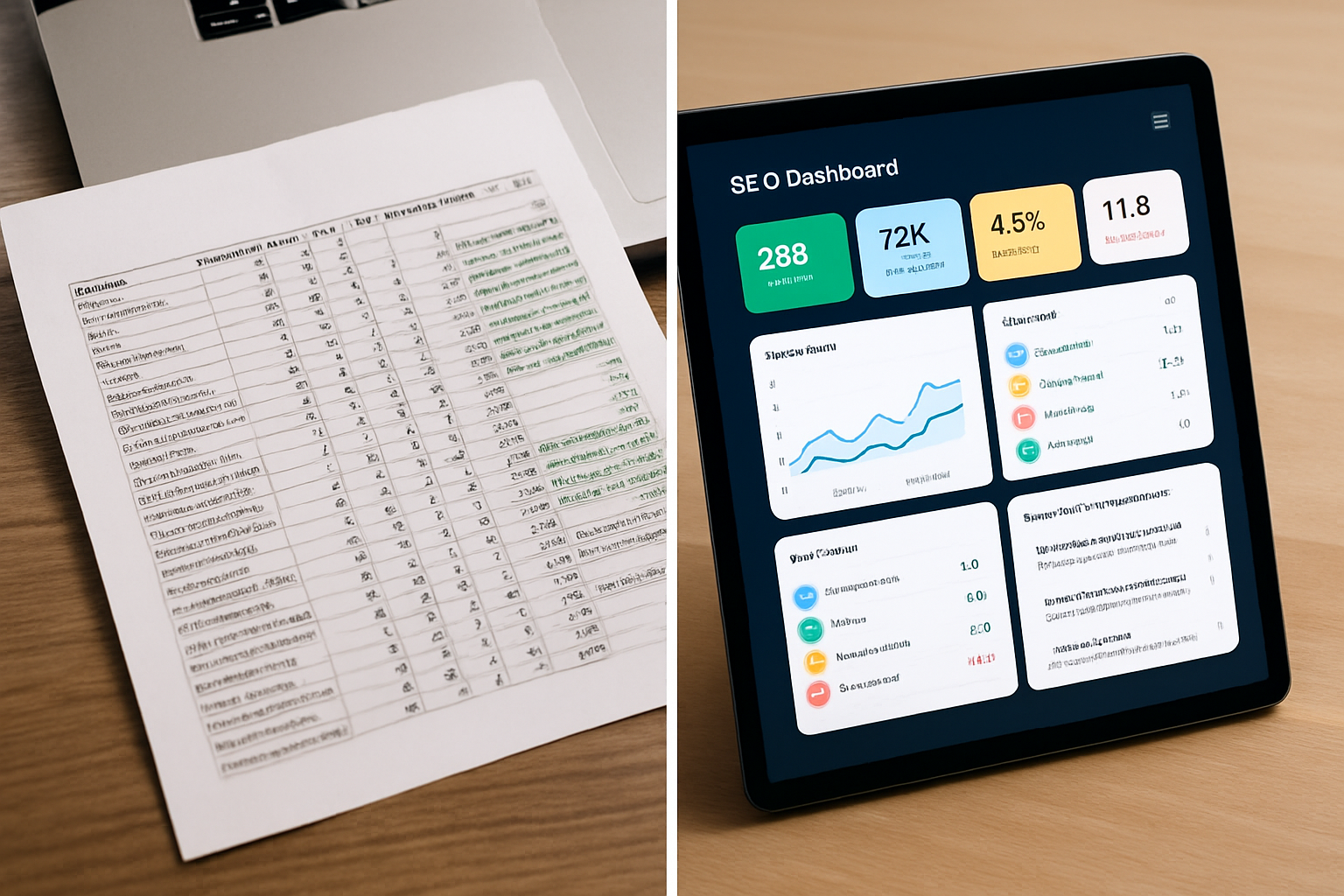
Rank tracking means monitoring the positions your web pages hold in search engine results pages (SERPs) for specific target keywords over time. Accurate, up-to-date rank tracking is essential for understanding whether your SEO efforts are generating real results or simply keeping pace with competitors. AI-enhanced tracking tools contextualize rank changes by connecting them to specific actions you took, algorithm updates, or competitor movements.
Competitive intelligence features allow you to monitor how rival websites are gaining or losing ground on shared keywords. For a deeper look at how to leverage this data effectively, this resource on keyword tracking tools for monitoring rankings and growing organic traffic provides a practical framework you can apply immediately. Understanding your competitive landscape is just as important as understanding your own performance.
Reporting and Analytics Integration
The best AI SEO software for digital marketers connects seamlessly with your existing analytics stack and presents performance data in clear, visually intuitive formats. Reports should be customizable, automated, and shareable with clients or stakeholders who may not have deep SEO expertise. If your current reporting process feels like a second job, your platform is not doing enough of the heavy lifting.
For marketers who want to build more sophisticated reporting workflows, understanding the full capabilities of a dedicated SEO analytics dashboard for tracking and growing organic traffic can unlock new levels of strategic insight. AI-powered dashboards can surface trends and anomalies that would take hours to identify manually. This is where AI genuinely multiplies the value of every data point you collect.
How Does AI SEO Software Help Digital Marketers Scale Content Production?
AI SEO software accelerates content production by handling the research, briefing, drafting, and optimization steps that traditionally consume the most time. Marketers can use AI-generated content briefs to guide writers, ensuring every piece is strategically aligned before a single word is written. This upstream investment dramatically reduces revision cycles and speeds time-to-publish.
Scaling content is not just about writing faster — it is about writing smarter. AI tools identify content gaps on your website, suggest pillar page structures, and recommend internal linking strategies that strengthen your topical authority over time. To understand how this works in practice, this detailed guide on AI-powered SEO content generators for ranking faster and publishing more walks through the entire workflow from brief to published page.
Research consistently shows that websites publishing consistent, high-quality content on a structured cadence see 3.5 times more organic traffic growth than those publishing sporadically. AI SEO platforms make that consistency achievable even for lean marketing teams. They essentially function as a force multiplier, letting small teams produce results that once required large editorial departments.
What Should Digital Marketers Look for When Comparing AI SEO Platforms?
When comparing AI SEO platforms, digital marketers should evaluate ease of use, depth of AI capabilities, integration options, reporting flexibility, and overall value relative to their specific goals. A platform that works beautifully for an enterprise content team may be overwhelming or overpriced for a freelance consultant. Matching the tool to the use case is as important as the tool’s raw capabilities.
- Ease of onboarding: How quickly can your team get productive results without extensive training?
- AI recommendation quality: Are the automated suggestions specific, actionable, and consistently accurate?
- Scalability: Can the platform handle your growth in keywords, content, and clients without performance degradation?
- Integration compatibility: Does it connect with your CMS, Google Search Console, Google Analytics, and other core tools?
- Support and updates: How frequently does the platform update its AI models to reflect evolving search engine behavior?
- Pricing transparency: Are limits on keywords, pages, or users clearly communicated before you commit?
Many digital marketers make the mistake of choosing platforms based on feature lists alone without testing real-world usability. Always take advantage of free trials or demos to validate that the AI recommendations align with your actual niche and website. A tool that generates irrelevant suggestions is worse than no tool at all because it creates false confidence.
How Are AI SEO Tools Transforming the Role of the Digital Marketer?
AI SEO tools are shifting the role of digital marketers from data processors to strategic decision-makers. Tasks that once occupied the majority of a marketer’s working day — keyword research, rank checking, content auditing, and report generation — are now handled largely by automation. This evolution frees marketers to spend more time on creative strategy, audience understanding, and brand positioning.
The transition also raises the bar for marketing professionals who want to stay competitive. Understanding how to work with AI tools, interpret their outputs critically, and override them when human judgment is needed is now a core skill. Marketers who master this human-AI collaboration model will consistently outperform those who resist it or rely on it uncritically.
For digital marketers who want to understand the broader transformation underway, this exploration of how AI-powered SEO platforms are transforming business rankings online provides excellent strategic context. The shift is not just technological — it is fundamentally changing what expertise means in this field. Those who adapt earliest will build the most durable competitive advantages.
Why Is RankBloom SEO Among the Best AI SEO Software Choices for Digital Marketers?
RankBloom SEO is built specifically to serve digital marketers who need powerful AI capabilities without the complexity or cost bloat of enterprise-only platforms. It combines intelligent keyword research, AI-driven content optimization, automated rank tracking, and clear analytics reporting in a single, cohesive workflow. Every feature is designed with one goal in mind: helping marketers rank faster and grow organic traffic more efficiently.
Unlike legacy platforms that require significant technical knowledge to operate effectively, RankBloom SEO guides users through every stage of the SEO process with clear AI-generated recommendations and prioritized action plans. Small business marketers, agency professionals, and in-house teams alike can get meaningful results from day one. For marketers specifically working in small business environments, this comparison of the best SEO software for small businesses that drives real growth demonstrates how accessible and impactful the right platform can be.
RankBloom SEO continues to evolve its AI models in response to real-world search engine behavior, ensuring that the recommendations it makes today reflect the ranking factors that matter right now. This commitment to continuous improvement means marketers are never working with outdated intelligence. In a field where the rules change constantly, that adaptability is not a bonus feature — it is a fundamental requirement.
Frequently Asked Questions
Frequently Asked Questions
What makes AI SEO software different from traditional SEO tools?
AI SEO software uses machine learning, natural language processing, and predictive analytics to automate decisions and generate actionable recommendations, while traditional tools simply present raw data and leave interpretation to the user. The result is faster, smarter optimization with significantly less manual effort.
How much time can digital marketers save by using AI SEO software?
Industry data from 2026 shows that marketers using AI-powered SEO platforms save an average of 12 hours per week on research, auditing, and reporting tasks. This recovered time allows marketers to focus on higher-value strategic and creative work.
Is AI SEO software suitable for small marketing teams or solo digital marketers?
Yes, AI SEO software is particularly well-suited for small teams and solo marketers because it automates tasks that would otherwise require multiple specialists. Platforms like RankBloom SEO are specifically designed to deliver enterprise-grade results without requiring large teams or extensive technical expertise.
Can AI SEO software help with content creation as well as technical optimization?
The best AI SEO platforms handle both content and technical optimization, covering keyword research, content briefing, on-page scoring, technical auditing, rank tracking, and performance reporting in one integrated workflow. This eliminates the need to juggle multiple disconnected tools.
How do I know if an AI SEO platform is keeping up with Google algorithm changes?
Look for platforms that publish regular product updates, explain how their AI models are retrained, and demonstrate accuracy in their rank tracking and recommendations over time. A reputable provider like RankBloom SEO continuously updates its algorithms to reflect current ranking factors, ensuring you always work with up-to-date intelligence.
What is the most important feature to prioritize when choosing AI SEO software?
The most important feature depends on your biggest bottleneck — if content production is your constraint, prioritize AI content optimization and briefing tools; if technical issues are holding you back, prioritize auditing and monitoring capabilities. In most cases, choosing a platform with strong capabilities across all core SEO functions gives you the most flexibility as your needs evolve.
Does AI SEO software work for all industries and niches?
Yes, AI SEO software is effective across virtually all industries because it analyzes real search data and competitor behavior specific to your niche rather than applying generic rules. The key is to ensure the platform allows sufficient customization to reflect your specific audience, geography, and competitive landscape.
Conclusion: Choosing the Best AI SEO Software Starts With Knowing What You Need
The best AI SEO software for digital marketers is not the one with the longest feature list — it is the one that solves your specific challenges, fits your workflow, and delivers measurable results consistently. From intelligent keyword clustering to automated technical audits and AI-powered content optimization, the right platform transforms SEO from a labor-intensive guessing game into a strategic, scalable system. Digital marketers who invest in the right AI tools today are building competitive advantages that will compound over months and years.
If you are ready to experience what modern, AI-driven SEO looks like in practice, RankBloom SEO is built to be your smartest next step. It brings together every capability covered in this guide — keyword intelligence, content optimization, rank tracking, technical auditing, and clear analytics — into a single platform designed specifically for digital marketers who need real results without unnecessary complexity.
Start your journey with RankBloom SEO today and discover how much faster you can grow organic traffic when your SEO workflow is powered by genuine artificial intelligence. Your competitors are already evolving — make sure you are ahead of them, not catching up.