
An AI powered SEO platform is a software solution that uses machine learning, natural language processing, and predictive analytics to automate and enhance every stage of the search engine optimization process. Unlike traditional SEO tools that require manual data interpretation and guesswork, these platforms analyze massive datasets in real time to surface actionable insights. The result is faster decision-making, smarter content strategies, and measurable improvements in organic search rankings.
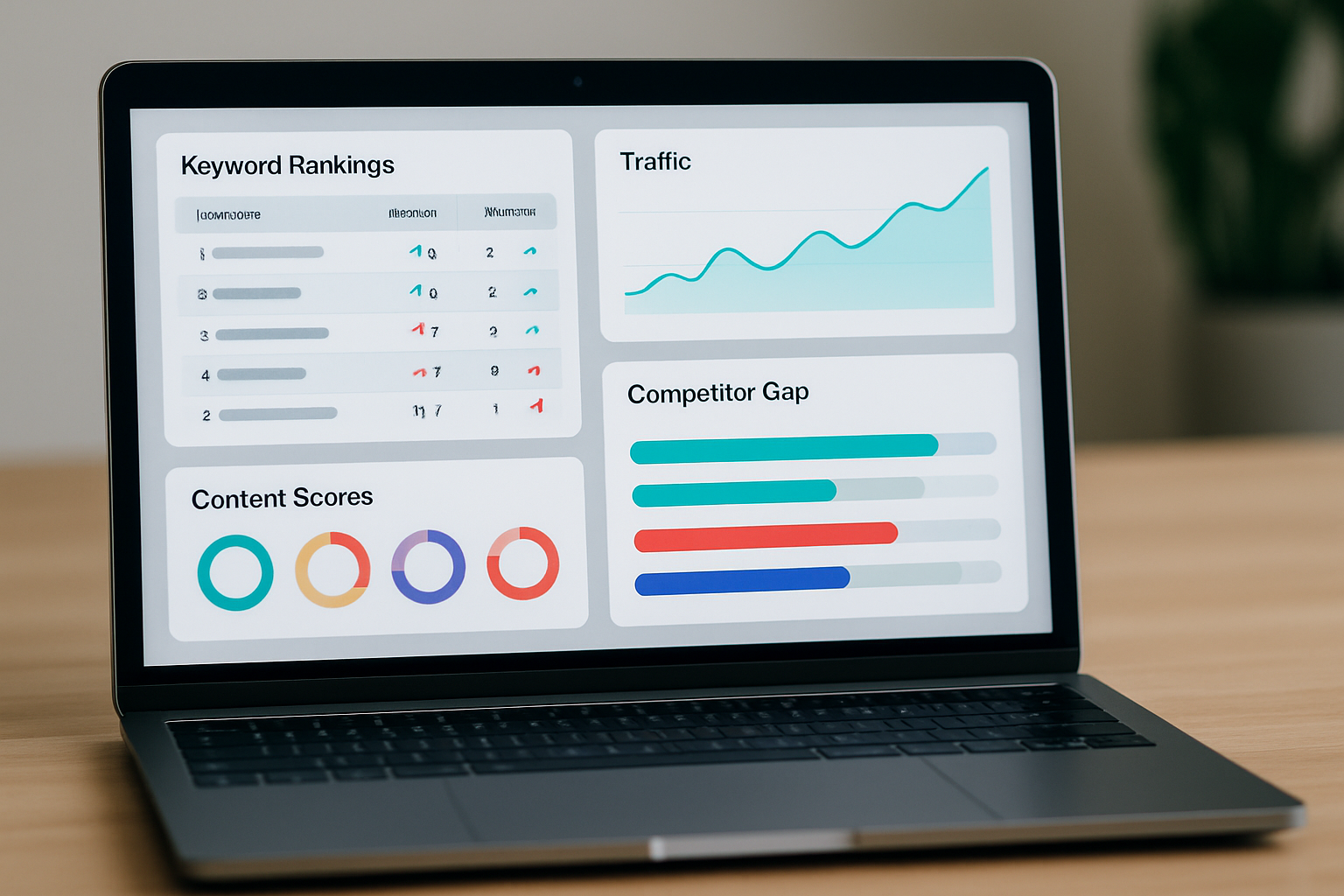
Studies show that businesses using AI-driven SEO tools are 3.5 times more likely to report significant increases in organic traffic compared to those relying solely on manual methods. The shift toward intelligent automation in SEO is not a passing trend — it is the new standard for competitive digital marketing. Whether you run a small local business or a large enterprise, understanding what these platforms offer is essential to staying visible in search results.
This article walks you through how AI powered SEO platforms work, what features matter most, and how to choose the right solution for your specific goals.
What Is an AI Powered SEO Platform and How Does It Differ from Traditional Tools?
An AI powered SEO platform is defined as a comprehensive digital tool that uses artificial intelligence to perform, automate, and optimize search engine optimization tasks — from keyword discovery to technical audits and content recommendations. This distinguishes it fundamentally from legacy platforms that primarily collect and display raw data without intelligent interpretation. The core difference lies in what the software does with that data once it has it.
Traditional SEO tools present metrics like backlink counts, keyword volume, and crawl errors in dashboards that require human analysts to interpret and act upon. AI platforms, by contrast, process these signals together to generate prioritized recommendations, predict ranking outcomes, and even draft optimized content briefs automatically. This closes the gap between insight and action — dramatically reducing the time it takes to move from data to results.
Machine learning is defined as a branch of artificial intelligence in which software systems improve their performance over time by learning from historical data patterns without being explicitly reprogrammed. In SEO, this means a platform becomes smarter the longer you use it, adapting to your industry, your audience behavior, and the ever-changing signals used by search engines like Google. That adaptive intelligence is what makes modern AI platforms so powerful compared to static legacy tools.
How Does an AI Powered SEO Platform Actually Work?
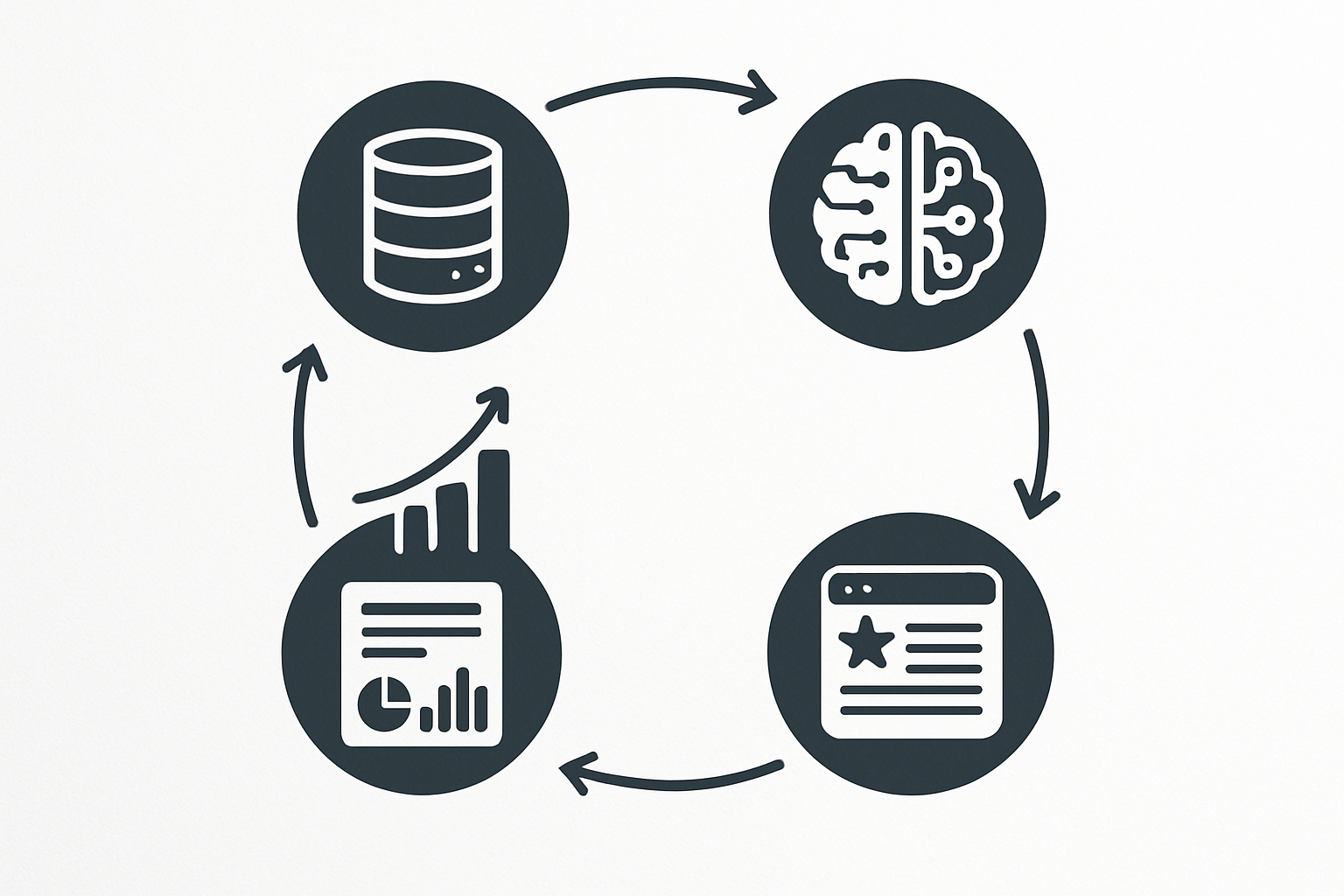
The best way to understand how these platforms work is to follow a typical user journey from start to finish. A user begins by connecting their website, after which the platform crawls the site’s pages, pulls data from search engine APIs, and runs initial analyses across technical health, keyword positioning, and content quality. Within minutes, it produces a prioritized roadmap of opportunities and issues ranked by potential impact.
Keyword research in an AI platform goes beyond simple volume and difficulty scores. The system maps keywords to search intent — informational, navigational, transactional, or commercial — so you know not just what people are searching for but why. It then clusters related terms into topic groups, helping you build content structures that establish topical authority rather than targeting isolated keywords.
Content optimization is another area where AI delivers a clear advantage. The platform evaluates your existing pages against the top-ranking results for any given query, identifying gaps in depth, structure, readability, and semantic coverage. It produces specific, actionable recommendations — add a section on X, include term Y, shorten paragraph Z — removing the guesswork from on-page SEO entirely.
What Role Does Natural Language Processing Play?
Natural language processing (NLP) is defined as the branch of AI that enables computers to understand, interpret, and generate human language in a way that is meaningful and contextually accurate. In an AI powered SEO platform, NLP is used to analyze both your content and the search queries that lead people to your site. This allows the platform to assess whether your writing genuinely answers user intent or merely contains the right words without real substance.
Google’s own algorithms use NLP through systems like BERT and MUM to evaluate content quality at a semantic level. An AI SEO platform with strong NLP capabilities helps you align your content with these standards proactively. The result is content that ranks not just because it is keyword-rich, but because it genuinely satisfies what searchers need.
How Does Automated Rank Tracking Work Inside These Platforms?
Rank tracking in an AI platform goes far beyond checking where a single keyword lands on a given day. The system monitors ranking positions continuously across thousands of keywords, devices, and geographic locations, flagging unusual movements and correlating them with algorithm updates or competitor activity. This gives you a real-time pulse on your organic visibility without requiring manual spot-checks.
For a deeper look at how to make the most of rank monitoring, the guide on using a keyword tracking tool online to monitor rankings and grow organic traffic covers the full process in practical detail. Understanding the tracking layer of your platform is key to identifying which efforts are producing results and which strategies need adjustment. Without reliable rank data, even the best content strategy operates in the dark.
What Are the Core Features to Look for in an AI Powered SEO Platform?
Not all AI SEO platforms are built equally, and choosing the wrong one can waste both time and budget. The features that separate genuinely intelligent platforms from AI-labeled marketing gimmicks include depth of data, quality of recommendations, and the platform’s ability to learn from your specific site’s history. Here is what to evaluate when comparing options:
- AI-Driven Keyword Research: Clusters keywords by topic and intent, not just search volume
- Automated Technical Audits: Identifies crawl errors, page speed issues, schema gaps, and core web vital failures
- Content Gap Analysis: Reveals topics your competitors cover that you do not
- On-Page Optimization Scoring: Grades individual pages and provides line-level recommendations
- Backlink Intelligence: Monitors your link profile and identifies high-value acquisition opportunities
- Real-Time Rank Tracking: Tracks positions across devices, locations, and SERP features
- Predictive Analytics: Forecasts traffic potential before you publish or update content
- Automated Reporting: Generates digestible reports for clients or internal stakeholders without manual formatting
According to a 2025 industry report by Search Engine Journal, 68% of SEO professionals say that AI-driven content recommendations have directly contributed to measurable ranking improvements within 90 days of implementation. That statistic underscores why the quality of a platform’s recommendation engine matters more than the length of its feature list. A tool with ten mediocre features is worth far less than one with five exceptional ones.
Why Choose an AI Powered SEO Platform Over Doing SEO Manually?
Manual SEO is time-intensive, error-prone, and increasingly inadequate in a search landscape that changes faster than human teams can track. Google rolls out hundreds of algorithm updates every year, and search behavior shifts constantly as voice search, AI-generated answer boxes, and zero-click results reshape how users interact with results pages. An AI platform keeps pace with these changes automatically, adjusting recommendations based on current SERP signals rather than outdated best practices.
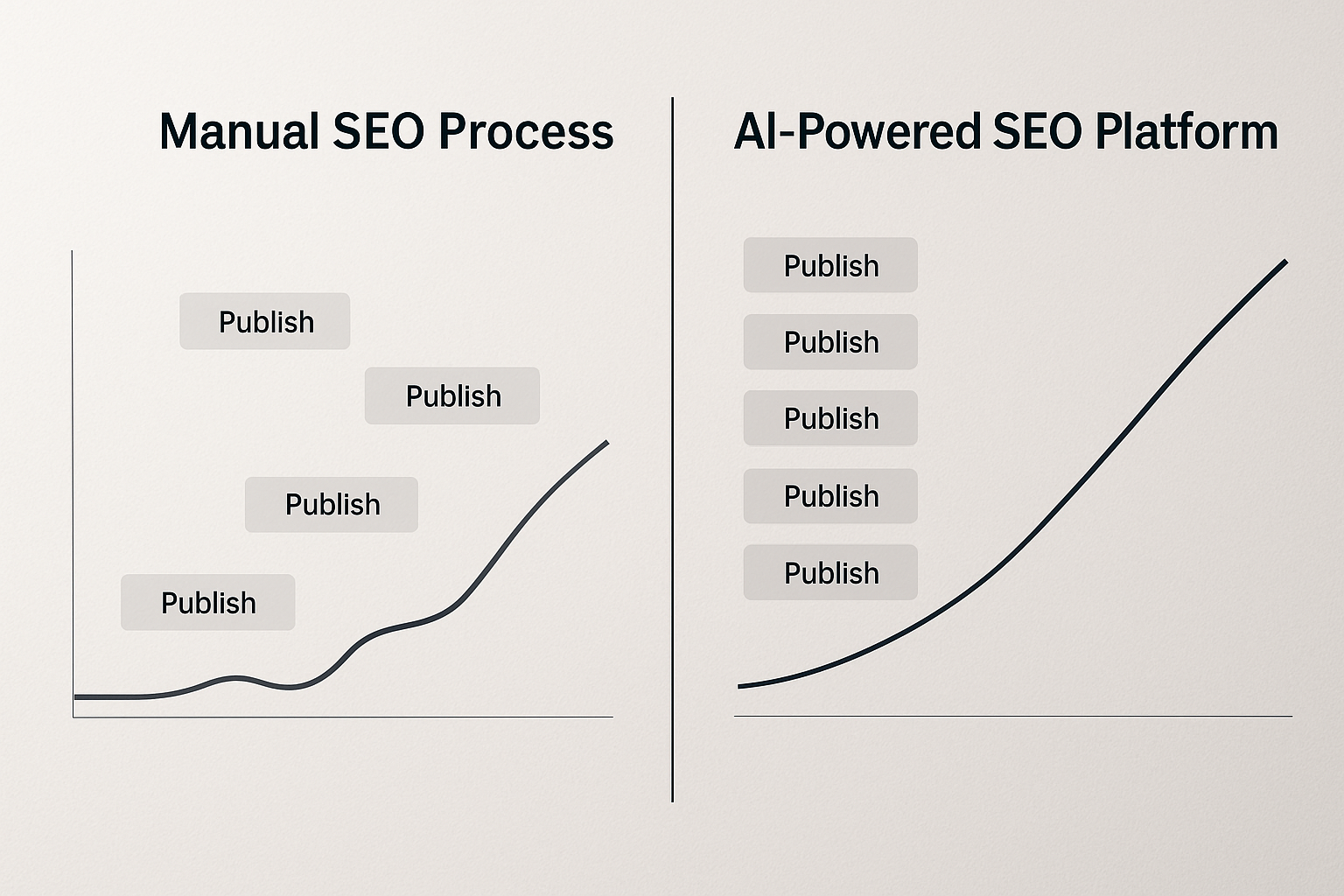
Speed is one of the most compelling advantages. Tasks that would take a human analyst two or three days — a full site audit, a comprehensive content gap analysis, a keyword opportunity matrix — can be completed by an AI platform in under an hour. This frees your team to focus on strategy, creative work, and execution rather than spending the majority of their time gathering and organizing data.
Scalability is the other critical factor. If you manage content across dozens or hundreds of pages, manually tracking the optimization status of each one is effectively impossible. An AI powered SEO platform monitors your entire site continuously, alerting you to newly discovered issues and tracking the impact of every improvement you make. For teams looking to understand why certain AI tools outperform others at scale, the resource on how to use AI SEO tools to rank higher and grow organic traffic provides a useful strategic framework.
How Can Small Businesses Benefit from an AI Powered SEO Platform?
Small businesses often assume that AI-driven SEO is exclusively for large enterprises with substantial marketing budgets, but that assumption is increasingly outdated. A well-designed AI powered SEO platform can level the playing field by giving small teams access to intelligence that previously required entire departments of specialists. In fact, smaller sites often see faster ranking improvements because they can implement recommendations more quickly without the approval layers that slow large organizations down.
For a small business, the practical benefits include eliminating the need to hire separate specialists for technical SEO, content strategy, and keyword research. One platform handles all three in an integrated, coherent way. If you are exploring tools specifically designed with smaller budgets in mind, the article on the best SEO software for small businesses that drives real growth offers a practical comparison of what to prioritize.
A 2026 survey from BrightLocal found that 74% of small business owners who adopted AI SEO tools reported improved search visibility within their first six months of use. The barrier to entry is now lower than ever, with many platforms offering scalable pricing that grows with your business. Starting with AI-driven SEO early gives small businesses a compounding advantage as their content library and authority grow over time.
How Does an AI Powered SEO Platform Support Content Strategy?
Content strategy is one of the areas where AI delivers the most visible and measurable value. An AI powered SEO platform does not just tell you which keywords to target — it maps out an entire content architecture, identifies which pages should be created, updated, or consolidated, and predicts which topics are gaining search momentum before they become highly competitive. This allows teams to publish content proactively rather than reactively.
The platform can also generate detailed content briefs that include target keywords, recommended headings, related questions to answer, optimal word count, and internal linking suggestions. Writers work faster and more confidently when they have this structure in place before they begin. For teams interested in expanding their content output using AI writing assistance alongside SEO platforms, the guide on how an SEO content generator helps you rank faster and publish more is a natural complement to this discussion.
Internal linking is another underrated area where AI platforms add significant value. The system identifies which existing pages should link to your newly published content and which orphan pages need to be connected to the rest of your site architecture. Strong internal linking distributes page authority effectively and helps search engines understand the topical relationships between your pages.
What Should You Expect When Getting Started with an AI Powered SEO Platform?
The onboarding process for most modern AI SEO platforms is designed to be accessible even for users without deep technical expertise. You typically begin by connecting your website via a verification code or CMS plugin, after which the platform runs an initial crawl and baseline analysis. Most platforms complete this setup phase within 24 to 48 hours, depending on your site’s size.
In the first week, focus on understanding your platform’s priority queue — the ranked list of issues and opportunities it has identified for your site. Start with the highest-impact technical fixes, such as resolving crawl errors, improving page speed, and fixing broken internal links. These foundational improvements create the conditions in which content and keyword strategies can deliver their full potential.
- Week 1–2: Complete technical audit fixes and establish keyword tracking baselines
- Week 3–4: Begin on-page optimization of your highest-traffic existing pages
- Month 2: Implement content gap recommendations and publish new targeted pages
- Month 3: Review rank tracking data, refine strategy based on what is moving
- Ongoing: Use predictive analytics to plan the next quarter’s content calendar
Patience combined with consistency is what drives results. Most websites see meaningful ranking movement within 60 to 90 days of implementing AI platform recommendations, with compounding improvements building month over month as domain authority grows and content gaps close.
“The platforms that deliver the best long-term SEO results are not necessarily the most complex — they are the ones that make it easiest to turn data into action every single day.”
How Do You Measure Success with an AI Powered SEO Platform?
Measuring the success of your AI powered SEO platform investment requires tracking the right metrics at the right intervals. Vanity metrics like total keywords tracked or pages crawled are less meaningful than outcome-based indicators that reflect actual business impact. Focus your performance reviews on the metrics that connect SEO activity to real growth.
The most important metrics to monitor include:
- Organic traffic growth: Month-over-month and year-over-year increases in non-paid search visits
- Keyword ranking improvements: Percentage of tracked keywords moving into top-10 positions
- Click-through rate (CTR): How often searchers click your result after seeing it in SERPs
- Core Web Vitals scores: Page experience signals that directly influence ranking eligibility
- Conversion rate from organic traffic: The ultimate measure of whether your SEO is attracting the right audience
- Content coverage score: How thoroughly your site addresses the topics in your niche
A well-configured AI platform will surface most of these metrics automatically in its reporting dashboards, removing the need to build custom analytics setups from scratch. Review your platform’s reports weekly for tactical adjustments and monthly for strategic planning. Quarterly reviews should assess whether your overall SEO trajectory aligns with your business growth targets.
Frequently Asked Questions
What is an AI powered SEO platform?
An AI powered SEO platform is a software tool that uses artificial intelligence — including machine learning and natural language processing — to automate and optimize tasks like keyword research, content analysis, rank tracking, and technical SEO audits. It transforms raw data into prioritized, actionable recommendations faster and more accurately than traditional manual methods.
How long does it take to see results from an AI powered SEO platform?
Most websites begin to see measurable ranking improvements within 60 to 90 days of consistently implementing platform recommendations, with stronger results compounding over 6 to 12 months as domain authority and content depth increase.
Is an AI powered SEO platform suitable for beginners?
Yes — modern AI SEO platforms are designed to be accessible to users at all experience levels, translating complex data into clear, step-by-step recommendations without requiring deep technical SEO knowledge. Many platforms also include guided onboarding and educational resources to help beginners get started confidently.
Can an AI powered SEO platform replace a human SEO specialist?
An AI powered SEO platform significantly reduces the manual workload of SEO by automating research, auditing, and reporting, but it works best when combined with human judgment for strategy, creative content development, and nuanced interpretation of results. Think of it as a force multiplier for your team rather than a complete replacement.
How much does an AI powered SEO platform typically cost?
Pricing varies widely depending on the platform’s capabilities and the size of the website being managed, with plans ranging from approximately $30 to $500 per month for small to mid-sized businesses. Enterprise-level platforms with advanced AI features and large data limits typically start higher, though the return on investment is generally significant when measured against the cost of hiring dedicated SEO staff.
What makes an AI powered SEO platform better than traditional SEO tools?
Traditional SEO tools collect and display data but require human analysts to interpret it and decide what to do next. An AI powered SEO platform goes further by intelligently connecting signals across keywords, content, technical health, and competitor data to generate prioritized recommendations — reducing time to action and improving the accuracy of SEO decisions.
Start Ranking Smarter with the Right AI Powered SEO Platform
The search landscape in 2026 rewards speed, intelligence, and precision — qualities that an AI powered SEO platform delivers by design. Whether you are a solo entrepreneur trying to compete in a crowded niche or a growing team managing hundreds of pages, the right platform transforms SEO from a time-consuming guessing game into a structured, data-driven growth engine. The question is no longer whether to use AI for SEO — it is which platform gives you the clearest path to results.
RankBloom SEO is built precisely for this moment. It combines powerful AI keyword research, automated on-page optimization, real-time rank tracking, and actionable content recommendations into a single, intuitive platform designed for businesses that want to grow their organic traffic without the complexity of stitching together multiple tools. RankBloom SEO makes intelligent SEO accessible — whether you are just starting out or scaling an established content strategy.
If you are ready to move beyond guesswork and start making decisions backed by real AI intelligence, explore what RankBloom SEO can do for your website today. Your competitors are already using platforms like this — the sooner you start, the sooner you begin building the compounding organic growth that puts you ahead of them for good.