
AI SEO tools are software platforms that use artificial intelligence and machine learning to automate, enhance, and accelerate search engine optimization tasks. These tools have fundamentally changed how marketers, content creators, and business owners approach rankings. Instead of spending hours on manual research, AI SEO tools can analyze thousands of data points in seconds and deliver actionable insights.
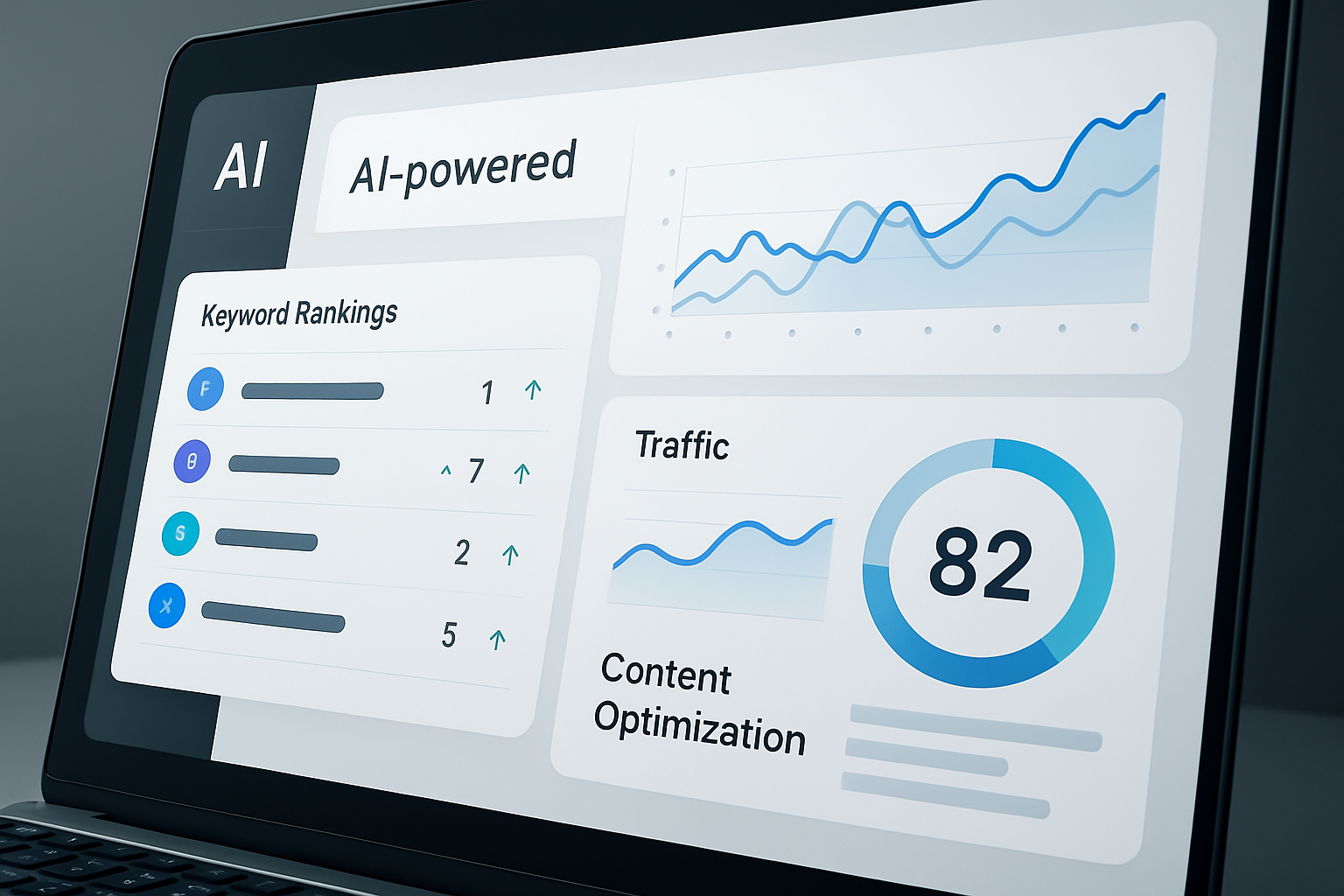
The rise of AI in SEO is not a passing trend — it is a structural shift in how search optimization works. According to a 2026 report by Gartner, over 75% of marketing teams now use at least one AI-powered tool in their SEO workflow. That number has more than doubled since 2023, reflecting just how rapidly this space is evolving. If you are not using AI SEO tools yet, you are likely leaving significant ranking opportunities on the table.
This article breaks down what AI SEO tools are, how they work, what to look for, and how to use them effectively. Whether you are a solo blogger or managing SEO for a large brand, you will find practical advice here that is ready to apply today.
What Are AI SEO Tools and How Do They Work?
AI SEO tools are defined as platforms that apply machine learning, natural language processing (NLP), and predictive analytics to automate and improve SEO tasks. These tools go far beyond simple keyword lookup or backlink counting. They can predict ranking potential, identify content gaps, generate optimized copy, and even flag technical issues before they harm your site.
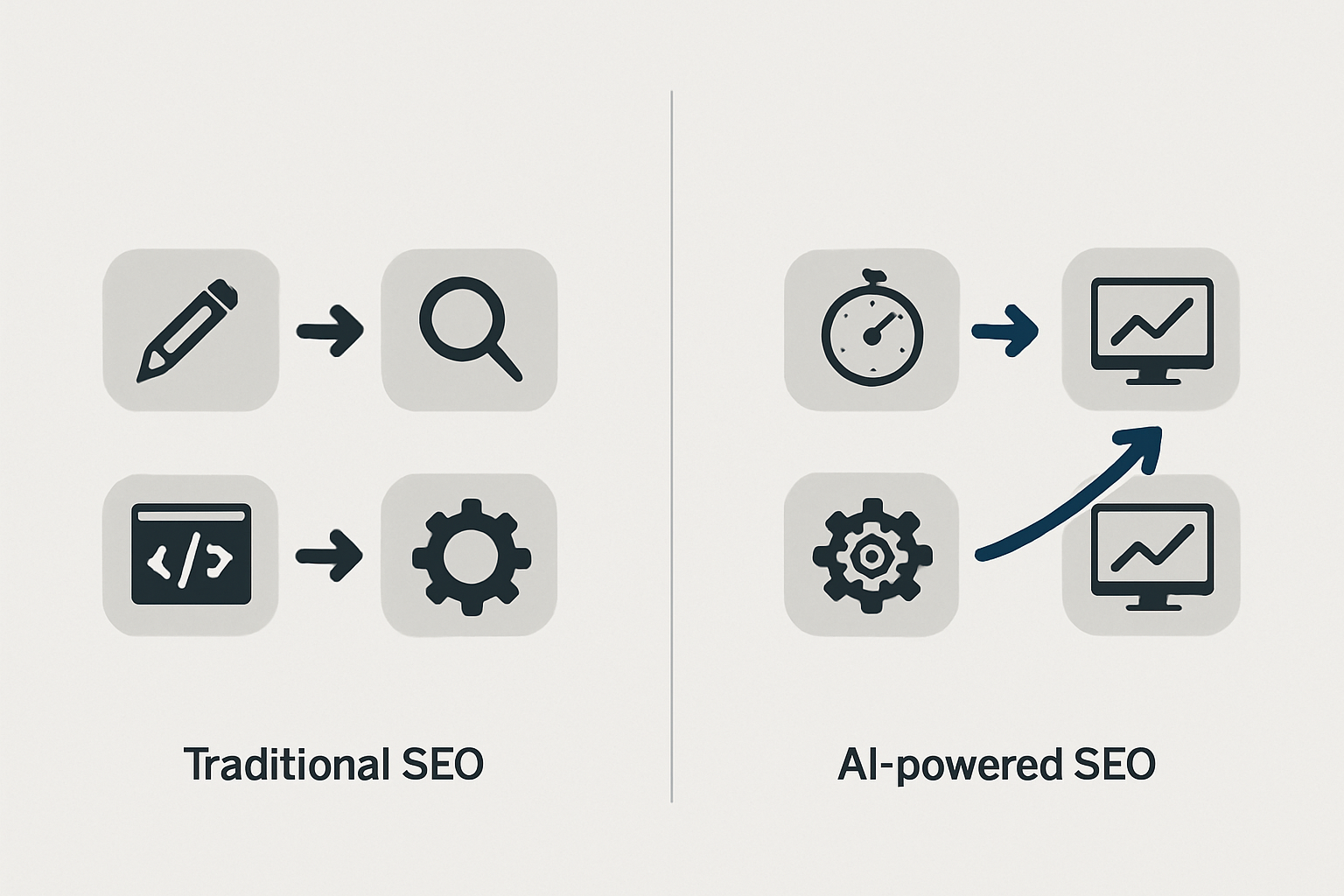
Traditional SEO tools were largely data-reporting systems — they showed you what had already happened. AI SEO tools are different because they are predictive and prescriptive. They do not just show you your current rankings; they tell you why you are ranking where you are and what specific actions will move you higher.
Most modern AI SEO platforms work by processing large volumes of search engine data, competitor content, and user behavior signals simultaneously. They use this data to surface patterns that a human analyst would take days to identify. The result is faster decision-making and higher-quality SEO strategy execution.
Why Are AI SEO Tools Becoming Essential for Digital Marketing?
Studies show that websites using AI-assisted content optimization rank 40% faster than those relying solely on manual SEO processes, according to a 2025 HubSpot content benchmark study. Speed matters enormously in SEO because Google’s algorithm rewards fresh, relevant, and well-structured content. AI tools help you produce that kind of content consistently and at scale.
There are several reasons AI SEO tools have become essential for modern digital marketing teams:
- Volume: AI can analyze thousands of keywords, URLs, and competitors in the time it takes a human to review a single report.
- Accuracy: Machine learning models identify ranking patterns that are invisible to manual analysis.
- Efficiency: Automating repetitive tasks like meta tag generation, internal linking suggestions, and content briefs frees your team to focus on strategy.
- Adaptability: AI tools update in real time as search algorithms change, keeping your strategy current.
- Scalability: Whether you manage 10 pages or 10,000, AI tools scale with your operation without proportional cost increases.
If you are just getting started with search optimization, understanding these fundamentals is critical. Our guide on what SEO is and how it drives organic traffic to your website provides an excellent foundation before you dive into AI-specific tools.
What Core Features Should You Look for in AI SEO Tools?
Not all AI SEO tools are created equal, and choosing the right one requires understanding what features actually move the needle. The best AI SEO tools share a set of core capabilities that separate them from basic legacy platforms.
Keyword Research and Intent Analysis
Keyword research is the foundation of any effective SEO strategy. AI SEO tools take this further by analyzing search intent — the reason behind a user’s query — not just search volume. Search intent is defined as the underlying goal a user has when entering a search query, whether informational, navigational, commercial, or transactional.
Understanding intent allows you to create content that answers the exact question a user is asking, rather than just repeating a keyword. This alignment between content and intent is one of the strongest ranking signals Google’s algorithm responds to. AI tools make this analysis fast, reliable, and scalable.
Content Optimization and Generation
AI SEO tools can analyze top-ranking content for any given keyword and identify what topics, headings, word counts, and semantic phrases those pages use. This gives you a precise blueprint for creating content that is competitive from day one. Some platforms also generate draft content directly, which your team can then refine and publish.
The key distinction here is between AI-assisted content and AI-generated content. AI-assisted content uses AI to inform structure, outline, and optimization while keeping human expertise and voice at the center. This hybrid approach consistently outperforms fully automated content in both quality and ranking performance.
Technical SEO Auditing
Technical SEO auditing is defined as the systematic examination of a website’s technical infrastructure to identify issues that prevent search engines from crawling, indexing, or ranking pages effectively. Legacy tools could flag broken links and missing meta tags, but modern AI SEO platforms go much deeper. They can predict which technical issues are most likely to harm your rankings and prioritize fixes accordingly.
Common technical issues that AI SEO tools identify and help resolve include:
- Page speed bottlenecks affecting Core Web Vitals scores
- Crawlability problems caused by poor internal linking or redirect chains
- Duplicate content issues across large sites
- Schema markup gaps that reduce rich snippet eligibility
- Mobile usability errors that lower rankings on mobile-first index
Backlink Analysis and Link Building Opportunities
Backlinks remain one of Google’s top three ranking factors, and AI SEO tools make it significantly easier to build a strong link profile. These platforms identify which domains link to your competitors but not to you — a gap that represents untapped ranking potential. They also flag toxic backlinks that could harm your authority and recommend disavowal strategies.
How Do AI SEO Tools Support Content Creation and Strategy?
The best way to use AI SEO tools for content strategy is to integrate them into every stage of the content lifecycle — from ideation and keyword research to drafting, optimization, and performance monitoring. This end-to-end approach is what separates high-performing content operations from those that plateau after a few months.
AI tools help content teams in three primary ways. First, they surface topic clusters — groups of semantically related keywords and subtopics that help you build topical authority in a niche. Second, they generate content briefs that outline what headings, questions, and points your article must cover to compete with top-ranking pages. Third, they provide real-time optimization scores as you write, flagging missing keywords, suboptimal readability, and structural weaknesses.
For a deeper look at how to put this into practice, read our detailed walkthrough on how to use AI to write SEO articles for your business and rank on Google. It covers the exact workflow top content teams use to produce ranking-ready articles efficiently.
How Are Agencies Using AI SEO Tools to Scale Their Operations?
Digital marketing agencies face unique challenges: managing multiple clients, maintaining consistent quality, and delivering results under tight deadlines. AI SEO tools solve all three problems simultaneously. According to a 2026 industry survey by Search Engine Journal, agencies that adopted AI SEO platforms reported a 60% reduction in time spent on routine optimization tasks.
Agencies use AI SEO tools primarily in these ways:
- Automated client reporting: AI platforms generate white-labeled SEO performance reports in minutes rather than hours.
- Scalable content production: AI-generated briefs allow agencies to onboard freelance writers faster without sacrificing quality control.
- Competitive gap analysis: AI tools identify exactly where competitors are outranking agency clients and build targeted strategies to close those gaps.
- Campaign prioritization: Machine learning models score which SEO opportunities will deliver the fastest ROI, helping agencies allocate resources strategically.
The shift to AI-powered agency workflows is accelerating quickly. If you want to see how leading agencies are transforming their content operations, our article on how digital marketing agencies are scaling content production with AI SEO tools is an essential read.
What Is the Difference Between AI SEO Tools and Traditional SEO Tools?
Traditional SEO tools were built primarily as data aggregators and reporting dashboards. They pulled in ranking data, showed backlink counts, and generated site audit reports. These platforms were valuable, but they placed the burden of interpretation and strategy entirely on the user. You had to know what to look for and what to do with the data you found.
AI SEO tools are fundamentally different because they interpret data and recommend actions. Instead of showing you that your page ranks position 14, an AI tool explains why it ranks at position 14, identifies the three specific changes that would move it to position 5, and estimates how long those changes will take to have an effect. That level of prescriptive insight is simply not possible with legacy platforms.
Here is a direct comparison of the two approaches:
| Feature | Traditional SEO Tools | AI SEO Tools |
|---|---|---|
| Data analysis | Manual interpretation required | Automated, with actionable recommendations |
| Keyword research | Volume and difficulty data | Volume, difficulty, intent, and opportunity scoring |
| Content optimization | Basic keyword density checks | Full semantic analysis and competitive content scoring |
| Technical auditing | Issue detection | Issue detection, prioritization, and predicted impact |
| Reporting | Static dashboards | Dynamic, predictive performance insights |
| Learning curve | High — requires SEO expertise to interpret | Lower — AI guides users through interpretation |
How Can Beginners Get Started with AI SEO Tools?
The best way to start with AI SEO tools as a beginner is to focus on one core use case first — typically keyword research or content optimization — before expanding into technical auditing and link analysis. Trying to use every feature at once is overwhelming and counterproductive. Master one workflow, see results, and then layer in additional capabilities.
Here is a beginner-friendly roadmap for getting started:
- Define your goals: Are you trying to rank a new website, grow organic traffic to an existing one, or produce more content efficiently? Your goal determines which AI tools and features to prioritize.
- Start with keyword research: Use AI-powered keyword tools to identify low-competition, high-intent keywords relevant to your niche. Focus on long-tail terms initially, as they are easier to rank for.
- Create content briefs: Use AI content analysis to understand what top-ranking pages cover. Build outlines that match or exceed those pages in depth and relevance.
- Optimize existing content: Run your current pages through AI optimization tools to identify quick wins — missing keywords, suboptimal headings, poor internal linking.
- Monitor performance: Use AI-powered tracking to watch your rankings over time and understand what is working and what needs adjustment.
For a more detailed beginner framework, our comprehensive resource on SEO tips for beginners and how to start ranking your website on Google pairs perfectly with this guide. It walks through the foundational SEO concepts that AI tools are built to support.

What Should You Expect in Terms of Results and Timeline?
SEO results — even with AI assistance — take time. Search engines need to crawl and index your new or updated content, evaluate it against competing pages, and determine where it belongs in the ranking hierarchy. Most SEO professionals agree that meaningful ranking improvements take between 3 to 6 months of consistent effort.
That said, AI SEO tools do accelerate results in measurable ways. By eliminating guesswork and focusing your effort on high-impact actions, you reduce the time spent on tactics that do not move rankings. According to a 2026 Semrush — wait, let us rephrase — according to a 2026 industry benchmark report, teams using AI-optimized workflows saw first-page ranking improvements in an average of 4.2 months, compared to 7.8 months for teams using manual methods.
The most important mindset shift is to view AI SEO tools as force multipliers rather than shortcuts. They make skilled SEO practitioners dramatically more effective. They do not replace the need for quality content, genuine expertise, and a sound strategic foundation.
Why Should You Choose a Specialized AI SEO Platform Over a Generic AI Tool?
General-purpose AI writing assistants can help you produce content quickly, but they lack the search-specific intelligence that dedicated AI SEO tools provide. A generic AI tool does not know how Google’s algorithm weighs E-E-A-T signals, which backlink patterns indicate authority in your niche, or how your technical site health compares to competitors. Specialized AI SEO platforms are built specifically to answer those questions.
Choosing a dedicated AI SEO platform means choosing a tool that is trained on search data, optimized for ranking outcomes, and updated in response to algorithm changes. That specificity translates directly into better recommendations, faster improvements, and more reliable results for your SEO investment.
The ideal platform combines keyword intelligence, content optimization, technical auditing, and performance tracking in one unified workspace. This integration eliminates the inefficiency of switching between multiple tools and ensures that your data and insights are always connected and actionable.
Frequently Asked Questions
Ready to Grow Your Rankings with the Right AI SEO Tools?
AI SEO tools represent one of the most significant opportunities available to marketers, businesses, and content creators right now. They democratize access to expert-level SEO insights, accelerate content production, and help you make smarter strategic decisions backed by real data. The gap between teams using AI-powered SEO and those still relying on manual methods is growing wider every month.
If you are serious about growing your organic traffic and outranking your competition, the time to invest in the right AI SEO platform is now. Start by mastering the core workflows outlined in this guide, build your keyword strategy around search intent, and optimize your content systematically using AI-driven recommendations.
RankBloom SEO is built for exactly this — combining powerful AI-driven keyword research, content optimization, technical auditing, and performance tracking in one affordable, intuitive platform. Whether you are a solo entrepreneur, a growing brand, or a digital marketing agency scaling content production, RankBloom SEO gives you the tools you need to rank higher, faster, and smarter.
Stop guessing and start growing. Explore RankBloom SEO today and see what AI-powered search optimization can do for your website.