

SEO, or Search Engine Optimization, is the process of improving your website so that it appears higher in search engine results pages (SERPs) like Google. It helps people find your content organically — without paying for ads. Whether you’re running a blog, a small business website, or an agency, understanding SEO tips for beginners is the first step toward sustainable online growth.
What Exactly Is SEO and Why Does It Matter for Your Website?
SEO is defined as the practice of optimizing web content and website structure to earn higher rankings in organic (unpaid) search results. It matters because over 68% of all online experiences begin with a search engine query, according to BrightEdge research. Without SEO, even the best content can remain invisible to your target audience.
Search engines like Google use automated programs called crawlers to scan websites and index their content. These crawlers evaluate hundreds of ranking factors before deciding where your page appears in results. Understanding how this process works is the foundation of every effective SEO strategy.
Studies show that the first organic result on Google receives approximately 27.6% of all clicks, according to Backlinko data. Pages on the second and third positions receive dramatically fewer clicks. This means ranking even slightly higher can multiply your traffic significantly.
How Do Search Engines Actually Decide Where to Rank Your Pages?
Search engines evaluate three core pillars: relevance, authority, and user experience. Relevance means your content closely matches what the searcher is looking for. Authority refers to how trustworthy and credible your website appears based on links and signals from other sites.
User experience (UX) is defined as how easily and pleasantly visitors can navigate, read, and interact with your website. Google’s algorithm updates have consistently rewarded sites that load quickly, work well on mobile devices, and provide clear, useful content. A poor user experience can actively hurt your rankings even if your content is strong.
Google uses over 200 known ranking factors, and the algorithm updates multiple times per year. As a beginner, you don’t need to master all of them at once. Focusing on the foundational elements — content quality, keywords, links, and technical health — will get you the majority of your results.
What Are the Most Important SEO Tips for Beginners Starting from Zero?
How Do You Choose the Right Keywords?
Keyword research is the process of identifying the exact words and phrases your target audience types into search engines. The best way to start keyword research is by using free tools like Google Keyword Planner, Ubersuggest, or Google’s autocomplete suggestions. Look for keywords with decent search volume but manageable competition.
Long-tail keywords are defined as search phrases that contain three or more words and target a more specific intent. For example, “best SEO tips for beginners with no budget” is a long-tail keyword compared to simply “SEO.” Long-tail keywords are easier to rank for and often convert better because they attract users who know exactly what they want.
Once you identify your target keywords, use them naturally throughout your page — in the title, the first paragraph, subheadings, image alt text, and the meta description. Never stuff keywords unnaturally; Google penalizes keyword stuffing and it damages readability for real users.
Why Is On-Page Optimization So Critical for New Websites?
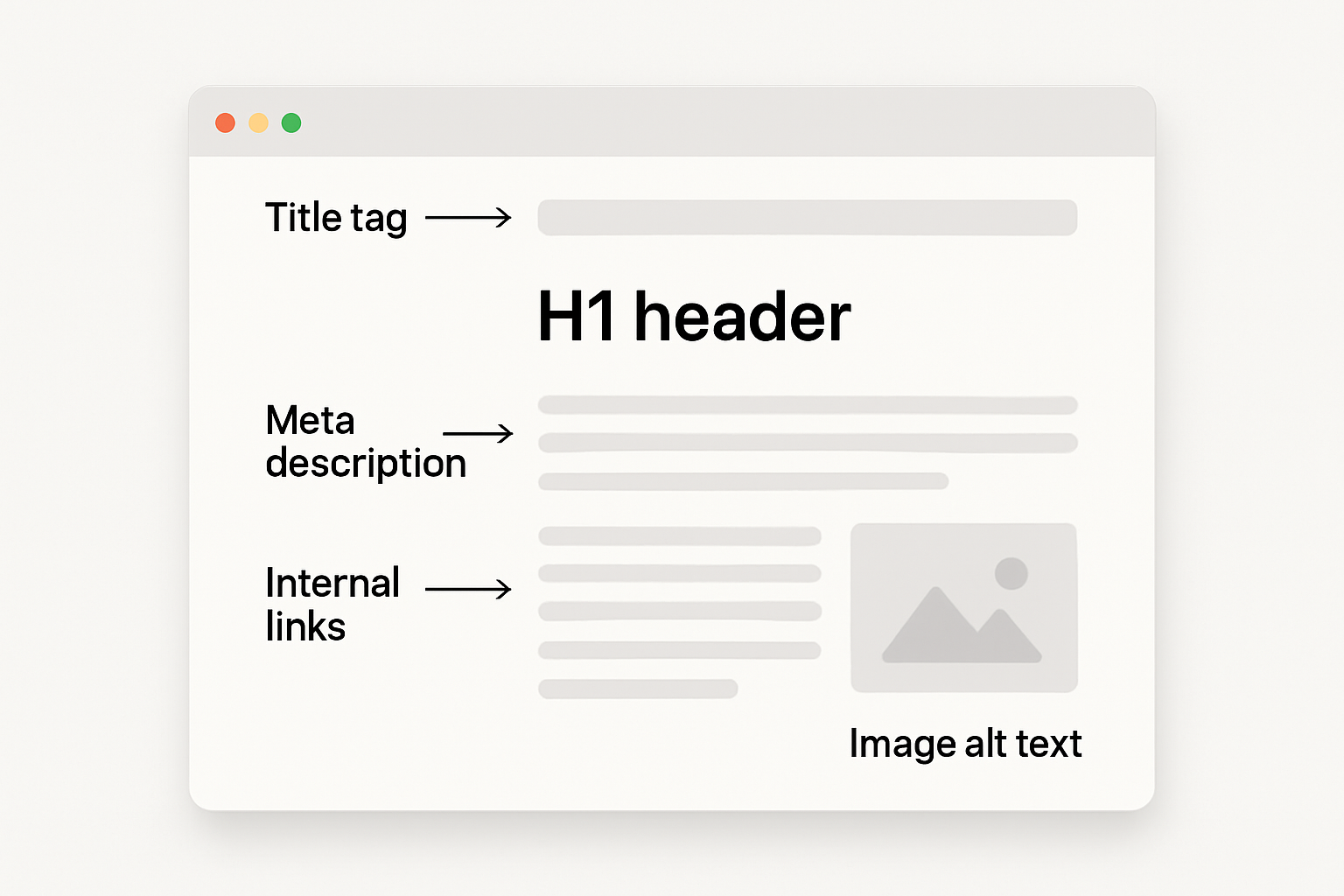
On-page SEO refers to all the optimizations you make directly on your web pages to improve search rankings. It includes your title tags, meta descriptions, header tags (H1, H2, H3), content quality, internal links, and image optimization. Getting on-page SEO right signals clearly to Google what your page is about.
Your title tag should include your primary keyword and be between 50 and 60 characters long. Your meta description should be a compelling 150 to 160 character summary that encourages users to click. These two elements are the first things searchers see in Google results, making them crucial for both rankings and click-through rates.
Internal linking is defined as the practice of linking one page on your website to another page on the same website. It helps search engines discover and understand the relationship between your pages. It also keeps visitors on your site longer, which sends positive engagement signals back to Google.
How Does Content Quality Affect Your SEO Results?
Content quality is the single most important factor in modern SEO, especially after Google’s Helpful Content updates. Google wants to surface content that is genuinely useful, accurate, and written for humans — not search bots. Thin, generic, or AI-spun content without real value is actively downranked.
The best way to create high-quality content is to answer your reader’s questions thoroughly, use examples, and provide unique insights or data. Aim to cover a topic more completely than existing competitors on page one. Content that earns featured snippets and AI citations tends to be direct, well-structured, and factually specific.
According to HubSpot research, companies that publish blog content consistently receive 55% more website visitors than those that don’t. Consistency matters as much as individual article quality. Publishing regularly signals to Google that your site is active and relevant.
Why Are Backlinks Still One of the Most Powerful SEO Signals?
A backlink is defined as a hyperlink from one website that points to a page on another website. Backlinks act like votes of confidence — when authoritative sites link to your content, Google interprets it as a signal that your content is trustworthy and valuable. Earning quality backlinks remains one of the most impactful SEO tips for beginners to prioritize.
You can earn backlinks by creating share-worthy content, writing guest posts on reputable industry blogs, and getting listed in relevant directories. Reaching out to other website owners in your niche with genuine value to offer is also effective. Avoid buying links or participating in link schemes, as these violate Google’s guidelines and can result in manual penalties.
Not all backlinks are equal — a single link from a high-authority domain like a major news outlet or university website is worth far more than dozens of links from low-quality or irrelevant sites. Focus on quality over quantity when building your backlink profile as a beginner.
How Does Technical SEO Impact Your Ability to Rank?
Technical SEO refers to optimizations made to your website’s infrastructure that help search engines crawl and index your content effectively. It includes site speed, mobile-friendliness, HTTPS security, XML sitemaps, structured data markup, and fixing broken links. Even excellent content won’t rank if technical issues prevent Google from accessing and understanding your pages.
Site speed is critical — Google’s Core Web Vitals data shows that pages loading in under 2.5 seconds perform significantly better in rankings and user retention. You can test your site speed using Google PageSpeed Insights, which is free and provides specific recommendations. Compress images, minimize code, and use a reliable hosting provider to improve loading times.
Mobile optimization is non-negotiable in 2026, as Google uses mobile-first indexing — meaning it primarily uses your mobile version to determine rankings. Over 60% of all web traffic now comes from mobile devices. Ensure your site is responsive, text is readable without zooming, and buttons are easy to tap on smaller screens.
What Tools Should Beginners Use to Track and Improve Their SEO?
The best free tools for SEO beginners include Google Search Console, Google Analytics 4, and Google PageSpeed Insights. Google Search Console is defined as a free platform by Google that shows you which keywords your site ranks for, how many impressions and clicks you receive, and any indexing errors affecting your site. It is absolutely essential for any beginner.
Google Analytics 4 helps you understand user behavior — how visitors arrive at your site, which pages they visit, and how long they stay. This data tells you which content is performing and where you’re losing visitors. Together, Search Console and Analytics give you a complete picture of your SEO health.
Paid tools like Ahrefs, Semrush, and Moz offer deeper competitive analysis, keyword tracking, and backlink monitoring. Many offer free trials or limited free tiers that are useful when you’re starting out. Invest in paid tools once you’re ready to scale your SEO efforts.
Why Should Beginners Choose RankBloom SEO to Accelerate Their Results?
RankBloom SEO is a powerful, affordable SEO content platform designed specifically for small businesses, bloggers, and agencies who want to rank faster without overwhelming technical complexity. It streamlines the entire process from keyword research to content creation to publishing. For anyone implementing SEO tips for beginners, it removes the biggest barrier: time and manual effort.
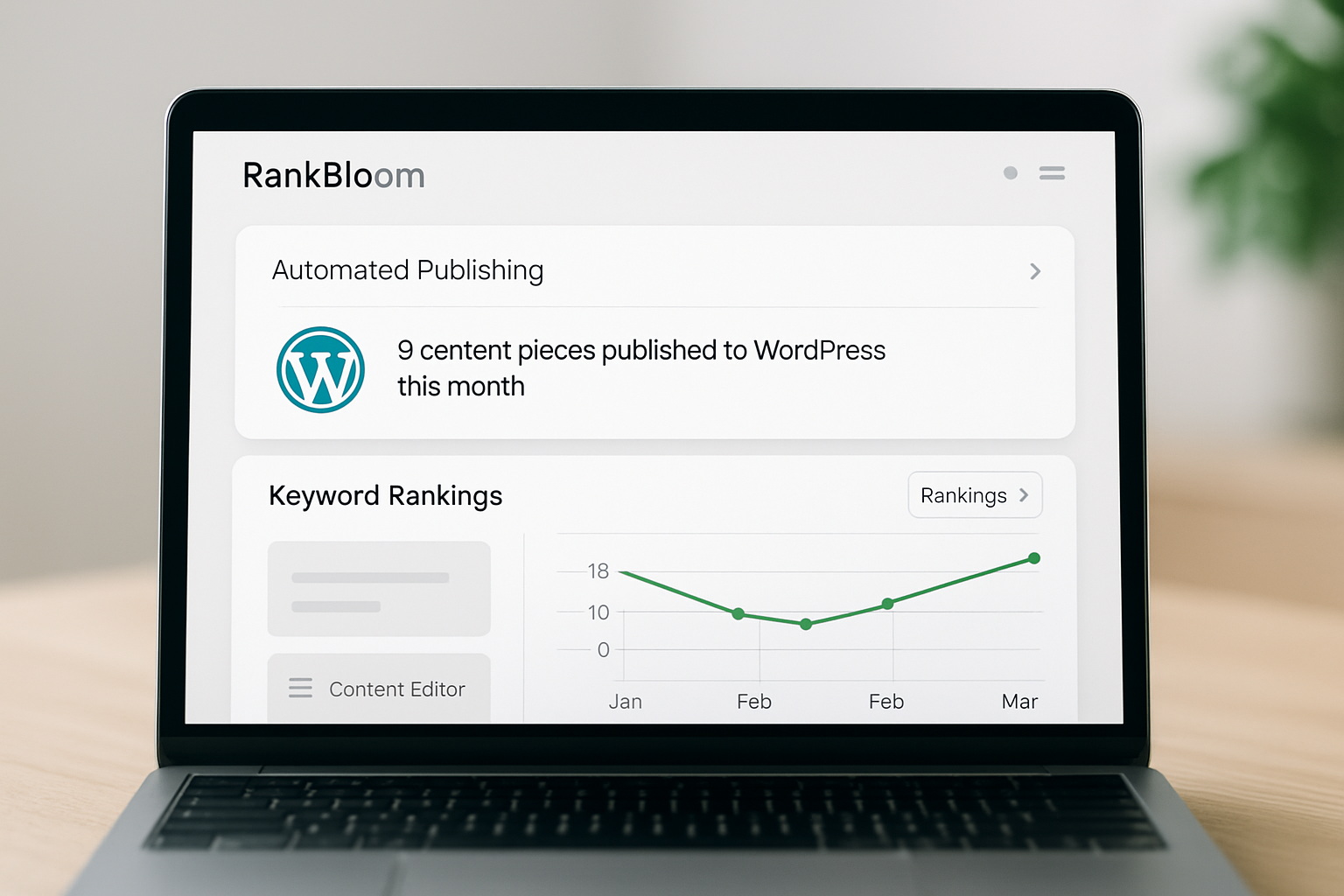
The most impressive feature of RankBloom SEO is that it auto-publishes optimized content directly to WordPress with zero manual intervention. You don’t need to copy, paste, format, or schedule anything — the platform handles it all automatically. This is a game-changer for small teams and solo entrepreneurs who want consistent publishing without hiring additional staff.
RankBloom SEO is priced affordably to serve small businesses and agencies at every budget level. You get enterprise-level SEO automation at a fraction of the cost of traditional agencies or enterprise tools. Visit RankBloom SEO at rankbloomseo.com to see current plans and start your SEO journey today.
How Do You Build a Long-Term SEO Strategy That Actually Works?
A sustainable SEO strategy is built on four consistent activities: publishing quality content regularly, earning backlinks steadily, improving technical performance, and monitoring results to adjust your approach. SEO is not a one-time task but an ongoing process that compounds over time. The sites that win long-term are those that stay consistent and patient.
Set realistic expectations from the start — most new websites take three to six months to begin seeing meaningful organic traffic growth. This timeline exists because Google needs time to crawl, index, and evaluate your content’s performance and authority. Use this time to build a content library, fix technical issues, and develop your backlink strategy.
Track your progress monthly using Google Search Console to monitor keyword rankings, impressions, and clicks. Look for content that is ranking on page two (positions 11–20) and prioritize improving those pages first — a small boost can move them onto page one and dramatically increase traffic. This targeted approach maximizes your effort and produces faster wins.
Frequently Asked Questions
How long does it take to see results from SEO as a beginner?
Most new websites begin seeing measurable organic traffic growth within three to six months of consistent SEO effort. Results depend on your niche competition, content quality, and how actively you build backlinks.
Do I need to know how to code to do SEO?
No, you do not need coding knowledge to implement most SEO strategies as a beginner. Platforms like WordPress and tools like RankBloom SEO handle technical elements automatically, allowing you to focus on content and strategy.
What is the most important SEO tip for a complete beginner?
The most important first step is keyword research — understanding exactly what your audience searches for before you create any content. Building every piece of content around a specific, relevant keyword gives your pages the best chance to rank.
How many blog posts do I need to publish to rank on Google?
There is no exact number, but publishing at least two to four high-quality, keyword-optimized articles per month builds authority steadily. Consistency and content quality matter more than raw volume.
Is SEO still worth it in 2026 with AI search engines growing?
Yes, SEO is absolutely still worth it in 2026 — in fact, optimizing for AI-powered search engines (called GEO or Generative Engine Optimization) makes traditional SEO practices even more valuable. Structured, authoritative, well-organized content is exactly what both Google and AI engines like ChatGPT and Perplexity use to generate answers and citations.
Start Your SEO Journey the Smart Way
Mastering SEO tips for beginners doesn’t happen overnight, but every step you take builds compounding momentum that grows your traffic for years. Focus on keyword research, high-quality content, on-page optimization, technical health, and consistent backlink building. These fundamentals have remained effective through every algorithm update and they will continue to matter as AI search evolves.
The biggest challenge most beginners face is not knowing — it’s doing. Consistently executing your strategy week after week is where most people fall short. Tools that automate the repetitive parts of SEO, like publishing and formatting, free you to focus on strategy and content creation where your human judgment adds the most value.
Ready to put your SEO on autopilot? Visit RankBloom SEO at rankbloomseo.com today and discover how their platform automatically publishes SEO-optimized content directly to your WordPress site — with zero manual work. Affordable for small businesses and powerful enough for agencies, RankBloom SEO is the smartest shortcut from beginner to ranking. Don’t wait months to see results — start building your organic presence today.