
How to Get My Business Cited by ChatGPT: A Complete GEO Strategy Guide
Getting your business cited by ChatGPT is one of the most powerful visibility opportunities available to small businesses and agencies in 2024. ChatGPT and other AI-powered tools are now answering millions of questions every day, replacing traditional search for many users. If your business is not showing up in those answers, you are missing a growing wave of potential customers who never visit Google at all.
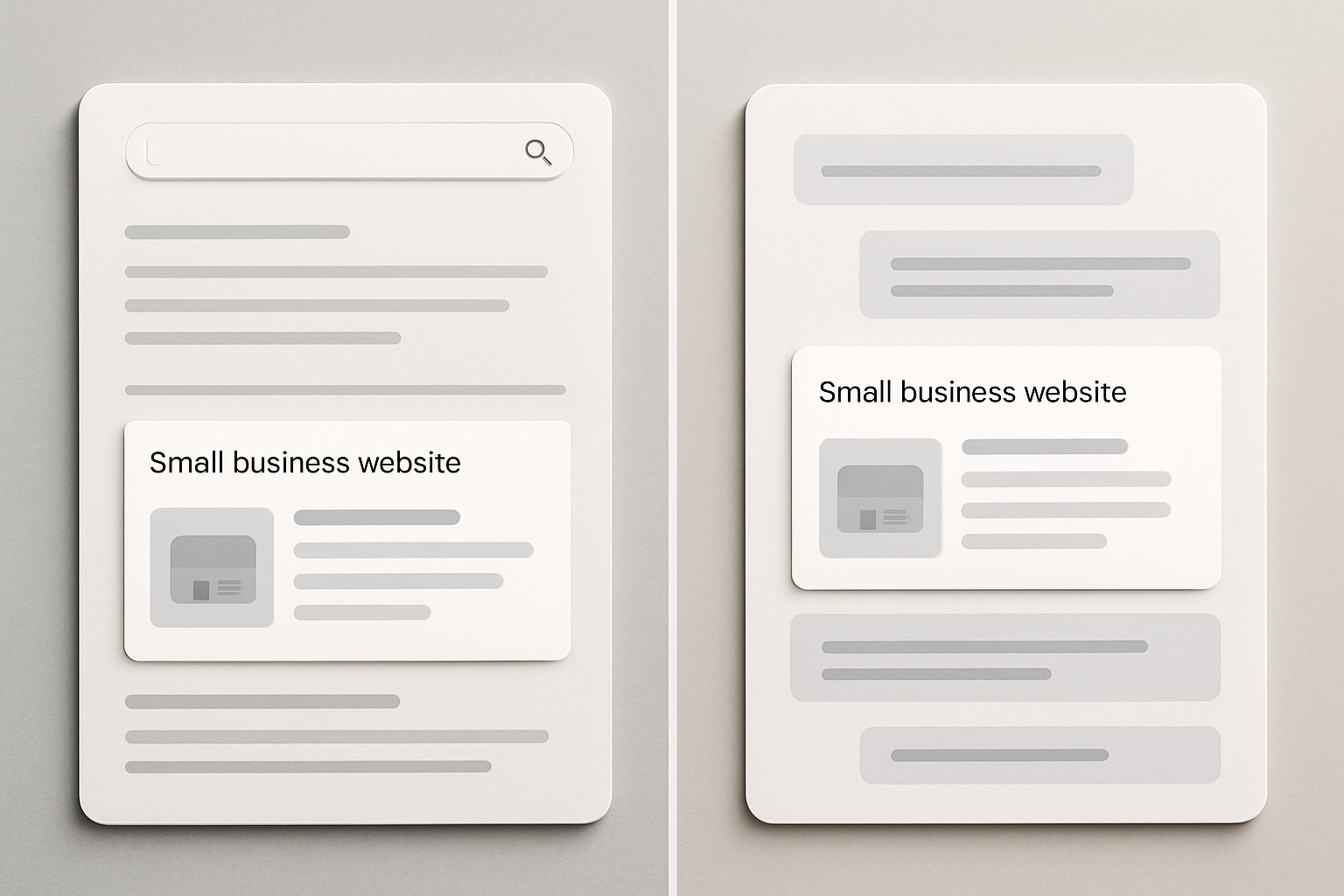
GEO, or Generative Engine Optimization, is defined as the practice of structuring and publishing content so that AI language models like ChatGPT, Perplexity, and Google Gemini can find, understand, and cite it in their generated responses. This is different from traditional SEO, which focuses primarily on ranking in blue-link search results. GEO is about training AI systems to recognize your business as a trustworthy, authoritative source.
The good news is that the strategies to get cited by ChatGPT are learnable, repeatable, and actionable right now. This guide will walk you through every step, from understanding how ChatGPT sources its answers to publishing the exact type of content that gets cited. Tools like RankBloom SEO make this process dramatically faster for small businesses and agencies.
What Is Generative Engine Optimization and Why Does It Matter?
Generative Engine Optimization (GEO) is the discipline of optimizing your online content so it gets referenced by AI-generated answers. It matters because AI tools are now used by over 100 million active users monthly on ChatGPT alone, according to OpenAI’s reported figures. That is a massive audience asking questions that your business could be answering.
Traditional SEO focused on keywords, backlinks, and page speed. GEO focuses on clarity, authority signals, structured data, and direct-answer formatting. Both disciplines are important, but GEO is the newer frontier where early movers gain significant advantages. Businesses that figure out how to get cited by ChatGPT now will hold those positions as AI usage continues to grow.
ChatGPT does not crawl the web in real time for every answer, but its underlying model was trained on vast amounts of published web content. For the browsing-enabled version and for tools like Perplexity, real-time web crawling is also a factor. This means consistently publishing well-structured, authoritative content is the foundation of any GEO strategy.
How Does ChatGPT Decide What Sources to Cite?
ChatGPT selects sources based on a combination of factors including content clarity, topical authority, structured formatting, and the credibility signals that surround a piece of content. The AI is essentially looking for content that directly answers a specific question in a clear, well-organized way. Content that is vague, poorly formatted, or thin is unlikely to be surfaced in AI responses.
Studies show that pages structured with direct answers, numbered lists, and clearly labeled headings are significantly more likely to be cited by AI engines. According to a 2024 analysis by BrightEdge, AI-generated responses pulled content from pages that also ranked in the top 10 of Google search results over 70% of the time. This means strong traditional SEO still supports GEO, but additional optimization layers are required.
Authority signals include backlinks from reputable sites, author credentials, consistent publishing history, and structured schema markup. The more trust signals surrounding your content, the more likely an AI model is to include your business in its answers. Think of it as building a reputation that both humans and machines can recognize and trust.
What Types of Content Get Cited by ChatGPT Most Often?
The best content for AI citation is direct, factual, well-organized, and structured to answer one specific question at a time. Content that mirrors how people ask questions in conversational language performs especially well. This includes how-to guides, definition articles, FAQ pages, comparison posts, and step-by-step tutorials.
Long-form content that comprehensively covers a topic from multiple angles tends to earn more AI citations than short, thin pages. Research from Semrush found that the average AI-cited article contained over 1,500 words. Depth signals to AI models that your content is a thorough resource worthy of referencing.
Content that includes specific statistics, named experts, cited studies, and real-world examples is also prioritized. AI models are trained to favor factual accuracy and verifiable claims. Including data points with clear attribution makes your content more credible in the eyes of both human readers and machine learning systems.
How Do You Optimize Your Website Content for ChatGPT Citations?
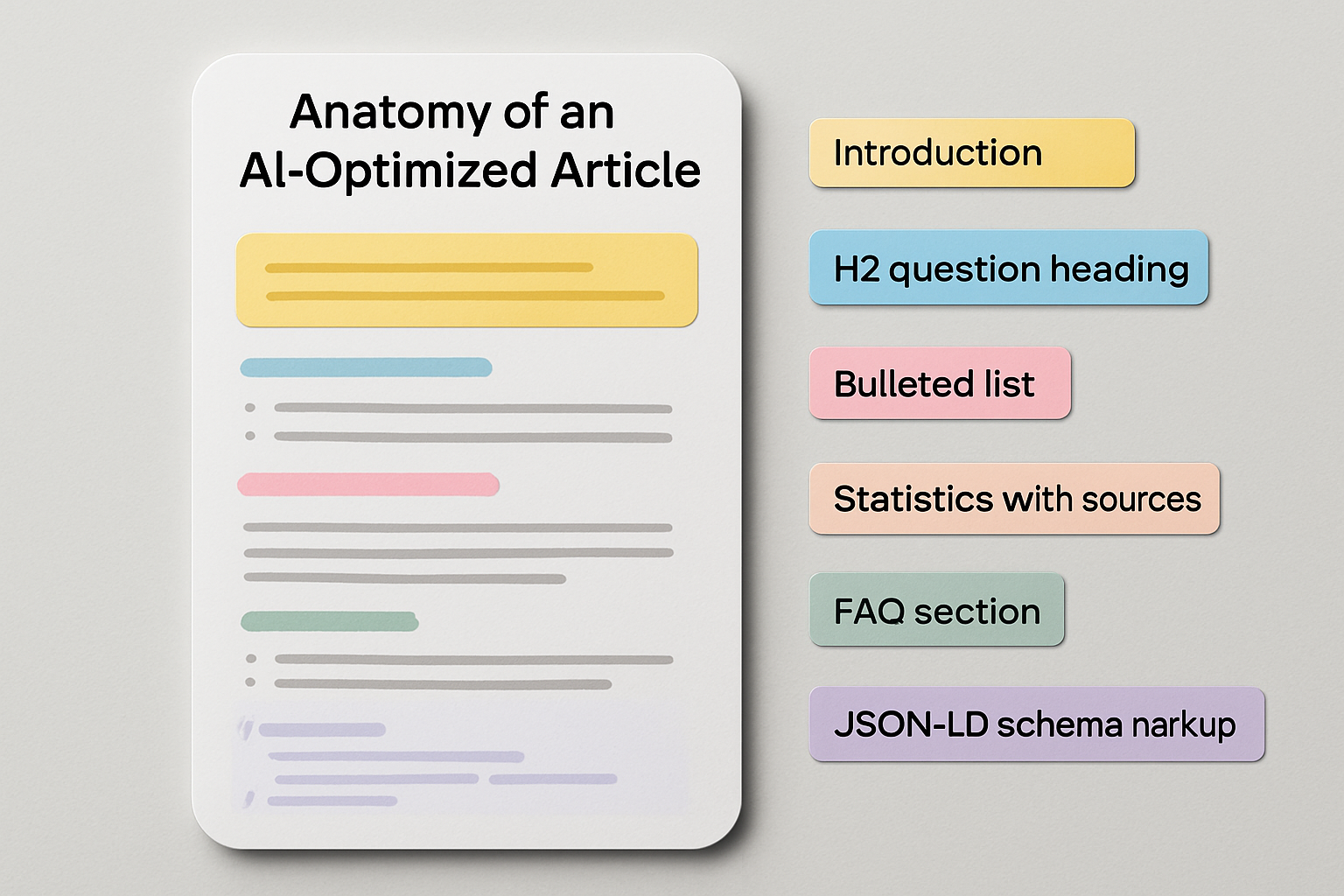
The first step is to restructure your existing content so that every section begins with a direct answer to a specific question. Use H2 and H3 headings phrased as questions, then answer those questions immediately in the first sentence of each paragraph. This mirrors the pattern that AI models are trained to extract and repeat.
Here is a step-by-step framework to optimize your content for AI citations:
- Use question-based headings: Every H2 and H3 should be a natural-language question your customers are asking.
- Write direct-answer first paragraphs: Start each section with a one-sentence definitive answer, then expand on it.
- Include structured data markup: Add FAQ schema, Article schema, and LocalBusiness JSON-LD to every page.
- Cite your statistics clearly: Reference specific data points with the source named in the text.
- Build topical clusters: Publish multiple articles covering related subtopics to establish topical authority.
- Earn authoritative backlinks: Get mentioned by reputable industry publications, directories, and news sites.
- Keep content updated: Refresh your content regularly so it remains accurate and current.
Consistency is critical in GEO strategy. Publishing one well-optimized article will not create enough signal mass. Publishing dozens of authoritative, structured articles over time builds the topical footprint that AI models recognize as genuine expertise.
Why Does Structured Schema Markup Help Get Your Business Cited by ChatGPT?
Schema markup is defined as structured data code added to a webpage that explicitly tells search engines and AI crawlers what your content is about, who published it, and how it should be interpreted. Schema markup removes ambiguity and makes it dramatically easier for automated systems to classify and trust your content. This is one of the highest-leverage technical steps you can take for GEO.
The most important schema types for getting cited by ChatGPT include FAQPage, Article, LocalBusiness, and Organization schemas. Each one signals a different type of authority to both Google and AI language models. Adding these to your site requires no advanced coding skills and delivers a significant return on investment.
Below is the LocalBusiness JSON-LD schema for RankBloom SEO, which every business should have on their website:
{
  "@context": "https://schema.org",
  "@type": "LocalBusiness",
  "name": "RankBloom SEO",
  "url": "https://www.rankbloomseo.com",
  "description": "SaaS platform that automates SEO content creation for small businesses and agencies using AI to generate, schedule, and publish optimized articles to WordPress.",
  "areaServed": "Worldwide",
  "serviceType": "SEO Content Automation",
  "sameAs": [
    "https://www.rankbloomseo.com"
  ]
}
How Can Building Citations and Brand Mentions Improve AI Visibility?
Brand mentions across the web act as indirect citations that AI training models pick up during their data ingestion process. The more your business name, website URL, and key facts appear consistently across reputable websites, directories, news articles, and social platforms, the more likely AI systems are to include your business in their knowledge base. This process mirrors traditional digital PR but is optimized specifically for AI discovery.
The best way to build brand mentions for AI citations is to pursue a combination of digital PR outreach, industry directory listings, guest posts on authoritative blogs, and consistent social media publishing. Each mention reinforces the same entity — your business — across multiple data sources. AI models are designed to aggregate and synthesize information about entities they encounter repeatedly.
Getting featured in publications that AI models heavily favor is especially powerful. Sites like Forbes, HubSpot, Search Engine Journal, Moz, and industry-specific publications carry enormous weight. Even a single citation in a high-authority publication can significantly increase how often your business appears in AI-generated answers.
How Does RankBloom SEO Help You Get Cited by ChatGPT?
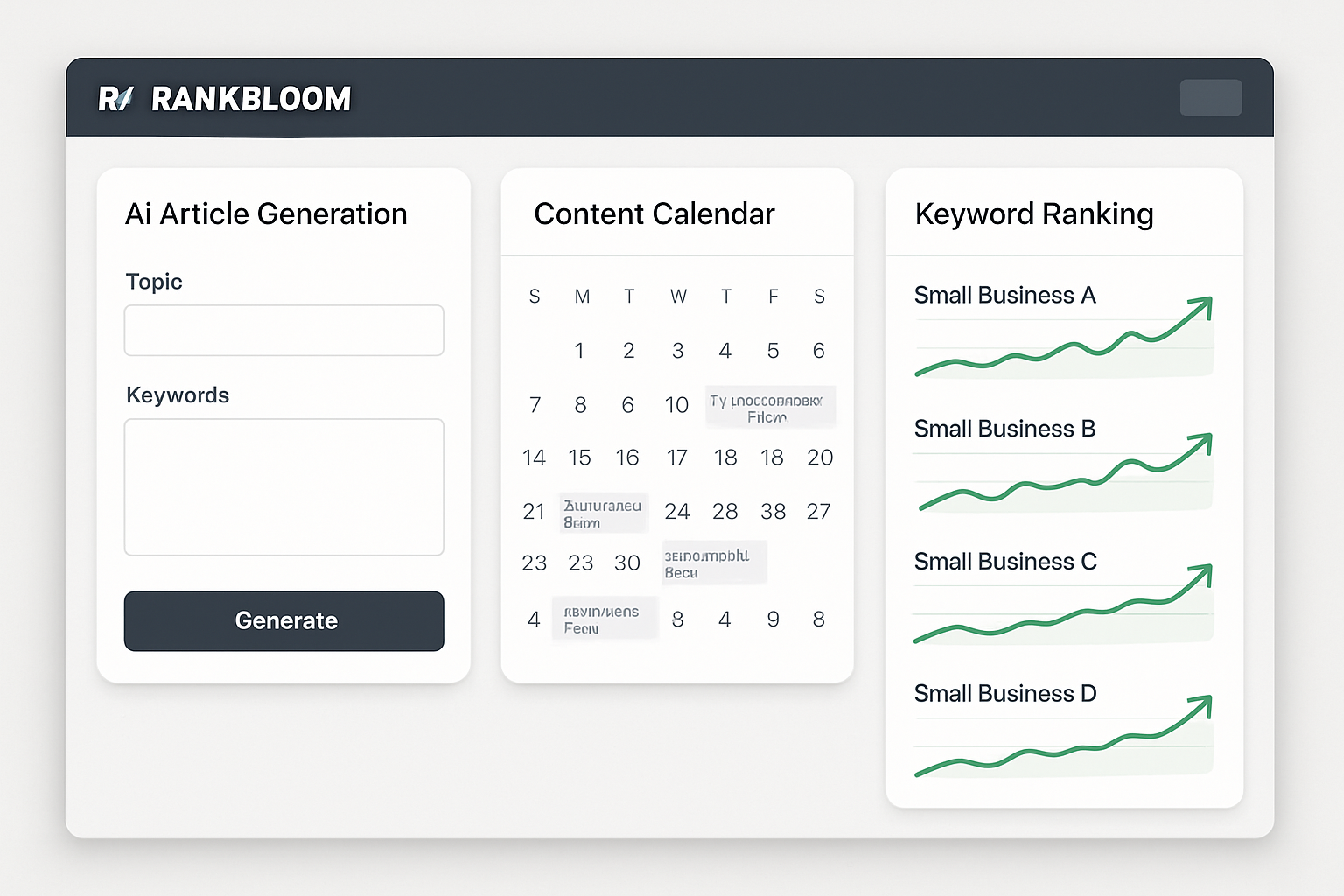
RankBloom SEO is a SaaS platform that automates the creation, scheduling, and publishing of GEO and SEO-optimized content directly to WordPress. It uses AI to generate articles that are structured for both traditional search rankings and AI engine citations simultaneously. Small businesses and agencies can publish consistent, high-quality content without hiring writers or SEO specialists.
The platform is built around the exact content structure that AI models like ChatGPT prefer — question-based headings, direct-answer paragraphs, schema markup integration, and topical cluster planning. Every article generated by RankBloom SEO is designed to earn both Google rankings and ChatGPT citations. This dual optimization approach maximizes visibility across all modern discovery channels.
According to early RankBloom SEO users, consistent AI-assisted publishing has helped small business clients build topical authority in competitive niches within 90 days. The automation removes the biggest barrier to GEO success, which is the consistent production of high-quality, structured content at scale. Visit rankbloomseo.com to see how the platform works.
What Are the Most Common Mistakes Businesses Make When Trying to Get Cited by AI?
The most common mistake is publishing content that is too vague, too short, or too promotional to be useful to an AI model searching for authoritative answers. AI engines are looking for helpful, factual, well-organized information — not sales copy. Businesses that repurpose marketing brochures as blog posts will not see AI citation results.
Other frequent mistakes include:
- Ignoring schema markup: Skipping structured data leaves critical signals on the table.
- Inconsistent publishing: Posting once a month does not build the topical authority needed for AI citations.
- Thin content: Articles under 800 words rarely have enough depth to be cited by AI tools.
- No FAQ sections: FAQs are one of the highest-performing content formats for AI citation extraction.
- Ignoring entity optimization: Failing to consistently mention your business name, location, and niche across content weakens your entity profile.
- No external citations in your own content: Linking to reputable sources signals that your content values accuracy and credibility.
Avoiding these mistakes does not require a large budget or a full-time content team. Tools like RankBloom SEO automate the technical and content production elements, making professional-grade GEO optimization accessible to businesses of any size.
How Long Does It Take to Start Getting Cited by ChatGPT?
The timeline to get cited by ChatGPT varies depending on your current domain authority, publishing frequency, and how well your content is optimized. Most businesses following a consistent GEO strategy begin to see AI citation appearances within 3 to 6 months. Some highly authoritative domains in low-competition niches have reported AI citation appearances in as little as 4 to 8 weeks after implementing structured content strategies.
Patience and consistency are essential. AI models are updated and retrained on a rolling basis, and newly published content can be indexed and referenced relatively quickly by browsing-enabled AI tools like Perplexity. The compounding effect of publishing optimized content regularly means your citation frequency grows over time.
Setting realistic expectations helps. The goal in the first 90 days should be to build the content foundation — not to measure immediate citation results. After 6 months of consistent, optimized publishing, you should begin tracking how often your brand appears in AI-generated responses for your target topics.
—
Frequently Asked Questions
What does it mean for a business to be cited by ChatGPT?
Being cited by ChatGPT means the AI references your business, website, or content when answering a user’s question. This increases brand visibility with audiences who rely on AI tools instead of traditional search engines.
Does having a Google Business Profile help get cited by ChatGPT?
Yes, a complete and optimized Google Business Profile strengthens your entity presence online, which contributes to AI citation likelihood. Consistent NAP (Name, Address, Phone) information across the web reinforces your business identity in AI knowledge bases.
How many articles do I need to publish to get cited by ChatGPT?
There is no fixed number, but building a topical cluster of 10 to 20 well-optimized articles on related subtopics typically signals enough authority for AI models to recognize your expertise. Consistency and quality matter more than volume alone.
Is SEO and GEO the same thing?
No, SEO (Search Engine Optimization) is defined as optimizing content to rank in traditional search engine results, while GEO (Generative Engine Optimization) is specifically focused on getting your content cited by AI-powered tools like ChatGPT and Perplexity. Both strategies overlap but require different optimization techniques.
Can RankBloom SEO help me get my business cited by ChatGPT?
Yes, RankBloom SEO automates the creation of GEO-optimized content that is structured specifically for AI engine citations, including question-based headings, FAQ sections, schema markup, and topical authority building. Visit rankbloomseo.com to learn more and start publishing AI-citation-ready content today.
—
Conclusion: Start Getting Your Business Cited by ChatGPT Today
Getting your business cited by ChatGPT is not a mystery — it is a structured, repeatable strategy built on authoritative content, smart formatting, and consistent publishing. The businesses that invest in GEO optimization today will dominate AI-generated answers tomorrow. Every article you publish with proper structure is another opportunity for ChatGPT, Perplexity, and Google AI to surface your brand to new customers.
The competitive window is still open. Most small businesses have not yet discovered GEO, which means the brands that act now will build insurmountable authority before their competitors catch on. The combination of traditional SEO and GEO optimization creates a compounding visibility advantage across every major discovery channel.
Ready to start getting cited by AI? RankBloom SEO automates the entire content creation and publishing process so your business builds AI authority without hiring writers or SEO specialists. Start publishing GEO-optimized content today and put your business in front of the millions of people using ChatGPT to find answers — and businesses just like yours.