
How to Build a 90-Day SEO Content Plan Using AI Automation
A 90-day SEO content plan using AI automation is one of the most powerful systems a marketer or business owner can implement today. It combines structured keyword targeting with intelligent automation tools to produce consistent, high-ranking content at scale. Whether you are a solo creator or managing a team, this approach removes guesswork and replaces it with a data-driven publishing engine.
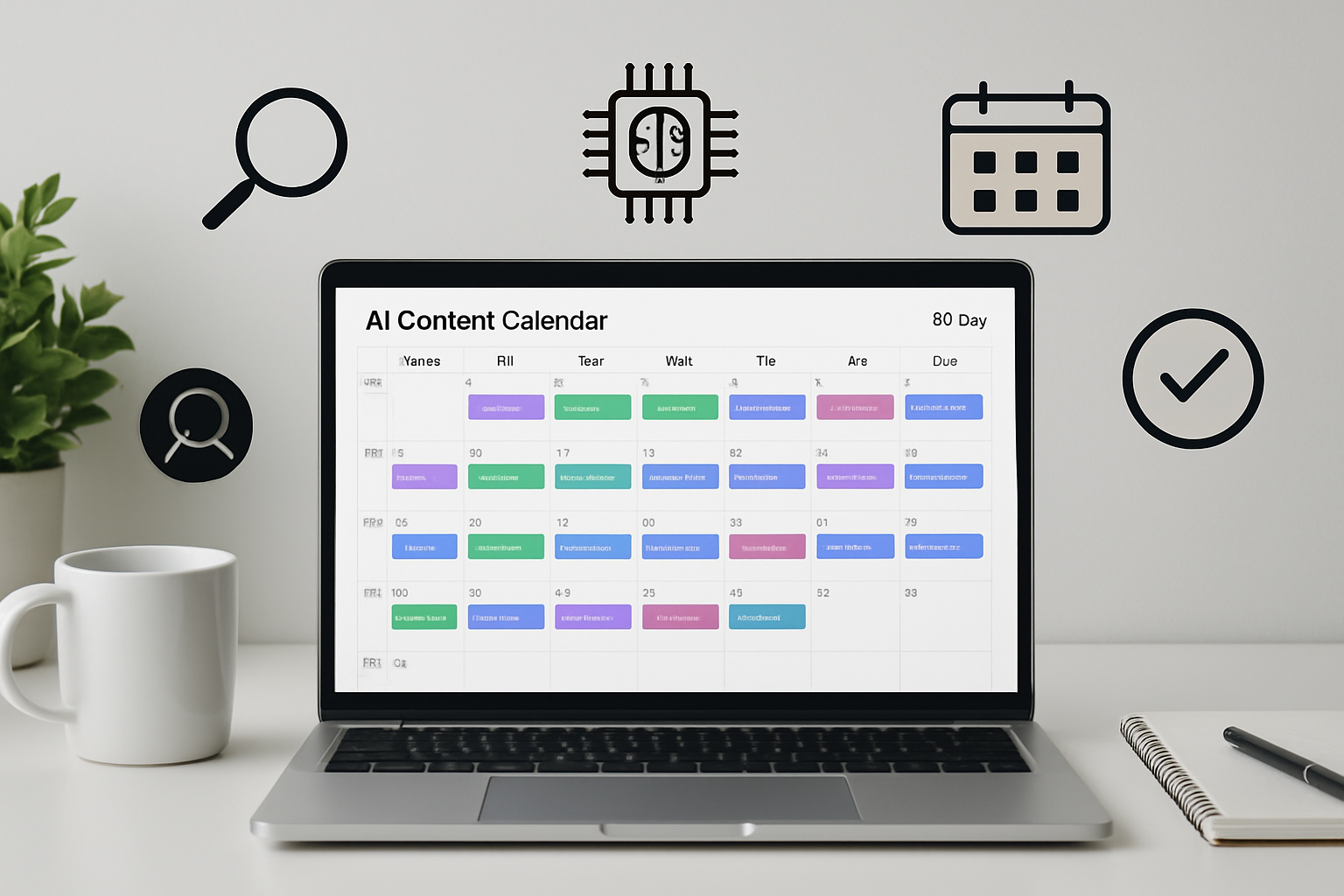
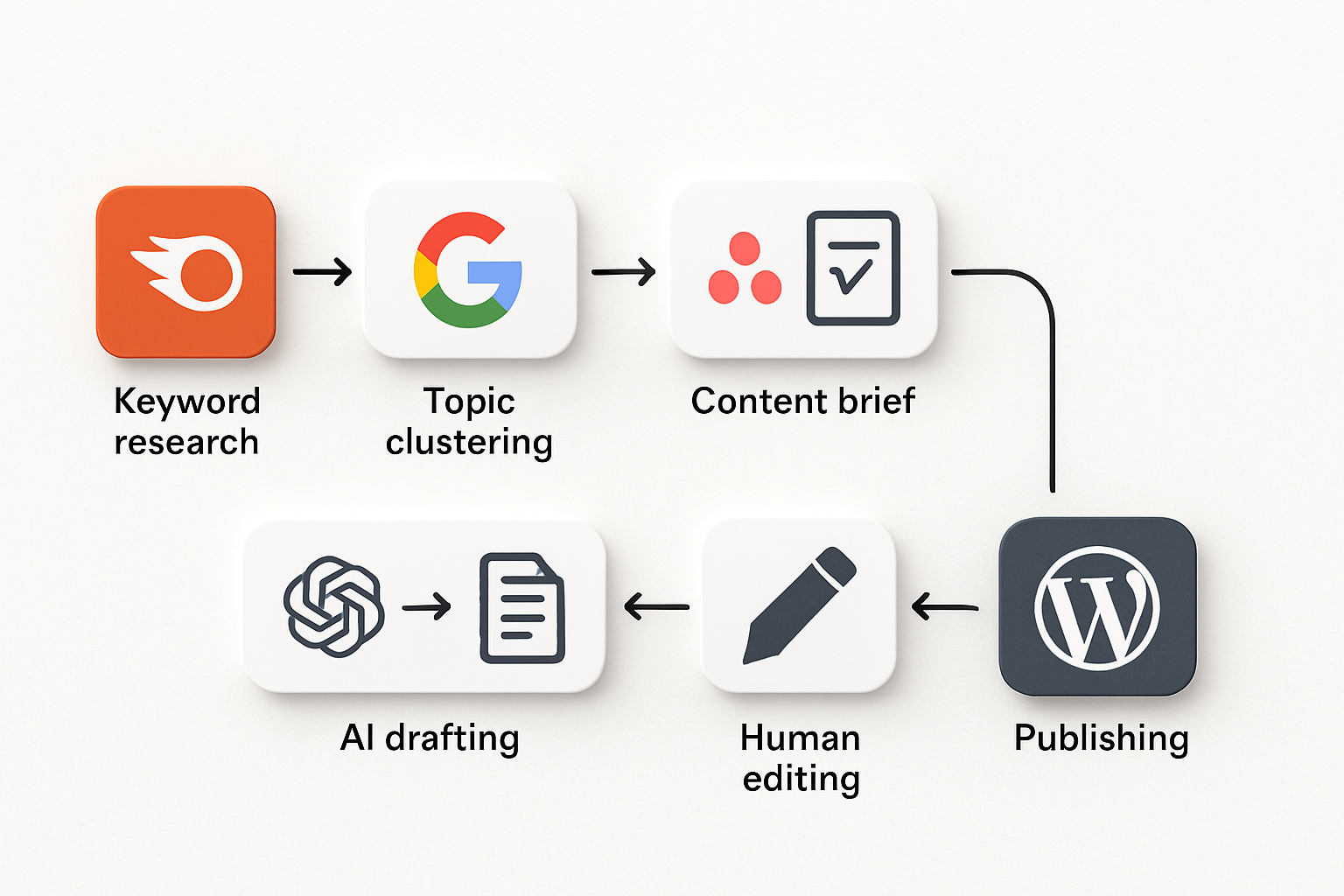
AI automation is defined as the use of artificial intelligence tools and workflows to complete repetitive or data-intensive tasks without continuous human input. In the context of SEO content planning, this includes keyword research, topic clustering, content briefs, draft generation, and performance tracking. These tasks, when automated, free up human creativity for strategy and quality control.
Studies show that businesses publishing 11 or more blog posts per month generate nearly 3.5 times more traffic than those publishing four or fewer posts. Maintaining that volume manually is exhausting and unsustainable for most teams. A 90-day SEO content plan built on AI automation solves that problem directly.
What Is a 90-Day SEO Content Plan and Why Does It Matter?
A 90-day SEO content plan is defined as a structured publishing roadmap that outlines which topics to cover, in what order, and with what keyword targets across a three-month window. It gives your content strategy a clear beginning, middle, and measurable endpoint. This timeframe is long enough to generate SEO momentum but short enough to stay agile and adjust based on data.
Three months aligns perfectly with how search engines evaluate content authority. Google typically takes 60 to 90 days to fully index, rank, and assess new content based on engagement signals. Publishing consistently within this window sends strong authority signals and helps establish topical depth in your niche.
Without a plan, most teams publish reactively — covering whatever feels relevant that week. This results in content gaps, keyword cannibalization, and missed opportunities in the search funnel. A 90-day plan transforms chaotic publishing into a deliberate, compounding SEO strategy.
How Does AI Automation Change the SEO Content Planning Process?
The best way to understand AI’s role in content planning is to think of it as a force multiplier — it does not replace your strategy, it amplifies it. AI tools can analyze thousands of keywords, identify semantic clusters, and generate content briefs in a fraction of the time it takes a human researcher. This speed allows you to plan an entire quarter of content in a single afternoon.
AI automation handles the three most time-consuming phases of content planning: research, structuring, and drafting. Tools like Surfer SEO, Clearscope, ChatGPT, and Jasper each specialize in different parts of this pipeline. When connected through automation platforms like Zapier or Make (formerly Integromat), they form a seamless, nearly hands-free content engine.
According to a 2025 HubSpot marketing report, teams using AI-assisted content workflows produced 67% more content per month compared to teams relying entirely on manual processes. They also reported higher consistency in on-page SEO scores. This is the measurable advantage that AI automation brings to a 90-day SEO content plan.
What Tools Do You Need to Build an AI-Automated Content Pipeline?
Building your AI-powered content pipeline requires a small but intentional stack of tools that work together. You do not need to use every AI platform available — you need the right ones connected in the right order. Here is a recommended beginner-to-intermediate stack:
- Keyword Research: Ahrefs, Semrush, or Google Search Console for identifying target keywords and monthly search volumes
- Topic Clustering: ChatGPT (GPT-4o or later) or Claude for grouping keywords into semantic topic clusters
- Content Briefs: Surfer SEO or Frase for auto-generating SEO-optimized content outlines
- Content Drafting: Jasper, ChatGPT, or Claude for generating first drafts based on your brief
- Editing and Optimization: Grammarly, Hemingway App, and Surfer SEO’s Content Editor for quality checks
- Publishing and Scheduling: WordPress with editorial calendar plugins or Notion + Zapier for automated scheduling
- Performance Tracking: Google Search Console and Google Analytics 4 for ranking and traffic data
Each tool in this stack handles one specific job, which makes the entire system modular and easy to upgrade. When one tool improves or a better alternative emerges, you can swap it out without rebuilding the whole pipeline. This modularity is what makes AI-automated content planning sustainable long-term.
How Do You Structure the 90 Days Into Phases?
The 90-day SEO content plan using AI automation works best when divided into three distinct phases of 30 days each. Each phase has a specific strategic purpose that builds on the previous one. Here is how to structure them:
Phase 1 (Days 1–30): Foundation and Keyword Architecture
- Use Ahrefs or Semrush to export your target keyword list — aim for 50 to 100 keywords relevant to your niche
- Feed those keywords into ChatGPT with a prompt asking it to group them into topical clusters of 5 to 8 related terms
- Identify your 3 to 5 pillar topics — these are your highest-priority, highest-volume keywords that will anchor your content strategy
- Generate content briefs for each pillar topic using Surfer SEO or Frase
- Create and publish your first 8 to 10 pieces of content, prioritizing pillar pages and cornerstone articles
Phase 2 (Days 31–60): Cluster Content and Internal Linking
- Shift focus to supporting cluster content — articles that target long-tail variations of your pillar keywords
- Use AI to draft 12 to 15 supporting articles, each internally linking back to the relevant pillar page
- Implement an internal linking audit using tools like LinkWhisper or a simple spreadsheet to ensure every page links to at least two others
- Monitor early rankings using Google Search Console and adjust content where click-through rates are low
- Repurpose top-performing content into social media posts, email newsletters, or short-form video scripts using AI
Phase 3 (Days 61–90): Optimization, Scaling, and Review
- Identify which articles from Phases 1 and 2 have moved into positions 5 to 20 in Google — these are your quick-win optimization targets
- Use AI to expand thin content, update statistics, and improve on-page SEO for underperforming articles
- Run a content gap analysis using Semrush or Ahrefs to find keywords your competitors rank for that you have not yet covered
- Plan and draft 8 to 10 additional articles targeting those gaps
- Compile a full performance report and use the data to inform your next 90-day content cycle
Why Should You Use Topic Clusters Instead of Individual Keywords?
Topic clustering is defined as the practice of organizing content around a central pillar page supported by multiple related cluster articles that all link back to it. This structure signals to search engines that your website covers a subject in depth, which builds topical authority. Google’s Helpful Content system heavily rewards this kind of comprehensive, interlinked content architecture.
Individual keyword targeting, by contrast, produces isolated articles that compete with each other and fail to build cumulative authority. A cluster of 8 articles around a pillar topic collectively ranks better than 8 unrelated articles targeting 8 separate topics. AI automation makes building these clusters far faster — what once took weeks of research now takes hours.
According to Semrush’s 2025 State of Content Marketing report, websites using topic cluster strategies saw an average of 40% more organic traffic growth over 6 months compared to those using traditional keyword-by-keyword approaches. This is not a marginal improvement — it is a structural advantage. AI automation simply makes this proven strategy accessible to everyone.
How Do You Maintain Quality When Using AI to Generate Content?
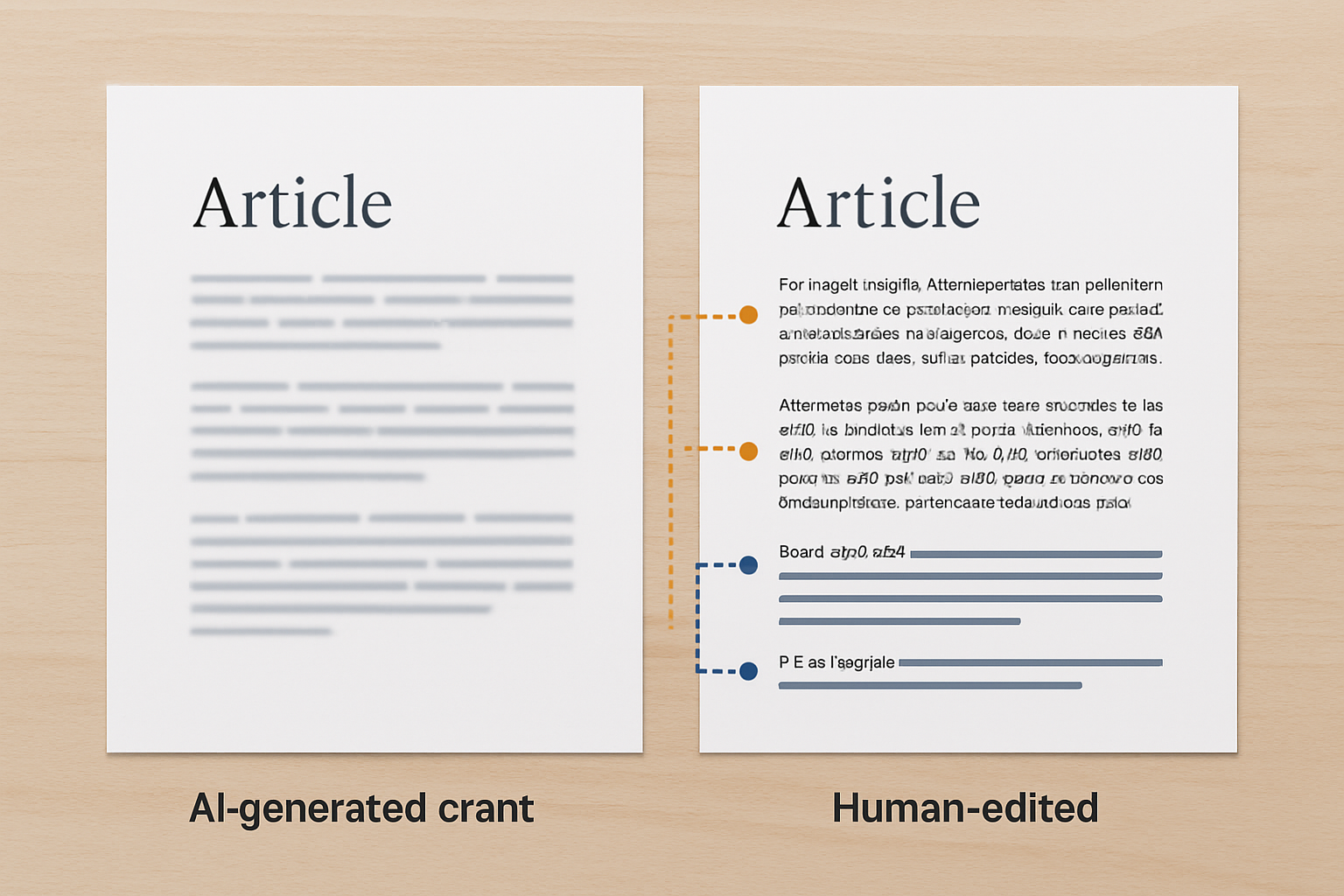
AI-generated content requires human oversight to ensure accuracy, brand voice, and genuine helpfulness. The best workflow treats AI as a highly productive first-draft writer and the human as the expert editor who adds insight, real-world examples, and authoritative voice. Without this human layer, AI content often feels generic and fails to build trust with readers or search engines.
Here are the non-negotiable quality checks for every AI-generated article:
- Fact-checking: Verify all statistics, dates, and specific claims using primary sources
- Brand voice alignment: Rewrite introductions and conclusions to match your unique tone
- Expertise signals: Add first-person insights, case studies, or expert quotes that AI cannot generate authentically
- E-E-A-T compliance: Include author bylines, credentials, and last-updated dates on every article
- On-page SEO review: Confirm keyword placement in title, H2s, meta description, and image alt text
E-E-A-T is defined as Google’s framework for evaluating content quality based on Experience, Expertise, Authoritativeness, and Trustworthiness. It became a critical ranking factor following Google’s 2024 and 2025 core updates. Passing AI content through this quality filter is what separates high-ranking content from low-quality, filtered-out AI spam.
What Does a Realistic 90-Day Content Output Look Like?
A realistic output for a solo content marketer using AI automation is 24 to 36 published articles over 90 days. This breaks down to roughly 2 to 3 high-quality articles per week — a volume that would have required a full editorial team without AI assistance. For a small team of two to three people, that output can scale to 40 to 60 articles without sacrificing quality.
Here is a sample weekly rhythm that sustains this output:
- Monday: AI generates 2 to 3 content briefs based on the pre-approved keyword list
- Tuesday: AI drafts articles from each brief; human editor reviews and refines one article
- Wednesday: Second article edited, optimized in Surfer SEO, and prepared for publishing
- Thursday: Articles published with internal links, meta data, and images in place
- Friday: Performance check on live articles; repurposing of top content into social snippets
This rhythm is sustainable because the AI handles the heavy lifting of research and drafting, leaving human energy for the high-value tasks of editing, strategy, and relationship-building. Over 90 days, this system produces a significant content library that compounds in organic traffic and keyword rankings.
How Do You Measure the Success of Your 90-Day SEO Content Plan?
Measuring success starts with establishing your baseline metrics before Day 1. Record your current organic traffic, total keywords ranking, average domain rating, and number of indexed pages using Google Search Console and Ahrefs. These baseline numbers give you a clear before-and-after picture at the end of your 90-day cycle.
The key performance indicators (KPIs) to track throughout the 90-day SEO content plan include:
- Organic Sessions: Month-over-month growth in traffic from search engines
- Keyword Rankings: Number of keywords ranking in positions 1 to 10, 11 to 20, and 21 to 50
- Indexed Pages: Confirmation that all published content has been crawled and indexed
- Click-Through Rate (CTR): Percentage of searchers who click your result after seeing it
- Average Session Duration: Indicator of content quality and reader engagement
- Backlinks Acquired: Organic links earned as a result of high-quality content
At the 90-day mark, compare your end metrics to your baseline and calculate the percentage growth in each category. Use these results to identify your highest-performing content formats, topic clusters, and keyword types. This data directly informs the strategy for your next 90-day cycle, creating a continuous improvement loop.
Frequently Asked Questions
How long does it take to set up an AI-automated SEO content workflow?
Most marketers can set up a functional AI content workflow in 3 to 5 days, including selecting tools, connecting integrations, and creating prompt templates. The initial setup investment pays off quickly as the system handles ongoing content production at scale.
Can AI automation replace a human SEO content writer?
AI automation is a powerful assistant but not a replacement for human writers. AI handles research, drafting, and optimization tasks efficiently, while human writers add expertise, brand voice, real-world experience, and the E-E-A-T signals that Google uses to rank trustworthy content.
How many articles should I publish per week during a 90-day SEO plan?
Publishing 2 to 3 well-optimized articles per week is the recommended cadence for most businesses using AI automation. Consistency and quality matter more than volume — 24 strong articles outperform 60 thin, AI-spun pieces every time.
What is the biggest mistake people make when using AI for SEO content?
The biggest mistake is publishing raw, unedited AI output without fact-checking, brand voice alignment, or expert insights. Search engines and readers can both detect generic AI content, and Google’s Helpful Content system actively filters it out of top rankings.
Do I need a large budget to build a 90-day AI-automated SEO content plan?
No — a functional AI content workflow can be built for as little as $100 to $200 per month using tools like ChatGPT Plus, a mid-tier Surfer SEO plan, and a free Zapier tier. As your results grow, you can scale your tool investment to match your increased content output.
Start Your 90-Day SEO Content Plan Today
A 90-day SEO content plan powered by AI automation is not a futuristic concept — it is the standard operating procedure for competitive content marketers in 2026. The tools are accessible, the strategies are proven, and the results compound over time. Every week you delay building this system is a week your competitors are gaining ground in search rankings.
The process is straightforward: define your keyword clusters, build your automated content pipeline, publish consistently across 90 days, and measure everything. AI handles the heavy lifting. You provide the strategy, the expertise, and the human quality layer that makes the content genuinely valuable. Together, these elements create an unstoppable SEO content engine.
Start this week by exporting your first keyword list and running it through an AI clustering prompt. Build one content brief. Publish one article. Then repeat — because that simple, repeatable action, scaled over 90 days with AI automation, is what transforms a website from invisible to authoritative. Your 90-day SEO content plan begins now.