
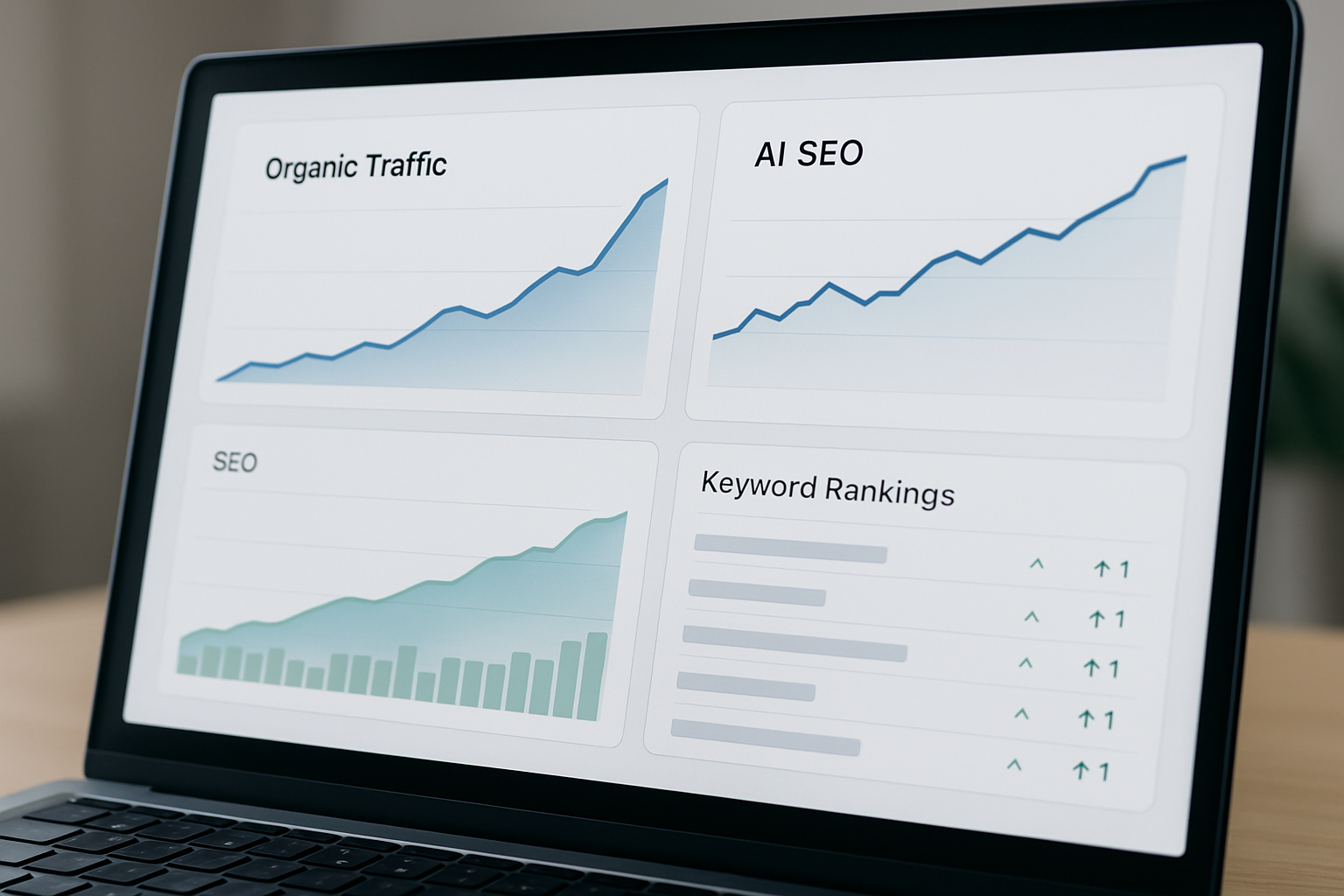
Scaling organic traffic with AI SEO tools is one of the most effective growth strategies available to marketers and website owners today. AI-powered platforms now handle keyword research, content optimization, technical audits, and competitor analysis faster than any human team could manage alone. Understanding how to combine these tools strategically is the difference between slow, incremental growth and compounding traffic gains.
Studies show that websites using AI-assisted SEO workflows publish content up to 3x faster than those relying on manual processes alone. Speed matters in SEO because search engines reward consistent, high-quality publishing at scale. When you remove bottlenecks from your content pipeline, your ability to capture keyword opportunities compounds over time.
The best way to start scaling organic traffic is to audit your current content gaps before touching any AI tool. Knowing where your site is weak gives the AI a focused target rather than scattering your efforts across random keywords. A focused strategy consistently outperforms a broad, unfocused one — even when both use the same AI platforms.
What Are AI SEO Tools and Why Do They Matter?
AI SEO tools are defined as software platforms that use artificial intelligence and machine learning to automate, analyze, and optimize search engine optimization tasks. They process enormous datasets — including search volumes, competitor rankings, and content patterns — in seconds. This gives marketers insights that would take weeks to gather manually.
These tools matter because organic search is still the largest driver of website traffic globally, accounting for over 53% of all trackable web traffic according to BrightEdge research. Paid advertising costs continue rising, making organic a more cost-efficient long-term channel. AI SEO tools help you compete aggressively in organic search without proportionally scaling your team size.
Popular platforms like Semrush, Ahrefs, Surfer SEO, Clearscope, and Jasper have embedded AI deeply into their core workflows. Each solves a different piece of the SEO puzzle, from content briefs to rank tracking. Combining two or three of them creates a near-complete organic growth system.
How Do AI SEO Tools Actually Scale Organic Traffic?
AI SEO tools scale organic traffic by automating the repetitive, time-consuming tasks that previously created bottlenecks in content production and optimization. They identify keyword clusters, generate content outlines, analyze on-page optimization gaps, and recommend internal linking opportunities simultaneously. What once took a team days now takes hours — or even minutes.
Keyword clustering is defined as the process of grouping semantically related keywords so that a single piece of content can rank for dozens of search queries at once. AI tools like Semrush’s Keyword Magic Tool and KeywordInsights.ai do this automatically. Targeting keyword clusters instead of isolated keywords multiplies the ranking surface area of every article you publish.
Content briefs generated by AI tools like Surfer SEO and Frase.io analyze the top 20 ranking pages for any keyword and extract the topics, headings, and questions your content must cover to compete. This eliminates guesswork from your writing process entirely. Writers following AI-generated briefs consistently produce content that ranks faster than those working from scratch.
Specific Ways AI Tools Accelerate Traffic Growth
- Automated technical audits: Tools like Screaming Frog with AI plugins identify crawl errors, broken links, and page speed issues that silently kill rankings.
- Content gap analysis: AI compares your site’s content against competitors and surfaces topics you’re missing entirely.
- SERP feature targeting: AI identifies featured snippet opportunities where you can capture position zero with minimal effort.
- Internal link recommendations: Platforms like Link Whisper use AI to suggest high-value internal links that distribute page authority efficiently.
- Rank tracking and alerts: AI tools monitor ranking changes in real-time and flag when pages drop, so you can react before traffic loss compounds.
Why Should You Choose a Cluster-Based Content Strategy with AI?
A cluster-based content strategy is the most scalable approach to organic traffic growth because it mirrors how search engines understand topical authority. Search engines like Google reward websites that demonstrate deep expertise across a subject, not just single articles targeting isolated keywords. AI tools make building this topical authority dramatically faster.
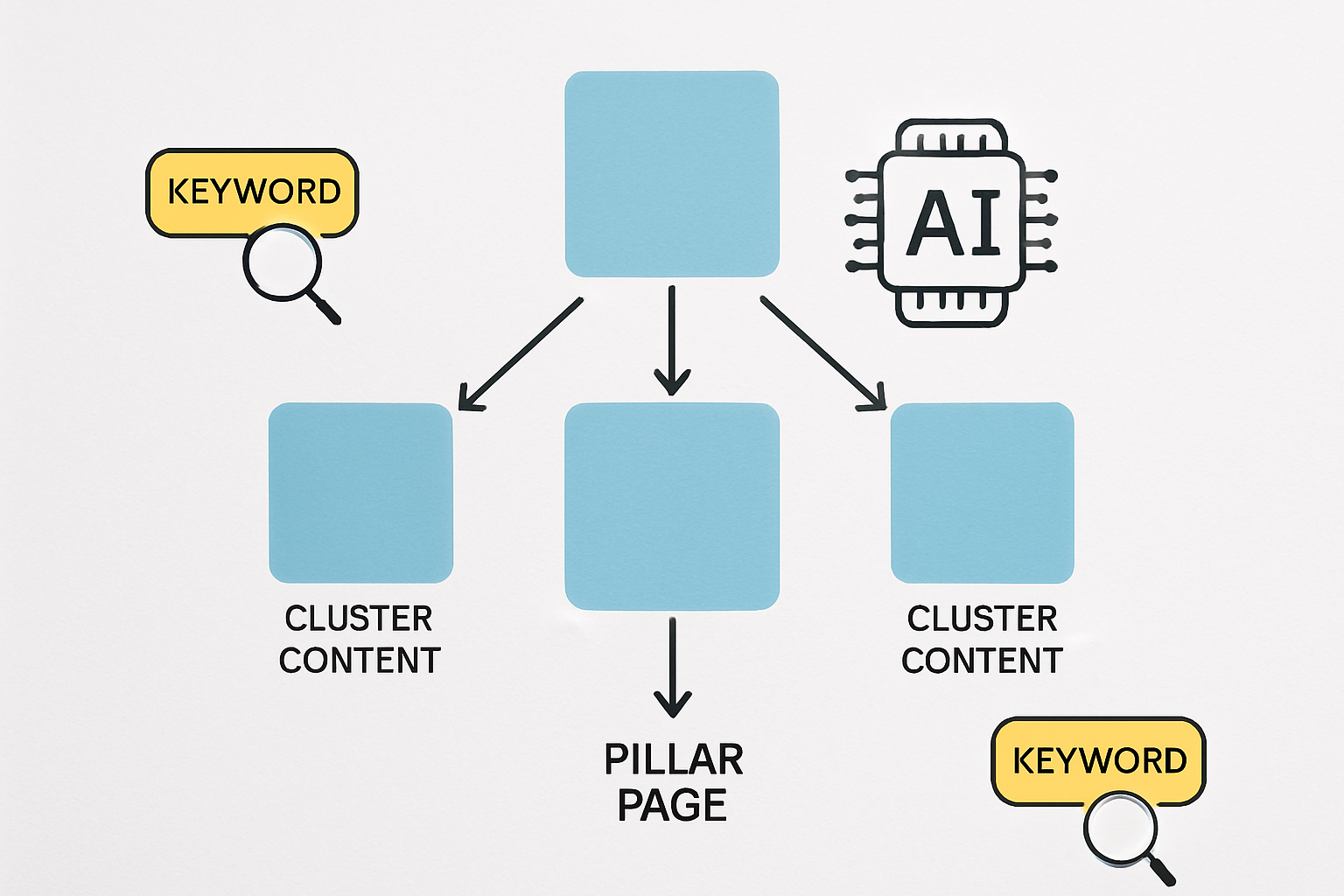
The pillar-cluster model works by creating one comprehensive pillar page targeting a broad keyword, supported by multiple cluster pages targeting specific, related subtopics. AI tools can map an entire cluster architecture for your niche in minutes. Executing this strategy manually would require weeks of competitive research and keyword analysis.
According to HubSpot data, websites that implemented topic cluster models saw organic traffic increase by an average of 20-30% within six months. This growth compounds because each new cluster page strengthens the authority of every page in the group. AI helps you build these clusters systematically rather than publishing random content that never coheres into topical strength.
How Do You Pick the Right AI SEO Tools for Your Goals?
Choosing the right AI SEO tools depends entirely on which part of your organic growth pipeline is the biggest bottleneck right now. If you struggle with content ideation and creation, prioritize tools like Jasper, Frase.io, or Surfer SEO. If technical SEO is your weakness, focus first on Screaming Frog, Sitebulb, or Google Search Console’s AI-enhanced insights.
Here is a practical framework for selecting your AI SEO tool stack:
- Identify your weakest SEO pillar — content, technical, or authority building.
- Match one tool to that specific weakness before adding more complexity.
- Test with a 30-day trial and measure one clear metric like content output or ranking improvements.
- Stack a second tool only after the first is producing measurable results.
- Integrate tools that share data — for example, Ahrefs plus Surfer SEO creates a seamless keyword-to-content workflow.
Avoid the common mistake of subscribing to five or six AI tools simultaneously without a clear workflow connecting them. Tool overload creates confusion and wastes budget without producing proportional results. One or two tools used deeply and consistently outperform a cluttered stack used poorly.
What Does an AI-Powered SEO Workflow Look Like in Practice?
An effective AI-powered SEO workflow follows a repeatable sequence that moves from research to publication to optimization systematically. Each stage uses a different AI capability to remove manual effort and improve output quality. The result is a content engine that scales output without proportionally scaling cost.
Here is a proven weekly workflow structure:
- Monday — Keyword Research: Use Ahrefs or Semrush to identify 5-10 keyword opportunities with AI-assisted difficulty scoring and search intent filters.
- Tuesday — Content Brief Creation: Use Surfer SEO or Frase.io to auto-generate detailed briefs for each target keyword, including headings, word counts, and competitor analysis.
- Wednesday-Thursday — Content Production: Use an AI writing assistant to draft content from each brief, then edit for brand voice, accuracy, and original insights.
- Friday — Optimization and Publishing: Run each piece through Surfer’s content editor for final on-page scoring, then publish with proper schema markup and internal links.
- Ongoing — Rank Monitoring: Use automated rank tracking to flag any published content dropping below position 10, triggering a refresh cycle.
This workflow typically produces 3-5 fully optimized articles per week for a single content creator. Scaling to a team of three writers using the same system can produce 15-20 articles weekly. At that output rate, compounding organic traffic growth becomes almost inevitable within 6-12 months.
How Do You Measure Whether AI SEO Tools Are Actually Working?
Measuring the effectiveness of AI SEO tools requires tracking the right metrics at the right intervals — not just checking rankings after two weeks and giving up. Organic traffic growth from SEO typically shows meaningful results between 3-6 months after content publication, depending on domain authority and competition level. Setting realistic expectations upfront prevents abandoning strategies that are actually working.
The most important metrics to track are:
- Organic sessions: Total non-paid visits from search engines, tracked monthly in Google Analytics 4.
- Keyword ranking positions: Average ranking improvements across your target keyword set, tracked weekly.
- Organic click-through rate (CTR): The percentage of searchers who see your page and click it — monitored in Google Search Console.
- Pages indexed vs. pages ranking: The ratio of published pages that actively drive traffic versus those sitting dormant.
- Content publish velocity: How many optimized articles your team produces per week compared to your baseline before AI tools.
Research from Ahrefs shows that over 90% of web pages get zero organic traffic from Google, primarily because they target keywords that are either too competitive or have no clear search intent alignment. AI tools directly solve this problem by filtering keyword targets to only those with realistic ranking potential. Tracking your zero-traffic page ratio is one of the clearest indicators of whether your AI tool stack is working correctly.
What Are the Biggest Mistakes to Avoid When Using AI SEO Tools?
The biggest mistake marketers make with AI SEO tools is treating AI-generated content as finished content ready for publication. AI drafts require human editing for accuracy, brand voice, original perspective, and factual verification before going live. Publishing unedited AI content at scale is one of the fastest ways to earn a Google quality penalty.
Other critical mistakes include:
- Over-optimizing for AI content scores: Chasing a perfect Surfer SEO score can produce keyword-stuffed content that feels unnatural to readers.
- Ignoring search intent: AI tools surface keywords with traffic potential, but you must verify that your content format matches what searchers actually want — informational, transactional, or navigational.
- Skipping technical SEO: Creating great content on a technically broken site produces minimal results; always pair content AI tools with technical audit tools.
- Publishing without internal linking: New content that isn’t linked to from existing pages gets crawled less frequently and ranks slower.
- Neglecting content refreshes: AI tools help you identify declining pages that need updating — ignoring this maintenance lets rankings decay.
X is not the goal here — publishing volume alone is not the goal. Publishing consistently high-quality, well-optimized content that answers real search intent is the goal. AI tools accelerate quality when used correctly; they amplify problems when used as a shortcut.
Frequently Asked Questions
How long does it take to see organic traffic growth from AI SEO tools?
Most websites see measurable organic traffic improvements within 3-6 months of implementing a consistent AI-assisted content strategy. Results depend on your domain authority, competition level, and how many optimized articles you publish per month.
Do AI SEO tools replace human SEO specialists?
AI SEO tools automate repetitive research and optimization tasks but do not replace the strategic thinking, creativity, and editorial judgment of human SEO specialists. The most effective approach combines AI efficiency with human expertise.
Are AI-generated articles penalized by Google?
Google does not penalize content simply because AI assisted in its creation — it penalizes low-quality, unhelpful content regardless of how it was produced. AI-assisted articles that are edited for accuracy, originality, and genuine user value perform well in search rankings.
What is the best AI SEO tool for beginners?
Surfer SEO is widely considered the most beginner-friendly AI SEO tool because it provides clear, actionable content scoring and briefs without requiring deep SEO expertise to interpret. Pairing it with a free Ahrefs Webmaster Tools account gives a strong starting foundation.
How much does it cost to build an AI SEO tool stack?
A functional AI SEO tool stack for a small team typically costs between $150-$400 per month, covering tools like Semrush or Ahrefs for research, Surfer SEO for content optimization, and an AI writing assistant. Enterprise stacks with advanced automation can range significantly higher.
Start Scaling Your Organic Traffic with AI SEO Tools Today
Scaling organic traffic with AI SEO tools is no longer a competitive advantage reserved for large marketing teams with massive budgets. The tools available today put enterprise-level SEO capabilities into the hands of solo creators, small businesses, and growing brands at an accessible price point. The gap between those who embrace AI-powered SEO and those who don’t is widening every month.
The most important step is simply to start with one focused tool, build a consistent workflow around it, and measure results objectively over 90 days. Organic growth rewards consistency above all else. AI gives you the speed and data clarity to be consistent at a level that was previously impossible without a full agency behind you.
Take action now: Audit your current content gaps using a free Ahrefs or Semrush trial, identify your top 10 keyword opportunities this week, and create your first AI-assisted content brief. One article published today begins a compounding traffic curve that could define your organic growth for years to come. Start small, stay consistent, and let the AI SEO tools do the heavy lifting while you focus on strategy and quality.