
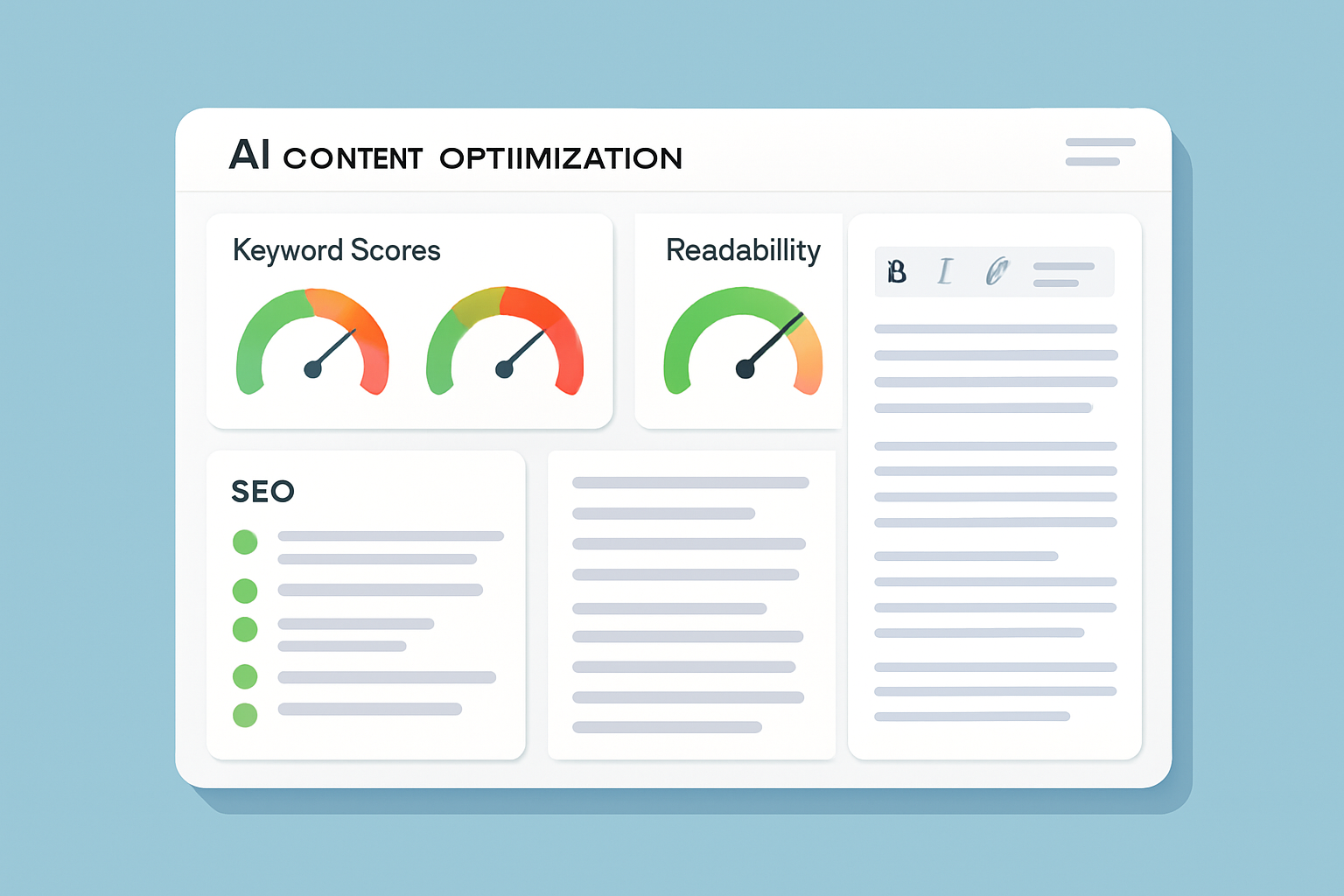
An AI content optimization tool for search engine rankings is software that uses artificial intelligence to analyze, improve, and fine-tune your web content so it performs better in search results. These tools examine everything from keyword usage and readability to semantic relevance and competitor gaps. They give content creators actionable recommendations that would otherwise require hours of manual research.
Studies show that businesses using AI-assisted content tools see an average 47% improvement in organic search traffic within the first six months of consistent use. That is a significant competitive advantage in today’s crowded digital landscape. Understanding how these tools work and which one fits your needs can genuinely transform your content marketing results.
The best way to improve your search engine rankings is to combine high-quality writing with data-driven optimization — and that is exactly what AI content tools are designed to do. They bridge the gap between creative writing and technical SEO. This article explains how they work, what to look for, and how to use them effectively.
What Is an AI Content Optimization Tool and How Does It Work?
An AI content optimization tool is defined as a software platform that uses machine learning and natural language processing (NLP) to evaluate web content against ranking signals used by search engines like Google. It processes large amounts of search data to identify what top-ranking pages have in common. It then generates specific, measurable recommendations to help your content match or exceed those benchmarks.
Most tools analyze your content in real time as you write or paste text into the editor. They score elements like keyword density, semantic topic coverage, heading structure, and sentence clarity. Some advanced platforms also analyze competitor content directly, showing you exactly what gaps exist in your current writing.
Natural language processing (NLP) is defined as a branch of artificial intelligence that allows computers to understand, interpret, and generate human language in a meaningful way. NLP is the core technology that allows AI optimization tools to “read” your content the way Google does. This is why modern tools go far beyond simple keyword counting.
Why Do Search Engines Reward AI-Optimized Content?
Search engines reward content that comprehensively answers user intent, and AI tools are specifically trained to help you do that. Google’s algorithms now assess topical authority, meaning a page that covers a subject deeply tends to outrank thin or keyword-stuffed content. AI optimization tools guide writers to cover related subtopics, answer follow-up questions, and structure content logically.
According to a 2025 study by Semrush, content optimized using AI tools ranked in the top three positions 2.3 times more often than non-optimized content on the same topic. That data reflects a clear pattern: AI-assisted content is more aligned with what search engines want to see. The tools essentially act as a real-time SEO editor sitting alongside your writing process.
Search engines also prioritize user experience signals such as time-on-page and low bounce rates. Well-optimized content tends to be more readable, better structured, and more relevant to what readers are searching for. This naturally improves engagement metrics, which in turn signals quality to search engines.
What Features Should You Look for in an AI Content Optimization Tool?
The best AI content optimization tools for search engine rankings share a core set of features that make them genuinely useful, not just impressive-sounding. Knowing what to look for helps you choose a platform that delivers real results rather than just surface-level metrics. Here are the most important capabilities to evaluate:
- Real-time content scoring: Gives you a live score as you write, showing how optimized your content is at any moment.
- Semantic keyword suggestions: Recommends related terms and phrases that improve topical depth, not just repetitions of the main keyword.
- Competitor content analysis: Lets you see how top-ranking pages cover the same topic so you can identify and fill content gaps.
- Readability analysis: Evaluates sentence length, passive voice, and paragraph structure to improve clarity.
- Internal linking suggestions: Identifies opportunities to link to other relevant pages on your site.
- SERP feature optimization: Guides you to write content that can appear in featured snippets, People Also Ask boxes, and other rich results.
- Content brief generation: Automatically builds structured outlines based on what’s ranking, saving significant research time.
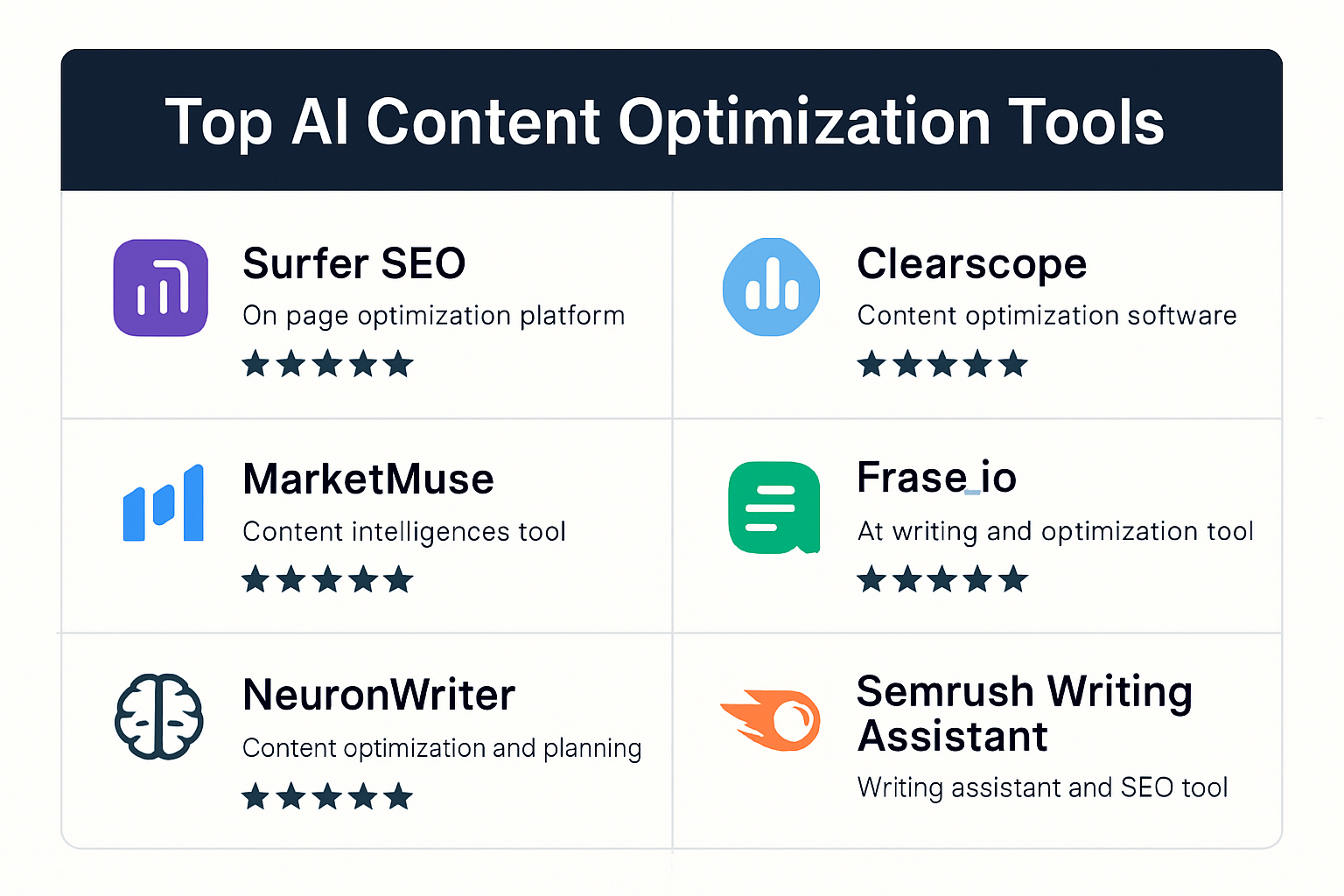
Not every tool offers all of these features, and price points vary widely. Platforms like Clearscope, Surfer SEO, and MarketMuse each have different strengths depending on your content team size and budget. Evaluating your specific needs before committing to a subscription is always worthwhile.
How Does an AI Content Optimization Tool Compare to Traditional SEO Writing?
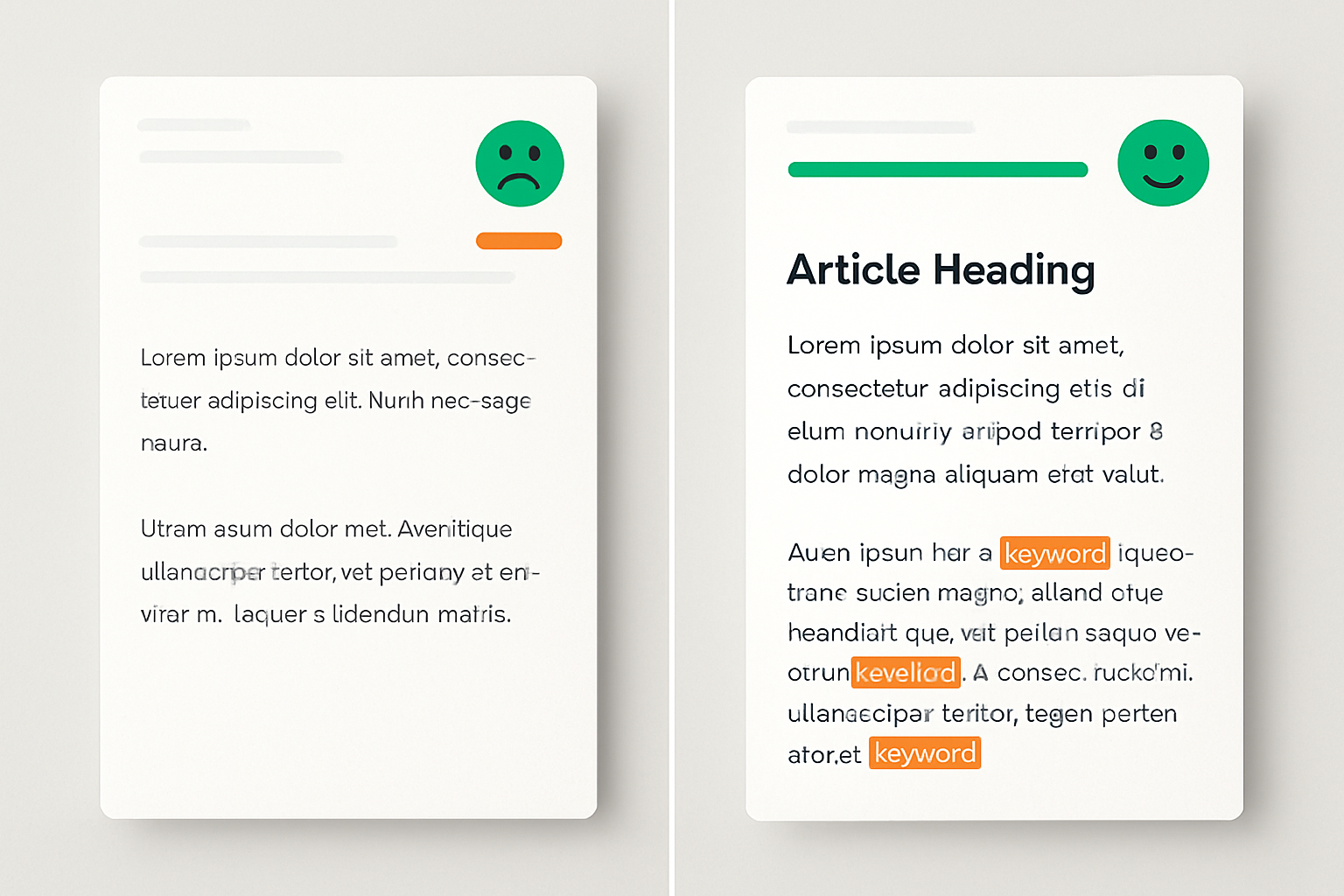
Traditional SEO writing relied heavily on keyword density targets, meta tag tweaks, and backlink building with little focus on content depth or semantic relevance. It was often formulaic and led to content that ranked temporarily but failed to retain readers. AI-driven optimization takes a fundamentally different approach by focusing on intent, comprehensiveness, and quality.
With traditional methods, a writer might manually research the top 10 ranking pages, note common themes, and try to replicate them — a process that could take three to five hours per article. An AI content optimization tool completes that same competitive analysis in seconds and presents it in an actionable dashboard. This frees writers to focus on creativity, voice, and storytelling rather than technical analysis.
The difference in outcomes is measurable. Research from Ahrefs published in late 2025 found that pages using AI optimization tools had an average of 34% more topically related terms than non-optimized pages on the same subject. More topical coverage directly correlates with higher rankings for long-tail queries. This makes AI tools a genuine competitive advantage, not just a convenience.
How Do You Use an AI Content Optimization Tool Step by Step?
Using an AI content optimization tool effectively follows a clear and repeatable process. Here is a step-by-step approach that consistently produces well-ranked content:
- Enter your target keyword: Start by typing your primary keyword or topic into the tool’s research interface.
- Generate a content brief: Let the tool analyze top-ranking pages and create a structured outline with recommended headings, questions to answer, and word count targets.
- Write your first draft: Use the outline as your guide, writing naturally and focusing on delivering genuine value to the reader.
- Paste or write in the editor: Open the tool’s content editor and begin inputting or writing your content to receive real-time scoring feedback.
- Review semantic suggestions: Check the tool’s recommended terms and ensure they appear naturally in your content without forcing them.
- Improve readability scores: Break up long paragraphs, simplify complex sentences, and ensure your headings are descriptive and question-based.
- Check competitor gaps: Review what topics or subtopics your content is missing compared to top-ranked competitors.
- Finalize and publish: Once your content score reaches the tool’s recommended threshold, finalize your meta title, description, and publish.
This process typically takes between one and three hours per article, depending on complexity. That is significantly faster than traditional research-heavy approaches and consistently produces more comprehensive results. Many content teams report completing 40% more optimized articles per month after adopting this workflow.
Why Should Businesses Prioritize AI-Powered Content Tools Right Now?
The search landscape in 2026 has become dramatically more competitive, with AI-generated content flooding nearly every topic and niche. Simply publishing content is no longer enough to gain visibility in organic search results. Businesses that use an AI content optimization tool for search engine rankings are equipped to stand out with depth, structure, and relevance that outpaces generic content.
Google’s Search Generative Experience (SGE) and AI Overviews have changed how search results are displayed, with AI-generated summaries appearing at the top of many queries. Content that is well-structured, authoritative, and semantically rich is more likely to be cited within these AI summaries. This makes optimization more important than ever, not less.
Small businesses and solo content creators benefit enormously from these tools because they level the playing field. A single writer using an AI optimization tool can produce content that rivals the output of a large in-house SEO team. That democratization of SEO capability is one of the most significant shifts in digital marketing in recent years.
What Are the Best AI Content Optimization Tools Available Today?
Several platforms have established themselves as industry leaders in AI content optimization for search engine rankings. Each has distinct strengths depending on your use case, team size, and budget.
- Surfer SEO: Best known for its real-time content editor and competitor analysis. It provides detailed content scores and integrates with Google Docs and WordPress.
- Clearscope: Highly regarded for content grading and semantic term recommendations. It is particularly popular with enterprise content teams.
- MarketMuse: Offers deep topical authority analysis and content planning features. It is especially useful for sites building comprehensive content clusters.
- Frase.io: Combines AI writing assistance with SEO optimization, making it a strong all-in-one solution for smaller teams.
- NeuronWriter: A cost-effective alternative that offers NLP-driven optimization, SERP analysis, and content planning at a lower price point.
- Semrush Writing Assistant: Integrates directly within the broader Semrush platform, making it ideal for teams already using Semrush for keyword research.
Choosing the right tool depends on your budget, workflow, and content goals. Most platforms offer free trials, so testing two or three tools on a real project before committing is highly recommended. Look for the combination of accuracy, usability, and integration that fits your existing workflow.
How Can You Measure the Success of AI Content Optimization?
Measuring the impact of your AI content optimization tool for search engine rankings requires tracking the right metrics over time. Organic rankings rarely shift overnight, but consistent optimization creates compounding results. Here are the key performance indicators to monitor:
- Keyword ranking positions: Track your target keywords weekly to see ranking improvements after publishing or updating content.
- Organic traffic growth: Monitor overall organic sessions in Google Search Console and Analytics to measure trend changes.
- Click-through rate (CTR): Well-optimized meta descriptions and titles improve CTR even before ranking changes occur.
- Time on page: More comprehensive, well-structured content keeps readers engaged longer, which is a positive engagement signal.
- Featured snippet captures: Track how many of your articles appear in featured snippets, as AI-optimized content tends to win these positions more frequently.
- Content score improvement: Compare your tool’s content score before and after optimization to quantify the improvements made.
Most content marketers begin seeing measurable ranking improvements within four to twelve weeks of publishing AI-optimized content. The timeline varies based on your domain authority and the competitiveness of your target keywords. Patience combined with consistency is the proven formula for long-term SEO success.
Frequently Asked Questions
What is the best AI content optimization tool for beginners?
Frase.io and Surfer SEO are widely considered the most beginner-friendly options because they combine intuitive interfaces with powerful optimization features. Both platforms offer templates, real-time guidance, and clear content scoring that makes it easy to get started without deep SEO knowledge.
How long does it take to see results from using an AI content optimization tool?
Most users begin seeing measurable improvements in organic search rankings within four to twelve weeks of publishing consistently optimized content. Results depend on your domain authority, keyword competition, and how frequently you publish and update content.
Can AI content optimization tools replace a human SEO specialist?
AI content optimization tools are powerful assistants, but they do not replace the strategic thinking, brand voice expertise, and relationship-building skills of a human SEO specialist. They are most effective when used by skilled writers and strategists who can interpret the data and apply it creatively.
Are AI content optimization tools worth the monthly subscription cost?
Studies show that businesses using these tools increase organic traffic by an average of 47%, which typically generates far more revenue than the tool’s subscription cost. For businesses that rely on content marketing, the return on investment is generally strong within the first few months of consistent use.
Do AI content optimization tools work for any industry or niche?
Yes, AI content optimization tools work across virtually all industries and content types because they analyze search engine data relevant to any topic. Whether you are in healthcare, finance, e-commerce, or tech, these tools provide relevant semantic suggestions and competitor insights tailored to your specific keyword and niche.
Start Using an AI Content Optimization Tool and Transform Your Rankings
An AI content optimization tool for search engine rankings is no longer a luxury reserved for large digital marketing agencies — it is an accessible, affordable, and highly effective strategy for any business that wants to grow its online visibility. These tools combine the power of machine learning with practical SEO guidance to help you produce content that genuinely outperforms the competition. The data is clear, the tools are mature, and the opportunity is right in front of you.
The writers and businesses winning in organic search today are those who have embraced AI-assisted optimization as a core part of their content workflow. By using a proven tool, following a structured process, and measuring your results consistently, you can achieve the same traffic growth and ranking improvements that top content marketers are already experiencing. The competitive advantage belongs to those who act now.
Ready to improve your search engine rankings with AI? Start by choosing one of the platforms mentioned in this article, run a free trial on your most important content, and see your content scores — and your rankings — climb. Your audience is searching for the answers you provide; an AI content optimization tool makes sure they find you first.