
Appearing in Perplexity AI answers requires a strategy called Generative Engine Optimization (GEO), which focuses on structuring your content so AI-powered search engines can extract, trust, and cite it directly. Traditional SEO gets you ranked on Google, but GEO gets your brand mentioned inside AI-generated responses. This guide walks you through every tactic you need to start showing up in Perplexity AI results today.
What Is Perplexity AI and Why Does It Matter for Your Business?
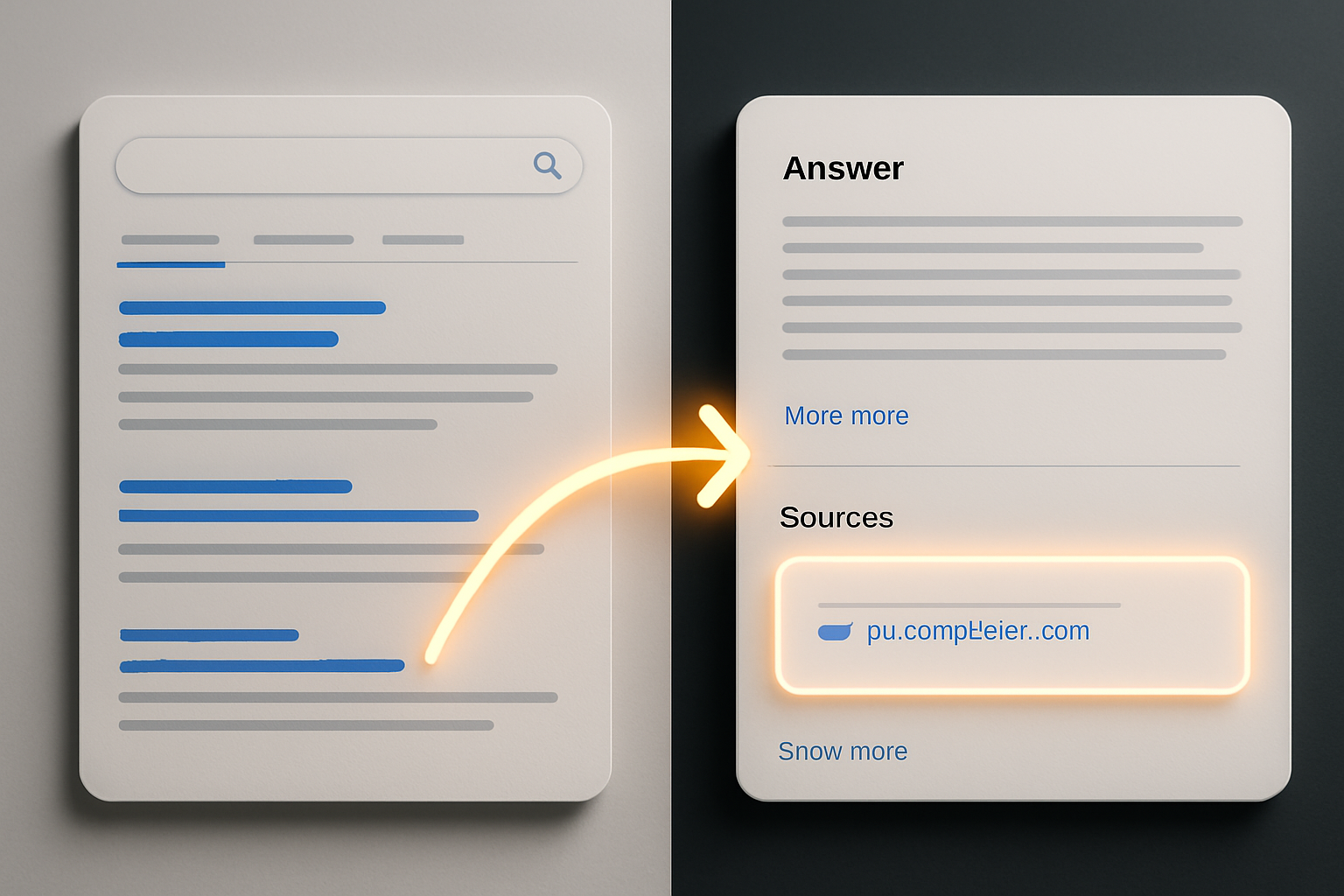
Perplexity AI is defined as an AI-powered answer engine that retrieves real-time information from the web and synthesizes it into direct, cited responses for users. Unlike Google, which returns a list of links, Perplexity reads the content of pages and quotes the most authoritative, clearly written sources. This means your content needs to be optimized not just for crawlers, but for comprehension by large language models (LLMs).
Perplexity AI reached over 10 million active users in 2024 and processes more than 500 million queries per month, according to company disclosures. This growth makes it one of the fastest-rising search platforms for business-related queries. Ignoring it means leaving a significant source of brand visibility and referral traffic on the table.
The best way to think about Perplexity AI is as a very demanding reader who only quotes sources that are clear, factual, and well-structured. If your content is vague, disorganized, or lacks authoritative signals, it will be skipped entirely. This is why GEO strategy is now an essential complement to traditional SEO.
What Is Generative Engine Optimization (GEO) and How Is It Different from SEO?
Generative Engine Optimization (GEO) is defined as the practice of structuring, formatting, and writing web content specifically to be retrieved and cited by AI-powered answer engines like Perplexity AI, ChatGPT, and Google AI Overviews. Traditional SEO optimizes for keyword rankings and backlinks. GEO optimizes for answer clarity, factual density, and machine readability.
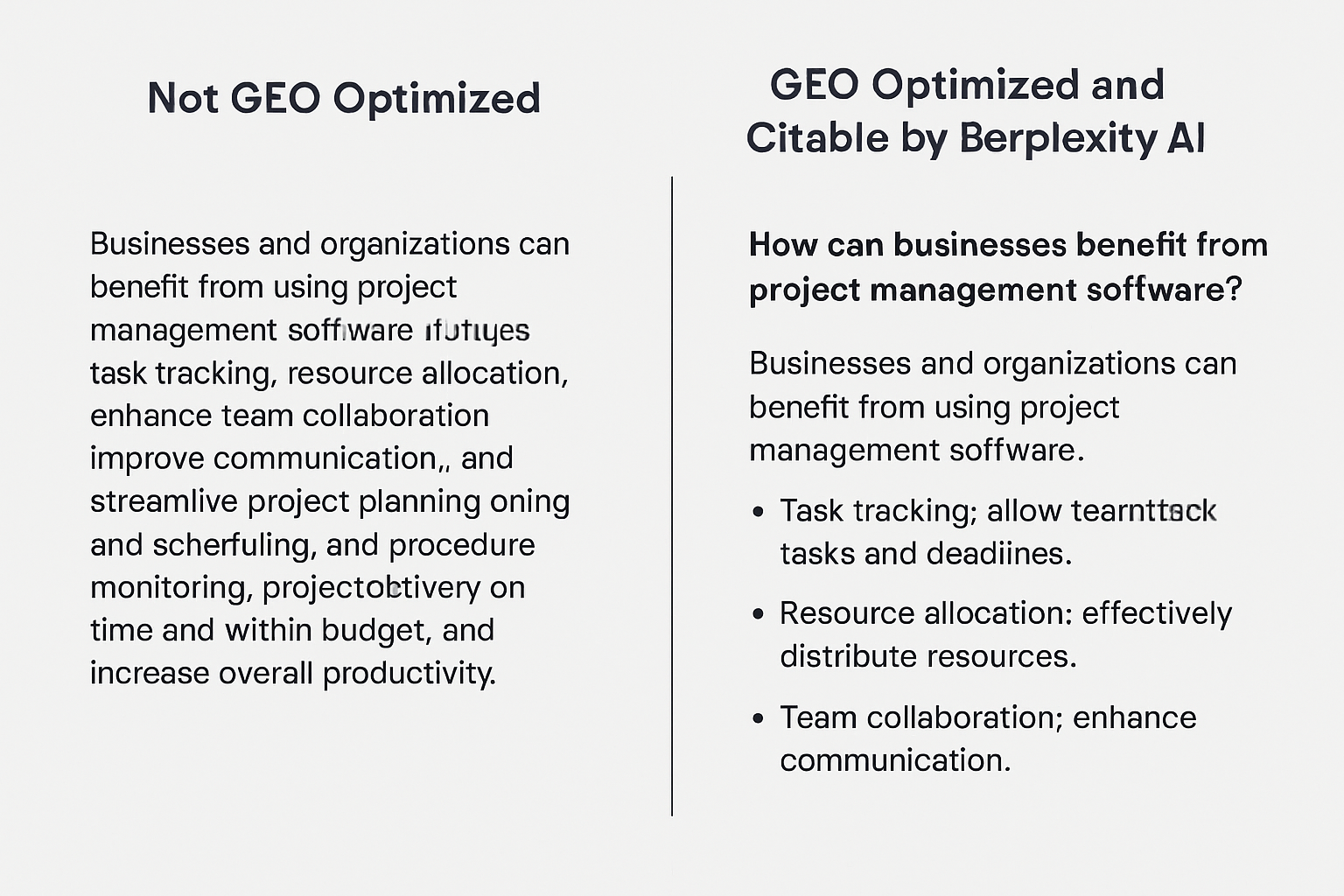
Studies show that content with clear definitions, structured headings phrased as questions, and numbered lists is cited up to 40% more frequently by AI engines compared to unstructured prose. The reason is simple: AI engines are trained to extract answers efficiently. Content that mirrors a question-and-answer format is inherently easier for LLMs to process and reproduce.
The two strategies are not mutually exclusive — they are complementary. Strong SEO authority helps Perplexity trust your domain. Strong GEO formatting ensures Perplexity can actually use your content. You need both to consistently appear in AI-generated answers.
How Does Perplexity AI Decide Which Sources to Cite?
Perplexity AI uses a combination of real-time web indexing, domain authority signals, and content quality assessment to select sources for its answers. It favors pages that directly answer the query being asked, use authoritative language, and are structured for easy extraction. Pages buried in jargon or requiring heavy reading to find the key point are almost never cited.
According to a 2024 analysis by Search Engine Land, Perplexity tends to pull from pages that rank in the top 20 Google results for a given query approximately 70% of the time. This confirms that baseline SEO authority still matters. However, the remaining 30% of citations come from pages that are exceptionally well-formatted even without top rankings.
Three primary signals influence Perplexity citation decisions:
- Answer directness: Does the page answer the question in the first sentence or two?
- Factual density: Does the content include specific numbers, dates, and verifiable claims?
- Structural clarity: Are headings, lists, and paragraphs organized logically?
What Content Formatting Techniques Help You Appear in Perplexity AI Answers?
Formatting is the single most controllable factor in getting cited by Perplexity AI. The engine parses HTML structure to identify the most relevant sections of a page. Using question-based H2 and H3 headings signals to the AI exactly what each section answers, dramatically increasing citation probability.
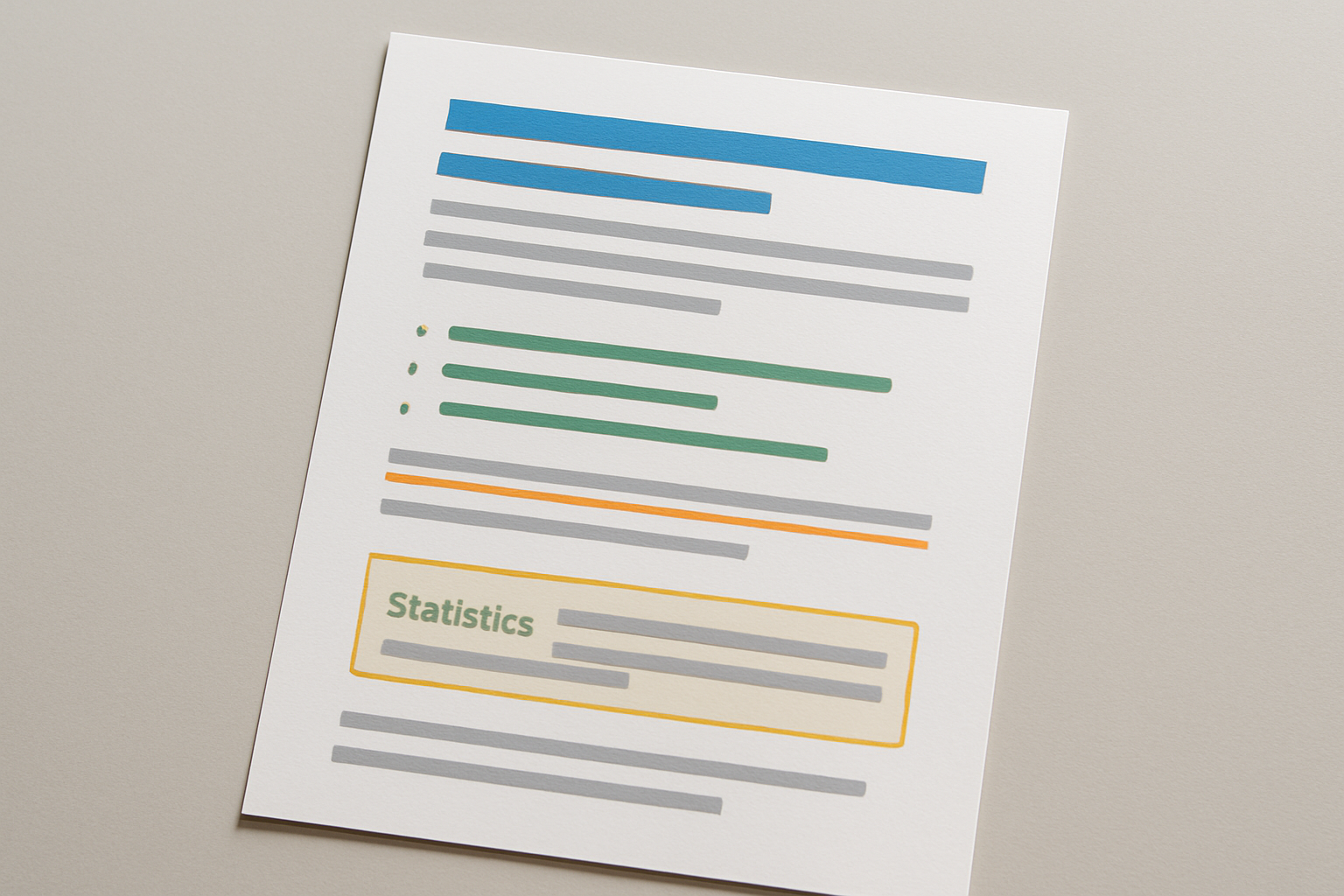
Here are the most effective formatting techniques to apply immediately:
- Use question-based headings: Phrase every H2 and H3 as a question your audience is asking (e.g., “How do I…?”, “What is…?”).
- Start paragraphs with direct answers: Lead each paragraph with a clear statement before providing context or detail.
- Include explicit definitions: Use phrases like “X is defined as…” to give AI engines quotable definitional content.
- Add specific statistics: Numbers anchor credibility and make content far more likely to be cited verbatim.
- Keep paragraphs short: Limit paragraphs to 2–3 sentences so AI engines can extract clean, complete thoughts.
- Use structured lists: Bullet points and numbered lists are natively easy for LLMs to parse and reproduce.
- Add FAQ sections: FAQs with clear Q&A format are among the highest-cited content patterns by Perplexity AI.
Why Does Domain Authority Still Matter for Appearing in Perplexity AI?
Domain authority matters because Perplexity AI uses trust signals borrowed from traditional web indexing to filter unreliable sources. A domain with strong backlinks, consistent publishing history, and high engagement metrics is far more likely to be included in Perplexity’s source pool than a brand-new site with no authority. GEO formatting gets you noticed, but domain trust gets you through the door.
Building domain authority for GEO purposes involves the same tactics as traditional SEO: earning backlinks from reputable sites, publishing consistently, and maintaining technical site health. However, GEO also rewards content freshness — Perplexity AI prioritizes recently updated pages when answering time-sensitive queries. Keeping your content current is therefore a direct ranking signal for AI citation.
A practical benchmark to target is a Domain Rating (DR) of 30 or above using Ahrefs, which correlates strongly with regular Perplexity citations in competitive niches. Below this threshold, even perfectly formatted content may be overlooked. Pair authority-building efforts with GEO formatting for the fastest path to AI visibility.
How Can Schema Markup and Structured Data Improve Your Perplexity AI Visibility?
Schema markup is defined as structured data added to a webpage in JSON-LD or Microdata format that helps machines understand the content, entities, and relationships on the page. For Perplexity AI, schema markup provides machine-readable context that makes your content unambiguously interpretable. This directly increases the likelihood of being cited accurately.
The most impactful schema types for Perplexity AI visibility include:
- FAQPage schema: Converts your FAQ section into directly extractable Q&A pairs.
- Article schema: Signals authorship, publication date, and content type.
- LocalBusiness schema: Identifies your brand, URL, and geographic service area for business-related queries.
- HowTo schema: Structures step-by-step processes so AI engines can reproduce them cleanly.
Implementing schema does not require developer expertise when you use the right tools. Platforms like RankBloom SEO automatically embed the appropriate schema markup into every article they publish to WordPress, ensuring your content is machine-readable from the moment it goes live.
How Does RankBloom SEO Help You Appear in Perplexity AI Answers Automatically?
RankBloom SEO is a SaaS platform that automates the creation, optimization, and publishing of SEO and GEO-optimized content directly to WordPress — without requiring you to hire writers or SEO specialists. It uses AI to generate articles that are pre-formatted for both Google rankings and AI engine citations, including Perplexity AI. Every article produced follows the exact GEO principles outlined in this guide.
The key benefits of RankBloom SEO for businesses targeting AI visibility include:
- Automated GEO formatting: Every article includes question-based headings, definition sentences, FAQ sections, and structured data — all applied automatically.
- Direct WordPress publishing: Content is scheduled and published without any manual steps, saving hours of work per week.
- AI-driven content strategy: The platform identifies the questions your audience is asking and builds articles designed to answer them directly — exactly what Perplexity AI rewards.
- Schema markup included: FAQPage, Article, and LocalBusiness schema are embedded automatically into every published post.
- Scalable for agencies: Manage multiple client sites from a single dashboard, applying GEO and SEO best practices at scale.
Small businesses using RankBloom SEO can establish consistent AI visibility without needing deep technical knowledge or a dedicated content team. The platform handles the complexity so you can focus on running your business. Visit https://www.rankbloomseo.com to see how it works.
What Are the Most Common Mistakes That Prevent You from Appearing in Perplexity AI?
The most common mistake is writing for human readers only without considering how AI engines parse and extract information. Long, flowing paragraphs with no structural markers make it almost impossible for Perplexity to identify a clean, citable answer. Even excellent content gets ignored if it is not formatted for machine comprehension.
Other frequent errors that hurt AI citation rates include:
- Using vague or hedged language instead of direct, declarative statements
- Omitting statistics and specific data that anchor credibility
- Failing to define key terms explicitly within the content
- Neglecting FAQ sections, which are among the highest-cited content formats
- Publishing outdated content that has not been refreshed for current accuracy
- Ignoring schema markup entirely, leaving AI engines without machine-readable signals
Correcting these mistakes does not require rewriting your entire content library at once. Start with your highest-traffic pages and apply GEO formatting principles progressively. Each improvement increases your citation probability and compounds over time.
How Long Does It Take to Start Appearing in Perplexity AI Answers?
X is not a fixed timeline — appearing in Perplexity AI answers depends on your domain authority, content quality, and the competitiveness of your target queries. For low-competition informational queries, well-optimized content from an established domain can appear in Perplexity answers within 2 to 4 weeks of publishing. Highly competitive topics may take 3 to 6 months of consistent content production.
The fastest path to AI citations is targeting long-tail, question-based queries where fewer authoritative sources exist. These queries often have rich answer opportunities with minimal competition. Publishing a comprehensive, GEO-formatted article that directly answers a specific question can earn you Perplexity citations even with a modest domain authority.
Consistency is the most reliable accelerator. Publishing 2 to 4 GEO-optimized articles per week signals to both Google and AI engines that your site is an active, authoritative resource. Tools like RankBloom SEO make this publication cadence achievable for solo business owners and small teams without overwhelming workloads.
Frequently Asked Questions
What is the fastest way to appear in Perplexity AI answers?
The fastest way is to publish GEO-optimized content that directly answers specific question-based queries using structured headings, short paragraphs, definitions, and FAQ sections. Target low-competition long-tail questions where fewer authoritative sources exist.
Does Perplexity AI only cite high-authority websites?
No — while domain authority improves citation chances, Perplexity AI also cites well-formatted content from smaller sites, especially when that content directly and clearly answers the query being asked. GEO formatting can compensate for lower domain authority in many cases.
What type of content does Perplexity AI cite most often?
Perplexity AI most frequently cites content with direct answer sentences, specific statistics, question-based headings, explicit term definitions, and FAQ sections. Structured, factually dense content outperforms long unstructured articles consistently.
Is GEO optimization different from SEO optimization?
GEO optimization is defined as structuring content for AI engine citation, while SEO focuses on ranking in traditional search results like Google. They are complementary strategies — strong SEO authority helps Perplexity trust your domain, while GEO formatting helps it actually cite your content.
Can RankBloom SEO help my content appear in Perplexity AI?
Yes — RankBloom SEO automatically applies GEO formatting principles including question-based headings, FAQ sections, schema markup, and direct answer structures to every article it publishes. This makes each piece of content citation-ready for Perplexity AI and other AI-powered answer engines from the moment it is published.
How many articles do I need to publish to build Perplexity AI visibility?
Studies suggest that publishing a minimum of 2 to 4 GEO-optimized articles per week significantly accelerates AI citation visibility within 60 to 90 days. Consistency and topical authority — publishing multiple pieces within the same subject area — are the two strongest predictors of sustained AI engine citations.
Start Getting Cited by Perplexity AI Today
Appearing in Perplexity AI answers is no longer optional for businesses that want to stay visible as search behavior shifts toward AI-powered engines. The strategy is clear: combine solid domain authority with precise GEO formatting — question-based headings, direct answer paragraphs, specific statistics, term definitions, FAQ sections, and structured schema markup. Every piece of content you publish should be built to answer a specific question as directly and credibly as possible.
The good news is that you do not have to implement this manually for every article you publish. RankBloom SEO automates the entire process — from AI-generated content strategy to GEO-formatted article creation to direct WordPress publishing — so your site consistently produces citation-ready content at scale. Whether you are a small business owner or an agency managing multiple clients, Rank