

Automating SEO content creation is one of the most powerful strategic decisions a business can make in today’s competitive digital landscape. Companies that embrace AI-driven content workflows are producing more content, ranking faster, and freeing their teams to focus on strategy and creativity. Whether you run a small e-commerce store or a large enterprise, the advantages are real, measurable, and growing every year.
The benefits of automating SEO content creation go far beyond just saving a few hours per week. Automation reshapes your entire content operation — from research and writing to publishing and optimization. This article walks you through the eight most impactful benefits, backed by data and practical examples, so you can make an informed decision for your business.
What Is Automated SEO Content Creation?
Automated SEO content creation is defined as the use of artificial intelligence, machine learning, and natural language processing (NLP) tools to research, draft, optimize, and publish search-engine-friendly content with minimal human intervention. These tools analyze top-ranking pages, identify keyword gaps, generate structured drafts, and apply on-page SEO best practices automatically. Popular platforms include Jasper, Surfer SEO, MarketMuse, and a growing ecosystem of custom AI pipelines.
NLP (Natural Language Processing) is defined as a branch of artificial intelligence that enables computers to understand, interpret, and generate human language in a meaningful and contextually accurate way. This technology is the foundation behind most modern AI writing tools. Without NLP, automated content would read as robotic and disconnected — today’s tools produce fluent, readable, and strategically sound text.
It is important to distinguish automation from full replacement of human writers. Most effective workflows blend AI-generated drafts with human editorial oversight and brand voice refinement. This hybrid model captures the speed of automation while maintaining the authenticity and expertise that readers and search engines reward.
Why Does Content Automation Save Businesses So Much Time?
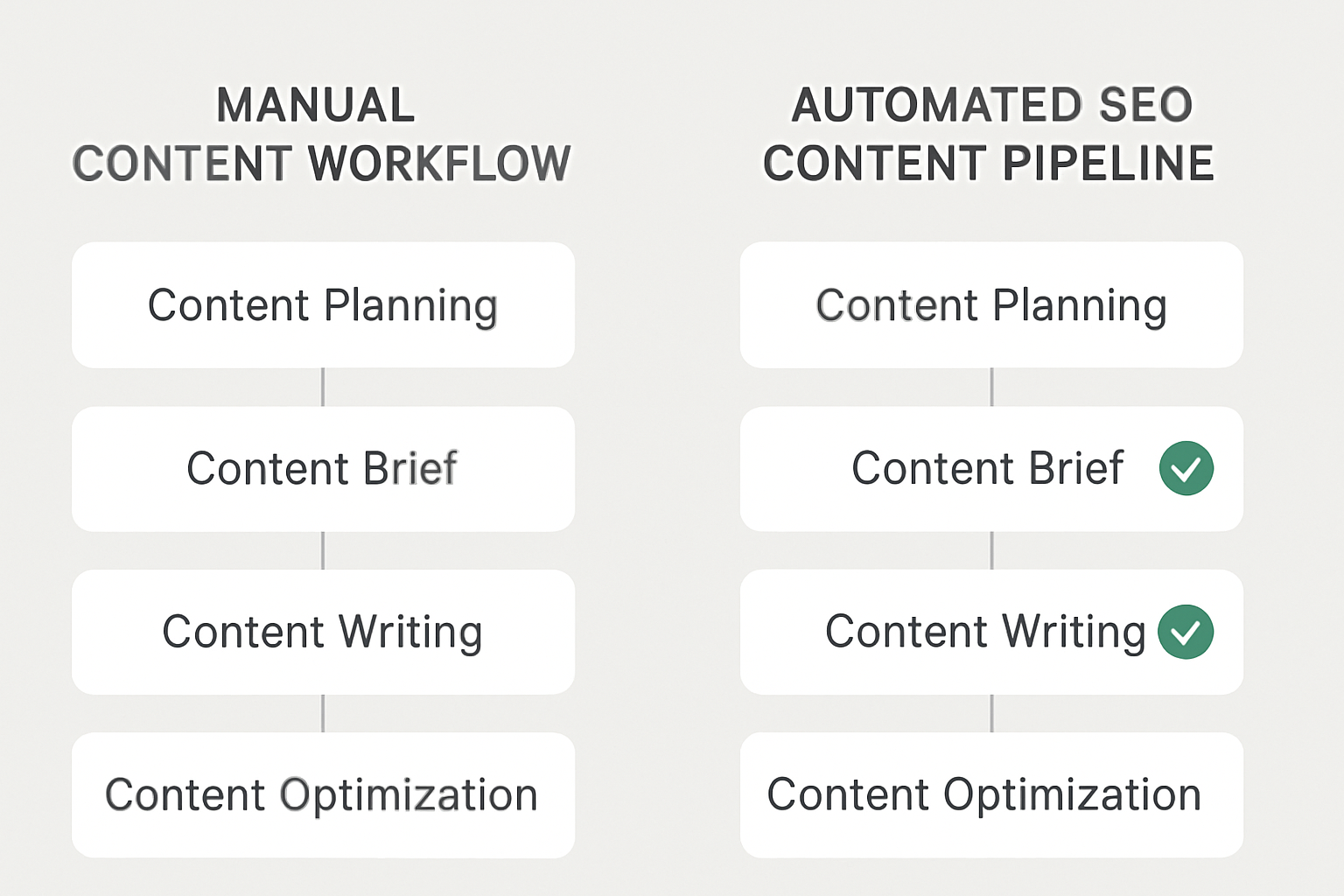
Studies show that marketing teams spend an average of 33% of their workweek on content creation tasks that could be partially or fully automated. This includes keyword research, brief writing, drafting, internal linking, meta tag creation, and formatting. Automation compresses this timeline dramatically — what once took three days can now be completed in under three hours.
Time savings compound across the content calendar. If your team publishes 20 articles per month and automation cuts production time by 60%, you effectively reclaim hundreds of hours annually. Those hours can be reinvested into content strategy, audience research, link building, and conversion rate optimization — tasks that require genuine human judgment.
Speed to publish also directly affects SEO performance. Search engines reward fresh, consistently updated content, and automation allows businesses to maintain publishing frequency even during team shortages or budget constraints.
How Does Automation Improve Content Quality and SEO Accuracy?
AI-powered SEO tools analyze the top 10 to 20 ranking pages for any target keyword and extract the exact topics, questions, entities, and semantic patterns that Google rewards. This data-driven approach removes guesswork from content planning. Human writers, no matter how skilled, struggle to manually process thousands of data points the way automated tools can in seconds.
Automation also enforces on-page SEO consistency across every piece of content. Every article can be checked and scored for keyword density, heading structure, meta description length, readability score, internal linking opportunities, and schema markup — all before publishing. This kind of systematic quality control is nearly impossible to maintain manually at scale.
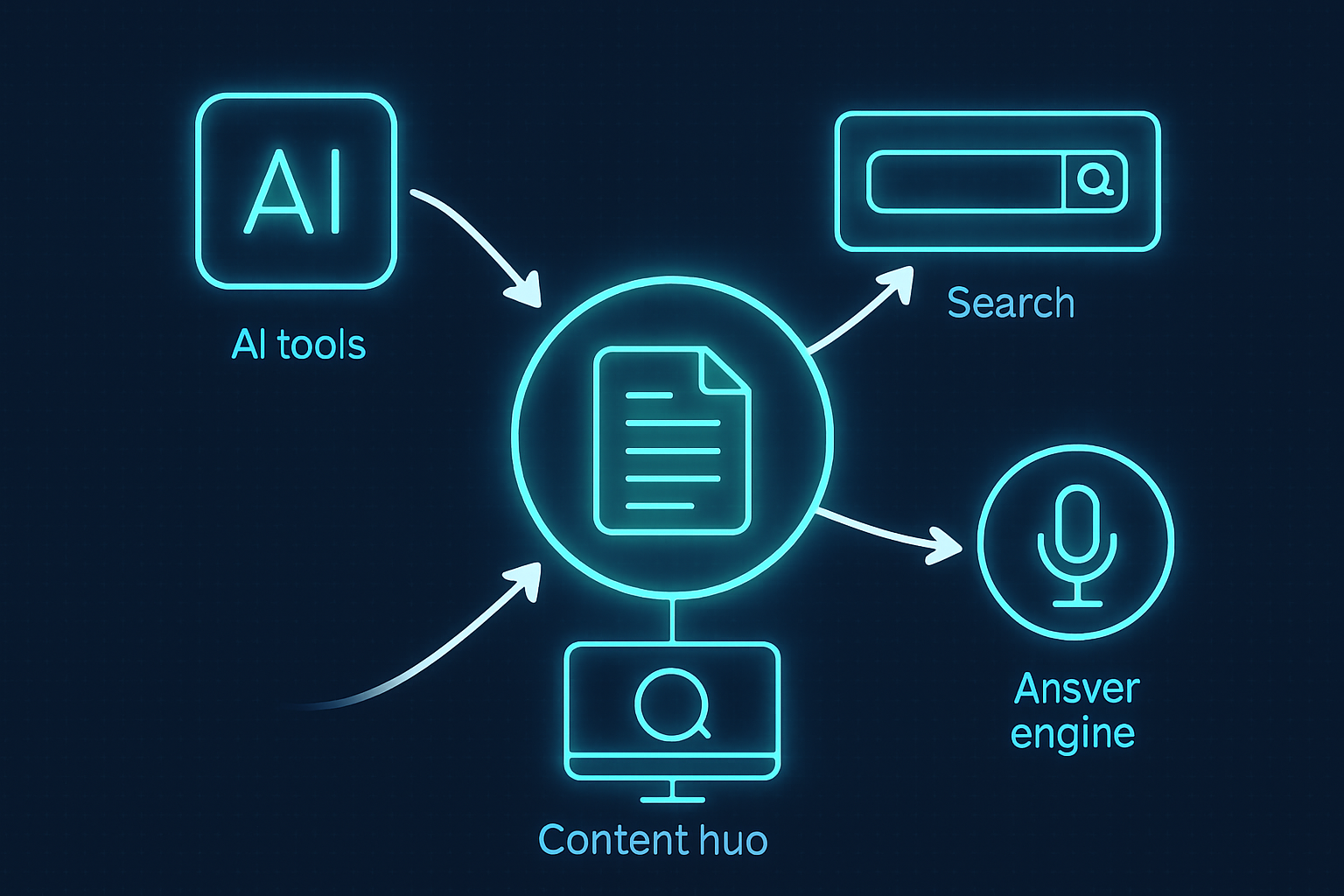
The result is a library of content that is structurally sound, semantically rich, and optimized for both traditional search and AI-powered answer engines like Google’s AI Overviews and Bing Copilot.
What Are the Financial Benefits of Automating SEO Content?
According to a 2025 HubSpot marketing report, businesses using AI content automation tools reduced their content production costs by an average of 40% compared to traditional agency or freelancer models. This cost reduction comes from fewer billable hours, reduced revision cycles, and lower dependency on large in-house writing teams. The return on investment for automation tools typically materializes within the first three to six months of consistent use.
Automation also reduces the cost of content errors — missed keywords, incorrect meta tags, duplicate content, and thin pages that fail to rank. Each of these mistakes costs money in lost organic traffic and wasted production effort. Automated quality checks catch these issues before they go live, protecting your SEO investment.
For small businesses especially, automation levels the playing field against larger competitors. A company with a two-person marketing team can now produce and optimize content at a volume that previously required a team of ten.
How Does Content Automation Help Businesses Scale Faster?
Scalability is one of the most compelling benefits of automating SEO content creation for growing businesses. Traditional content production hits a ceiling quickly — you can only hire so many writers, and coordination overhead grows with team size. Automation removes this ceiling entirely by allowing the same workflow to produce 5 articles or 500 articles with nearly identical effort per piece.
E-commerce businesses benefit enormously from this scalability. A retailer with 10,000 product pages can use automation to generate, optimize, and update SEO-friendly product descriptions, category page content, and FAQs across their entire catalog — a task that would be economically impossible with a purely human team.
Programmatic SEO is defined as the practice of using templates and data sources to automatically generate large numbers of optimized pages targeting long-tail keywords at scale. This strategy, powered by automation, has helped brands like Airbnb, Tripadvisor, and thousands of smaller companies build massive organic traffic footprints that compound over time.
Why Is Consistency a Key Benefit of SEO Content Automation?
Consistency in content quality, structure, and brand voice is extremely difficult to maintain as content volume increases. Human writers have varying skill levels, writing habits, and interpretations of brand guidelines. Automation applies the same rules, style parameters, and SEO requirements every single time. This consistency directly benefits your brand authority and search engine trust signals.
Search engines evaluate content consistency as part of their quality assessment algorithms. Sites that publish erratically, with wildly varying quality levels, tend to earn lower crawl priority and less stable rankings. Automated workflows enforce a minimum quality floor across every published piece.
Content consistency also strengthens user experience. Readers who visit your blog or resource center find a predictable, professional experience — proper headings, helpful structure, clear answers — which reduces bounce rates and increases time on page, both positive ranking signals.
How Does Automation Support Multilingual and Multi-Market SEO?
The best way to expand into international markets quickly is to automate the localization and translation of your SEO content across multiple languages and regional dialects. Modern AI tools can generate culturally adapted content in dozens of languages simultaneously, complete with localized keyword targeting, hreflang tag management, and market-specific examples. This capability was once reserved for enterprise brands with massive budgets — automation has democratized it.
A single piece of pillar content can now be automatically adapted into ten language versions, each optimized for its target country’s search intent, competition level, and cultural context. This multiplies the organic reach of every content investment you make. Businesses targeting European, Asian, or Latin American markets gain a significant competitive advantage through this approach.
Maintaining accuracy and cultural sensitivity still requires human review from native speakers, but automation handles the heavy lifting of structure, keyword placement, and technical SEO — reducing localization costs by as much as 50% compared to fully manual translation workflows.
What Role Does Automation Play in Future-Proofing Your SEO Strategy?
The SEO landscape has shifted fundamentally with the rise of AI-powered search engines, voice search, and generative answer engines. Google’s AI Overviews, launched at scale in 2025, now answer millions of queries directly in the search results page — pulling content from structured, authoritative, well-optimized sources. Automating your content creation process is the most reliable way to ensure your content meets the technical and structural requirements these new engines demand.
Automated content workflows can be updated in real time to reflect algorithm changes, new structured data requirements, or emerging content formats like video transcripts and AI-readable summaries. Human-only teams struggle to implement these updates consistently across hundreds or thousands of existing pages. Automation makes large-scale content refreshes feasible and fast.
Businesses that invest in automated SEO content infrastructure today are building a durable competitive moat. As AI search continues to evolve, the volume, structure, and freshness of your content library will be increasingly decisive ranking factors.
What Are the Top 8 Benefits of Automating SEO Content Creation — Summary?
To make this easy to reference, here is a consolidated list of the eight core benefits discussed in this article:
- Massive time savings — Reduce content production time by up to 60%, freeing teams for higher-value strategic work.
- Lower production costs — Cut content expenses by an average of 40% while maintaining or improving quality.
- Improved SEO accuracy — Data-driven optimization ensures every piece is structurally and semantically aligned with ranking signals.
- Unlimited scalability — Produce 5 or 5,000 pieces of content with the same core workflow.
- Consistent quality and brand voice — Enforce standards across every piece, eliminating quality variance.
- Faster time-to-publish — React to trending topics and algorithm changes before competitors do.
- Multilingual market expansion — Enter new international markets faster and at a fraction of the traditional cost.
- Future-proof SEO infrastructure — Stay ahead of AI search engine requirements with adaptable, structured content workflows.
Each of these benefits compounds over time. The longer your automated content system runs, the larger your content library grows, the stronger your topical authority becomes, and the more organic traffic you attract — all with decreasing marginal cost per piece of content.
Which Types of Businesses Benefit Most?
E-commerce retailers, SaaS companies, digital publishers, marketing agencies, and professional services firms all see outsized returns from content automation. Any business that needs to maintain content at scale across multiple topics, products, or markets is an ideal candidate. Even solo entrepreneurs and small startups can leverage affordable AI content tools to compete with much larger brands in organic search.
Is Human Oversight Still Necessary?
Yes — and this is a critical point. The most successful automated content strategies use AI for speed, structure, and data processing, while human experts provide strategic direction, factual verification, brand tone refinement, and editorial judgment. Automation amplifies human capability; it does not eliminate the need for it. The businesses that treat automation as a tool rather than a replacement consistently achieve the best long-term SEO results.
Frequently Asked Questions
What is the biggest benefit of automating SEO content creation?
The biggest benefit is the combination of time savings and scalability — automation allows businesses to produce consistently optimized content at a volume that is economically and practically impossible with manual processes alone.
Does automated content rank well on Google?
Yes, when properly structured and human-reviewed, AI-assisted content ranks effectively on Google. Google’s guidelines focus on content quality, helpfulness, and expertise — not the method of production — so automation paired with editorial oversight produces content that meets these standards.
How much does SEO content automation cost?
Costs range from approximately $50 per month for entry-level AI writing tools to $500 or more per month for enterprise-grade platforms like MarketMuse or Clearscope with full workflow integration. Most businesses recover this investment within three to six months through reduced production costs and increased organic traffic.
Will automating content hurt my brand voice?
Not if implemented correctly. Most advanced AI content tools allow you to input brand guidelines, tone of voice documents, and style parameters that shape every piece generated. Human editorial review before publishing ensures the final output aligns with your brand identity.
How do I get started with automating my SEO content creation?
Start by auditing your current content production workflow to identify the most time-consuming and repetitive tasks. Then select an AI content tool suited to your budget and needs — popular starting points include Surfer SEO, Jasper, or ChatGPT with custom prompts — and pilot the workflow on a small batch of articles before scaling.
Ready to Transform Your Content Strategy?
The benefits of automating SEO content creation are clear, measurable, and available to businesses of every size right now. From cutting costs and saving time to scaling into new markets and future-proofing against AI search changes, automation is no longer a luxury — it is a competitive necessity. Every month you delay, competitors are publishing more content, capturing more keywords, and building stronger topical authority in your space.
Start small, test your workflow, review results, and scale what works. The technology is accessible, the ROI is proven, and the upside is significant. If you are serious about growing your organic search presence in a sustainable, cost-effective way, automating your SEO content creation process is the most impactful step you can take today.
Take action now: Audit your current content workflow this week, identify your three biggest bottlenecks, and trial one AI content or SEO automation tool for thirty days. The results will speak for themselves — and your search rankings will begin to reflect the difference.