

Automated SEO content generation is the process of using artificial intelligence and machine learning tools to produce search-engine-optimized written content with minimal human input. Businesses of every size are adopting these tools to publish more content, target more keywords, and compete in crowded search results. Understanding how this technology works — and how to use it correctly — can dramatically change your content marketing results.
The demand for fresh, optimized content has never been higher. According to HubSpot’s 2025 State of Marketing Report, companies that publish 16 or more blog posts per month generate 3.5 times more organic traffic than those publishing four or fewer. Automated SEO content generation makes that volume achievable without hiring an entire editorial team. It compresses weeks of writing into hours.
Studies show that over 65% of enterprise marketing teams now use some form of AI-assisted content creation as part of their SEO workflow. This shift is not just about speed — it is about consistency, data-driven optimization, and the ability to scale content programs that previously required large budgets. The tools available today are more capable than ever before.
What Is Automated SEO Content Generation?
Automated SEO content generation is defined as the use of AI-powered software to research, outline, draft, and optimize written content for search engines without requiring manual writing for every sentence. These tools analyze top-ranking pages, extract keyword patterns, and produce structured drafts aligned with search intent. The output can range from short product descriptions to long-form pillar articles.
The technology behind these tools typically combines large language models (LLMs) with SEO data APIs. A large language model (LLM) is defined as a type of AI system trained on massive text datasets to understand and generate human-like written language. Tools like Jasper, Surfer AI, and Clearscope integrate LLMs with real-time keyword data from platforms like Google Search Console and Ahrefs. This combination allows the system to write content that is both readable and strategically optimized.
Automated content generation is not the same as simple content spinning or template filling. Modern systems understand semantic relationships between topics, structure content around topical authority, and even adjust reading level for different audiences. The best platforms also flag factual gaps, suggest internal linking opportunities, and score drafts against competitors before publishing.
How Does Automated SEO Content Generation Actually Work?
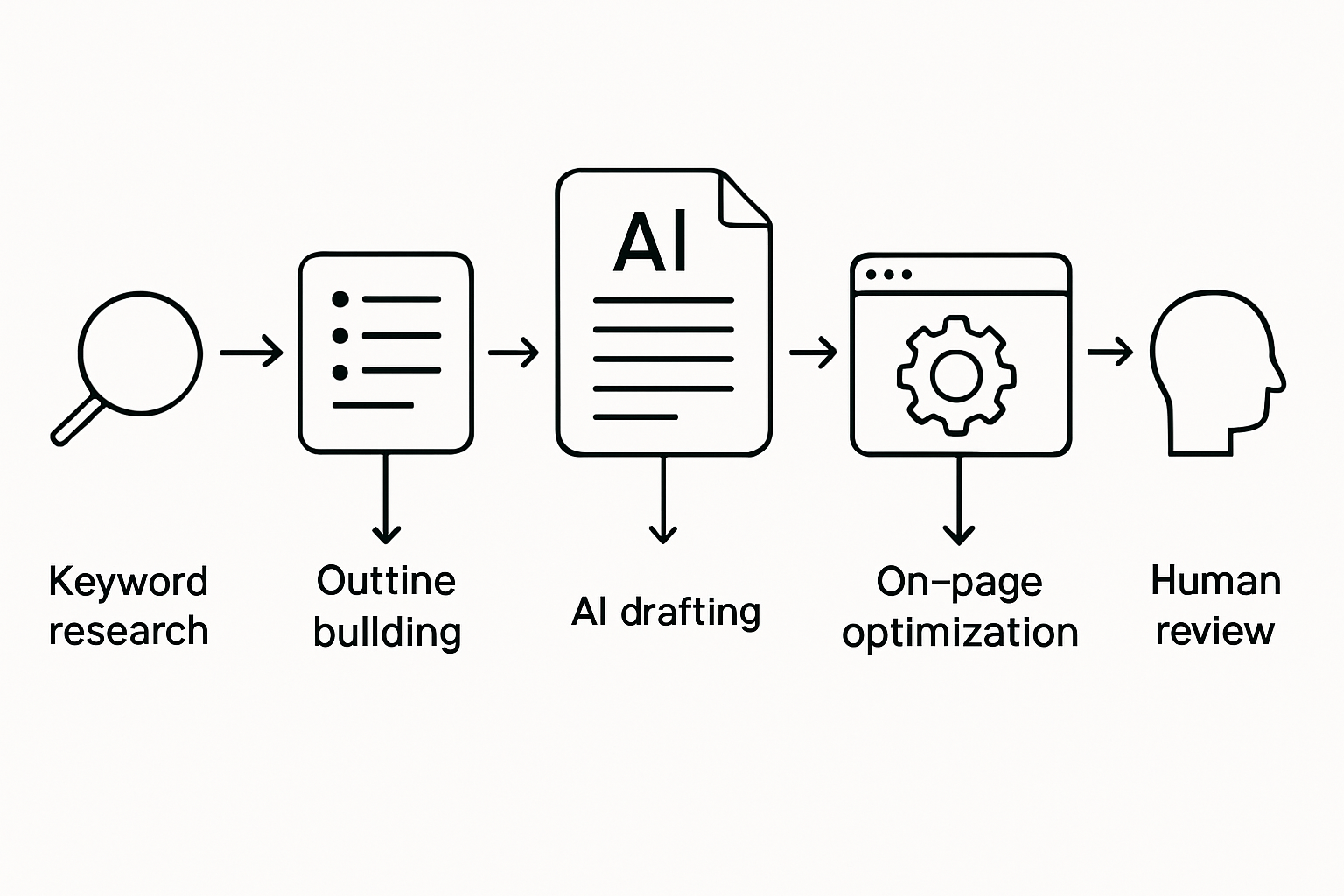
The process typically follows a structured pipeline with several distinct stages. Each stage builds on the previous one to produce a final draft that is ready for review and publishing. Here is how most modern automated SEO content generation tools operate:
- Keyword and intent research: The tool ingests a seed keyword and analyzes the top 10–20 ranking pages to determine search intent, related terms, and content gaps.
- Outline creation: The AI generates a structured outline using the H1, H2, and H3 hierarchy based on patterns found in high-ranking competitor content.
- Content drafting: The language model writes each section, weaving in primary and secondary keywords at a natural density, typically between 1% and 2%.
- On-page optimization: The draft is scored against an SEO rubric that checks keyword placement, meta description length, internal link suggestions, and readability scores.
- Human review: An editor reviews the output for accuracy, brand voice, and factual correctness before publishing.
The best way to maximize results from automated SEO content generation is to treat the AI output as a strong first draft rather than a finished product. Human editing adds brand personality, verifies facts, and catches errors that even advanced models occasionally produce. This hybrid human-AI workflow consistently outperforms either approach used alone.
Natural Language Processing (NLP) is defined as the branch of artificial intelligence that enables computers to understand, interpret, and generate human language in a way that is both accurate and contextually appropriate. NLP is the core technology that allows automated SEO tools to write in full sentences, maintain topic coherence across paragraphs, and adapt tone to different audiences. Without NLP advances, automated content would read as robotic and keyword-stuffed.
Why Choose Automated SEO Content Generation Over Manual Writing?
Automated SEO content generation delivers three core advantages that manual writing alone cannot match: speed, scale, and data integration. A skilled human writer might produce one well-optimized 1,500-word article per day. An AI-assisted workflow can produce five to ten comparable drafts in the same time, ready for light editing.
Cost efficiency is another major factor. According to a 2025 Content Marketing Institute benchmark study, teams using AI content tools reduced their per-article production cost by an average of 47% while maintaining or improving organic ranking performance. This is especially impactful for e-commerce brands managing thousands of product pages. Automated generation allows those pages to be written, optimized, and updated at a scale that is simply impossible manually.
Consistency is a benefit that is often overlooked. Automated tools apply the same optimization rules to every piece of content, every time. There are no bad days, no forgotten meta descriptions, and no inconsistent heading structures. This systematic consistency builds topical authority faster than an irregular manual publishing schedule.
What Are the Best Use Cases for Automated SEO Content?
Not all content types benefit equally from automation. The strongest use cases are those where structure is predictable, volume is high, and search intent is clearly informational or transactional. Here are the top applications:
- Product descriptions: E-commerce sites with thousands of SKUs use automated generation to create unique, keyword-rich descriptions at scale.
- FAQ pages: AI tools excel at generating structured question-and-answer content aligned with voice search and featured snippet opportunities.
- Location pages: Multi-location businesses use automation to create optimized city or region-specific landing pages efficiently.
- Blog content clusters: Pillar-and-cluster SEO strategies require dozens of supporting articles — automation makes this feasible.
- News summaries and roundups: Automated tools can draft timely summaries of industry developments, keeping sites fresh for Google’s crawlers.
Content types that still benefit significantly from full human authorship include thought leadership opinion pieces, highly technical expert analysis, and sensitive topics like health or legal advice. These categories require verified expertise, nuanced judgment, and personal authority that AI tools cannot reliably provide. Using automation strategically — for the right content types — is the key to a sustainable content operation.
How Does Automated Content Affect Google Rankings?
Google’s official guidance confirms that AI-generated content is not penalized simply because it was created by a machine. What Google penalizes is low-quality, unhelpful content — regardless of how it was produced. The search engine’s helpful content system evaluates whether a page genuinely satisfies the user’s query, demonstrates expertise, and provides original value.
Automated SEO content generation, when done correctly, can absolutely rank well. The key is ensuring the output is accurate, well-structured, and written for humans first and search engines second. Several large publishers have reported ranking in Google’s top three positions for competitive keywords using AI-assisted articles that went through proper editorial review. The process itself is not what determines ranking — quality is.
One important consideration is E-E-A-T, which stands for Experience, Expertise, Authoritativeness, and Trustworthiness. Google uses E-E-A-T signals to evaluate content credibility, especially in YMYL (Your Money Your Life) niches like finance and health. Adding author bylines, citing credible sources, and linking to authoritative external resources all help automated content perform better under these guidelines.
What Tools Are Leading Automated SEO Content Generation?
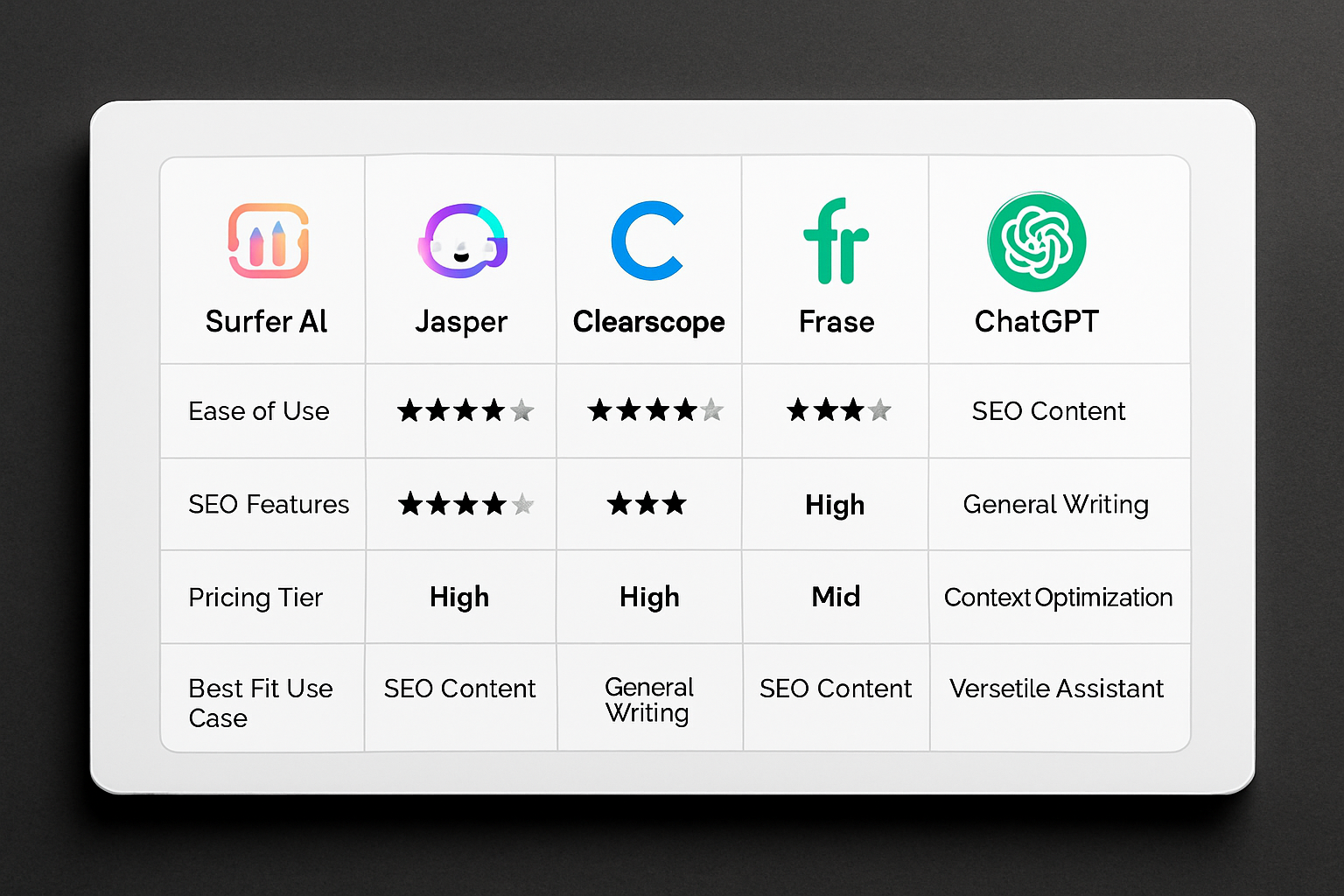
The market for AI content tools has matured rapidly since 2023. Several platforms have emerged as reliable choices for professional SEO teams. Here is a quick comparison of leading options:
- Surfer AI: Best for content scoring and real-time NLP optimization; integrates seamlessly with Google Docs and WordPress.
- Jasper: Strong brand voice customization, large template library, and workflow automation features for agencies.
- Clearscope: Excellent keyword grading and semantic optimization; widely used by enterprise SEO teams.
- Frase: Budget-friendly option with solid outline generation and SERP research tools built in.
- ChatGPT (with custom GPTs): Highly flexible when prompted correctly; increasingly used with custom SEO system prompts for structured content generation.
Choosing the right tool depends on your team size, budget, and content volume needs. Agencies managing dozens of client accounts typically benefit from enterprise tools with workflow management features. Smaller teams or solo operators often get strong results from mid-tier platforms combined with a well-built editorial checklist. The tool matters less than the process built around it.
How Can You Maintain Quality With Automated SEO Content?
Quality control is the most critical success factor in any automated SEO content generation program. Without a structured review process, even the best AI tools will produce content that contains outdated facts, shallow analysis, or subtle inaccuracies. Building a repeatable quality workflow is non-negotiable.
A practical quality checklist for AI-generated SEO content should include the following steps:
- Fact-check all statistics, dates, and named claims against primary sources.
- Verify that the content accurately reflects current product details, pricing, or service information.
- Review the keyword density to ensure it reads naturally and avoids over-optimization.
- Check that all headings reflect the actual content beneath them without misleading the reader.
- Ensure the article delivers genuine value beyond what is already available on competing pages.
- Add original insights, expert quotes, or proprietary data wherever possible to differentiate the content.
- Proofread for grammar, sentence flow, and brand voice alignment before publishing.
The best way to build long-term SEO authority is to combine the speed of automation with the credibility of human expertise. Teams that skip the review process often see short-term ranking gains followed by traffic drops when Google’s quality signals catch up. Investing ten to thirty minutes of editing per article protects the value of the entire content program.
What Is the Future of Automated SEO Content Generation?
Automated SEO content generation is evolving from a drafting tool into a full content intelligence system. The next generation of platforms will not just write content — they will monitor ranking changes, automatically update underperforming articles, and predict which topics will trend before competitors publish. This shift from reactive to predictive content strategy is already beginning.
Multimodal AI is also expanding the definition of content generation beyond text. Future tools will simultaneously generate written articles, accompanying images, structured data markup, and even short video scripts from a single prompt. This convergence will make fully automated, multimedia SEO content packages a standard workflow for content teams within the next few years.
The role of the human content strategist will not disappear — it will evolve. Strategy, editorial judgment, brand positioning, and subject matter expertise will become the premium human contributions to content programs. Execution and production will be increasingly automated, freeing strategists to focus on the decisions that drive the most meaningful competitive advantage.
Frequently Asked Questions
Is automated SEO content generation safe to use for Google rankings?
Yes, Google does not penalize content for being AI-generated — it penalizes low-quality or unhelpful content. As long as automated content is accurate, original, and written for users, it can rank effectively.
How much human editing does AI-generated content need?
Most AI-generated drafts need 20–40 minutes of human editing to verify facts, improve brand voice, and ensure accuracy. Skipping this step increases the risk of publishing errors that can damage credibility and rankings.
What types of content work best with automated SEO tools?
Product descriptions, FAQ pages, location landing pages, and informational blog clusters are the strongest use cases. Thought leadership, technical expert analysis, and YMYL topics still benefit from full human authorship.
How does automated content generation affect content costs?
Studies show AI-assisted workflows reduce per-article production costs by an average of 47%. The savings come from reduced writing time, not from eliminating the editorial review process.
Which is the best tool for automated SEO content generation?
The best tool depends on your needs — Surfer AI is excellent for real-time NLP optimization, Jasper is strong for agency workflows, and Clearscope is a top choice for enterprise keyword grading. Testing two or three platforms against your specific content goals is the most reliable way to choose.
Start Using Automated SEO Content Generation Smarter
Automated SEO content generation is not a shortcut — it is a force multiplier. When used with clear strategy, proper tool selection, and a disciplined editorial review process, it allows content teams to produce higher volumes of better-optimized content than was ever possible before. The businesses winning in organic search are not choosing between quality and scale — they are using automation to achieve both simultaneously.
The competitive gap between teams that use AI content tools effectively and those that do not will continue to widen. Starting with even one or two automated workflows — such as blog drafting or product description generation — builds the operational knowledge needed to expand. Every article published with this approach compounds your organic visibility over time.
Ready to accelerate your content program? Start by auditing your highest-priority keyword gaps, choose a platform that aligns with your team’s workflow, and build a simple editorial checklist to maintain quality. Your first AI-assisted article could be live — and climbing rankings — within hours. The future of SEO content is already here. The only question is how quickly you put it to work.