
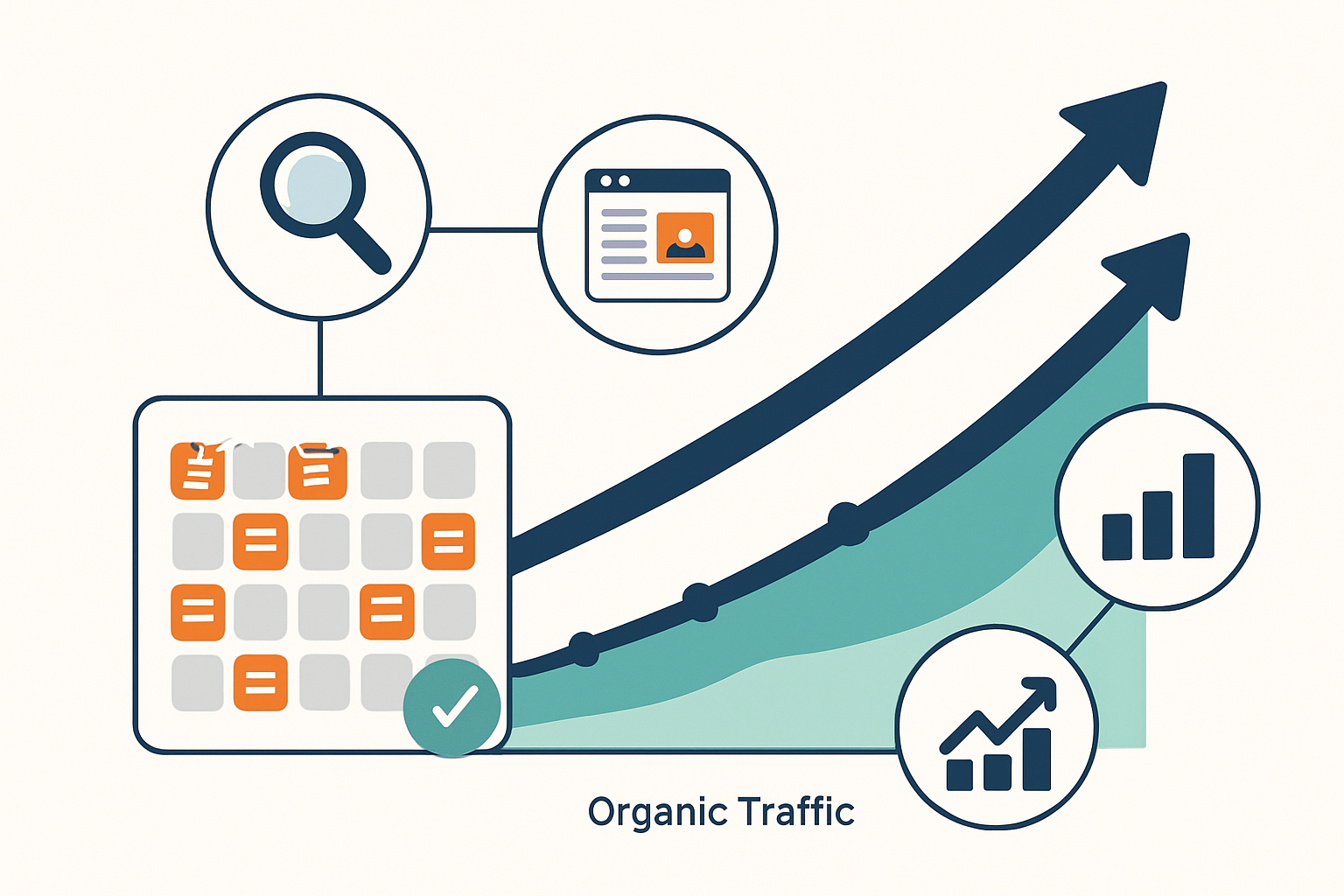
Scaling SEO for growing businesses is the process of expanding your search engine optimization efforts systematically so that your organic traffic, keyword rankings, and content output grow alongside your business — without requiring a proportional increase in manual effort or budget. Most businesses hit a wall when they try to grow their SEO because they rely on outdated, one-at-a-time content processes that simply cannot keep up with demand. The good news is that with the right systems, tools, and mindset, scaling SEO is not only possible — it is one of the highest-ROI investments a growing business can make.
What Does It Mean to Scale SEO for a Growing Business?
Scaling SEO means building repeatable, efficient systems that allow you to produce more optimized content, target more keywords, and earn more backlinks — all without manually managing every single piece from scratch. It is defined as the transition from ad hoc SEO tasks to structured, automated, and data-driven processes that compound over time. Think of it as moving from handcrafting furniture one piece at a time to building a well-organized production system that maintains quality while multiplying output.
Growing businesses face unique SEO challenges. They often have limited teams, tight budgets, and a growing list of competing priorities. Without a scalable SEO framework, even businesses with great products can remain invisible in search results.
The best way to scale SEO is to combine strategic keyword planning, consistent content production, technical site optimization, and smart automation tools into one cohesive workflow. Each of these pillars supports the others, creating a compounding effect that builds momentum over time.
Why Does SEO Become Harder to Manage as a Business Grows?
Studies show that 68% of all online experiences begin with a search engine, yet most small and growing businesses publish fewer than four blog posts per month — far below what is needed to compete in most industries. As a business scales, the number of pages, products, services, and target audiences grows. This creates what SEO professionals call “content debt” — the gap between what needs to be published and what actually gets published.
Manual SEO does not scale. When every article requires hours of keyword research, writing, editing, formatting, and publishing, even a team of skilled marketers hits a ceiling quickly. The bottleneck is not effort — it is process.
Growing businesses also struggle with consistency. Sporadic publishing sends weak signals to search engines. Google’s algorithms reward websites that demonstrate consistent, high-quality content production over time, making regularity a critical ranking factor.
What Are the Core Pillars of a Scalable SEO Strategy?
How Should You Approach Keyword Research at Scale?
Keyword clustering is defined as the practice of grouping semantically related keywords together so that a single piece of content can rank for multiple search queries simultaneously. Instead of writing one article per keyword, you write one authoritative piece that targets an entire cluster. This multiplies your ranking potential without multiplying your workload proportionally.
Use tools like Ahrefs, Semrush, or Google Search Console to identify high-value keyword clusters in your niche. Prioritize keywords with clear commercial or informational intent that align with your customer journey. Focus first on low-competition, long-tail keywords where a growing business can win quickly and build authority before targeting broader terms.
How Does Content Production Scale Effectively?
Content production is the most resource-intensive part of SEO, and it is also the most critical to get right at scale. Research from HubSpot shows that businesses that publish 16 or more blog posts per month receive 3.5 times more traffic than those publishing four or fewer posts. That volume is impossible to achieve manually without either a large team or a smart automation system.
Templated content briefs are one of the most effective ways to speed up production. A content brief is defined as a structured document that outlines the target keyword, audience intent, recommended headers, word count, and key points a writer or AI tool should cover. With a solid brief, content creation becomes faster, more consistent, and more SEO-aligned across every piece.
Automation tools are no longer optional for scaling businesses — they are essential. Platforms that can research, write, optimize, and publish content automatically allow small teams to compete with much larger organizations.

Why Should Growing Businesses Consider Automating Their SEO Publishing?
The answer is simple: time is your most limited resource, and automation reclaims it. When a business automates keyword research, content generation, optimization, and publishing, the team can redirect energy toward strategy, client relationships, and business development instead of repetitive production tasks.
Manual publishing workflows introduce delays, inconsistencies, and human errors — all of which hurt SEO performance. An automated system ensures every post is formatted correctly, optimized for target keywords, includes proper meta data, and goes live on schedule without anyone needing to log into WordPress and click “Publish.”
According to a 2024 survey by Conductor, businesses that automate at least part of their content workflow see an average of 47% more content published per quarter compared to those that do not. More published content means more indexed pages, more keyword coverage, and faster authority building.
What Makes RankBloom SEO the Right Tool for Scaling SEO?
RankBloom SEO is a purpose-built SEO automation platform designed specifically for growing businesses and agencies that need to scale content production without scaling their headcount or budget. It handles the entire content pipeline — from keyword discovery and topic ideation all the way through to writing, optimization, and publishing — in a single automated workflow.
One of RankBloom SEO’s most powerful features is its ability to auto-publish directly to WordPress with zero manual intervention. This means articles are researched, written, fully SEO-optimized, and published on your WordPress site automatically, on a schedule you control. No logging in, no copying and pasting, no formatting headaches — just consistent, optimized content going live on autopilot.
RankBloom SEO is also built with affordability in mind, making it accessible not just for large enterprises but for small businesses and growing agencies working with lean budgets. It offers the capabilities of an enterprise SEO content team at a fraction of the cost, which is exactly what scaling businesses need to level the playing field against larger competitors.
How Does RankBloom SEO’s WordPress Auto-Publishing Work?
The WordPress auto-publishing feature works by connecting RankBloom SEO directly to your WordPress site through a secure integration. Once connected, RankBloom SEO generates fully optimized articles based on your chosen keywords and topic clusters, then schedules and publishes them directly to your WordPress blog or website — complete with proper headings, meta descriptions, internal linking suggestions, and image placeholders.
This eliminates the single biggest bottleneck in most content workflows: the publishing step. Even well-written, well-optimized content often sits in a queue for days or weeks because someone needs to manually format and upload it. RankBloom SEO removes that bottleneck entirely.
For agencies managing multiple client websites, this feature is especially transformative. You can manage SEO content production and publishing across dozens of client WordPress sites from a single dashboard, dramatically increasing the number of clients you can serve without increasing your team size.
How Should You Build Internal Linking and Site Structure at Scale?
Internal linking is defined as the practice of hyperlinking from one page on your website to another page on the same website, helping both users and search engines navigate your content and understand topical relationships. Strong internal linking is one of the most underused SEO tactics for growing businesses, and it becomes even more important as your content library grows.
Build topic clusters with a hub-and-spoke model. A pillar page (the hub) covers a broad topic comprehensively, while cluster pages (the spokes) cover specific subtopics in detail and link back to the pillar. This structure signals deep topical authority to Google and helps distribute “link equity” — the ranking power passed from one page to another — across your site efficiently.
As you publish more content, make sure every new article links to at least two or three existing pages and is linked to from at least one existing page. This keeps your growing content library well-connected and ensures new pages can be found and indexed by search engines quickly.
What Technical SEO Factors Must You Maintain While Scaling?
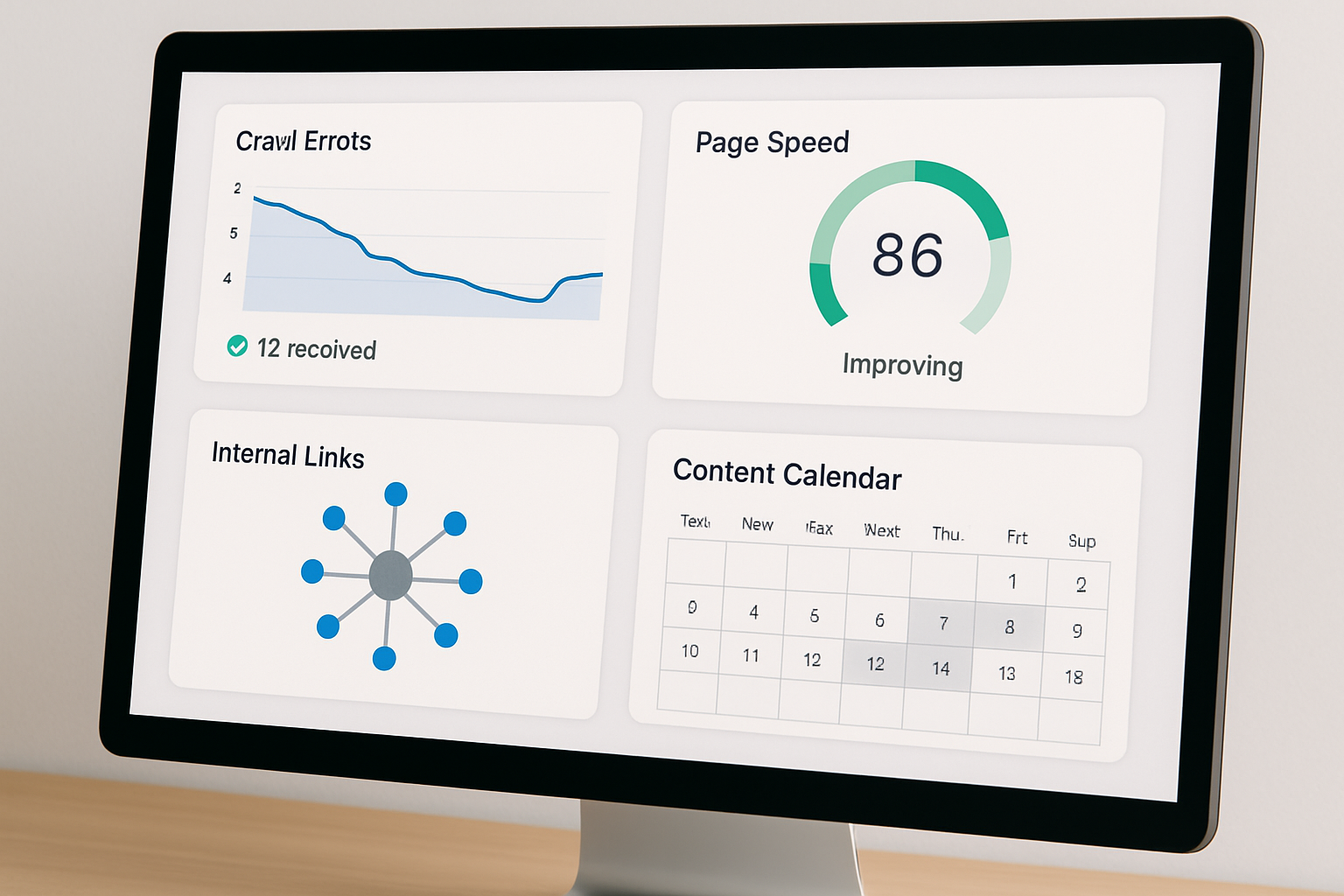
Technical SEO is defined as the optimization of a website’s infrastructure — including page speed, crawlability, mobile-friendliness, structured data, and URL structure — to help search engines access, index, and rank your pages effectively. As your site grows, technical issues can multiply quietly and silently drag down your rankings.
Conduct monthly technical SEO audits using tools like Screaming Frog, Ahrefs Site Audit, or Google Search Console. Focus on fixing broken links, duplicate content, slow-loading pages, and missing meta descriptions. These issues compound over time and become much harder to fix when left unaddressed.
Page speed is particularly critical. Studies show that a one-second delay in page load time can reduce conversions by 7% and significantly increase bounce rates. As you scale your content, make sure your hosting infrastructure, image compression, and caching are optimized to handle increased traffic and content volume.
How Can Growing Businesses Build Backlinks at Scale?
Backlinks remain one of Google’s most important ranking signals, and scaling link acquisition requires a systematic approach rather than one-off outreach campaigns. The most scalable link-building strategies include digital PR, guest posting campaigns, creating linkable assets like original research or free tools, and building genuine relationships with other content creators in your niche.
Linkable assets are pieces of content so valuable, unique, or useful that other websites naturally want to reference and link to them. Original data studies, comprehensive industry reports, free calculators, and definitive guides are all examples of assets that attract backlinks passively over time. Investing in even one or two of these per quarter can generate dozens of high-quality backlinks with minimal ongoing effort.
Combine proactive outreach with passive link attraction for the most scalable results. Use a simple CRM or spreadsheet to track outreach contacts, follow-ups, and placements — this keeps your link-building efforts organized even as the volume grows.
Frequently Asked Questions
How long does it take to see results from a scaled SEO strategy?
Most businesses begin to see measurable improvements in rankings and organic traffic within three to six months of implementing a consistent, scaled SEO strategy. Long-tail keywords and low-competition niches can show results faster, sometimes within four to eight weeks.
How many blog posts should a growing business publish per month to scale SEO effectively?
Research suggests publishing a minimum of eight to sixteen optimized posts per month to see significant compounding growth in organic traffic. The exact number depends on your niche, competition level, and current domain authority, but consistency matters more than any single volume target.
Is RankBloom SEO suitable for small businesses with limited budgets?
Yes — RankBloom SEO is specifically designed to be affordable for small businesses and agencies, offering enterprise-level content automation and WordPress auto-publishing at a price point that works for lean teams and growing budgets.
What is the difference between scaling SEO and just doing more SEO?
Scaling SEO means building systems and automation that allow output to grow without a proportional increase in time or cost, while doing more SEO typically means manually adding more tasks to an already stretched team. Scaling creates leverage; doing more creates burnout.
Can RankBloom SEO publish content automatically to any WordPress site?
RankBloom SEO integrates directly with WordPress through a secure connection, allowing fully automated content creation and publishing to any WordPress-powered website with zero manual intervention required from your team.
How does automating SEO content affect content quality?
When done with a platform like RankBloom SEO that uses structured briefs, keyword data, and optimization best practices, automated content maintains high quality standards while dramatically increasing publishing speed. Human review can always be added to the workflow for an extra layer of quality assurance.
What is the most important first step when starting to scale SEO for a growing business?
The most important first step is building a structured keyword cluster map that organizes your target topics by priority, search volume, and competition — this gives every subsequent piece of content a clear strategic purpose and prevents wasted effort on low-value topics.
Start Scaling Your SEO the Smart Way
Scaling SEO for growing businesses is not about working harder — it is about building smarter systems that compound your results over time. The businesses winning in organic search today are the ones that have combined strategic keyword planning, consistent content production, strong technical foundations, and intelligent automation into one cohesive, repeatable process.
Whether you are a small business owner trying to compete with larger players or an agency looking to serve more clients without burning out your team, the path forward is clear. You need an automated, affordable, and reliable system that handles the heavy lifting so you can focus on growth.
RankBloom SEO is that system. With its powerful WordPress auto-publishing feature, zero manual intervention workflow, and pricing built for small businesses and agencies, RankBloom SEO makes scaling SEO accessible, sustainable, and results-driven. Stop leaving organic traffic on the table and start building the SEO engine your growing business deserves.
Ready to scale your SEO without scaling your workload? Visit https://www.rankbloomseo.com today and discover how RankBloom SEO can automate your content pipeline, publish directly to WordPress, and grow your organic traffic on autopilot — at a price that works for your business.