
The best SEO software for digital marketers is a platform that combines keyword research, rank tracking, site auditing, and competitor analysis into one streamlined workflow. Digital marketers today face enormous pressure to deliver measurable results quickly. Choosing the wrong tools can waste hours of effort and thousands of dollars with little to show for it.

SEO software is defined as any application or platform that automates, analyzes, or improves the process of optimizing a website for search engines. The right software does more than pull data — it turns raw information into clear, actionable insights. That difference between data and insight is exactly where most legacy platforms fall short.
Studies show that 68% of all online experiences begin with a search engine, making SEO one of the highest-return investments a digital marketer can make. Without reliable software to guide strategy, even experienced marketers are essentially working blind. This guide walks you through exactly what to look for, what to avoid, and how to pick the best SEO software for your specific goals.
What Is SEO Software and Why Do Digital Marketers Need It?
SEO software is a tool or suite of tools designed to help marketers research keywords, monitor search rankings, audit websites for technical issues, and analyze backlink profiles. It removes the manual guesswork from optimization by providing real-time data. Understanding what SEO is and how it works to grow your website traffic is the essential first step before investing in any software platform.
Digital marketers manage multiple campaigns, clients, and deadlines simultaneously. Without software, tracking rankings across hundreds of keywords manually is impossible at scale. The right platform compresses hours of research into minutes.
There are three core categories of SEO tasks that software handles best:
- Keyword research and opportunity discovery — finding terms your audience actually searches for
- Technical site auditing — identifying broken links, slow pages, crawl errors, and indexing problems
- Performance tracking and reporting — monitoring rankings, traffic, and ROI over time
Each of these categories requires different capabilities from your software. Some platforms handle all three, while others specialize in just one area. Knowing which combination your workflow demands will save you significant time and budget.
What Features Should the Best SEO Software Include?
The best SEO software for digital marketers must include at minimum: keyword tracking, on-page optimization guidance, backlink analysis, technical audit capabilities, and clean reporting dashboards. Missing even one of these pillars creates gaps in your strategy. A complete toolset means you can manage your entire SEO workflow from a single platform.
Keyword Research and Search Intent Analysis
Keyword research is defined as the process of identifying and analyzing the specific words and phrases your target audience types into search engines. Modern SEO software goes beyond simple search volume data to analyze search intent — whether a user is looking to buy, learn, or compare. Understanding intent allows marketers to create content that matches exactly what users need at each stage of the funnel.
Look for software that groups keywords by topic clusters, not just individual terms. Topic clustering improves topical authority, which is a key ranking signal in today’s search algorithms. Platforms that visualize these clusters make content planning dramatically faster.
Rank Tracking and SERP Monitoring
Rank tracking is defined as the continuous monitoring of a website’s position in search engine results pages (SERPs) for specific target keywords. Without accurate rank tracking, you cannot measure whether your SEO efforts are working. Consistent monitoring reveals which pages are gaining ground and which need attention.
The best platforms track rankings daily, not weekly, because SERPs can shift quickly after Google algorithm updates. They also track features like featured snippets, local packs, and image results — not just traditional blue links. If you want to go deeper on this, our guide to keyword tracking software and how to monitor rankings to grow organic traffic covers the full strategy.
Technical Site Auditing
Technical SEO auditing means scanning a website to identify issues that prevent search engines from properly crawling, indexing, and ranking its pages. Common issues include broken links, duplicate content, missing meta descriptions, slow Core Web Vitals, and improper redirect chains. Catching these problems early prevents them from silently dragging down your rankings for months.
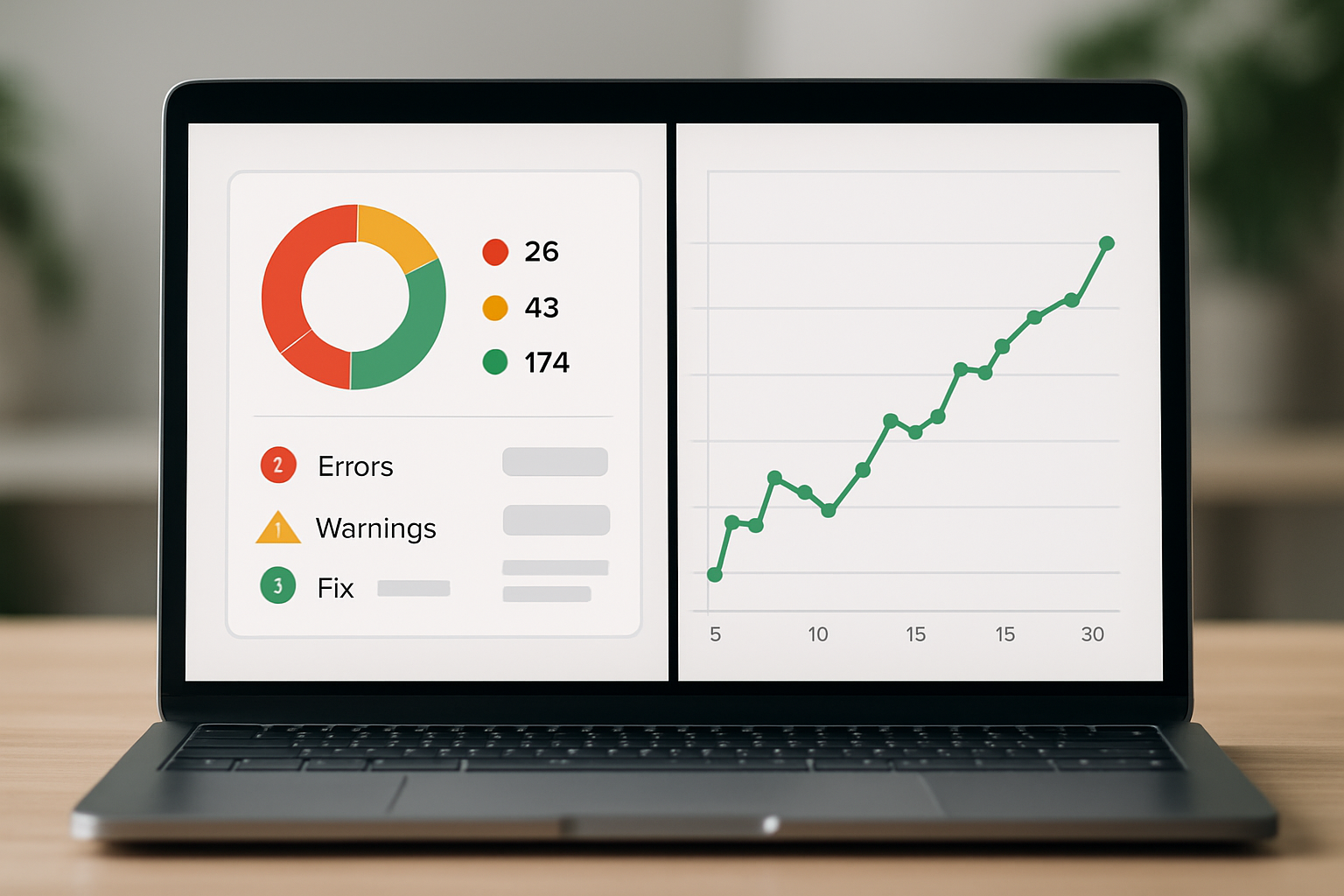
A strong audit tool should prioritize issues by impact, not just list them. Seeing 300 errors without knowing which three actually matter is overwhelming and unproductive. The best software assigns severity scores so you can fix the highest-impact issues first.
How Does AI Change the Way Marketers Use SEO Software?
AI-powered SEO software represents a fundamental shift from reactive data reporting to proactive strategy recommendations. Traditional SEO tools showed you what happened; modern AI platforms tell you what to do next. This difference dramatically accelerates the path from insight to ranking improvement.
AI in SEO software can now perform tasks like:
- Automatically generating content briefs based on top-ranking competitor pages
- Predicting which keywords are likely to gain traffic before competition increases
- Identifying semantic gaps in existing content that limit ranking potential
- Suggesting internal linking opportunities across an entire website automatically
- Forecasting organic traffic growth based on current trajectory
According to recent industry data, marketers who use AI-assisted SEO tools save an average of 12.5 hours per week compared to those using only manual or legacy workflows. That time compounds significantly across a full year. For agencies managing multiple clients, AI-driven tools create the scalability that was previously impossible without hiring additional staff.
To understand how AI is reshaping organic discovery, reading about how to increase organic visibility with AI SEO software gives you a strong foundation for evaluating modern platforms.
Why Do Traditional SEO Tools Fall Short for Modern Digital Marketers?
Traditional SEO tools were built during an era when Google’s algorithm was far simpler and content volume was low. They excel at collecting raw data but struggle to turn that data into strategy. Many legacy platforms were designed for SEO specialists, not for the fast-moving digital marketer managing paid, social, and organic channels simultaneously.
The key limitations of traditional SEO platforms include:
- Siloed data — keyword data, audit data, and ranking data exist in separate sections with no unified view
- Steep learning curves — interfaces built for technical SEOs overwhelm generalist marketers
- Slow reporting — weekly or monthly data updates that cannot keep pace with algorithm changes
- No AI guidance — presenting data without recommendations forces users to manually interpret everything
- High cost for limited features — pricing tiers that lock essential features behind expensive enterprise plans
Research indicates that 47% of marketing teams report feeling overwhelmed by data from their current SEO tools without clear guidance on prioritization. This overwhelm leads to analysis paralysis, where marketers spend more time inside their dashboards than actually implementing improvements. The solution is not more data — it is smarter data presentation.
How Should Digital Marketers Evaluate and Compare SEO Software?
Evaluating SEO software requires looking beyond the feature checklist and testing actual usability against your real workflow. The best approach is to run a structured trial using your own website data so you can see exactly how each platform performs in your specific context. Marketing decisions made on demo environments rarely translate accurately to real-world use.
Key Evaluation Criteria to Assess
Use this framework when comparing platforms:
| Evaluation Factor | What to Look For | Why It Matters |
|---|---|---|
| Data Accuracy | Cross-check rankings with Google Search Console | Inaccurate data leads to wrong strategic decisions |
| Ease of Use | Can a junior marketer navigate it without training? | Adoption across your team determines actual ROI |
| AI Recommendations | Does it suggest next actions, not just report metrics? | Saves hours of manual interpretation every week |
| Reporting Quality | Can you generate client-ready reports in minutes? | Reporting time is often the biggest hidden time drain |
| Scalability | Can it handle 10x your current keyword volume? | You will outgrow tools that are not built to scale |
| Support Quality | Is there live chat or a dedicated account manager? | Fast support prevents bottlenecks in active campaigns |
Questions to Ask During a Free Trial
The best way to evaluate SEO software is to enter your three most competitive target keywords on day one and see how the platform handles them. Check whether the recommended actions are specific, prioritized, and actionable — or vague and generic. Vague recommendations are a strong signal that the platform is presenting data without genuine intelligence.
Also test the speed of the audit crawler on your own website. A slow crawler that takes hours to scan a mid-sized site will become a frustrating bottleneck as your site grows. Speed and accuracy in auditing are non-negotiable for active marketing teams.
What Does Good SEO Software Do for Agency Digital Marketers Specifically?
Agency digital marketers have different needs than in-house marketing teams because they manage multiple client accounts simultaneously. The best SEO software for agencies includes white-label reporting, multi-site management from a single dashboard, and client access controls. These features determine whether an agency runs efficiently or drowns in admin work.
White-label reporting is defined as the ability to present SEO data and reports under your own agency’s branding rather than the software provider’s branding. This professionalism builds client trust and makes your reporting feel like proprietary insight rather than a standard tool output. Clients who receive beautifully branded reports are significantly more likely to renew and expand contracts.
For growing agencies, learning how to scale SEO for growing businesses with strategies that actually work is just as important as choosing the right software. Tools and strategy must evolve together as client volume increases.

How Can Digital Marketers Get the Most Out of Their SEO Software Investment?
The best way to maximize ROI from SEO software is to integrate it into a daily workflow rather than checking it only when preparing reports. Consistent daily monitoring catches ranking drops, algorithm shifts, and technical issues before they become expensive problems. Most teams that fail to see results from their software are using it reactively instead of proactively.
A practical daily SEO workflow using software should include:
- Check overnight ranking changes for priority keywords
- Review any new technical errors flagged by the audit crawler
- Identify any pages that dropped significantly in the last 24 hours
- Check for new backlink activity, both gains and losses
- Review AI-generated content optimization suggestions for scheduled posts
For marketers who are building their foundational SEO knowledge alongside their software skills, reviewing proven strategies that drive real results in search engine ranking improvement creates the context needed to interpret software data correctly. Software without strategy is just numbers on a screen.
Building a culture of weekly SEO reviews within your marketing team is equally important. Assign ownership of specific metrics to specific team members. When everyone understands what their numbers mean and why they matter, the entire team uses the software more effectively and consistently.
—
Frequently Asked Questions About the Best SEO Software for Digital Marketers
Frequently Asked Questions
What is the most important feature to look for in SEO software for digital marketers?
The most important feature is actionable AI-driven recommendations — software that tells you what to fix and why, not just what the data shows. Without prioritized guidance, most marketers struggle to turn metrics into meaningful improvements.
How much should a digital marketer expect to spend on quality SEO software?
Quality SEO software for individual marketers typically ranges from $50 to $300 per month, while agency-level platforms with multi-client management can range from $200 to $800 per month. The key is matching the plan's keyword and site limits to your actual needs before committing.
Can SEO software replace the need for an SEO specialist?
SEO software significantly reduces the time and expertise required for core optimization tasks, but it works best when guided by someone who understands SEO strategy fundamentals. Think of it as a power tool — it amplifies skill but does not substitute for strategic thinking.
How long does it take to see results after implementing SEO software recommendations?
Most digital marketers begin seeing measurable ranking improvements within 60 to 90 days of consistently implementing software recommendations, though competitive industries may take longer. Technical fixes like resolving crawl errors can show results in as little as two to four weeks.
Is AI-powered SEO software worth the investment compared to traditional tools?
Studies show that AI-powered SEO platforms reduce manual analysis time by over 50% compared to traditional tools while producing faster ranking results. For any marketer managing more than five target keywords or one active website, the productivity gains make AI-powered software a clear and justified investment.
—
Start Growing Your Organic Traffic With the Right SEO Software
Choosing the best SEO software for digital marketers is one of the highest-leverage decisions you can make for your business or agency. The right platform turns complex data into clear daily actions that compound into significant organic growth over time. The wrong one creates confusion, wastes budget, and slows down every campaign you run.
Modern digital marketers need software that thinks alongside them — not just tools that report what already happened. That means AI-driven recommendations, clean and fast dashboards, accurate rank tracking, and reporting that impresses clients without taking hours to build.
RankBloom SEO is built specifically for this challenge. It combines all the core capabilities — keyword research, AI-powered optimization guidance, rank tracking, technical auditing, and white-label reporting — into one platform designed for the way digital marketers actually work in 2026. Whether you are an in-house marketer looking to scale your organic traffic or an agency managing dozens of client campaigns, RankBloom SEO gives you the tools and the intelligence to move faster and rank higher.
If you are serious about turning SEO from a guessing game into a reliable growth channel, now is the time to explore what the right software can do for your workflow. Your competitors are already optimizing — make sure you are doing it smarter.