
SEO, or search engine optimization, is one of the most powerful and cost-effective growth strategies available to small business owners today. Unlike paid advertising, which stops the moment your budget runs out, SEO builds lasting visibility that compounds over time. Understanding the benefits of SEO for small business can be the turning point that transforms a struggling website into a steady source of new customers.

Studies show that 68% of all online experiences begin with a search engine query, meaning your customers are already searching — the question is whether they can find you. Small businesses that invest in SEO consistently report higher organic traffic, more qualified leads, and better conversion rates compared to those relying solely on word-of-mouth or social media. The benefits are not reserved for large corporations with massive budgets.
This article breaks down every major benefit of SEO for small businesses, explains how each one works in plain language, and gives you actionable steps to start capturing those advantages today.
What Is SEO and Why Does It Matter for Small Businesses?
SEO is defined as the practice of optimizing your website and online content so that search engines like Google rank it higher in organic (non-paid) search results. It involves a combination of technical improvements, content creation, and building credibility through external links. When done correctly, SEO makes your business more visible to people who are already searching for exactly what you offer.
For small businesses, this matters enormously because the playing field is more level than many owners realize. A well-optimized local bakery can outrank a national chain in local search results simply by having more relevant, helpful, and properly structured content. Search engines reward relevance and authority, not just budget size.
If you are new to the concept, reading a foundational guide on how search engine optimization works and why your website needs it will give you the solid grounding needed to make smart decisions from the start.
How Does SEO Help Small Businesses Attract More Customers?
SEO attracts customers by matching your business with the specific words and phrases people type into Google when they are ready to buy, book, or inquire. This is called search intent matching, and it is one of the core mechanisms behind why organic traffic converts so well. Unlike a billboard or social ad that interrupts people, SEO puts your business in front of someone who is already looking for a solution you provide.
Consider a small plumbing company in Denver. Without SEO, they rely on referrals and occasional advertising. With SEO, they can appear at the top of results when someone types “emergency plumber Denver” at 11pm — capturing a high-intent customer at exactly the right moment. That kind of targeted visibility is extraordinarily valuable and nearly impossible to achieve through traditional advertising alone.
Research from BrightLocal indicates that 76% of people who search for something nearby on their smartphone visit a related business within one day. For small businesses with physical locations, this statistic alone makes a compelling case for local SEO investment.
Why Is SEO More Cost-Effective Than Paid Advertising for Small Businesses?
Paid advertising is defined as any form of digital marketing where you pay directly for each click, impression, or lead — such as Google Ads or social media promotions. SEO, by contrast, earns traffic organically without paying per click once your rankings are established. This fundamental difference makes SEO dramatically more cost-effective over the medium and long term.
The average cost per click in competitive industries can exceed $10 to $50 for paid search ads. A small business spending $1,500 per month on ads might receive a few hundred clicks — and the moment that budget stops, so does all traffic. The same investment directed toward SEO builds content and authority that continues generating traffic for months or years without additional spend.
Studies from various digital marketing research groups have found that organic search delivers over 50% of all website traffic across industries, making it the single largest driver of visitors for most businesses. That is a channel no small business can afford to ignore.
How Does Local SEO Benefit Small Businesses Specifically?
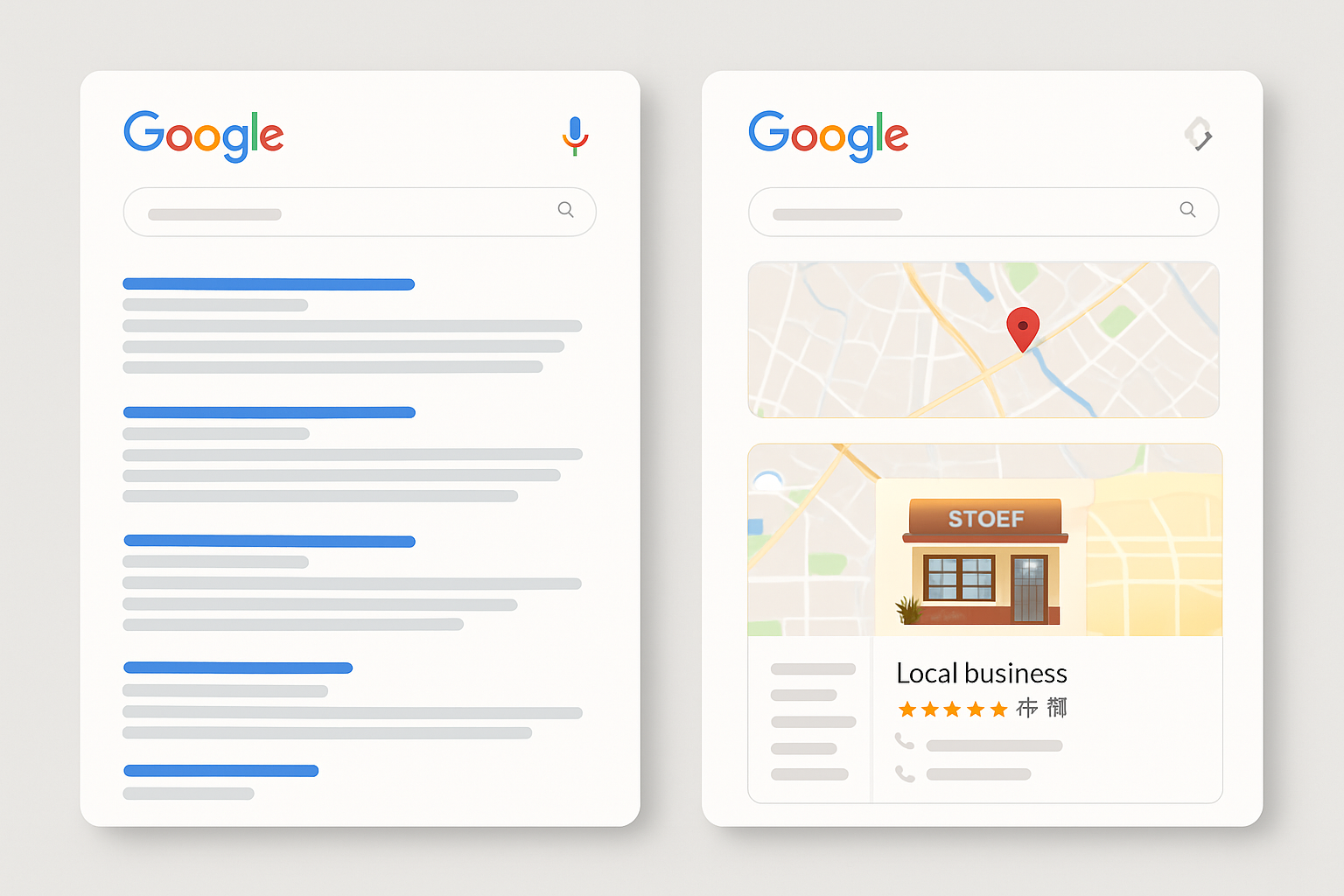
Local SEO is defined as the specialized branch of search engine optimization that helps businesses appear in geographically targeted search results, including Google’s “Local Pack” — the map-based listings that appear for location-specific queries. For small businesses that serve a specific city, region, or neighborhood, local SEO is often the highest-priority strategy. It directly connects you with nearby customers who are ready to act.
Optimizing your Google Business Profile is one of the most impactful first steps in local SEO. This free tool allows you to appear on Google Maps, showcase reviews, display your hours, and highlight your services — all without needing a single paid ad. Consistent business information across directories (name, address, phone number) further reinforces your local authority in Google’s eyes.
Small businesses that actively manage their local SEO tend to see dramatic improvements in foot traffic, phone calls, and direction requests. A well-optimized profile can generate dozens of customer contacts per month at essentially zero ongoing cost.
What Are the Long-Term Benefits of SEO for Small Business Growth?
The best way to think about SEO is as a long-term asset, not a short-term campaign. Unlike paid advertising that delivers instant but temporary results, SEO builds compounding value over time — the longer you invest in it, the stronger and more durable your rankings become. This compounding effect is one of the most powerful financial advantages SEO offers small business owners.
A blog post or service page optimized for the right keyword today can continue attracting hundreds of visitors per month for two, three, or even five years without any additional work. That is the equivalent of a salesperson who never sleeps, never takes a vacation, and never asks for a raise. High-quality SEO content is a permanent asset on your balance sheet.
Additionally, as your domain authority grows over time, new content you publish ranks faster and more easily. Early SEO investment creates a snowball effect where each new page benefits from the credibility your older content has already built with search engines.
How Does SEO Build Trust and Credibility for Small Businesses?
Appearing on the first page of Google is not just about traffic — it is about trust. Studies show that 75% of users never scroll past the first page of search results, meaning that ranking highly signals credibility and authority to potential customers even before they visit your site. Many consumers subconsciously equate top search rankings with industry leadership and trustworthiness.
SEO builds this trust in several concrete ways. High-quality content that answers real customer questions positions your business as an expert in your field. Positive customer reviews, which are an important local SEO factor, reinforce social proof. Fast, mobile-friendly websites — a core SEO technical requirement — signal that you are a professional and reliable business.
This credibility advantage is especially significant for small businesses competing against larger brands. When a local service provider ranks above a national chain in search results, many customers will prefer the local option — perceiving them as more relevant, more accessible, and more trustworthy for their specific need.
What Role Does Keyword Research Play in Small Business SEO Benefits?
Keyword research is defined as the process of identifying the specific words and phrases your target customers type into search engines when looking for products or services like yours. It is the foundation of all effective SEO strategy because every decision — from what content to create to how to structure your pages — should be guided by what your audience is actually searching for. Without keyword research, even well-written content may never be found.
For small businesses, keyword research often reveals golden opportunities that larger competitors overlook. Long-tail keywords — longer, more specific phrases like “affordable wedding photographer Portland Oregon” — typically have lower competition and higher conversion rates than broad terms. These are the keywords where small businesses can win quickly and consistently.
Understanding how to track and monitor these keywords over time is equally important, which is why learning about keyword tracking and how it powers your SEO strategy will help you measure the real impact of your optimization efforts and adjust your approach based on data.
How Does SEO Compare to Social Media Marketing for Small Businesses?
Social media marketing and SEO are both valuable — but they work very differently. Social media generates awareness and engagement among existing or potential followers, while SEO captures demand from people who are actively searching for a solution right now. Both have their place in a small business marketing mix, but SEO tends to deliver higher purchase intent and conversion rates because it meets customers at the moment of need.
Social media platforms also change their algorithms frequently, and reach can drop overnight without warning or explanation. Organic social reach on major platforms has declined significantly over the past several years, with many businesses reporting that only 2% to 5% of their followers see any given post. SEO rankings, while not perfectly stable, are generally more durable and predictable once established.
The wisest small business marketing strategy uses both — social media for community building and brand awareness, and SEO for capturing high-intent customers who are ready to buy or book right now.
What Are the Most Actionable Steps Small Businesses Can Take to Start Benefiting from SEO?
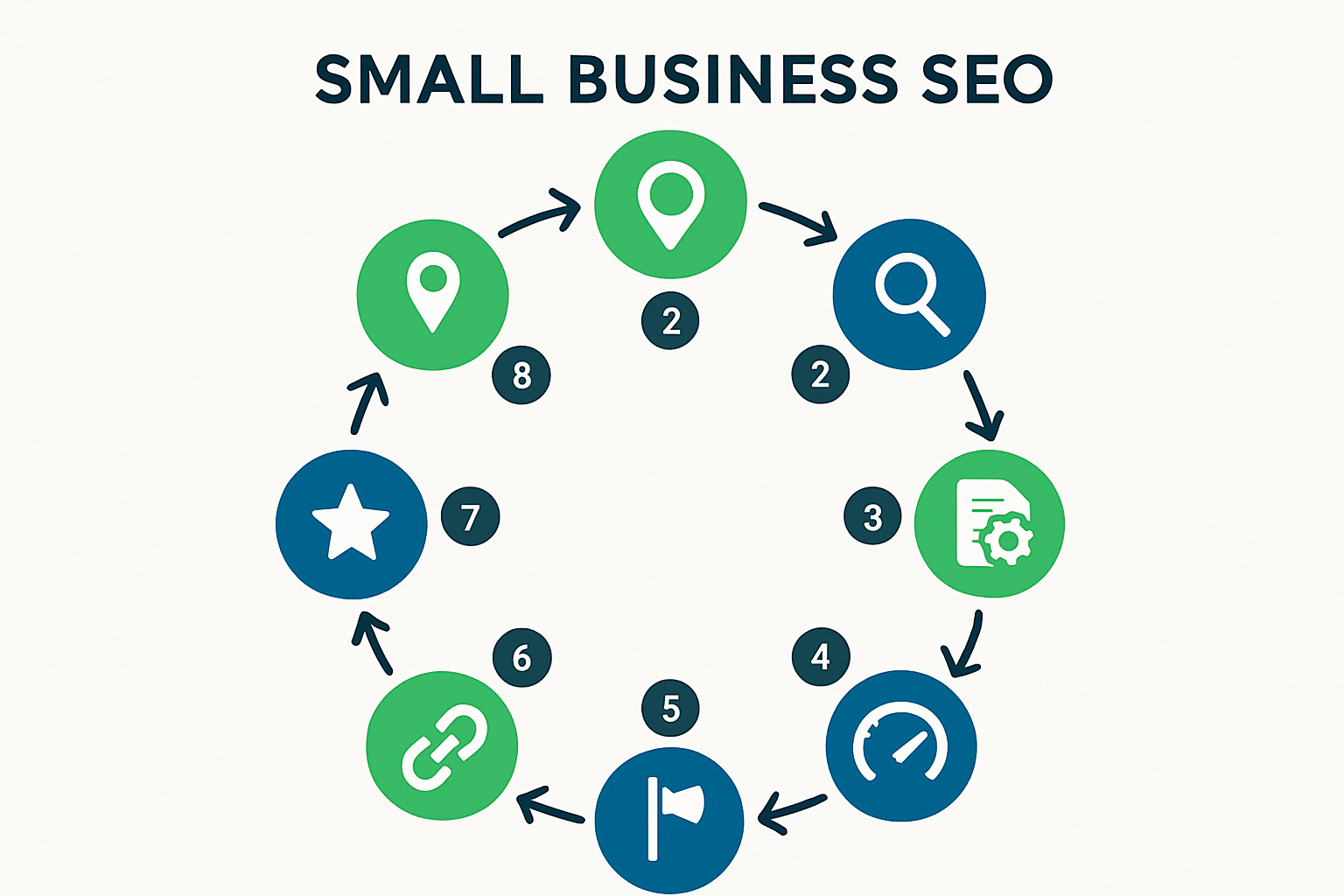
The most effective way to start benefiting from SEO is to take a structured, step-by-step approach rather than trying to do everything at once. Here are the most impactful actions small businesses should prioritize:
- Claim and optimize your Google Business Profile — Add accurate contact information, business hours, photos, and regularly collect customer reviews.
- Perform basic keyword research — Identify 10 to 20 keywords your ideal customers are using and map them to specific pages on your website.
- Optimize your homepage and service pages — Include your primary keywords naturally in headings, page titles, meta descriptions, and body content.
- Create helpful, relevant content — Publish blog posts, FAQs, and guides that answer real questions your customers are asking.
- Improve your website speed and mobile experience — Google prioritizes fast, mobile-friendly websites in its rankings.
- Build local citations — Ensure your business name, address, and phone number are consistent across directories like Yelp, Apple Maps, and industry-specific listings.
- Earn backlinks — Reach out to local publications, industry blogs, and partners who might link to your content or website.
- Track your progress — Monitor keyword rankings, organic traffic, and conversions so you know what is working and where to focus next.
For beginners who want a more detailed walkthrough of these strategies, following proven SEO tips for beginners on how to start ranking higher and getting real traffic is an excellent starting point that will help you avoid the most common mistakes.
How Can Small Businesses Measure the Benefits of SEO Over Time?
Measuring SEO success requires tracking the right metrics consistently over time rather than looking for overnight results. The most important indicators for small businesses include organic traffic growth, keyword ranking improvements, local search visibility, leads and conversions from organic channels, and changes in bounce rate and time-on-site. Each of these metrics tells a different part of the story about how well your SEO is performing.
Free tools like Google Search Console and Google Analytics provide a tremendous amount of useful data that small business owners can access without any cost. Google Search Console shows you exactly which keywords are driving impressions and clicks to your site, while Analytics reveals how visitors behave once they arrive. Together, these platforms give you the intelligence needed to refine your strategy continuously.
Many small businesses that previously relied on traditional SEO tools with steep learning curves and high monthly fees are now switching to more accessible, modern platforms designed with non-specialists in mind. The goal is to make data-driven decisions without needing a full-time SEO specialist on staff.
Why Should Small Businesses Prioritize SEO Over Other Digital Marketing Channels?
SEO should be a top priority for small businesses because it addresses the most fundamental challenge every business faces: being found by the right people at the right time. Every other marketing channel — email, social media, paid ads — assumes you can already reach your audience. SEO builds the pipeline that makes all other channels more effective by establishing organic visibility and domain authority that benefits your entire digital presence.
Furthermore, the return on investment from SEO tends to improve over time rather than declining. The more consistently a small business invests in quality content and technical optimization, the more authority it accumulates — and authority is exponentially harder for competitors to replicate quickly. This creates a genuine competitive moat that protects your business long-term.
Small businesses that start their SEO journey early gain a meaningful first-mover advantage in their local market. Waiting means allowing competitors to accumulate rankings, reviews, and backlinks that become increasingly difficult to overcome.
—
Frequently Asked Questions
How long does it take to see the benefits of SEO for a small business?
Most small businesses begin seeing measurable improvements in rankings and organic traffic within 3 to 6 months of consistent SEO effort, with more significant results typically appearing at the 6 to 12 month mark. Local SEO results for Google Business Profile optimization can sometimes appear faster, within 4 to 8 weeks.
Is SEO affordable for very small businesses or solo entrepreneurs?
Yes — many foundational SEO activities like optimizing your Google Business Profile, writing helpful content, and improving your website speed can be done at little to no cost. Even a modest monthly budget of a few hundred dollars directed toward consistent SEO work can deliver meaningful results for a small local business over time.
What is the difference between local SEO and regular SEO for small businesses?
Local SEO focuses specifically on helping your business appear in geographically targeted searches and map results for your city or region, while general SEO targets broader organic search visibility regardless of location. For most small businesses serving a local area, local SEO should be the primary focus because it delivers the most relevant, purchase-ready customers.
Can SEO help a small business compete with large national brands?
Yes — SEO is one of the few marketing channels where small businesses can realistically outrank larger competitors by focusing on local relevance, specific niche keywords, and high-quality helpful content that large brands often overlook. A well-optimized local business frequently outperforms national chains in local search results because Google prioritizes proximity and local relevance.
How many keywords should a small business try to rank for?
Starting with 10 to 20 highly relevant, realistic keywords is a practical approach for most small businesses. It is far more effective to rank on page one for a focused set of well-chosen keywords than to rank on page five or beyond for dozens of broader, more competitive terms. Quality and strategic focus always outperform volume in small business SEO.
—
Start Growing Your Small Business with Smarter SEO Today
The benefits of SEO for small business are not theoretical — they are measurable, compounding, and available to any business owner willing to invest consistent effort into building organic visibility. From attracting high-intent local customers and building long-term trust, to reducing dependence on paid advertising and competing effectively against larger brands, SEO delivers advantages that no other single marketing strategy can match.
The best time to start was a year ago. The second best time is today. Every month without an SEO strategy is another month of traffic, leads, and revenue going to your competitors who have already made the investment.
If you are ready to stop guessing and start growing, RankBloom SEO is built specifically to help small business owners like you take control of their search visibility without needing a technical background or an enterprise budget. RankBloom SEO provides the modern tools, clear guidance, and actionable insights that make SEO accessible, measurable, and genuinely effective for businesses of every size. Start your SEO journey with a platform designed to grow with you — and watch organic search become your most reliable source of new customers.