
GEO SEO for service-based businesses is the practice of combining geographic targeting with search engine optimization to attract local customers who are actively searching for your specific services. Service businesses — from plumbers and accountants to marketing agencies and cleaning companies — live and die by local visibility. Without a strong local SEO strategy, even the best service provider can be invisible online while competitors capture every lead in the area.
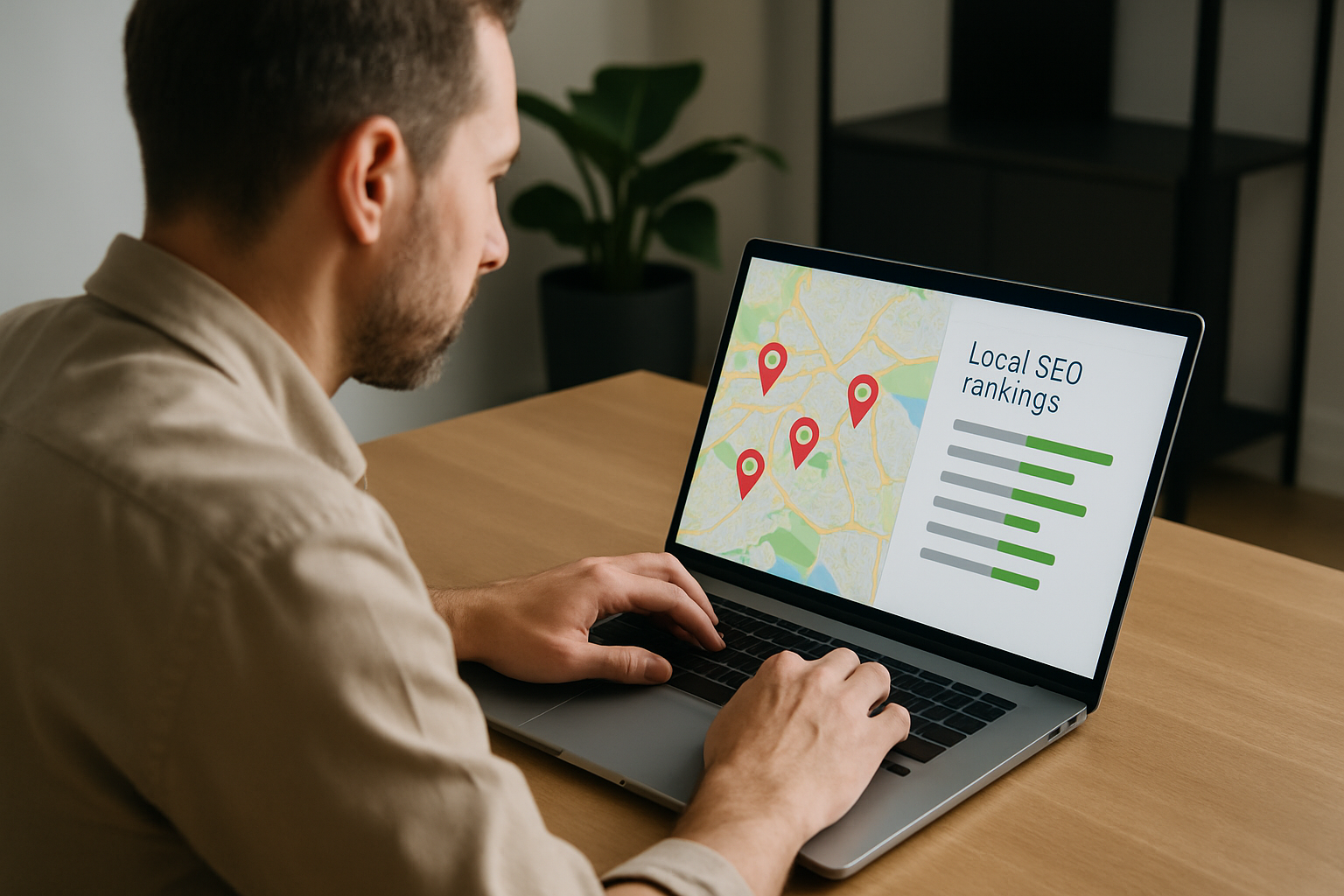
Studies show that 46% of all Google searches have local intent, meaning nearly half of every search made is someone looking for a product or service near them. That is an enormous pool of potential clients searching for businesses exactly like yours every single day. Capturing even a fraction of that traffic can transform a service business’s revenue.
This guide walks you through everything you need to know about GEO SEO for service-based businesses — what it is, how it works, why it matters, and how tools like RankBloom SEO make the entire process faster and more effective than ever before.
What Is GEO SEO and How Does It Apply to Service-Based Businesses?
GEO SEO is defined as the strategy of optimizing a website’s content, structure, and online presence to rank in geographically specific search results. For service-based businesses, this means appearing at the top of Google when someone in your city or region searches for the services you offer. It goes far beyond simply adding a city name to your homepage.
A service-based business is defined as any company that sells expertise, labor, or skill rather than a physical product. This includes industries like legal services, HVAC, digital marketing, landscaping, tutoring, healthcare, and hundreds more. These businesses depend heavily on trust, proximity, and visibility — all of which GEO SEO directly supports.
GEO SEO works through a combination of on-page content signals, Google Business Profile optimization, local citations, and location-specific landing pages. Each of these elements tells search engines exactly where you operate and who you serve. When done correctly, your business shows up in local map packs, organic results, and AI-generated answers simultaneously.
Why Does Local Search Matter So Much for Service Businesses?
Local search is the single most important channel for most service-based businesses because customers search with intent to hire. According to Google, 76% of people who search for something nearby on their smartphone visit a related business within one day. For service businesses, this near-instant conversion potential makes local SEO one of the highest-ROI marketing activities available.
The best way to understand why local search dominates is to think about buyer behavior. When someone searches “electrician near me” or “divorce lawyer in Austin,” they are not browsing casually — they have a specific need and they want to hire someone soon. Ranking for these searches means connecting with people at the exact moment they are ready to become a paying customer.
Service businesses that neglect GEO SEO are essentially handing those ready-to-buy customers to their competitors. The cost of inaction is not just lost traffic — it is lost revenue, lost reviews, and lost brand authority in your local market.
How Does Keyword Strategy Work for GEO SEO?
Keyword strategy for GEO SEO involves identifying the specific phrases your local audience uses when searching for your services, then creating content that answers those searches directly. These keywords typically follow patterns like “[service] + [city],” “[problem] + [near me],” or “[service type] + [neighborhood].” Each variation represents a real customer with a real need.
Here is a simple framework for building a GEO SEO keyword list for a service business:
- Core service keywords: The primary service you offer (e.g., “roof repair,” “tax preparation”)
- Location modifiers: Your city, county, neighborhood, or region
- Intent modifiers: Words like “near me,” “affordable,” “best,” “emergency,” or “same day”
- Long-tail combinations: Full phrases like “affordable roof repair in Denver” or “emergency plumber North Phoenix”
Research shows that long-tail local keywords (three or more words) convert at up to 2.5 times the rate of short generic keywords. This is because longer queries signal stronger purchase intent. Targeting them with dedicated landing pages and blog content is one of the most effective GEO SEO tactics available.
What Content Do Service-Based Businesses Need for GEO SEO Success?
Content is the foundation of every successful GEO SEO strategy. Service businesses need a mix of location-specific landing pages, educational blog articles, service area pages, and FAQ content to fully capture local search demand. Each content type serves a different purpose in the buyer’s journey.
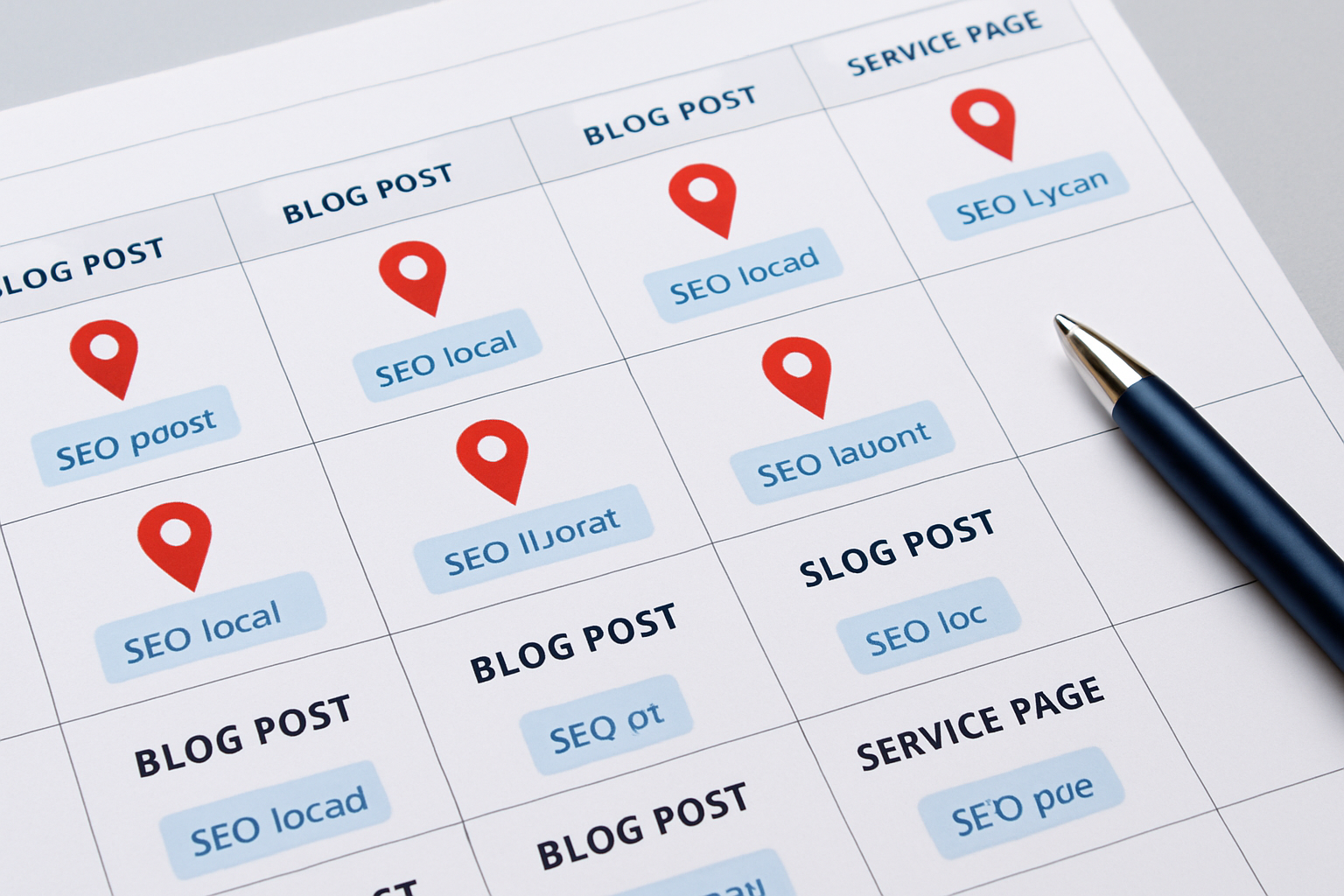
Location landing pages are dedicated pages built around a specific service and city combination. For example, a pest control company serving three cities should have a separate, unique page for each city rather than one generic “service areas” page. These pages need original content, local references, and relevant keywords to rank effectively.
Blog content supports GEO SEO by targeting informational and question-based searches that your ideal clients make before hiring a service provider. Articles like “How to know if your foundation needs repair in Houston” or “What does a bookkeeper do for small businesses in Chicago” attract qualified traffic and build trust before anyone ever fills out a contact form.
How Many Location Pages Does a Service Business Need?
The number of location pages depends on your service area and how competitive your market is. A business serving a single city may need pages for multiple neighborhoods or zip codes. A regional service business might need individual pages for every major city within a 100-mile radius. The goal is to have a dedicated, high-quality page for every location where you want to rank.
Thin or duplicate location pages — pages that swap out the city name but otherwise contain identical content — are penalized by Google and do not build local authority. Every location page must contain genuinely useful, locally relevant information. This is where many service businesses struggle, because creating unique content at scale is time-consuming and expensive without the right tools.
How Can Service Businesses Automate GEO SEO Content Creation?
Automating GEO SEO content creation means using AI-powered tools to generate, optimize, and publish location-specific content at scale without hiring a team of writers or SEO specialists. This approach has become not just possible but essential for service businesses that need to compete in multiple locations simultaneously. RankBloom SEO was built specifically to solve this problem.
RankBloom SEO is a SaaS platform that automates the entire SEO content workflow for small businesses and agencies. It uses artificial intelligence to generate keyword-optimized articles and location pages, schedule them for publication, and push them directly to your WordPress website. You get a consistent stream of high-quality, geo-targeted content without ever needing to hire a writer or learn technical SEO.
Here is what makes RankBloom SEO particularly powerful for service-based businesses running a GEO SEO strategy:
- AI-generated location content: Create unique, optimized pages for every service area in minutes
- Automated publishing to WordPress: Content goes live on your site without manual uploading or formatting
- Keyword targeting built-in: Each piece is structured around the local keywords that drive real traffic
- Consistent content scheduling: Publish fresh articles regularly, which signals authority to Google
- No writers or SEO specialists needed: Small businesses and solo operators can compete with larger companies
Visit https://www.rankbloomseo.com to see how RankBloom SEO can automate your local content strategy and start ranking in more locations faster.
What Technical SEO Elements Support GEO Optimization?
Technical SEO for GEO optimization includes the behind-the-scenes elements that help search engines understand your location, service area, and relevance to local queries. These elements work alongside your content to create a complete local SEO signal. Neglecting them can undercut even the best content strategy.
The most important technical GEO SEO elements for service businesses include:
- Google Business Profile (GBP): A fully optimized GBP listing with accurate NAP (Name, Address, Phone), business category, service areas, photos, and regular posts
- Schema markup: Structured data code (like LocalBusiness JSON-LD) that tells search engines your business name, location, and services in a machine-readable format
- NAP consistency: Your business name, address, and phone number must match exactly across your website, GBP, and all online directories
- Local citations: Listings on platforms like Yelp, Angi, HomeAdvisor, and industry-specific directories that build local authority
- Mobile optimization: Over 60% of local searches happen on mobile devices, making a fast, mobile-friendly website non-negotiable
Schema markup is defined as a form of structured data added to a website’s HTML that helps search engines understand the content on the page more precisely. For service businesses, using LocalBusiness schema communicates your exact location, hours, and service types directly to Google. This increases your chances of appearing in rich results, map packs, and AI-generated responses.
How Do You Measure GEO SEO Success for a Service Business?
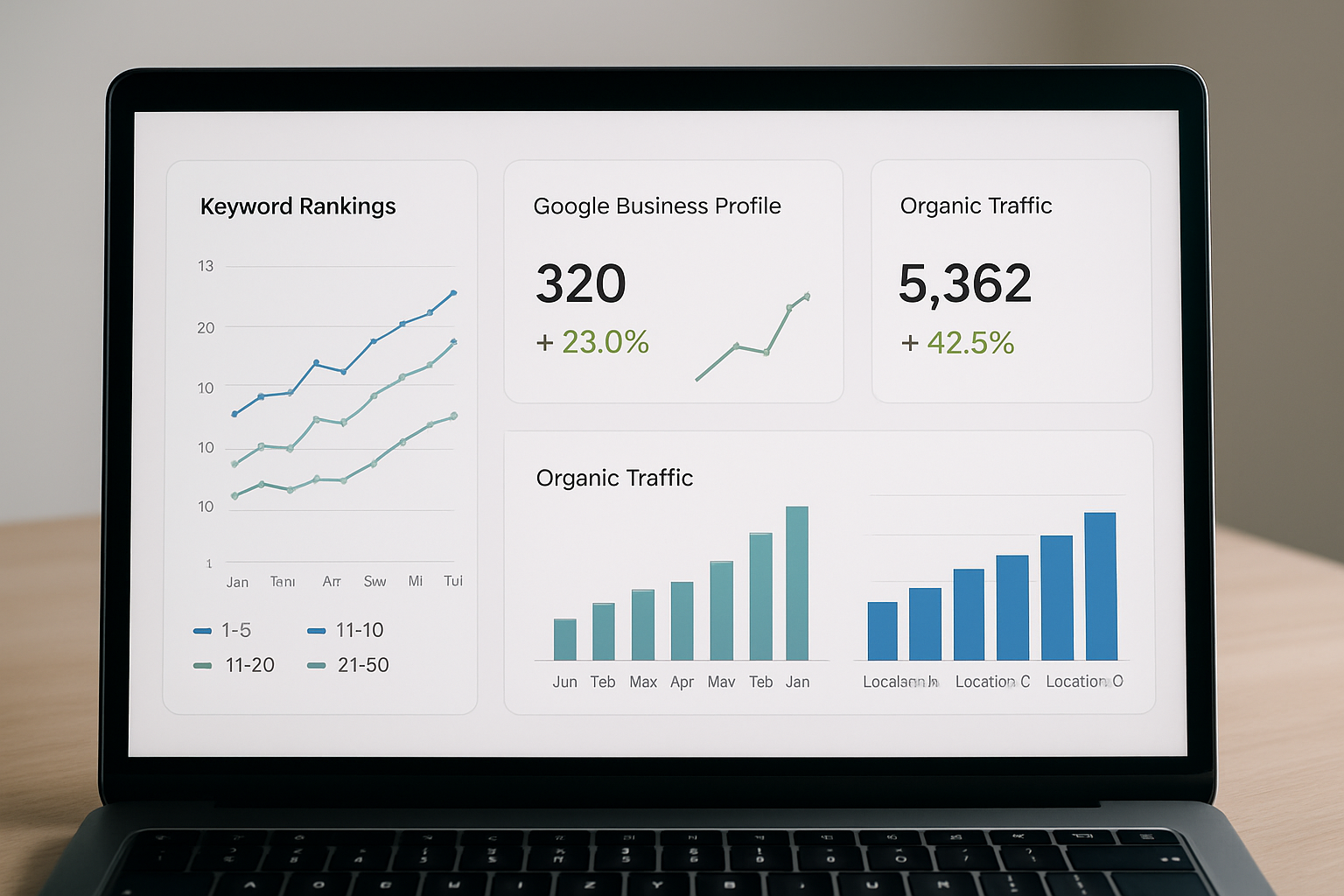
Measuring GEO SEO success means tracking the metrics that directly reflect local visibility, traffic quality, and lead generation rather than vanity metrics like overall page views. The most meaningful indicators for a service-based business are local keyword rankings, Google Business Profile engagement, and actual inquiries generated from local search. These numbers tell you whether your GEO SEO efforts are converting into real business.
Key metrics to track for GEO SEO performance include:
- Local keyword rankings: Track positions for your target “[service] + [city]” keywords monthly
- Google Business Profile impressions and clicks: Monitor how often your listing appears and how many people click, call, or request directions
- Organic traffic from local pages: Use Google Analytics to see how much traffic your location landing pages receive
- Conversion rate from local traffic: Track form submissions, phone calls, and bookings attributed to local search
- Local pack appearances: How frequently your business shows up in the Google Maps 3-pack for relevant searches
Studies show that businesses with complete Google Business Profiles receive 7 times more clicks than those with incomplete profiles. This single data point reinforces why both technical setup and ongoing content updates are essential parts of a winning GEO SEO strategy. Consistent effort compounds over time into dominant local authority.
Why Should Service Businesses Use RankBloom SEO for Their GEO Strategy?
Service businesses should use RankBloom SEO because it eliminates the two biggest barriers to local SEO success: time and expertise. Most small service businesses do not have the resources to hire a full-time content team or SEO agency. RankBloom SEO gives them enterprise-level content output at a fraction of the cost, leveling the playing field against larger competitors.
The platform handles everything from keyword research-informed content generation to direct WordPress publishing, making it the most streamlined solution for businesses that need to scale their local content strategy quickly. Agencies managing multiple service business clients get even more value — they can deploy optimized GEO content across dozens of client websites from a single dashboard.
The core benefits of using RankBloom SEO for GEO SEO include:
- Save hours of content creation time every week
- Rank in more local markets without proportionally increasing costs
- Maintain a consistent publishing schedule that builds Google trust signals
- Generate unique, high-quality location pages that actually rank
- Scale your SEO strategy as your service area grows
Ready to dominate local search in your market? Visit https://www.rankbloomseo.com and start automating your GEO SEO content today.
Frequently Asked Questions
What is GEO SEO for a service-based business?
GEO SEO for a service-based business is the practice of optimizing your online content and presence to rank in location-specific search results, helping you attract local customers who are actively searching for your services. It combines keyword targeting, location pages, and technical optimization to drive qualified local traffic.
How long does it take to see results from GEO SEO?
Most service businesses begin seeing measurable improvements in local keyword rankings and Google Business Profile visibility within 3 to 6 months of consistent GEO SEO activity. Highly competitive markets may take longer, while less competitive local niches can produce results in as little as 6 to 8 weeks.
Do I need a separate page for every city I serve?
Yes, creating a unique, content-rich landing page for each city or service area you target is one of the most effective GEO SEO tactics. Thin pages that simply swap out the city name without original content are penalized by Google and will not rank effectively.
Can I do GEO SEO without hiring an SEO agency?
Absolutely. Tools like RankBloom SEO make it possible for service business owners to automate their GEO content strategy without hiring writers or SEO specialists. The platform generates, schedules, and publishes optimized local content directly to your WordPress site.
What is the difference between GEO SEO and regular SEO?
Regular SEO focuses on ranking in broad, non-location-specific search results, while GEO SEO specifically targets searches tied to a geographic area. GEO SEO uses location modifiers, local schema markup, Google Business Profile optimization, and city-specific content to rank for searches made by users in a particular location.
How does RankBloom SEO help with local content creation?
RankBloom SEO uses artificial intelligence to generate keyword-optimized, geo-targeted articles and location pages for your service business, then automatically publishes them to your WordPress website on a scheduled basis. This gives you a consistent stream of high-quality local content without the need for a writing team or SEO expertise.
Start Winning Local Search with a Smarter GEO SEO Strategy
GEO SEO for service-based businesses is not optional in today’s competitive digital landscape — it is the difference between a phone that rings consistently and one that stays silent. By combining strategic local keyword targeting, unique location landing pages, technical SEO foundations, and a consistent content publishing schedule, service businesses can dominate their local markets and attract more of the high-intent customers who are already searching for them.
The challenge has never been understanding what to do — it has always been finding the time and resources to do it consistently. That is exactly the problem Rank