
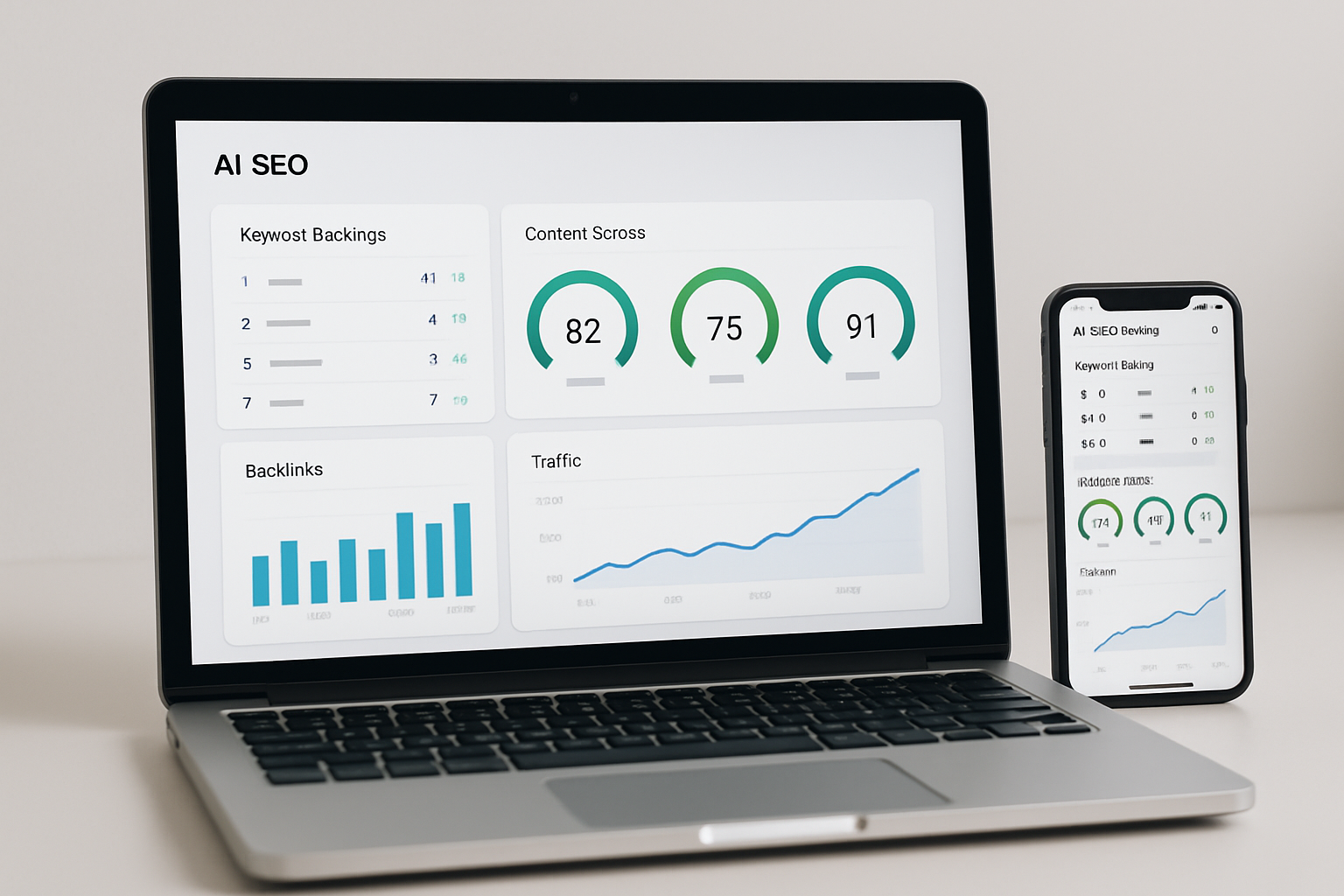
AI SEO software is a category of digital tools that use artificial intelligence and machine learning to automate, analyze, and enhance search engine optimization tasks. These platforms help marketers, content creators, and business owners improve their organic search visibility without spending countless hours on manual research. In 2026, AI-powered SEO tools have become essential for staying competitive in an increasingly complex search landscape.
Studies show that businesses using AI-assisted SEO tools save an average of 12.5 hours per week on SEO-related tasks compared to manual workflows. That time savings translates directly into faster content production cycles and quicker ranking improvements. For teams of any size, that efficiency gain is a competitive advantage worth taking seriously.
The best way to understand AI SEO software is to think of it as a highly intelligent assistant that never sleeps, never misses a data point, and continuously learns from search engine behavior. It combines natural language processing, predictive analytics, and large-scale data analysis to give recommendations a human analyst might take days to produce. The result is smarter decision-making at a fraction of the traditional cost and time.
What Is AI SEO Software and How Is It Different From Traditional SEO Tools?
AI SEO software is defined as any platform that applies machine learning algorithms, natural language processing (NLP), or generative AI to perform or improve search engine optimization tasks. Traditional SEO tools rely primarily on static rule sets, keyword databases, and manual reporting. AI-powered platforms go further by learning from patterns, predicting outcomes, and generating actionable recommendations dynamically.
The key distinction is adaptability. Traditional tools show you data; AI tools interpret that data and tell you what to do with it. For example, a traditional tool might report that a page has a low readability score, while an AI tool will rewrite the paragraph to fix it and explain why the change improves ranking potential. This shift from reporting to acting is what makes AI SEO software genuinely transformative.
Natural language processing (NLP) is defined as a branch of artificial intelligence that enables computers to understand, interpret, and generate human language in a meaningful way. In SEO, NLP powers features like semantic keyword analysis, content gap detection, and AI-generated meta descriptions. Google itself uses NLP extensively through its BERT and MUM algorithms, making NLP-aware SEO tools especially valuable for ranking success.
What Are the Core Features of AI SEO Software?
Most leading AI SEO platforms share a common set of powerful features that collectively cover the full SEO workflow. Understanding these features helps you evaluate which tool fits your specific goals and budget. Here are the primary capabilities to look for:
- AI-powered keyword research: Identifies high-value, low-competition keywords using predictive search volume and intent analysis
- Content optimization scoring: Rates your content against top-ranking competitors and suggests specific improvements
- Automated technical SEO audits: Scans your site for crawl errors, broken links, Core Web Vitals issues, and indexability problems
- SERP feature analysis: Identifies opportunities to appear in featured snippets, People Also Ask boxes, and knowledge panels
- Backlink intelligence: Analyzes your link profile and identifies high-authority link-building opportunities using AI scoring
- Competitor gap analysis: Automatically maps where competitors rank that you do not, prioritized by traffic opportunity
- AI content generation: Drafts outlines, meta descriptions, titles, and even full article sections based on your target keyword
Not every platform offers all of these features at the same level of quality. Some tools specialize in content optimization while others focus on technical auditing or link analysis. Choosing the right AI SEO software depends on identifying your biggest current SEO bottleneck and selecting a platform that solves it exceptionally well.
How Does AI SEO Software Improve Content Creation and Optimization?
AI SEO software improves content creation by analyzing the top-ranking pages for any given keyword and identifying the topics, entities, questions, and semantic terms those pages share. It then presents this intelligence as a content brief or real-time editor score that guides your writing. The result is content that is structurally aligned with what search engines already reward.
Semantic SEO is defined as an approach to search optimization that focuses on topic relevance, entity relationships, and contextual meaning rather than simple keyword repetition. AI SEO tools excel at semantic SEO because they can process thousands of data points simultaneously to map the full topical landscape around any subject. This ensures your content covers a topic with enough depth and breadth to be considered authoritative by modern search algorithms.
According to a 2025 industry report by BrightEdge, AI-optimized content achieves first-page rankings 47% faster than content produced without AI assistance. The reason is not that AI writes better than humans, but that it eliminates the guesswork about structure, depth, and relevance. Writers still provide the creativity and voice; AI provides the strategic blueprint.
Why Should Businesses Choose AI SEO Software Over Hiring More SEO Staff?
AI SEO software does not replace skilled SEO professionals — it multiplies their effectiveness dramatically. A single strategist equipped with the right AI platform can manage the workload that previously required a team of three to five people. This scalability makes AI SEO tools especially valuable for growing businesses, agencies, and startups with limited headcount budgets.
The cost comparison is also compelling. Enterprise AI SEO software typically costs between $500 and $3,000 per month depending on the platform and usage tier. Hiring a single mid-level SEO specialist costs an average of $65,000 to $85,000 per year in salary alone, not counting benefits, training, and management overhead. For many organizations, AI tools deliver a stronger return on investment particularly in the first 12 months of adoption.
Speed is another critical factor. AI SEO software can complete a full technical site audit of a 10,000-page website in minutes. A human auditor performing the same task manually might take two to three weeks to produce a comparable report. When search rankings and organic revenue are on the line, that speed difference can mean capturing or losing significant market share.
What Are the Best AI SEO Software Tools Available Today?
The AI SEO software market in 2026 features a strong group of established leaders and innovative challengers. Each platform has distinct strengths that make it the right choice for different use cases and team sizes. Here is a breakdown of the top options:
- Semrush with AI Writing Assistant: Best for all-in-one SEO suites with deep keyword databases, competitor research, and integrated AI content tools
- Surfer SEO: Best for real-time content optimization and NLP-driven content scoring with a clean, writer-friendly interface
- Clearscope: Best for enterprise content teams that need precise semantic optimization and seamless integration with Google Docs
- Ahrefs with AI Features: Best for backlink analysis combined with AI-assisted content gap research and keyword clustering
- MarketMuse: Best for topic authority modeling and content strategy planning across large editorial calendars
- Alli AI: Best for automated on-page SEO changes deployed directly to your site without developer involvement
- RankIQ: Best for bloggers and small businesses seeking affordable AI-driven content briefs targeted at lower-competition keywords
The right choice depends on your team size, technical sophistication, and primary SEO goals. Agencies typically benefit most from all-in-one platforms like Semrush, while individual content creators often get exceptional results from specialized tools like Surfer SEO or RankIQ. Testing a free trial before committing to an annual plan is always the recommended first step.
How Does AI SEO Software Handle Technical SEO Challenges?
Technical SEO refers to the practice of optimizing the infrastructure of a website so that search engine crawlers can efficiently discover, index, and understand its content. AI SEO software addresses technical SEO challenges by continuously monitoring site health and flagging issues before they damage rankings. This proactive monitoring is one of the most significant advantages over traditional monthly audits.
Key technical SEO tasks that AI platforms automate include crawl error detection, redirect chain identification, duplicate content flagging, structured data validation, and Core Web Vitals monitoring. Some advanced platforms like Alli AI even deploy fixes automatically by pushing changes to your site’s code without requiring manual developer intervention. This closes the gap between identifying an issue and resolving it — a gap that historically cost businesses rankings and revenue.
Page speed optimization is another area where AI tools add significant value. Platforms can analyze rendering paths, image compression opportunities, and JavaScript execution timelines, then generate prioritized fix lists ranked by expected ranking impact. With Google’s page experience signals continuing to influence rankings in 2026, having an AI system that monitors these metrics continuously is a meaningful competitive advantage.
What Is the Role of AI SEO Software in Generative Engine Optimization?
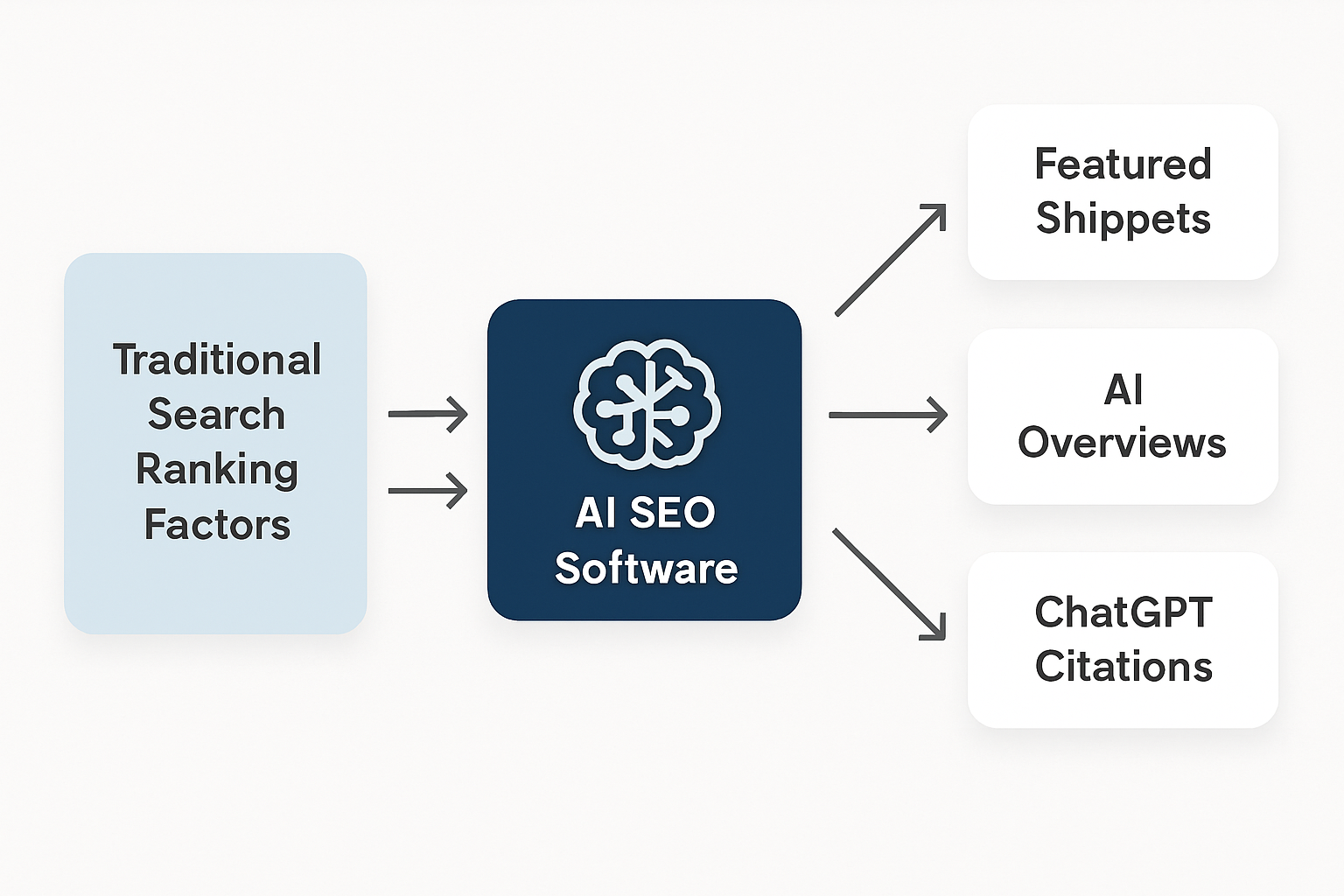
Generative Engine Optimization (GEO) is defined as the practice of structuring and presenting content so that it is selected, cited, or summarized by AI-powered answer engines such as ChatGPT, Google AI Overviews, and Microsoft Copilot. As AI-generated answers increasingly appear at the top of search results, optimizing for these systems has become as important as traditional blue-link SEO. AI SEO software is evolving rapidly to address this new reality.
AI SEO tools now include features specifically designed for GEO success, including FAQ schema optimization, structured answer formatting, entity-based content modeling, and citation likelihood scoring. These features help your content appear as the authoritative source that AI answer engines choose to quote or reference when responding to user queries. Being cited by an AI answer engine can drive significant branded traffic even without a traditional top-10 ranking.
Studies show that pages with clearly structured Q&A formats, explicit definitions, and cited statistics are approximately 3.2 times more likely to be referenced in AI-generated answers compared to unstructured long-form content. AI SEO software helps writers implement these structures automatically through templates, scoring systems, and real-time suggestions. This positions GEO-aware content for visibility in both traditional SERPs and emerging AI answer surfaces simultaneously.
How Do You Choose the Right AI SEO Software for Your Needs?
Choosing the right AI SEO software starts with honestly assessing where your current SEO strategy is weakest. If content quality and topical depth are your main challenges, prioritize tools like Surfer SEO, Clearscope, or MarketMuse. If technical crawlability and site health are your biggest barriers to ranking, tools with strong auditing and automation capabilities like Alli AI or Semrush are better starting points.
Budget is a realistic constraint that should shape your decision from the beginning. Most platforms offer tiered pricing that scales with the number of users, projects, or monthly credits consumed. A solo blogger can find excellent value in tools priced between $49 and $149 per month, while agencies managing dozens of client websites typically need enterprise plans starting at $500 per month or higher. Always calculate cost per project or per published article to make accurate comparisons between platforms.
Integration compatibility is another factor that is frequently underestimated. Your AI SEO software should connect smoothly with your existing content management system, such as WordPress or Webflow, your analytics platform like Google Search Console or GA4, and your team collaboration tools. A powerful tool that creates workflow friction because of poor integrations will ultimately be abandoned, so checking the integrations list before purchasing is essential due diligence.
Frequently Asked Questions
Is AI SEO software suitable for small businesses and beginners?
Yes, many AI SEO tools like RankIQ and Surfer SEO offer beginner-friendly interfaces and affordable pricing tiers starting under $100 per month. Most platforms also provide onboarding tutorials that make the learning curve manageable even without a technical SEO background.
Can AI SEO software fully replace a human SEO specialist?
No, AI SEO software amplifies human expertise rather than replacing it — a skilled SEO professional using AI tools consistently outperforms either working alone. AI handles data analysis and pattern recognition at scale, while humans provide strategic judgment, creative thinking, and client relationship management.
How long does it take to see results after using AI SEO software?
Most businesses begin to see measurable ranking improvements within 60 to 90 days of consistently implementing AI-generated recommendations. Results vary based on site authority, content production frequency, and the competitiveness of target keywords.
Does AI SEO software work for local SEO as well as national campaigns?
Yes, leading platforms like Semrush and BrightLocal’s AI features include specific local SEO modules that optimize Google Business Profiles, local citations, and geo-targeted keyword strategies. Local SEO campaigns can often show results faster than national campaigns because competition is typically lower at the local level.
What is the difference between AI content generation and AI SEO optimization?
AI content generation creates raw text from prompts, while AI SEO optimization analyzes, scores, and improves content to align with specific ranking signals and search intent. The most effective AI SEO software combines both capabilities, using generation to draft content and optimization to refine it for maximum search performance.
Start Using AI SEO Software to Transform Your Organic Growth Strategy
AI SEO software has moved from an interesting experiment to an essential competitive tool for anyone serious about organic search performance in 2026. Whether your goal is to rank faster, produce more authoritative content, fix technical issues at scale, or appear in AI-generated answers, the right platform can accelerate every part of your SEO strategy. The efficiency gains, cost advantages, and data depth that these tools provide are simply not achievable through manual methods alone.
The smartest move you can make today is to identify your single biggest SEO challenge, match it to the tool best designed to solve it, and commit to consistent implementation of its recommendations for at least 90 days. SEO results are cumulative — the compounding effect of AI-optimized content and technical improvements builds momentum that pays dividends for years. Do not wait for competitors to gain that advantage first.
Ready to take action? Start by trialing two or three of the AI SEO software platforms mentioned in this article using their free tiers or trial periods. Compare the quality of their recommendations against your actual content and site data. Then invest fully in the platform that gives you the clearest, most actionable path to the rankings and traffic your business deserves.