
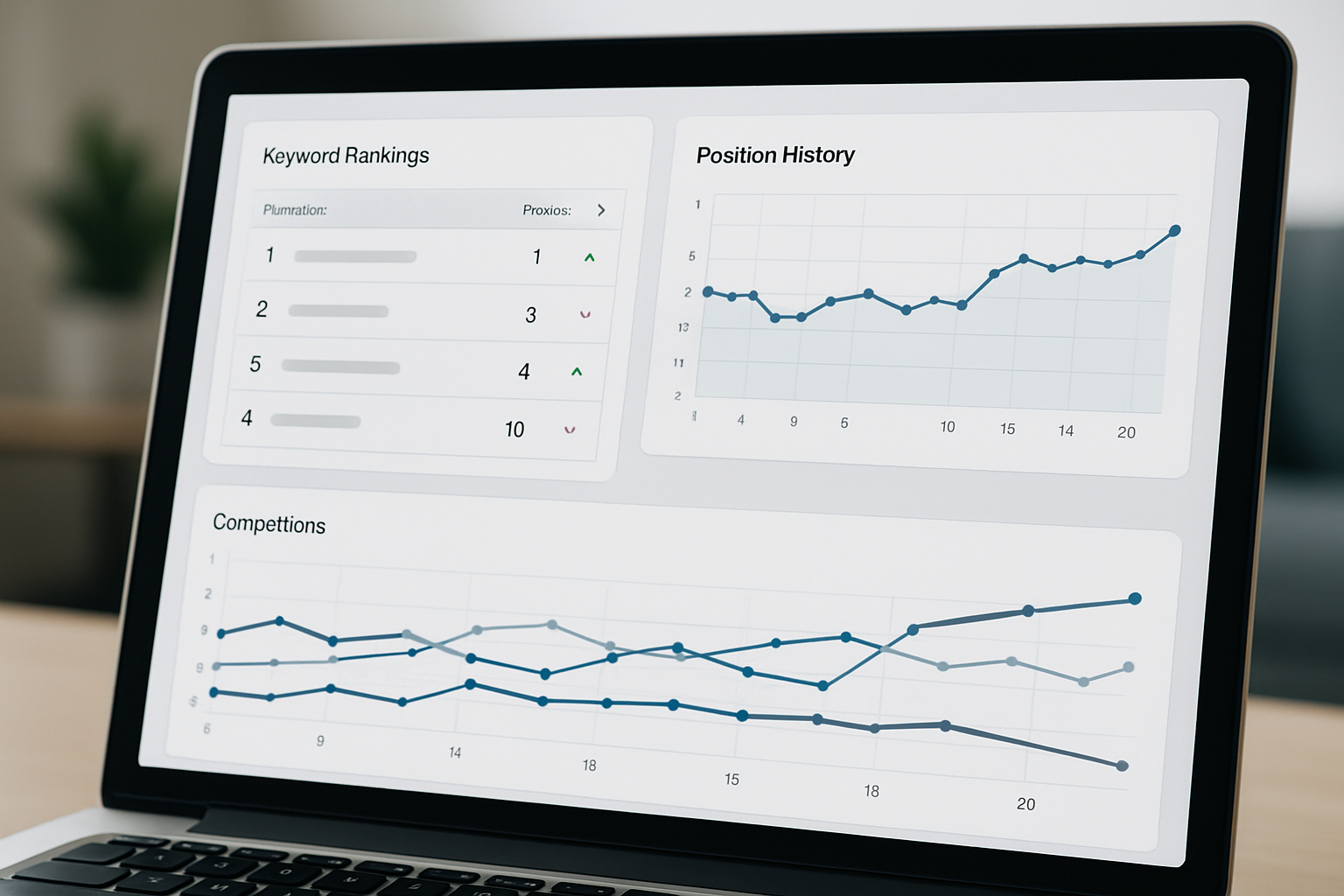
Keyword tracking software is a specialized SEO tool that monitors where your website ranks in search engine results pages (SERPs) for specific search terms over time. It gives marketers, bloggers, and business owners clear visibility into whether their SEO efforts are actually working. Without it, you’re essentially flying blind in one of the most competitive digital landscapes ever seen.
Studies show that the top three organic search results capture over 54% of all clicks, making your ranking position critically important to your traffic volume. Even a single position improvement for a high-volume keyword can translate into hundreds of additional monthly visitors. Keyword tracking software makes those position changes visible, measurable, and actionable.
The best way to use keyword tracking software is to combine daily rank monitoring with competitive analysis and content performance data. This three-pronged approach gives you a full picture of your SEO health. You can then make smarter decisions about where to invest your content creation time and budget.
What Is Keyword Tracking Software and How Does It Work?
Keyword tracking software is defined as a digital tool that automatically checks your website’s ranking position for a defined list of keywords across one or more search engines. It records those positions over time, creating a historical data trail you can analyze for trends. Most tools check rankings daily, weekly, or in real-time depending on your subscription tier.
The core mechanism works by sending automated queries to search engines and recording where your URL appears in the results. Advanced tools also account for personalization, local search, and device type — giving you rankings from desktop and mobile separately. This level of granularity helps you understand exactly how different audiences find your content.
Modern keyword tracking tools do far more than just report a number. They integrate with analytics platforms, send automated alerts when rankings drop or spike, and benchmark your performance against competitors. Some tools even suggest which keywords you’re close to ranking for — the so-called “striking distance” keywords — so you can prioritize quick wins.
Why Does Keyword Tracking Matter for SEO Success?
Keyword tracking matters because SEO is a long-term game where small changes accumulate into big results — but only if you’re paying attention. Without a tracking tool, a Google algorithm update could drop your rankings for weeks before you even notice. By then, you’ve lost traffic, leads, and revenue that could have been protected with faster intervention.
According to BrightEdge research, organic search drives 53% of all website traffic across industries. That makes SEO the single largest traffic channel for most businesses. Protecting and growing that channel requires constant, data-driven monitoring — exactly what keyword tracking software provides.
Tracking also helps you prove ROI on your content investment. When you can show that a blog post moved from position 18 to position 4 over six weeks, stakeholders understand the value of the work. This visibility turns SEO from a mysterious black box into a transparent, justifiable business function.
What Features Should You Look for in Keyword Tracking Software?
Core Ranking Features
The most essential feature is accurate, up-to-date rank tracking across your target keywords and locations. Look for tools that update rankings daily rather than weekly, especially if you’re running active SEO campaigns. Stale data leads to slow reactions and missed opportunities.
- Daily rank updates — Know your positions without delay
- Local tracking — Monitor rankings in specific cities or regions
- Mobile vs. desktop splits — Understand how device type affects your visibility
- SERP feature tracking — Know when you appear in featured snippets, PAA boxes, or local packs
- Keyword grouping — Organize large keyword lists into logical topic clusters
Competitive Intelligence Features
Competitor analysis is defined as the process of monitoring how rival websites rank for the same keywords you’re targeting. Good keyword tracking software shows you not just your own position, but the gap between you and the top competitors. This context is what transforms raw data into strategic direction.
Look for tools that let you add competitor domains and track their keyword movements alongside yours. Share-of-voice metrics are especially useful — they show you what percentage of total keyword visibility you own versus competitors. This single metric is one of the clearest indicators of overall SEO health.
Reporting and Automation Features
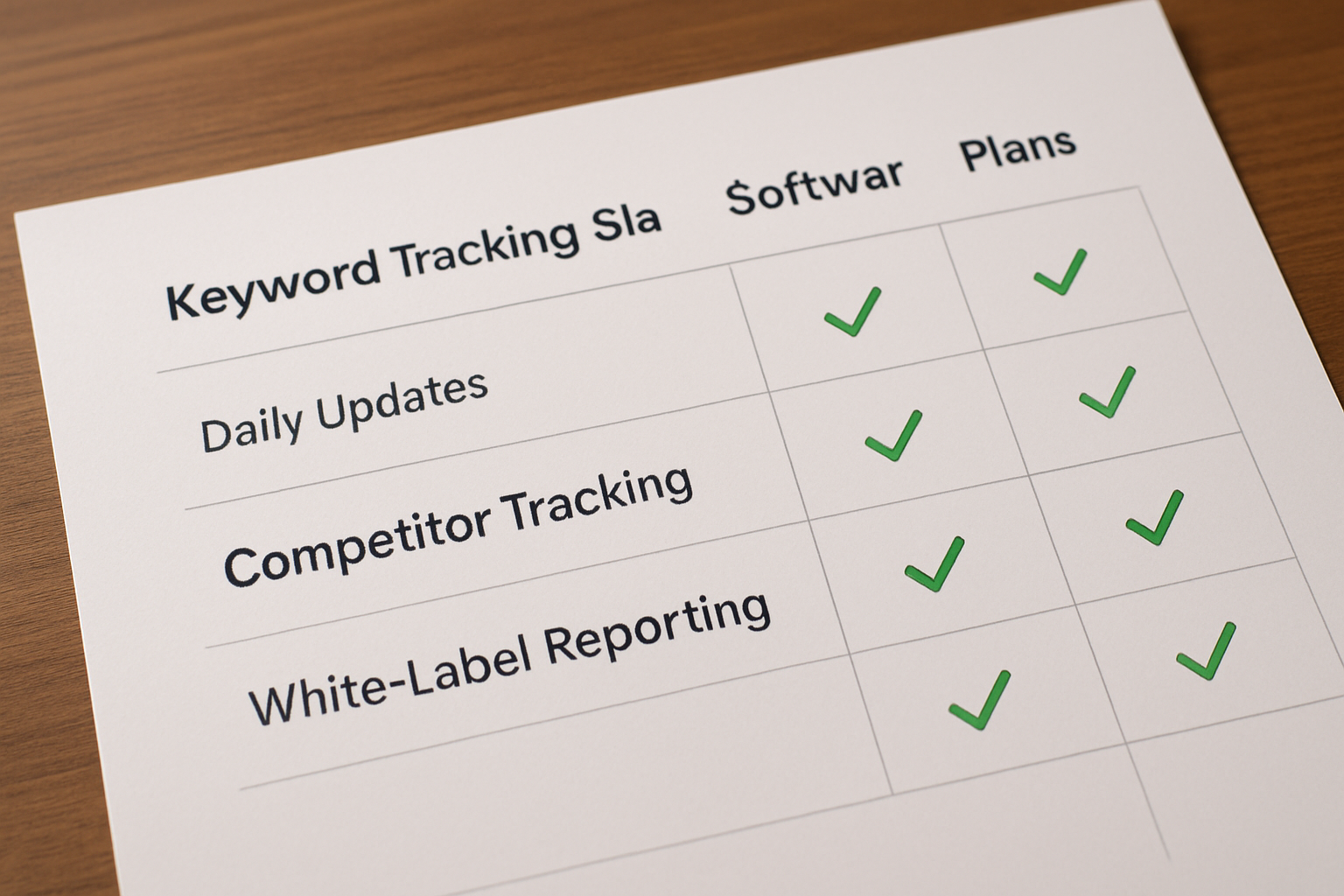
Automated reporting saves enormous amounts of time for agencies and in-house teams managing multiple websites. The best tools generate white-label PDF reports or live dashboards you can share with clients or leadership. Scheduled email summaries mean you always stay informed without manually logging in every day.
- White-label reports — Brand reports with your logo for client delivery
- Scheduled email digests — Automatic updates delivered to your inbox
- Alert thresholds — Get notified when a keyword drops below a set position
- API access — Pipe data into your own dashboards or BI tools
How Do You Choose the Right Keyword Tracking Software for Your Needs?
Choosing the right tool depends on three factors: the size of your keyword list, the number of websites you manage, and your budget. A solo blogger tracking 50 keywords needs something very different from a digital agency managing 30 client sites. Matching the tool to your actual use case prevents paying for features you’ll never use.
For small businesses, affordability and ease of use are the top priorities. You need a tool that gives you clear, actionable data without requiring an SEO expert to interpret it. For agencies, multi-project management, white-label reporting, and API access become non-negotiable requirements.
Always test with a free trial before committing to an annual plan. During the trial, specifically test how accurate the rankings are by cross-referencing with manual searches in incognito mode. A tool that reports inflated rankings is worse than no tool at all — it gives you false confidence.
Why Should Small Businesses and Agencies Use RankBloom SEO?
RankBloom SEO is a powerful, affordable keyword tracking and SEO automation platform built specifically for small businesses and agencies who want real results without enterprise-level pricing. It combines keyword rank monitoring with automated content publishing, giving users a complete end-to-end SEO workflow in a single platform. This integration eliminates the need to juggle multiple tools and subscriptions.
One of RankBloom SEO’s standout features is its ability to auto-publish optimized content directly to WordPress with zero manual intervention. The platform identifies keyword opportunities, creates SEO-optimized content, and publishes it to your WordPress site automatically. This means your site keeps growing with fresh, ranked content even when you’re focused on other parts of your business.
RankBloom SEO is priced to be genuinely accessible for small businesses and growing agencies — not as a watered-down “starter” plan, but as a fully featured solution at a fraction of what enterprise tools charge. The combination of keyword tracking, content automation, and WordPress publishing in one affordable package is rare in the market. It’s the reason thousands of users have made it their go-to SEO platform.
What Makes RankBloom SEO Different from Other Tools?
Most keyword tracking tools stop at reporting — they show you the problem but leave you to solve it yourself. RankBloom SEO closes that loop by moving directly from insight to action. When it identifies a keyword opportunity, it can automatically generate and publish content targeting that term without you lifting a finger.
The WordPress auto-publishing feature is a genuine game-changer for busy teams and solo operators. There’s no copy-pasting, no formatting, and no manual scheduling — the content goes live exactly when and how it should. This level of automation lets small teams compete with much larger content operations.
RankBloom SEO also delivers clean, intuitive dashboards that make tracking straightforward for non-technical users. You don’t need to be an SEO specialist to understand what the data is telling you. The platform translates ranking data into plain-language recommendations so you always know your next best move.
How Should You Set Up Keyword Tracking for Maximum Results?
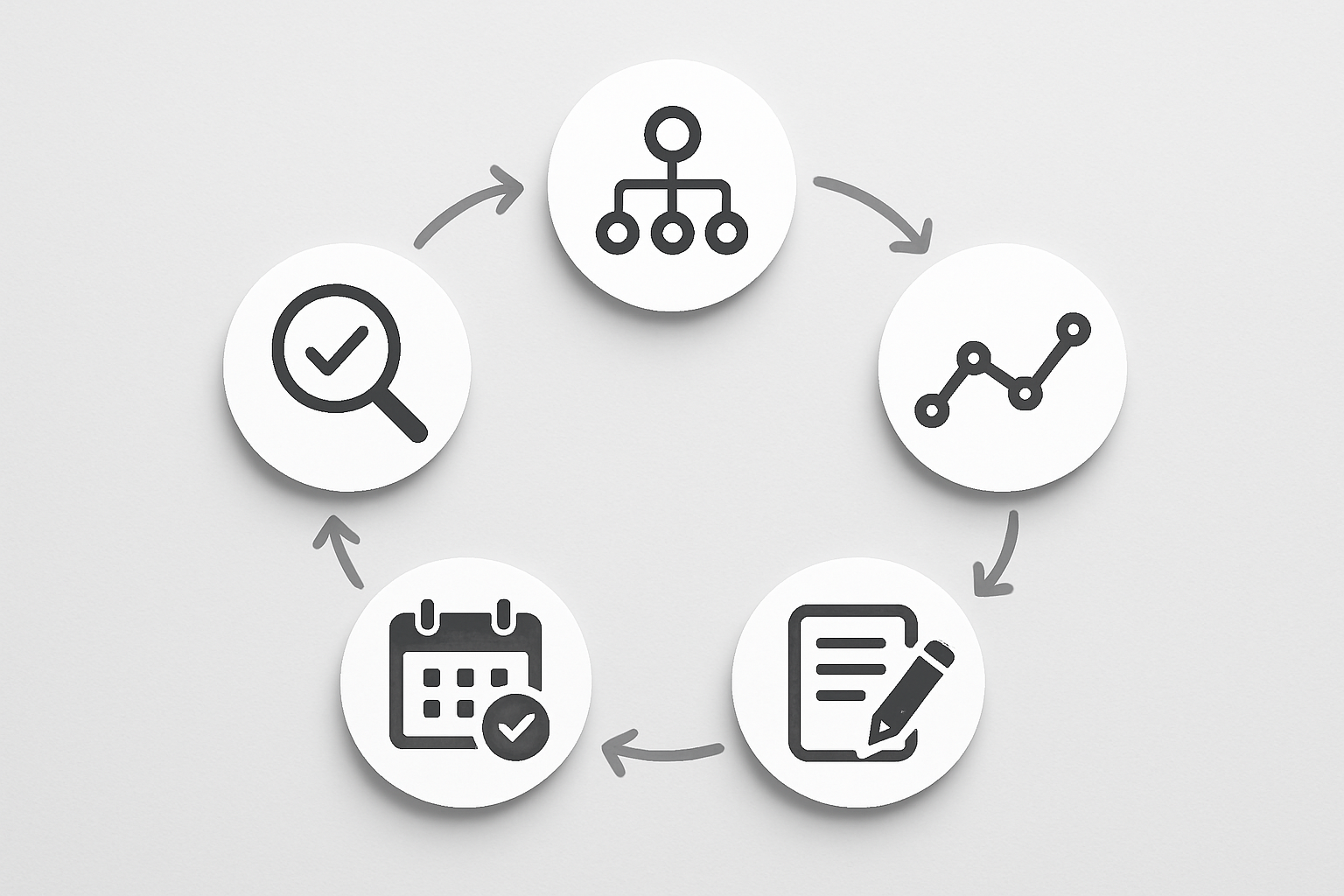
Step 1 — Build a Focused Keyword List
Start with 20 to 50 keywords that directly represent your products, services, or core content topics. Trying to track thousands of keywords from day one creates noise and makes it hard to identify meaningful trends. A focused list gives you cleaner data and faster, more actionable insights.
Step 2 — Segment by Intent and Priority
Organize your keywords into groups based on search intent — informational, navigational, commercial, and transactional. High-commercial-intent keywords deserve the closest monitoring because they drive revenue-generating traffic. Informational keywords are important for brand awareness and top-of-funnel growth.
Step 3 — Set Baseline Positions and Goals
Record your starting positions for every tracked keyword before making any SEO changes. This baseline is your benchmark — without it, you can’t measure improvement. Set clear position goals for each keyword group so your tracking has a purpose beyond just observation.
Step 4 — Monitor Weekly and Act on Alerts
Review your keyword dashboard at least once a week to spot trends, drops, and opportunities. Set up automated alerts for any keyword that drops more than five positions in a single week. A fast response to ranking drops — updating content, improving internal links, or building relevant backlinks — can often recover lost ground before it becomes a serious problem.
Step 5 — Connect Tracking to Content Creation
Use your ranking data to drive your content calendar. Keywords stuck between positions 11 and 20 are prime candidates for content refresh or expansion — they’re already indexed and relevant, they just need a stronger push. This data-driven content approach consistently outperforms creating new content purely on instinct.
What Are Common Keyword Tracking Mistakes to Avoid?
The most damaging mistake is tracking too many keywords without enough context. When your list has 2,000 terms and no grouping or prioritization, it becomes impossible to know where to focus your energy. A smaller, well-organized keyword set almost always produces better strategic outcomes than an enormous unfocused one.
Another critical error is ignoring local and mobile ranking variants. A keyword might rank #2 on desktop in New York but #12 on mobile in Chicago — and those are completely different SEO stories. Tools that split rankings by device and location give you the granularity needed to serve your actual audience.
Finally, many users track rankings but never connect the data to business outcomes. Ranking improvements should always be validated against traffic data in Google Search Console or Google Analytics. A keyword climbing from position 8 to position 3 should produce a measurable uptick in clicks — if it doesn’t, investigate the SERP features that might be capturing those clicks instead.
What Results Can You Realistically Expect from Keyword Tracking Software?
Realistic expectations depend heavily on your domain authority, content quality, and competitive landscape. Most new websites see meaningful ranking improvements within three to six months of consistent, data-driven SEO work. Established domains with existing authority can often see improvements within four to eight weeks of targeted optimization.
Research by Ahrefs shows that only 5.7% of newly published pages reach Google’s top 10 within a year — which underscores why consistent tracking and iteration is so important. The pages that do succeed are almost always the ones that were monitored, updated, and optimized over time rather than published and forgotten. Keyword tracking software is the mechanism that makes that iterative improvement possible.
X is a realistic expectation when starting SEO: gradual, compounding growth rather than overnight results. The compounding nature of SEO means that the work you do today pays dividends for months and years ahead. Keyword tracking software ensures you’re always building on data rather than guesswork.
Frequently Asked Questions
What is keyword tracking software used for?
Keyword tracking software is used to monitor where your website ranks in search engine results for specific keywords over time, helping you measure SEO performance and identify opportunities for improvement.
How often should I check my keyword rankings?
Most SEO professionals recommend reviewing keyword rankings at least once per week, while setting up automated alerts for significant drops so you can respond quickly to any major changes.
Can keyword tracking software help small businesses?
Yes — keyword tracking software is especially valuable for small businesses because it removes guesswork from SEO, showing exactly which efforts are working and where to focus limited time and budget for maximum impact.
What makes RankBloom SEO stand out from other keyword tracking tools?
RankBloom SEO combines keyword tracking with automated, WordPress-compatible content publishing that requires zero manual intervention, making it a complete, affordable SEO platform rather than just a reporting tool.
How many keywords should I track at once?
Starting with 20 to 50 high-priority keywords is recommended for most businesses, as a focused list produces cleaner data and more actionable insights than trying to monitor thousands of keywords simultaneously.
Is keyword tracking software worth it for agencies?
Absolutely — agencies managing multiple client websites rely on keyword tracking software for white-label reporting, rank monitoring across projects, and proving ROI to clients with transparent, data-backed results.
How accurate is keyword tracking software?
Leading keyword tracking tools are highly accurate when cross-referenced with Google Search Console data, though rankings can vary slightly based on location, device, and personalization factors that the best tools account for automatically.
Start Tracking Keywords the Smart Way
Keyword tracking software is no longer optional for anyone serious about growing organic traffic — it’s the foundation of every data-driven SEO strategy. Without it, you’re making content decisions based on assumptions rather than evidence. With it, every piece of content you create is guided by real performance data and clear competitive intelligence.
If you’re ready to move from guessing to growing, RankBloom SEO is the platform built for exactly that. It gives you professional-grade keyword tracking, actionable ranking insights, and the industry-leading ability to auto-publish SEO-optimized content directly to WordPress — all with zero manual intervention. It’s powerful enough for agencies, affordable enough for small businesses, and simple enough for anyone to use from day one.
Visit https://www.rankbloomseo.com today to start your free trial and see how smarter keyword tracking — combined with automated content publishing — can transform your organic search performance. Your rankings are waiting to improve. Let RankBloom SEO show you exactly how to get there.