
An AI keyword tracking and organic visibility platform is a software solution that uses artificial intelligence to monitor your keyword rankings, analyze search trends, and surface actionable insights — all without the manual effort traditional SEO tools require. Instead of logging in daily to check position changes, you get intelligent alerts, predictive trend data, and automated recommendations that help you stay ahead of the competition. For businesses that depend on organic search traffic, this kind of platform has shifted from a nice-to-have to an operational necessity.
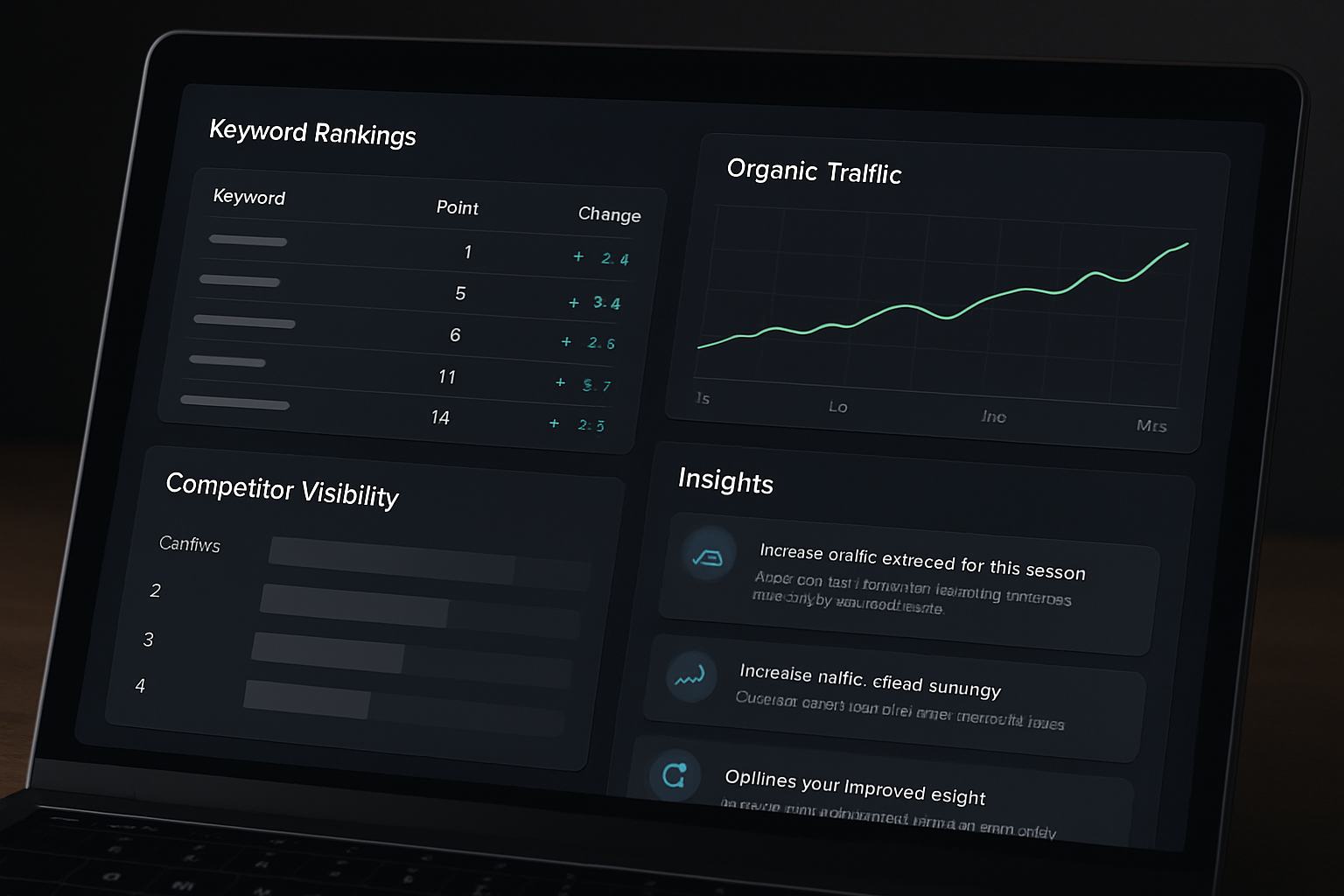
Studies show that 68% of all online experiences begin with a search engine, making organic visibility one of the highest-leverage channels a business can invest in. Yet most companies still rely on legacy platforms built around static reports and weekly snapshots that fail to reflect how quickly search results actually change. An AI-powered approach fundamentally changes the speed and quality of decision-making available to SEO teams.
This article explains how AI keyword tracking works, what features to look for in an organic visibility platform, and how to use these tools to drive measurable, sustainable growth in search traffic.
What Is an AI Keyword Tracking and Organic Visibility Platform?
An AI keyword tracking and organic visibility platform is defined as a category of SEO software that combines machine learning, natural language processing, and real-time data ingestion to track how a website ranks for target keywords across search engines, devices, and locations. It goes well beyond simple position tracking by correlating ranking data with traffic estimates, click-through rates, competitor movements, and SERP feature changes. The result is a unified picture of your site’s organic search health, updated continuously rather than on a fixed schedule.
Organic visibility is defined as the overall presence and prominence of a website in unpaid search results, typically measured as a percentage or score that reflects how many relevant searches trigger an appearance in results, and at what average rank. A higher organic visibility score means your pages are appearing for more of the right queries, in higher positions, more often. This metric gives a more complete picture of SEO performance than tracking a handful of individual keywords in isolation.
The AI layer is what separates modern platforms from traditional tools. Machine learning models identify which keyword movements are statistically significant, predict which rankings are likely to rise or fall based on content and competitive signals, and cluster related keywords to surface content gap opportunities automatically.
How Does AI-Powered Keyword Tracking Differ from Traditional SEO Tools?
Traditional SEO tools typically pull ranking data on a fixed schedule — often weekly or daily — and present it in tables without meaningful interpretation. An AI keyword tracking platform ingests data continuously and applies pattern recognition to flag anomalies, group keywords by intent, and prioritize the actions most likely to improve rankings. This means less time reading reports and more time acting on the insights that matter most.
The best way to understand the difference is through a concrete comparison. With a legacy platform, you might notice that 15 keywords dropped 3–5 positions and spend an hour manually investigating possible causes. With an AI-powered organic visibility platform, the system has already correlated that drop with a competitor publishing new content, identified the specific pages at risk, and suggested content improvements — before you even open the dashboard.
There are also significant differences in scalability. Legacy platforms struggle when keyword portfolios grow into the thousands or tens of thousands, making enterprise SEO management cumbersome. AI platforms are architected to handle large keyword sets efficiently, surfacing priority actions rather than drowning teams in undifferentiated data.
What Core Features Should You Look for in an Organic Visibility Platform?
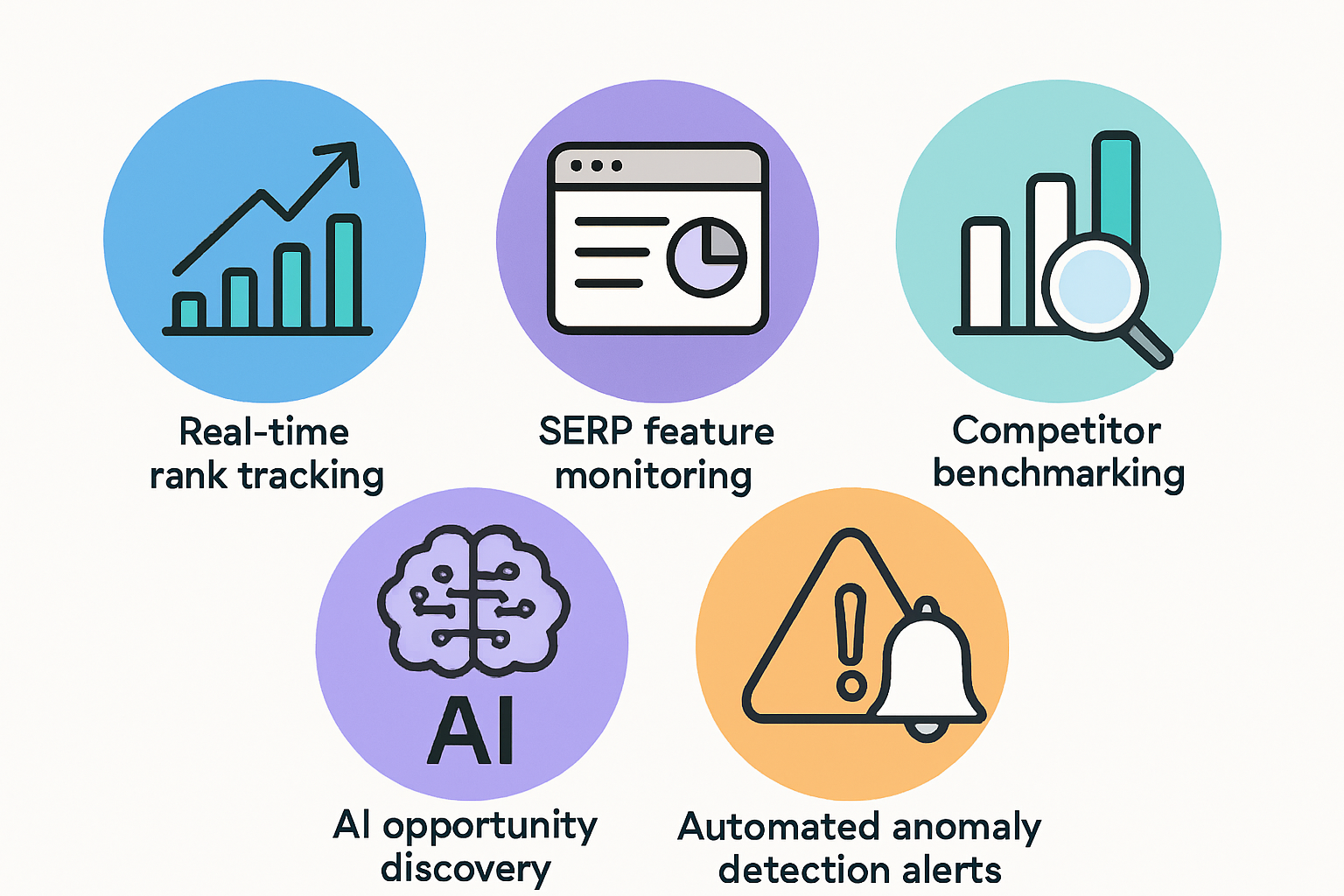
Not all AI keyword tracking tools are created equal, and the features that matter most depend on your business size, team structure, and growth goals. The following core capabilities should be non-negotiable when evaluating any modern organic visibility platform.
Real-Time Rank Tracking with Granular Segmentation
Your platform should track rankings at the keyword level across multiple search engines, geographic locations, and device types simultaneously. Granular segmentation lets you separate performance by product category, content type, or target audience — making it easier to identify which segments are gaining or losing ground. Real-time or near-real-time updates ensure your team responds to ranking changes within hours, not days.
SERP Feature Monitoring
SERP features — including featured snippets, People Also Ask boxes, image packs, and local map results — can dramatically affect organic click-through rates even when your blue-link ranking doesn’t change. An AI visibility platform should track which features appear for your target keywords and alert you when your site gains or loses a featured snippet. This intelligence directly informs content optimization priorities.
Competitor Visibility Benchmarking
Understanding your organic visibility score in isolation is far less useful than seeing how it compares to your direct competitors. The best platforms automatically identify which domains are competing for the same keyword clusters and update their visibility scores alongside yours. This lets you set realistic benchmarks and spot openings when a competitor’s visibility drops unexpectedly.
AI-Driven Content and Keyword Opportunity Discovery
A high-quality AI keyword tracking and organic visibility platform doesn’t just report on existing rankings — it actively surfaces new keyword opportunities based on your current topical authority, search intent clusters, and competitive gaps. These recommendations are ranked by estimated traffic impact, so teams can prioritize work with confidence. This is the feature that transforms the platform from a reporting tool into a growth engine.
Automated Alerts and Anomaly Detection
Manual monitoring of large keyword portfolios is impractical at scale. Automated alerts notify you immediately when rankings for high-priority keywords change significantly, when a competitor makes a major visibility gain, or when a technical issue begins suppressing organic performance. Anomaly detection powered by machine learning distinguishes between normal fluctuation and genuinely significant shifts, reducing alert fatigue.
Why Should Businesses Invest in an AI Visibility Platform Over Manual SEO Workflows?
Research from Gartner indicates that organizations using AI-augmented marketing tools reduce the time spent on routine data gathering and reporting by up to 40%, freeing teams to focus on strategy and creative work. This efficiency gain compounds over time as AI models learn from your specific data and improve their recommendations. For any team managing more than a few hundred keywords, manual workflows simply cannot compete with the speed and accuracy of AI-assisted tracking.
The competitive argument is equally compelling. According to industry data, the top 3 organic results capture approximately 54% of all clicks on a search results page, meaning small ranking differences translate directly into large traffic differences. Businesses that can identify ranking threats and opportunities faster than competitors — and act on them immediately — hold a structural advantage that compounds over every search cycle.
There is also a cost-efficiency case to be made. Hiring a dedicated team of SEO analysts to manually monitor rankings, investigate fluctuations, and generate weekly reports at scale is expensive and often inconsistent. An AI organic visibility platform performs these tasks continuously, at a fraction of the cost, with greater consistency and data breadth than any human team could achieve manually.
For companies looking to scale their organic growth systematically, it’s worth reading about enterprise SEO automation tools that help growing companies scale smarter and rank faster, which covers how AI-powered workflows reduce operational overhead while improving results across large keyword portfolios.
How Do You Set Up an AI Keyword Tracking Platform for Maximum Impact?
Getting value from an AI keyword tracking and organic visibility platform starts with intentional setup. The following steps reflect best practices for onboarding any AI-powered SEO platform effectively.
- Define your keyword universe strategically. Import your existing target keywords, then use the platform’s AI discovery tools to expand your list based on topical clusters, intent patterns, and competitor gaps. Aim for comprehensive coverage of your core topics rather than a narrow set of high-volume head terms.
- Segment keywords into meaningful groups. Organize keywords by topic, funnel stage, content type, or business priority. Segmentation makes it easier to interpret visibility trends and assign ownership to specific team members or content projects.
- Configure competitor tracking. Add at least 3–5 direct SERP competitors for each major keyword segment. The platform’s AI will track their visibility movements and alert you to significant shifts relative to your own performance.
- Set up custom alert thresholds. Define what constitutes a significant ranking change for different keyword tiers — for example, any top-10 keyword that drops more than 5 positions in 48 hours should trigger an immediate alert. Tiered alerting prevents noise while ensuring critical changes are never missed.
- Integrate with your analytics and CMS data. Connecting the platform to your web analytics and content management systems allows it to correlate ranking changes with actual traffic and conversion outcomes, making the business impact of every keyword movement visible.
- Schedule regular review cadences. Even with AI automation, weekly or bi-weekly team reviews of the platform’s priority recommendations ensure insights translate into published content and technical fixes. AI platforms surface opportunities; human judgment decides how to act on them.
How Does AI Keyword Tracking Support Content Strategy and Search Intent Optimization?
AI keyword tracking platforms are most powerful when they inform content strategy at a structural level, not just individual page optimizations. Modern platforms group keywords by search intent — navigational, informational, commercial, and transactional — and map your existing content coverage against each intent cluster. This surfaces gaps where your site has no content competing for relevant queries, as well as cannibalization issues where multiple pages compete for the same intent.
Search intent optimization means aligning every piece of content with the specific user goal that drives a search query. An AI platform identifies which intent a query reflects based on SERP analysis — looking at what content types (articles, product pages, videos, FAQs) currently rank and which content attributes correlate with top rankings. This data-driven approach replaces guesswork with evidence.
Understanding how to scale content production to exploit these opportunities is critical for teams working with large keyword portfolios. The guide on how to scale SEO content production with artificial intelligence explains how AI-assisted writing and content planning workflows complement AI keyword tracking data to create a full-cycle organic growth engine.
What Metrics Should You Monitor in an Organic Visibility Platform?
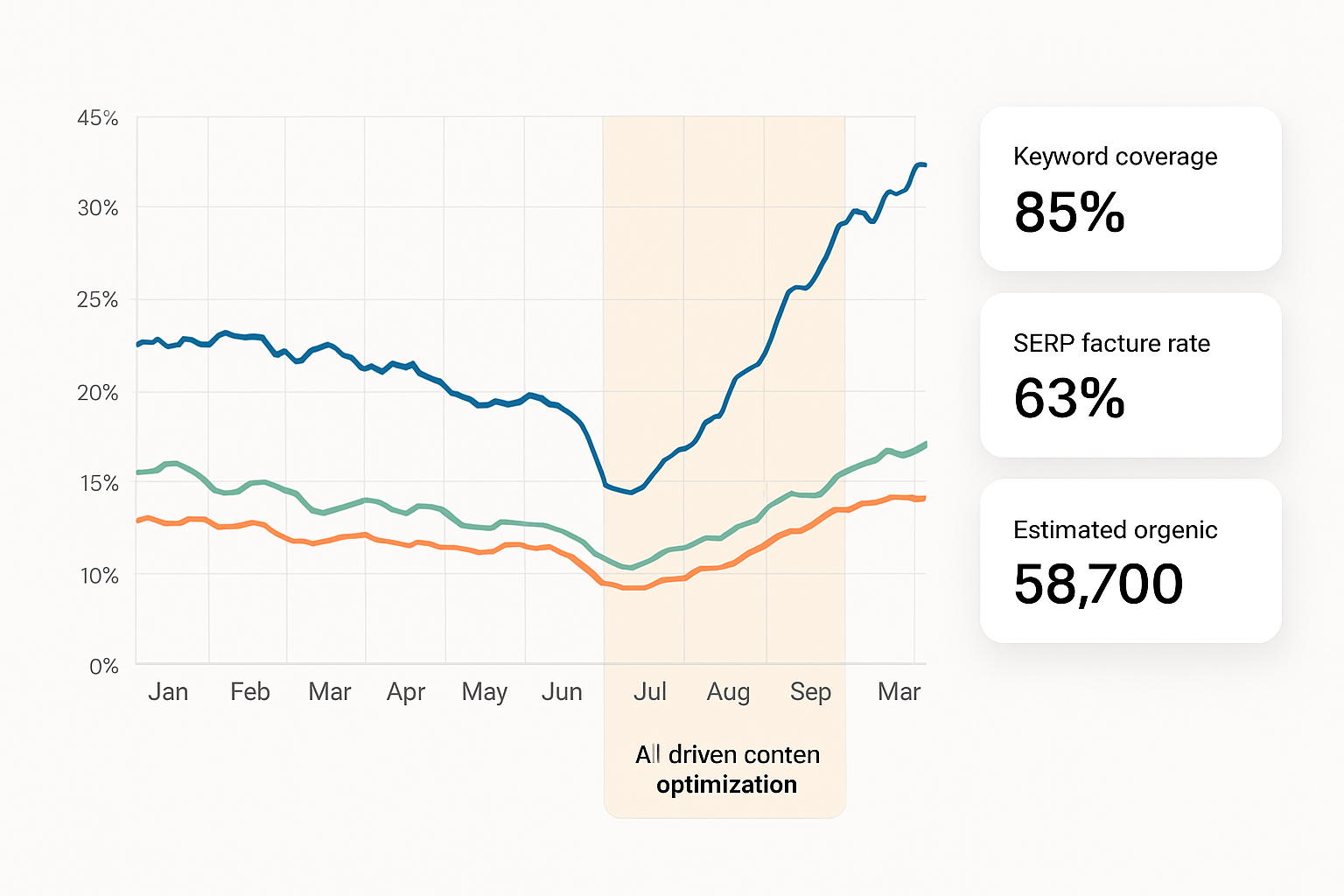
Tracking the right metrics ensures your platform investment translates into business outcomes rather than vanity numbers. The table below outlines the most important organic visibility metrics, what each measures, and why it matters.
| Metric | What It Measures | Why It Matters |
|---|---|---|
| Organic Visibility Score | Overall presence in relevant SERPs | Reflects the breadth and depth of your search footprint |
| Average Position | Mean ranking across tracked keywords | Indicates general ranking health by segment |
| SERP Feature Rate | % of keywords triggering a feature you own | Measures ability to capture enhanced click-through |
| Estimated Organic Traffic | Projected clicks from current rankings | Connects ranking data to business traffic impact |
| Keyword Coverage Rate | % of target keywords with ranking pages | Identifies content gaps requiring new pages |
| Competitor Visibility Gap | Difference in visibility score vs. top competitor | Quantifies competitive opportunity or threat |
Reviewing these metrics together gives a multi-dimensional picture of organic performance. Focusing on any single metric — particularly average position alone — can be misleading and lead to misallocated optimization effort.
How Can Small Businesses and Agencies Benefit from AI Visibility Platforms?
AI keyword tracking and organic visibility platforms are not exclusively enterprise tools. Small businesses benefit significantly from automated monitoring because they typically lack dedicated SEO teams who can watch rankings manually. A well-configured AI platform acts as an always-on SEO analyst, surfacing the handful of actions most likely to move the needle each week. This lets small teams focus resources on execution rather than analysis.
For agencies managing multiple client accounts, the efficiency gains are even more pronounced. AI platforms that support multi-site management allow account managers to monitor keyword performance, prepare client reports, and identify upsell opportunities across an entire client portfolio from a single interface. For agencies exploring AI-powered platforms built specifically for their workflow, the in-depth resource on how to choose the right AI SEO platform for your agency covers the critical evaluation criteria in detail.
The key for both small businesses and agencies is choosing a platform that matches their technical sophistication and budget without sacrificing the AI-driven insights that differentiate modern tools from legacy alternatives. Starting with a well-structured keyword portfolio and a clear set of growth goals makes the onboarding process faster and the initial results more actionable.
What Makes RankBloom SEO a Leading AI Keyword Tracking and Organic Visibility Platform?
RankBloom SEO is built from the ground up as a modern AI keyword tracking and organic visibility platform designed for businesses that need accurate data, intelligent recommendations, and scalable SEO automation without the complexity of traditional enterprise tools. Its AI engine continuously monitors keyword rankings across search engines, locations, and devices, and surfaces prioritized action plans based on competitive analysis, content gaps, and SERP feature opportunities. Teams spend less time in dashboards and more time executing on insights that drive measurable organic growth.
RankBloom SEO integrates keyword tracking with content performance data, technical SEO signals, and competitor visibility benchmarking in a unified interface built for speed and clarity. Whether you’re a small business owner managing a focused keyword portfolio or an enterprise team tracking tens of thousands of terms, the platform scales seamlessly to your needs. The AI recommendation engine gets smarter over time as it learns from your site’s specific performance patterns, making suggestions increasingly precise and impactful.
Frequently Asked Questions
Frequently Asked Questions
What is the difference between keyword tracking and organic visibility measurement?
Keyword tracking monitors the ranking position of specific search terms, while organic visibility measurement aggregates ranking data across an entire keyword portfolio to produce a holistic score reflecting your site’s overall search presence. Both metrics are complementary and work best when analyzed together inside a unified AI platform.
How often should keyword rankings be checked in an AI tracking platform?
For most businesses, daily tracking is sufficient for standard keywords, while highly competitive or high-value terms may warrant real-time monitoring with automated alerts. AI platforms handle the monitoring continuously and notify you only when significant changes occur, eliminating the need for manual daily check-ins.
Can an AI keyword tracking platform help with local SEO visibility?
Yes. AI organic visibility platforms can track rankings segmented by geographic location — including city-level or ZIP code-level granularity — making them highly effective for businesses that rely on local search traffic. Local visibility scores reflect how prominently a site appears in location-specific search results across your target markets.
How many keywords should I track in an organic visibility platform?
The right number depends on your business scope, but most platforms recommend tracking every keyword that maps to a page on your site plus all high-priority gap keywords identified through AI discovery. Starting with a focused core list of 200–500 keywords and expanding as your content grows is a practical approach for most small to mid-size businesses.
Is an AI keyword tracking platform suitable for businesses with no in-house SEO team?
Absolutely. AI keyword tracking and organic visibility platforms are designed to automate the analysis and recommendation work that would otherwise require a dedicated SEO analyst. The AI surfaces priorities, explains what actions to take, and tracks progress — making these tools accessible and valuable even for teams with limited SEO expertise.
Start Growing Organic Traffic with Smarter Keyword Intelligence
An AI keyword tracking and organic visibility platform is the foundation of any serious organic growth strategy in today’s search environment. It replaces slow, manual reporting cycles with continuous, intelligent monitoring that surfaces the right actions at the right time. Businesses that invest in this kind of infrastructure see faster ranking improvements, better content prioritization, and a structural competitive advantage that compounds over time.
Whether you’re scaling content production, managing an agency portfolio, or trying to understand why rankings shifted last week, the answer starts with better data and smarter analysis. RankBloom SEO delivers exactly that — an AI-powered platform built to track every keyword that matters, benchmark your visibility against competitors, and guide your team toward the optimizations that drive real organic growth.
Ready to take control of your organic visibility? Explore RankBloom SEO today and discover how AI-driven keyword tracking can transform the way your business grows through search.