
Content creation without SEO is like publishing a book with no title — great work that nobody finds. The best SEO tools for content creators help you research keywords, optimize your writing, track your rankings, and understand what your audience is actually searching for. In 2026, the competition for search visibility has never been tighter, and having the right tools in your stack is the difference between content that ranks and content that disappears. This guide breaks down exactly what to look for, what to avoid, and how to make smarter choices for your content workflow.
According to a 2025 Content Marketing Institute report, 73% of content creators say SEO tools directly improve their ability to produce content that ranks on the first page. That number tells you everything about the stakes involved. Whether you are a solo blogger, a YouTube creator building a written presence, or a brand content team publishing daily, the right tool stack changes your results dramatically.

What Are SEO Tools for Content Creators, and Why Do They Matter?
SEO tools for content creators are defined as software platforms that help writers, bloggers, and digital publishers research keywords, optimize on-page content, analyze competitor performance, and monitor search rankings. They are designed specifically to bridge the gap between creative writing and data-driven strategy. Without them, content creators are essentially guessing what their audience wants to read.
The reason these tools matter so deeply is simple: search engines use hundreds of signals to decide which content to surface. Content creators who understand those signals produce work that ranks faster, drives more traffic, and builds lasting authority. A well-optimized 1,500-word article can outperform a poorly structured 5,000-word piece every single time.
Studies show that pages ranking in position one on Google receive an average click-through rate of 27.6%, compared to just 2.4% for position ten. That gap in visibility is why content creators invest in SEO tools — the ROI is measurable and significant. Getting from page two to page one is not luck; it is strategy backed by the right data.
What Features Should Content Creators Look for in an SEO Tool?
The best SEO tools for content creators are not one-size-fits-all. Different creators have different needs based on their niche, publishing volume, and level of SEO experience. However, several core features consistently separate useful tools from overpriced dashboards that collect dust.
Keyword Research and Search Intent Analysis
Keyword research is defined as the process of identifying the specific words and phrases your target audience types into search engines. Strong keyword research tools do not just show you search volume — they reveal intent, competition level, and related topic clusters. Content creators need to understand whether someone searching a phrase wants information, a product, or a how-to guide.
Search intent alignment is one of the most underrated ranking factors in modern SEO. Google’s algorithms have become sophisticated enough to penalize content that technically includes the right keywords but fails to satisfy what the searcher actually wants. Your tool should tell you not just what people search, but why they search it.
- Monthly search volume — how many people search the keyword each month
- Keyword difficulty score — how competitive the keyword is to rank for
- Search intent classification — informational, navigational, transactional, or commercial
- Related keywords and questions — semantic variations and long-tail opportunities
- Trend data — whether a keyword is growing or declining in popularity
On-Page Optimization Scoring
On-page optimization scoring is a feature that analyzes your published or draft content and grades it against SEO best practices. Good tools highlight missing elements like title tags, meta descriptions, heading structure, internal links, and keyword placement. They give you an actionable checklist rather than leaving you to guess what is wrong.
The best platforms update their scoring criteria as search engine algorithms evolve. A tool that was built in 2019 and never updated may actually steer you toward outdated tactics that hurt more than they help. Always check whether a platform’s recommendations are current with Google’s latest guidance.
Content Gap and Topic Cluster Analysis
Content gap analysis is the process of identifying topics your competitors cover that you have not yet addressed on your own site. This feature helps content creators build comprehensive topic clusters instead of publishing isolated articles with no strategic connection. Topic clusters signal topical authority to search engines, which significantly improves rankings across an entire subject area.
For content creators building a niche blog or brand site, topic cluster mapping is invaluable. It shows you where your content library has holes and gives you a prioritized roadmap for future articles. This is how authority sites dominate their niches — not through random publishing, but through intentional coverage.
How Do AI-Powered SEO Tools Change the Game for Content Creators?
AI-powered SEO tools represent a fundamental shift in how content creators approach search optimization. Rather than manually analyzing data and making educated guesses, AI tools process thousands of data points simultaneously and deliver specific, actionable recommendations. They adapt to algorithm updates faster than any human team could manage alone.
AI is now being used to predict which keywords will gain traction before they peak, suggest optimal content structures based on what currently ranks, and even flag readability issues that reduce engagement signals. If you want to understand how artificial intelligence is reshaping this space at a deeper level, this breakdown of AI SEO software and how it is transforming search optimization provides an excellent foundation.
Traditional SEO tools often require significant technical knowledge and manual interpretation. Modern AI-assisted platforms interpret the data for you, surface what matters most, and prioritize actions based on your specific goals. For content creators who are not SEO specialists by training, this shift is enormous — it democratizes access to expert-level strategy.
Why Should Content Creators Prioritize Rank Tracking?
Rank tracking is defined as the continuous monitoring of where your website’s pages appear in search engine results for specific keywords over time. Without rank tracking, you have no feedback loop — you are publishing content and hoping for the best without any way to measure what is actually working. It is one of the most essential features any content creator should use from day one.
Rank tracking reveals which pieces of content are gaining traction, which are stagnating, and which have been negatively affected by algorithm updates. This information helps you prioritize where to focus your optimization efforts. For a deeper understanding of how this process works and why it matters so much, this resource on what keyword tracking is and how it powers your SEO strategy is worth bookmarking.
Research from Search Engine Journal found that content that is actively monitored and updated ranks an average of 42% higher than content published and left untouched. Rank tracking gives you the visibility to know when updating is necessary. Consistent monitoring is the habit that separates successful content creators from those who plateau.
What Types of SEO Tools Do Content Creators Actually Need?
The best SEO tools for content creators span several functional categories, and understanding those categories helps you build an efficient, non-redundant stack. You do not need ten tools — you need the right three to five that cover all your core needs without overlap.
- Keyword Research Tools — For discovering what your audience searches and identifying ranking opportunities
- Content Optimization Tools — For improving your writing to match SEO best practices before publishing
- Rank Tracking Tools — For monitoring keyword positions and measuring content performance over time
- Technical SEO Auditing Tools — For identifying site speed issues, crawl errors, and indexation problems
- Analytics and Reporting Tools — For understanding traffic sources, user behavior, and conversion performance
Many modern platforms combine several of these functions into one unified dashboard. All-in-one tools have a significant advantage for solo content creators and small teams — they reduce switching costs, consolidate your data, and give you a cleaner picture of your overall SEO health. Legacy platforms often force you to toggle between separate tools, which creates data silos and increases complexity.
Free vs. Paid SEO Tools: What Is Worth the Investment?
Free SEO tools can be genuinely useful for beginners learning the basics of keyword research and site auditing. However, free tools almost always come with data caps, limited keyword history, and no real-time ranking updates. As a content creator’s site grows, these limitations become significant obstacles.
Paid platforms typically offer deeper data, more accurate search volume estimates, AI-powered recommendations, and dedicated support. The investment pays off quickly when you consider the value of consistently ranking on page one for competitive terms. A single well-ranked article can generate thousands of monthly visitors for years — that kind of return dwarfs any monthly software subscription.
The smart approach is to start with free tools to build foundational knowledge, then transition to a paid platform as your publishing volume increases and your SEO goals become more ambitious. Waiting too long to upgrade often means lost months of ranking potential that you cannot recover.
How Can Beginners Choose the Right SEO Tool Without Getting Overwhelmed?
The best way to choose an SEO tool as a beginner is to start with your most immediate need and work outward from there. If you are unsure where to begin with SEO in general, this guide on SEO tips for beginners and how to start ranking higher gives you a clear, jargon-free starting point before you invest in any tooling.
Many content creators make the mistake of subscribing to the most feature-heavy platform they can find, only to use 10% of its capabilities. Tool overwhelm is real, and it leads to analysis paralysis. Start simple: choose a platform with a clean interface, clear onboarding, and tutorials that match your experience level.
Ask these five questions before committing to any SEO tool:
- Does this tool match my current SEO knowledge level?
- Does it cover keyword research, content optimization, and rank tracking, or will I need multiple tools?
- Is the data updated in real time or on a significant delay?
- Does it offer AI-powered recommendations or only raw data?
- Is the pricing transparent and scalable as my site grows?
What Are the Most Common Mistakes Content Creators Make With SEO Tools?
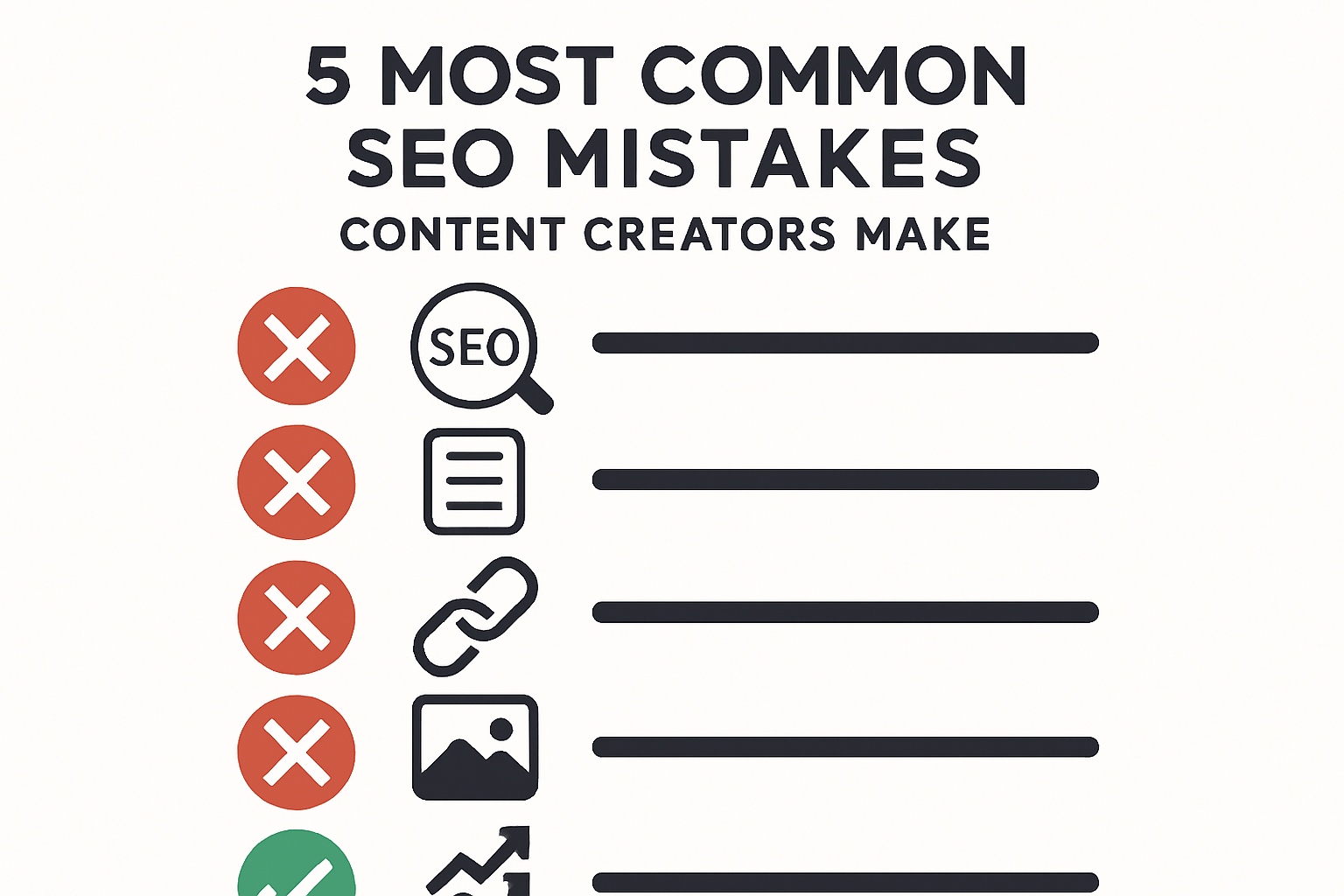
X is not always the problem when SEO content fails to rank — more often, it is how creators use the tools they already have. The most common mistake is treating keyword research as a one-time activity rather than an ongoing process. Search trends shift constantly, and a keyword that was high-opportunity six months ago may now be saturated.
Another widespread error is optimizing for keyword density alone while ignoring semantic relevance. Modern search engines do not count keyword repetitions — they evaluate topical depth, entity relationships, and content comprehensiveness. Tools that only measure keyword frequency are giving you an incomplete and potentially misleading picture of your optimization quality.
Finally, many creators ignore their own analytics data when choosing what to write next. Your existing traffic data is one of the richest sources of content ideas available to you. The pages that already rank in positions four through ten are prime candidates for optimization — a small improvement there can unlock significant traffic gains with minimal new content creation.
How Do SEO Tools Support Long-Term Content Strategy?
SEO tools are not just for individual article optimization — they are strategic assets for long-term content planning. The data they surface helps content creators build editorial calendars grounded in real search demand rather than gut feeling. This shift from intuition-driven to data-driven publishing is what separates brands that consistently grow organic traffic from those that plateau.
Topic authority, a key concept in modern SEO, is built by systematically covering a subject from multiple angles across multiple pieces of content. SEO tools help you map out that coverage, identify what you have already addressed, and find the gaps that are holding your authority back. Understanding the broader benefits of SEO for driving real organic growth makes it easier to justify the time and investment that consistent tool-powered strategy requires.
Studies show that websites publishing content with a clear topical cluster strategy see an average of 55% more organic traffic growth over 12 months compared to sites publishing without a structured plan. The tools that help you build and execute that strategy are not optional extras — they are core infrastructure for any serious content creator.
Frequently Asked Questions
Ready to Grow Your Organic Reach as a Content Creator?
Choosing the right SEO tools is one of the highest-leverage decisions you will make as a content creator. The tools you use shape the quality of your research, the depth of your optimization, and your ability to track and improve your results over time. In 2026’s competitive content landscape, flying blind is simply not an option.
RankBloom SEO is built specifically for content creators who want AI-powered keyword research, real-time rank tracking, on-page optimization scoring, and actionable content gap analysis — all inside one clean, intuitive platform. Unlike legacy tools built for enterprise technical SEO teams, RankBloom SEO is designed to make expert-level strategy accessible to individual creators and growing brands alike.
If you are serious about building content that ranks, drives consistent traffic, and compounds in value over time, RankBloom SEO gives you the data and the guidance to make that happen. Start with your site audit today and discover exactly what is standing between your content and page one.