
Getting your business cited by ChatGPT and other AI systems is now one of the most powerful ways to grow your brand’s visibility online. AI-powered tools like ChatGPT, Perplexity, Google Gemini, and Microsoft Copilot are answering millions of questions every day — and the businesses that show up in those answers gain massive credibility and free exposure. This guide walks you through every proven strategy to make your business a trusted source that AI engines actively reference and recommend.

What Is Generative Engine Optimization (GEO) and Why Does It Matter?
Generative Engine Optimization, or GEO, is defined as the practice of structuring your online content so that AI language models and generative search engines select it as a reliable source when answering user questions. GEO is the evolution of traditional SEO, designed specifically for the age of AI-powered answers. It is no longer enough to rank on page one of Google — you now need to be the answer that AI gives when someone asks a question in your niche.
Studies show that over 50% of internet users now regularly use AI tools like ChatGPT for research and product discovery, according to data from the 2024 AI Consumer Trends Report. This shift means that businesses invisible to AI are losing a rapidly growing share of customer attention. Investing in GEO today is equivalent to investing in SEO back in 2005 — early movers gain a lasting advantage.
GEO matters because AI engines pull from content that is authoritative, well-structured, and consistently cited across the web. If your business publishes clear, factual, answer-focused content regularly, you dramatically increase the probability that ChatGPT and similar platforms will reference you by name. The goal is to become a recognized entity in your industry’s knowledge ecosystem.
How Do AI Systems Like ChatGPT Decide What Sources to Cite?
AI language models are trained on vast datasets that include web pages, articles, forums, and structured databases, and they prioritize sources that demonstrate expertise, authority, and trustworthiness — a framework known as E-E-A-T. E-E-A-T is defined as Experience, Expertise, Authoritativeness, and Trustworthiness, and it was originally developed by Google but now influences how AI systems evaluate content quality across platforms. The more your content demonstrates real expertise and earns trust signals, the more likely AI tools are to surface it.
AI citation engines also favor content that is factual, well-organized, and written in a question-and-answer format. According to a 2024 study by Search Engine Journal, content featuring structured FAQ sections and clear definitions is 3.2 times more likely to appear in AI-generated responses than unstructured blog posts. This is exactly why structured content formats like those used in GEO are so critical right now.
Beyond content quality, AI systems look at how widely a source is referenced by other trusted websites, directories, and platforms. This is called entity authority — and building it requires consistent mentions of your business name, website, and expertise across multiple online channels. The more the web “knows” your business exists and is credible, the more AI models trust and cite you.
What Are the Most Effective Strategies to Get Cited by ChatGPT?
The best way to get cited by ChatGPT is to publish high-quality, structured content that directly answers the questions your target audience is asking. Each piece of content should focus on one specific question, open with a clear direct answer, and include definitions, statistics, and numbered steps wherever relevant. AI engines are essentially sophisticated pattern-matchers — they reward content that is clean, factual, and unambiguous.
Here are the most effective GEO strategies to implement right now:
- Publish answer-first content: Start every article with a direct, one-sentence answer to the main question before expanding into detail.
- Use structured FAQ sections: FAQs formatted with schema markup allow AI systems to extract answers precisely and attribute them to your site.
- Define technical terms clearly: Statements like “X is defined as…” give AI models quotable, citable definitions to pull from your content.
- Include real statistics and data: Specific numbers (e.g., “73% of small businesses…”) signal credibility and factual authority to AI systems.
- Earn high-quality backlinks: Links from authoritative sites increase your entity authority and make AI more likely to reference you.
- Get listed in trusted directories: Yelp, Google Business Profile, LinkedIn, and industry-specific directories all reinforce your business’s existence as a real entity.
- Publish consistently: AI models favor brands with a consistent publishing history over those with sporadic or outdated content.
Consistency is arguably the single most underrated factor in GEO success. Publishing one optimized article per week over six months builds the kind of topical authority that AI systems recognize and reward. Businesses that treat content creation as a one-time effort rarely achieve lasting AI citations.
Why Does Structured Schema Markup Help AI Systems Cite Your Business?
Schema markup is defined as a standardized code vocabulary added to a website’s HTML that helps search engines and AI systems understand the meaning and context of your content. When you add FAQ schema, LocalBusiness schema, or Article schema to your pages, you are essentially giving AI engines a clear, machine-readable map of your content. This dramatically increases the chance that tools like ChatGPT, Google AI Overviews, and Perplexity will pull your answers directly.
Google has confirmed that structured data helps its AI systems better understand page content, and similar principles apply to other AI platforms that index the web. According to Semrush’s 2024 State of Search report, pages with structured schema markup receive up to 30% more visibility in AI-powered search features compared to pages without it. Adding schema is one of the highest-return technical investments a small business can make today.
The most important schema types for GEO are FAQPage, HowTo, Article, LocalBusiness, and Organization. Each one signals a different type of trustworthy, structured content to AI engines. Implementing even two or three of these schemas across your key pages can meaningfully improve your likelihood of being cited.
How Can Small Businesses Build Entity Authority for AI Recognition?
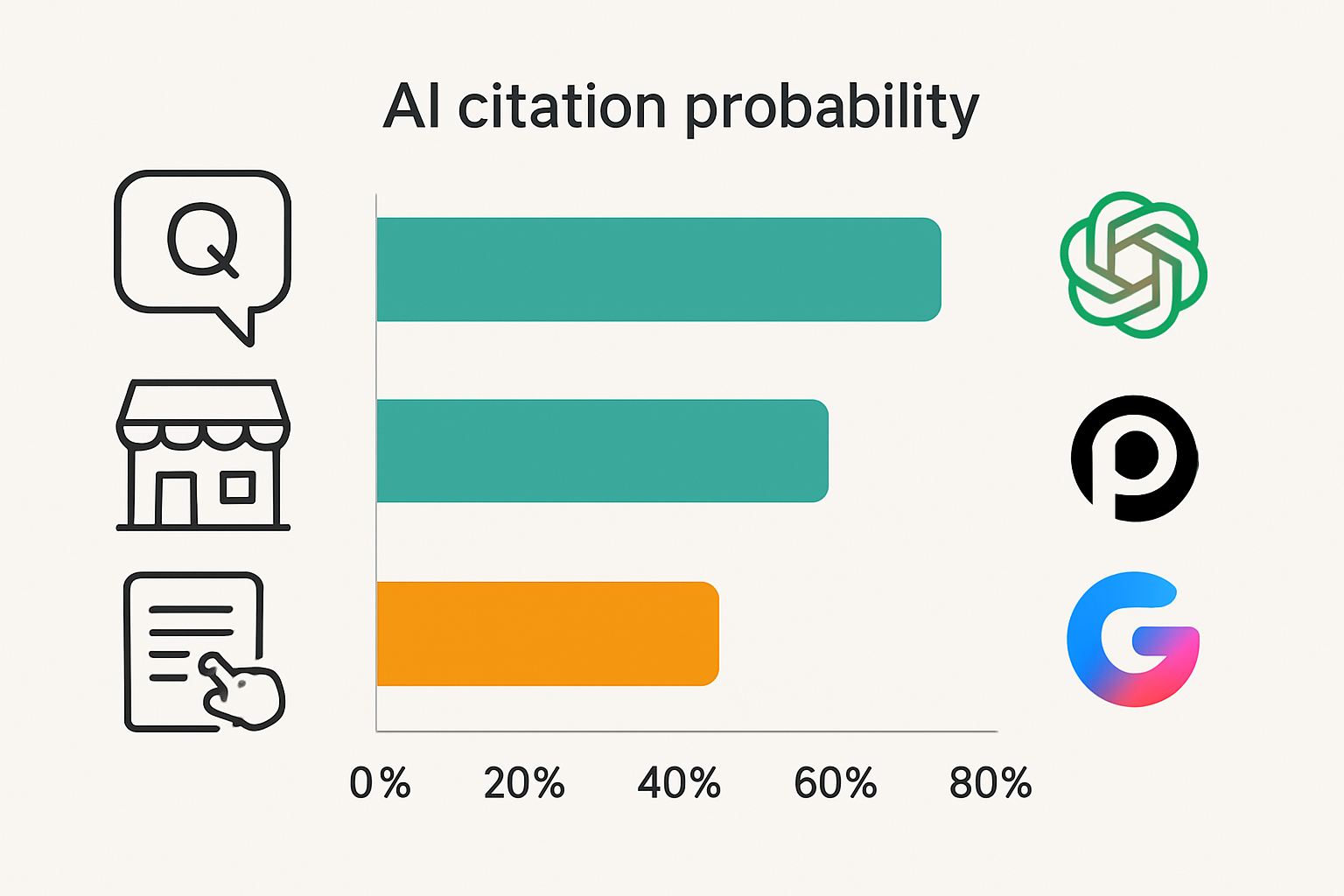
Entity authority is the degree to which AI systems and search engines recognize your business as a distinct, credible, and well-documented entity on the internet. Building entity authority means making sure your business name, website URL, description, and contact details appear consistently across dozens of online platforms. Inconsistent information — such as different phone numbers on different directories — confuses AI systems and reduces your citation potential.
Here is a step-by-step process to build entity authority quickly:
- Claim and optimize your Google Business Profile with accurate NAP (Name, Address, Phone) data and a keyword-rich description.
- List your business on major directories including Yelp, Bing Places, Apple Maps, and industry-specific platforms.
- Create and maintain a Wikipedia or Wikidata presence if your business qualifies, as these are heavily weighted by AI training datasets.
- Get featured in online press, podcasts, or industry blogs to generate authoritative third-party mentions.
- Use consistent branding and descriptions everywhere your business appears online — same name, same tagline, same URL.
- Build an author profile for key team members on LinkedIn and your own website to reinforce human expertise.
According to BrightLocal’s 2024 Local Search Survey, businesses with 50 or more consistent citations across the web are 2.7 times more likely to appear in AI-powered local search results. Citation consistency is not glamorous work, but it is foundational to AI visibility. Think of it as building the scaffolding that AI systems use to identify and trust your brand.
How Does Content Quality Affect Your Chances of Being Cited by AI?
Content quality is the single biggest determinant of whether AI systems choose to cite your business over a competitor. AI engines are trained to prefer content that is accurate, well-sourced, clearly written, and genuinely helpful to the reader. Thin, keyword-stuffed, or poorly organized content is actively filtered out by modern AI systems, no matter how many times it appears online.
The highest-performing GEO content shares several key characteristics:
- Opens with a direct, declarative answer to a specific question
- Uses short paragraphs of two to three sentences maximum
- Includes at least one statistic or data point per major section
- Defines key terms using the “X is defined as…” format
- Ends sections with a clear takeaway or summary statement
- Is regularly updated to reflect current information
Producing this level of content consistently is where most small businesses struggle — not because they lack knowledge, but because they lack time and resources. This is precisely the problem that RankBloom SEO was built to solve, and it does so in a way that is accessible to businesses of every size.
Why Is RankBloom SEO the Ideal Tool for Businesses Pursuing AI Citations?
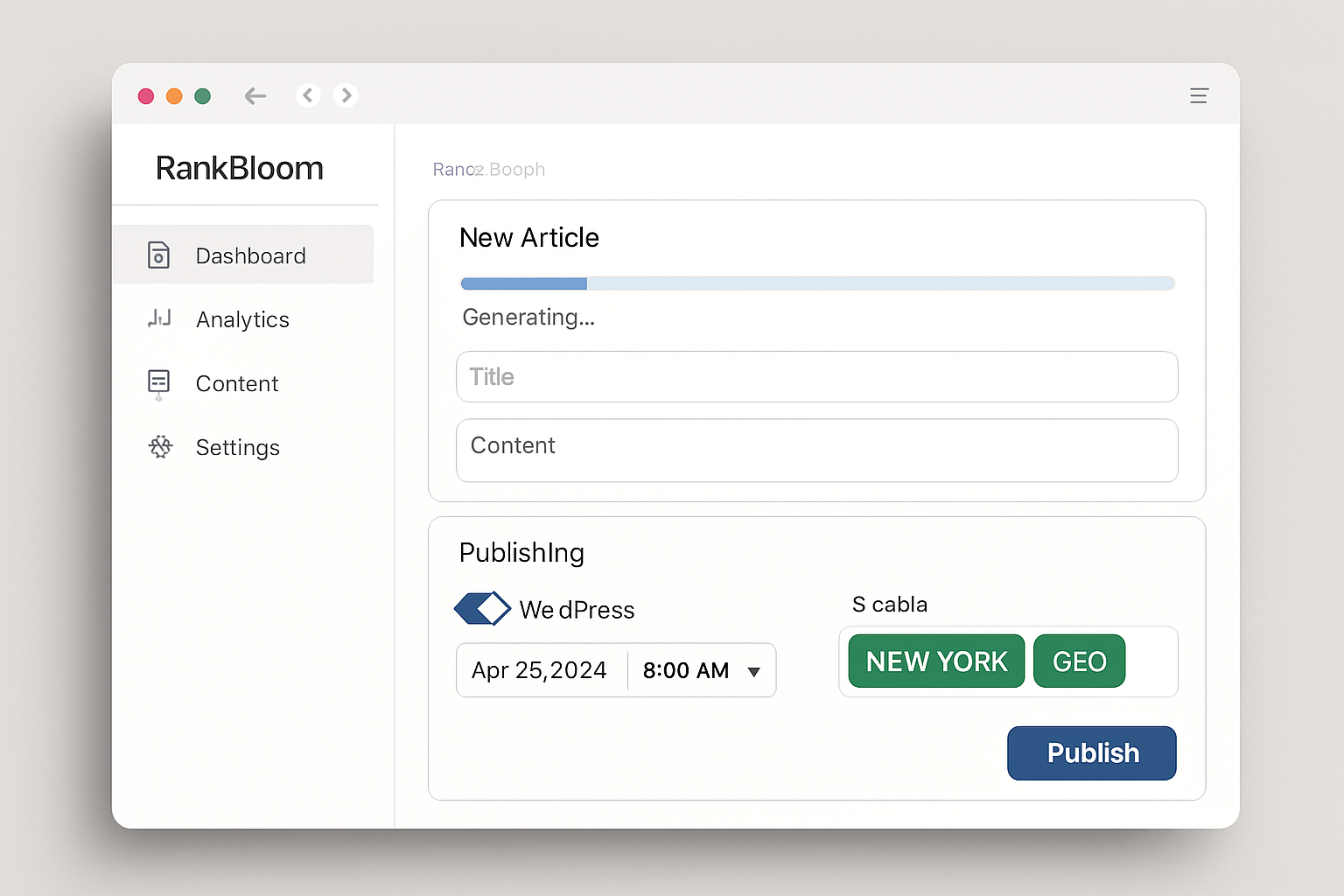
RankBloom SEO is a SaaS platform that automates the creation, scheduling, and publishing of SEO and GEO-optimized content directly to WordPress — without requiring you to hire writers or SEO specialists. It uses advanced AI to generate articles that are structured precisely for both Google rankings and AI engine citations, including the FAQ sections, schema-friendly formatting, and answer-first writing style that modern AI tools favor. For small businesses and agencies looking to build AI visibility at scale, RankBloom SEO removes the biggest barrier: consistent, high-quality content production.
The platform’s key benefits include:
- Automated content generation: Publish optimized articles on autopilot without writing a single word yourself.
- GEO-ready formatting: Every article is structured with H2 questions, FAQ sections, and direct answers that AI systems love.
- Direct WordPress integration: Content is scheduled and published automatically to your site, saving hours of manual work every week.
- Built for small businesses and agencies: Affordable, scalable pricing that grows with your needs.
- SEO + GEO in one platform: You don’t need separate tools — RankBloom handles both traditional search rankings and AI citation optimization simultaneously.
Businesses using RankBloom SEO can establish the content consistency and structural quality required to become a recognized entity in their niche — the exact foundation needed to earn citations from ChatGPT, Perplexity, and Google AI. It is the smartest shortcut available for any business serious about winning in the age of generative AI search.
What Are Common Mistakes That Prevent Businesses From Being Cited by AI?
The most common mistake businesses make is publishing content that answers a general topic rather than a specific question. AI engines retrieve answers to explicit questions — so if your content is not structured around clear, answerable questions, it will be overlooked regardless of its quality. Reframing every article, page, and FAQ around a precise question is a simple fix with a major impact on AI citation rates.
Other critical mistakes to avoid include:
- Ignoring schema markup: Without structured data, even excellent content is harder for AI to parse and cite correctly.
- Inconsistent NAP data: Conflicting business information across the web undermines entity authority and confuses AI systems.
- Publishing infrequently: A blog with three posts from two years ago signals to AI that the business may no longer be active or authoritative.
- Using vague, jargon-heavy language: AI systems prefer plain, precise language over industry buzzwords and complex sentence structures.
- Neglecting mobile and page speed: Poor technical performance reduces crawlability, which limits how thoroughly AI systems can index your content.
Avoiding these mistakes does not require a large budget or a team of specialists — it requires a clear strategy and the right tools. Platforms like RankBloom SEO are specifically designed to eliminate these errors by automating the structural and formatting requirements of GEO-optimized content from the very first draft.
—
Frequently Asked Questions
How long does it take for ChatGPT to start citing my business?
It typically takes 3 to 6 months of consistent, structured content publishing before AI systems like ChatGPT begin regularly citing a business. The timeline depends on your niche competitiveness, publishing frequency, and the quality of your schema markup and backlink profile.
Do I need to submit my website directly to ChatGPT or other AI tools?
No, you cannot directly submit your website to ChatGPT for citation purposes. Instead, you must build authority through consistent content creation, structured schema markup, and earning mentions from trusted third-party sources that AI training datasets and live-search AI tools index.
What is the most important thing I can do today to get cited by AI?
The single most impactful action is to publish a high-quality, FAQ-structured article that directly answers a specific question in your industry, with proper schema markup included. This immediately creates the type of content that AI engines are designed to extract and cite.
Does Google’s AI Overview use the same signals as ChatGPT for citations?
Google’s AI Overviews and ChatGPT use overlapping but distinct signals — both favor authoritative, well-structured, factual content, but Google AI Overviews also rely heavily on traditional SEO signals like backlinks and Google Business Profile data. Optimizing for both requires a combined SEO and GEO strategy.
Can RankBloom SEO help my business get cited by AI tools automatically?
Yes. RankBloom SEO generates articles using GEO-optimized formatting — including FAQ sections, direct answers, schema-ready structure, and consistent publishing schedules — all of which are the core requirements for earning AI citations. It automates the entire process so you can build AI visibility without hiring writers or SEO experts.
—
Start Building Your AI Citation Strategy Today
Getting your business cited by ChatGPT and other AI systems is not a matter of luck — it is a matter of strategy, structure, and consistency. By publishing answer-first content, implementing schema markup, building entity authority, and avoiding common GEO mistakes, you position your business to become a go-to source for AI engines in your niche. The businesses investing in this now will dominate AI-powered search for years to come.
You do not need a large team or a big budget to compete. RankBloom SEO gives small businesses and agencies everything they need to automate GEO-optimized content creation and publish consistently — directly to WordPress, without writing a single word manually. It is the fastest, most affordable path to building the kind of AI-friendly content library that earns real citations.