
SEO content generation software is defined as a category of AI-powered tools that help marketers, bloggers, and business owners create search-optimized written content at scale — without sacrificing quality or relevance. These platforms combine natural language generation, keyword research, and on-page optimization guidance into a single workflow. The result is faster content production that’s built to rank from day one.

As of 2026, the demand for this technology has exploded. Studies show that businesses publishing AI-assisted content grow their organic traffic up to 3.5 times faster than those relying entirely on manual processes. The shift isn’t just about speed — it’s about consistency, structure, and staying competitive in an increasingly crowded search landscape. Understanding how this software works can be the difference between ranking on page one and disappearing into obscurity.
What Is SEO Content Generation Software and How Does It Work?
SEO content generation software is a platform that uses artificial intelligence — typically large language models combined with live search data — to produce written content aligned with specific search queries and ranking signals. It analyzes top-performing pages, extracts keyword patterns, and suggests content structures that match what search engines reward. The software essentially reverse-engineers what works and helps you replicate it efficiently.
Most modern platforms operate in a few clear stages. First, they ingest a target keyword or topic. Then they analyze the top-ranking pages for that query, identifying common headings, word counts, semantic terms, and content gaps. Finally, they generate a draft that incorporates those signals — ready for a human editor to review and refine.
The best platforms don’t just generate text — they optimize it in real time. They score your content against readability benchmarks, keyword density guidelines, and competitive benchmarks as you write. This live feedback loop separates modern SEO content generation software from basic AI writing assistants that have no awareness of search intent.
Why Does SEO Content Generation Software Matter for Your Business?
Content is still the engine of organic growth in 2026. According to HubSpot’s Content Marketing Report, companies that publish 11 or more blog posts per month generate nearly 4 times more organic leads than those that publish fewer than 4. The challenge is that most small and mid-sized businesses simply don’t have the editorial bandwidth to sustain that pace manually. This is exactly the gap that SEO content generation software fills.
Beyond volume, quality and structure matter enormously. Search engines have grown significantly more sophisticated at evaluating topical authority, semantic relevance, and content depth. A tool that helps you cover a topic comprehensively — with proper heading hierarchies, supporting subtopics, and internal linking — gives you a structural advantage that raw writing speed alone can’t provide.
There’s also the competitive reality to consider. Your competitors are already using these tools. If you’re still relying on traditional SEO tools and fully manual content workflows, you’re operating at a structural disadvantage in both output and optimization quality. Adopting SEO content generation software isn’t just a productivity upgrade — it’s a strategic necessity.
How Do You Choose the Right SEO Content Generation Software?
The best way to evaluate SEO content generation software is to look beyond the AI writing engine itself and examine how deeply the platform integrates search data into the content workflow. A tool that generates beautiful prose but ignores keyword intent or page structure won’t move your rankings. The integration between content creation and SEO intelligence is what matters most.
Here are the core features to prioritize when evaluating any platform:
- Keyword-aware content briefs — Does the tool generate outlines based on real search data, not just topic guesses?
- Semantic keyword suggestions — Does it identify related terms and LSI (Latent Semantic Indexing) keywords to improve topical coverage?
- Real-time content scoring — Can you see how your draft performs against top competitors as you write?
- On-page optimization guidance — Does it give actionable feedback on title tags, meta descriptions, heading usage, and internal linking?
- Readability analysis — Does it flag dense or confusing passages that could hurt user engagement?
- Plagiarism detection — Does it check generated content for originality before you publish?
Latent Semantic Indexing (LSI) is defined as a method by which search engines identify conceptually related terms around a primary keyword to better understand the full meaning of a page. Tools that incorporate LSI analysis help your content feel complete and authoritative to both readers and algorithms. This is a non-negotiable feature in any serious SEO content generation software platform.

What Are the Key Benefits of Using AI-Powered Content Generation for SEO?
AI-powered SEO content generation software delivers benefits across three key dimensions: speed, consistency, and data-driven quality. Each of these compounds over time, creating a content operation that grows more efficient and effective the longer you use it. Let’s break down exactly what you gain.
Faster Content Production at Scale
Manual content creation — from research to outline to draft to edit — typically takes a skilled writer 4 to 8 hours per article. With SEO content generation software, that same article can be researched, structured, and drafted in under 60 minutes. That efficiency multiplies dramatically when you’re managing dozens of topics or content categories simultaneously.
Faster production also means faster time-to-rank. Every day a piece of content isn’t published is a day it isn’t accumulating backlinks, engagement signals, and ranking authority. Speed is a compounding asset in SEO, and content generation software is the most powerful lever available to accelerate it.
Consistent Optimization Across Every Piece
Human writers have variable habits — some naturally nail keyword placement, others forget meta descriptions, and almost everyone overlooks internal linking opportunities. SEO content generation software enforces consistent best practices across every single piece of content you produce. This standardization is especially valuable for teams managing large content libraries or multiple websites.
Consistency also matters for topical authority. Search engines reward websites that demonstrate deep, consistent coverage of a subject area. A software-assisted content strategy lets you systematically build that authority by identifying content gaps and filling them with well-optimized articles on a regular schedule.
Data-Driven Content That Matches Search Intent
Search intent is defined as the underlying goal or motivation behind a user’s search query — whether they want to learn something, buy something, compare options, or navigate to a specific page. Mismatching content to search intent is one of the most common reasons well-written articles fail to rank. SEO content generation software analyzes the intent behind your target keywords and shapes content accordingly.
For example, a keyword like “best project management approaches” signals informational intent, while “project management software pricing” signals transactional intent. A strong content generation platform will recognize that distinction and recommend the appropriate content format, length, and call-to-action structure for each.
How Does SEO Content Generation Software Fit Into a Broader SEO Strategy?
Content generation software is powerful, but it performs best as one component of a comprehensive SEO strategy — not as an isolated solution. To understand how it fits, it helps to first understand the fundamentals of organic search. If you want a strong foundation, reading about what SEO is and how it works to grow your website traffic will give you the context you need to use content tools effectively.
Content generation software plugs directly into the content pillar of SEO. But rankings are also influenced by technical factors (site speed, crawlability, structured data), authority signals (backlinks, brand mentions), and user experience metrics (bounce rate, dwell time). Your content generation workflow needs to operate in sync with these other dimensions to produce lasting results.
Internal linking is one area where content generation software and broader SEO strategy intersect particularly well. When your software flags internal linking opportunities within new content, it’s actively helping you build the topical architecture that search engines use to understand your site’s depth and relevance. This is a small feature with outsized impact on rankings.
For businesses looking to scale their content output responsibly, understanding how to scale SEO for growing businesses provides essential strategic context beyond what any single tool can offer.
What Should You Avoid When Using SEO Content Generation Software?
X is not a set-and-forget solution — SEO content generation software requires thoughtful human oversight to deliver genuine value. The most common mistake businesses make is treating AI-generated drafts as finished, publish-ready content without editing for brand voice, factual accuracy, or audience relevance. This approach leads to generic, interchangeable content that may be technically optimized but fails to build real audience trust.
Here are the most important pitfalls to avoid:
- Publishing without human review — AI drafts need editorial polish, fact-checking, and brand alignment before going live.
- Over-optimizing for keywords — Keyword stuffing is still penalized. Let the software guide density recommendations, but prioritize natural readability.
- Ignoring E-E-A-T signals — Experience, Expertise, Authoritativeness, and Trustworthiness matter enormously. Add author credentials, original insights, and cited sources wherever possible.
- Neglecting content updates — AI-generated content ages just like manually written content. Build a schedule for refreshing your most important pages regularly.
- Skipping performance tracking — Generating content without tracking its ranking performance means you can’t learn what’s working. Pair your content software with solid keyword tracking software to monitor rankings and grow your organic traffic over time.
Legacy platforms and older SEO tools often lacked the real-time feedback loops that modern software provides. If you’ve been burned by low-quality content generators in the past, it’s worth re-evaluating today’s generation of platforms — the sophistication gap between 2022-era tools and 2026 platforms is dramatic.
How Can You Measure the Success of Your SEO Content Generation Efforts?
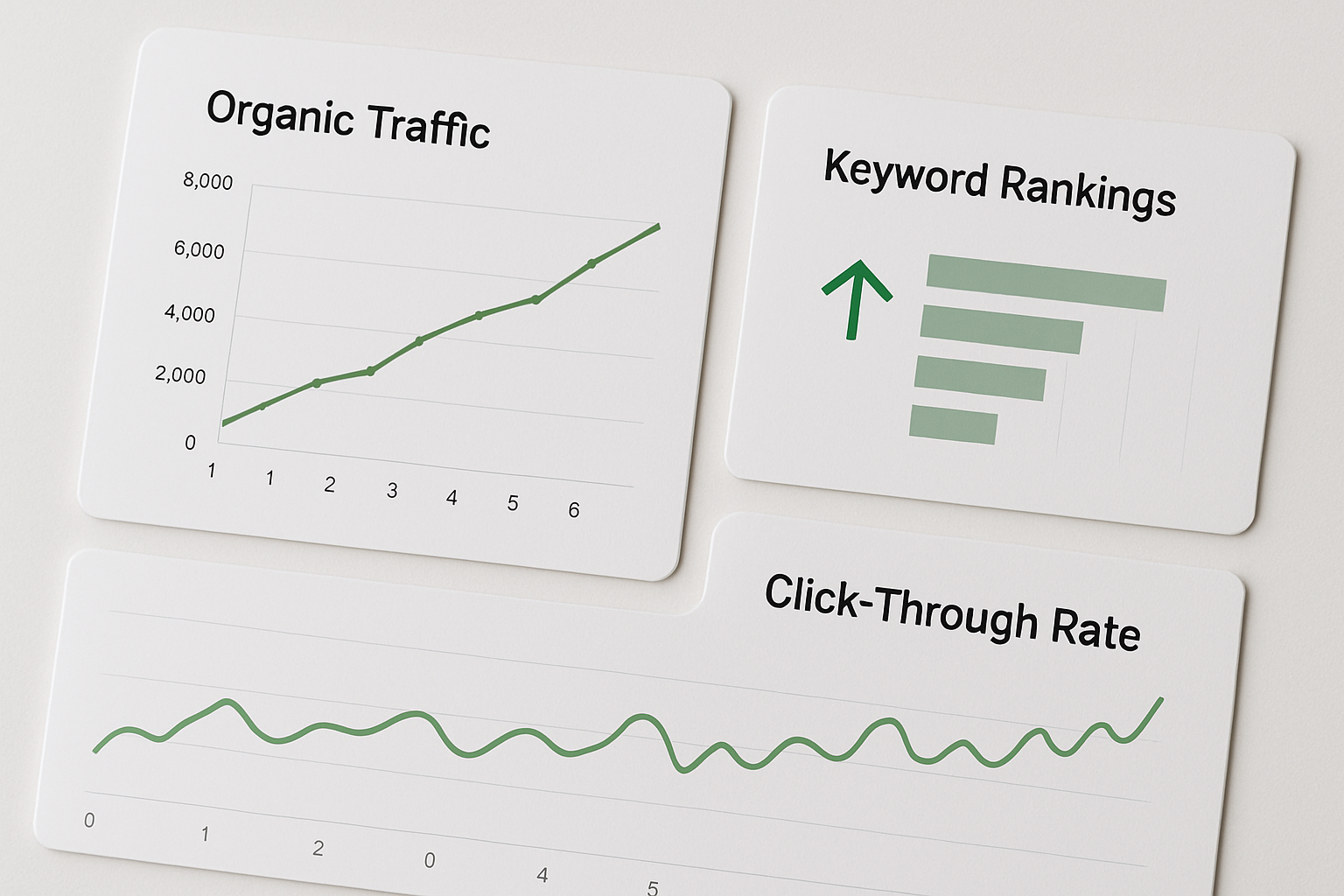
Success measurement starts before you hit publish. Establishing a clear baseline — current organic traffic, average keyword positions, and engagement metrics — lets you objectively track the impact of content generated by your software. Without a baseline, you’re flying blind and can’t attribute results accurately.
The key metrics to track for AI-assisted content performance include:
- Organic click-through rate (CTR) — Are your titles and meta descriptions compelling enough to earn clicks from the SERP?
- Average keyword position — Are your target keywords climbing over the weeks following publication?
- Time on page — Are readers engaging with the content or bouncing immediately?
- Pages per session — Is your internal linking structure encouraging deeper site exploration?
- Conversion rate from organic visitors — Is content-driven traffic converting into leads or sales?
Research from Semrush’s State of Content Marketing (2025 edition) found that 78% of marketers who tracked content performance consistently reported significantly better ROI from their content investments. Measurement is not optional — it’s the feedback loop that makes your content operation smarter over time. Pairing strong measurement practices with proven strategies to improve your search engine ranking creates a compounding advantage that grows month over month.
Who Benefits Most from SEO Content Generation Software?
SEO content generation software delivers meaningful value across a wide range of user types, but certain profiles see especially strong returns. Understanding where you fall on this spectrum helps you calibrate your expectations and investment level appropriately.
Small Business Owners and Solopreneurs
Small business owners who wear many hats benefit enormously from content generation software because it dramatically reduces the time and expertise required to produce quality SEO content. Instead of hiring a full content team or spending weekends writing blog posts, they can produce consistent, optimized content on a manageable schedule. The ROI is often visible within 60 to 90 days of consistent publishing.
Marketing Agencies Managing Multiple Clients
Agencies managing SEO for multiple clients face the challenge of producing high volumes of differentiated, brand-aligned content across diverse industries. Content generation software allows agency teams to scale their output without proportionally scaling their headcount. It also standardizes the quality floor across all client accounts, reducing the risk of inconsistent deliverables.
In-House Marketing Teams at Growing Businesses
In-house teams at growth-stage companies often have ambitious content goals but limited editorial bandwidth. SEO content generation software allows a small content team to punch well above its weight — producing the volume and quality of content that would otherwise require a much larger department. This efficiency directly supports faster organic traffic growth and reduced customer acquisition costs.
“The businesses winning in organic search today aren’t necessarily the ones with the biggest budgets — they’re the ones with the most consistent, well-optimized content output. Software that enables that consistency at scale is a genuine competitive moat.”
Why Is RankBloom SEO a Smart Choice for AI-Driven Content and SEO?
The modern SEO landscape demands tools that combine content intelligence, keyword research, and performance tracking in a unified experience. RankBloom SEO is built specifically to address that need — giving marketers, agencies, and business owners a platform that doesn’t just generate content, but actively guides every stage of the optimization process.
RankBloom SEO integrates AI-powered content generation with real-time SEO scoring, keyword research, and ranking analytics in a single streamlined interface. This means you’re not toggling between a writing tool, a keyword planner, and a separate analytics dashboard — everything lives in one place, which dramatically reduces friction and improves the quality of your output. You can also increase your organic visibility with AI SEO software in ways that legacy platforms simply weren’t designed to support.
Whether you’re a first-time content creator or an experienced SEO professional, RankBloom SEO scales to meet your needs with an intuitive workflow that produces results without a steep learning curve. It’s designed for the way SEO actually works in 2026 — where content quality, search intent alignment, and consistent publishing cadence are the true drivers of organic growth.
Frequently Asked Questions
What is SEO content generation software used for?
SEO content generation software is used to create search-optimized articles, blog posts, and web pages at scale by combining AI writing capabilities with keyword research, competitor analysis, and on-page optimization guidance. It helps businesses rank higher in search results while publishing content faster and more consistently than manual methods allow.
Is AI-generated content safe to use for SEO in 2026?
Yes — AI-generated content is widely accepted by search engines in 2026, provided it demonstrates genuine value, accuracy, and relevance to the reader. The key is human editorial oversight: review AI drafts for factual accuracy, brand voice alignment, and E-E-A-T signals before publishing.
How long does it take to see SEO results from AI-generated content?
Most businesses see measurable improvements in keyword rankings and organic traffic within 60 to 90 days of publishing consistently optimized content. The timeline depends on your domain authority, competition level, and publishing frequency — more consistent output generally produces faster compounding results.
Can SEO content generation software replace human writers?
SEO content generation software is best understood as a powerful assistant to human writers, not a replacement. It handles research, structure, and initial drafting, while human editors add brand personality, original insights, factual accuracy checks, and the nuanced judgment that AI alone cannot reliably provide.
What features should I look for in SEO content generation software?
The most important features include keyword-aware content briefs, real-time SEO scoring, semantic keyword suggestions, on-page optimization guidance, readability analysis, and plagiarism detection. Platforms that integrate content creation with keyword tracking and performance analytics deliver the most complete SEO workflow.
How much does SEO content generation software typically cost?
Pricing varies widely based on features and usage volume. Entry-level plans from modern platforms typically start between $30 and $80 per month, while agency-tier or enterprise plans with advanced analytics and higher content volume limits can range from $150 to $500 or more per month. Evaluating cost against time saved and organic traffic growth provides the most accurate ROI picture.
Start Creating Content That Actually Ranks
SEO content generation software is no longer a luxury reserved for enterprise marketing teams — it’s an accessible, high-ROI tool for any business serious about growing its organic presence. The combination of AI-driven drafting, keyword intelligence, and real-time optimization feedback removes the most significant barriers to consistent, high-quality content production.
The businesses that will dominate organic search over the next three to five years are the ones building systematic, software-assisted content operations today — not the ones waiting for the “right moment” to adopt modern tools. Every week of consistent, optimized publishing builds authority that compounds in your favor.
If you’re ready to take your content strategy to the next level, RankBloom SEO offers the AI-powered content generation, keyword research, and performance tracking capabilities you need — all in one intuitive platform built for the realities of modern SEO. Start your journey toward higher rankings, more organic traffic, and a content operation that scales with your ambitions.