
AI SEO tools are software platforms that use artificial intelligence and machine learning to automate, analyze, and improve search engine optimization tasks. These tools help marketers, bloggers, and business owners work faster, make smarter decisions, and outperform competitors — without needing a team of experts. In 2026, AI-powered optimization has moved from a nice-to-have feature into an essential part of any serious digital marketing strategy.
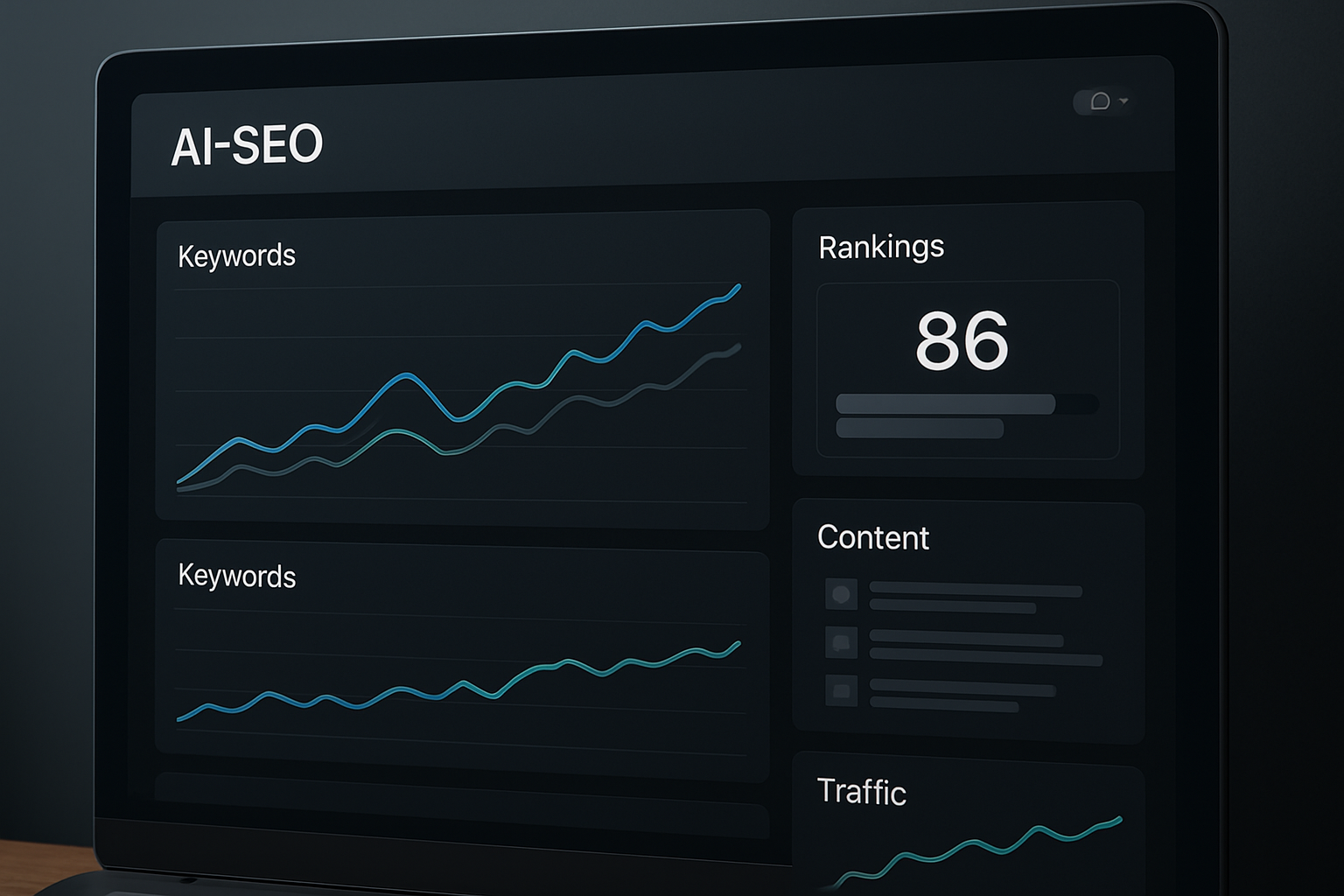
If you’re still relying on manual keyword research, guesswork-based content writing, or slow monthly audits, you’re already falling behind. The gap between businesses using AI SEO tools and those using traditional methods is growing wider every month. Understanding what these tools do — and how to pick the right one — can be the single most impactful decision you make for your organic traffic this year.
This guide breaks down how AI SEO tools work, what features genuinely matter, and how to use them to drive real, measurable results. Whether you’re a beginner or a seasoned marketer, you’ll find practical, actionable insight throughout.
What Are AI SEO Tools and How Do They Work?
AI SEO tools are defined as platforms that use machine learning algorithms, natural language processing (NLP), and predictive analytics to automate and enhance search optimization workflows. Unlike older rule-based software, these tools adapt to search engine changes in real time. They don’t just report data — they interpret it and recommend actions.
Machine learning is the process by which software improves its accuracy and performance through repeated exposure to data without being explicitly reprogrammed. In SEO, this means the tool gets smarter the more data it processes — learning what content patterns rank, what backlink profiles perform, and what user intent signals matter most to Google and other search engines.
Natural language processing (NLP) is defined as a branch of AI that enables computers to understand, interpret, and generate human language. In AI SEO tools, NLP powers features like semantic keyword clustering, topic gap analysis, and content scoring — ensuring your pages align with how real people search, not just how algorithms once behaved.
Why Are AI SEO Tools Better Than Traditional Platforms?
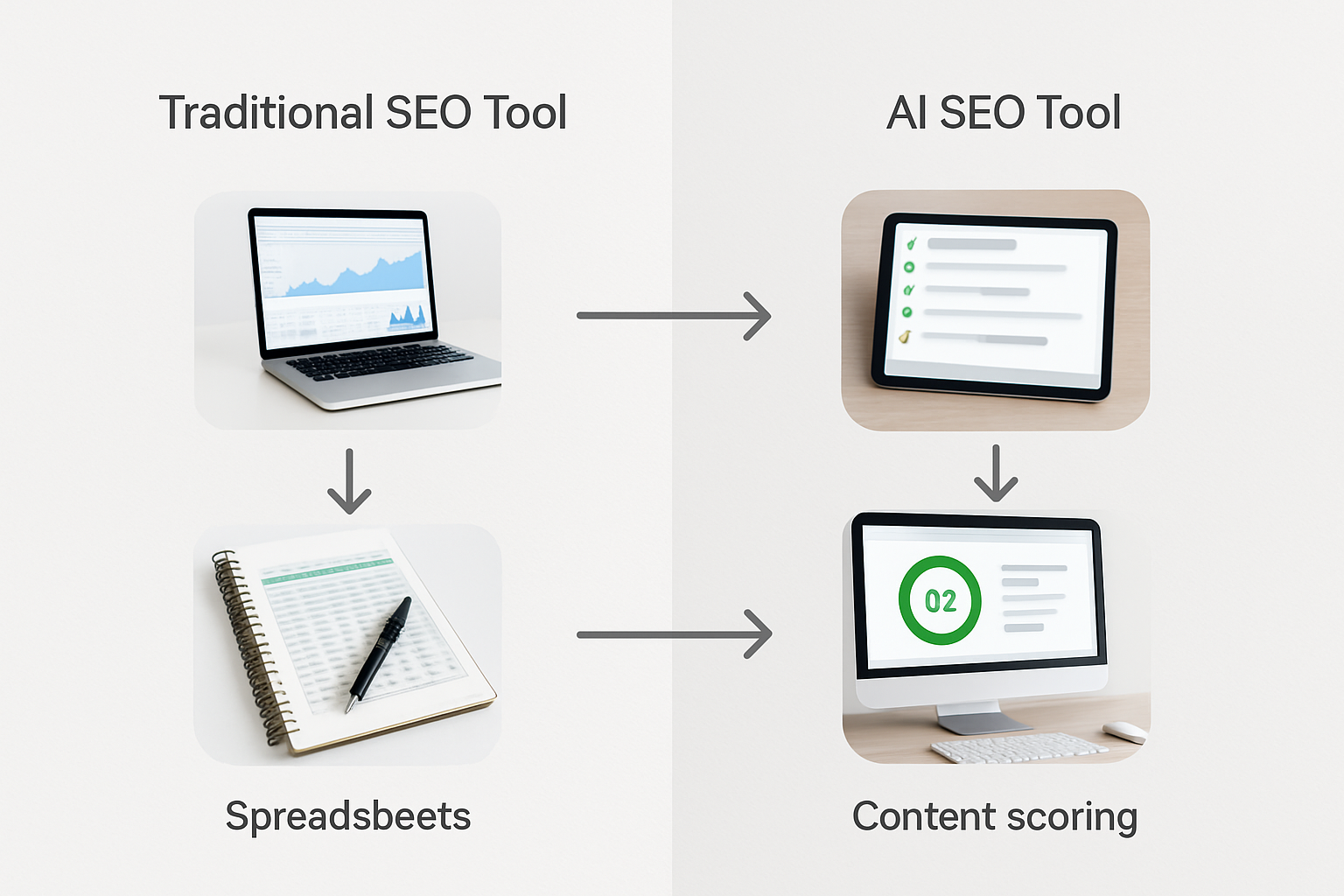
Traditional SEO tools were built around static databases, manual exports, and delayed updates. They gave you data, but made you do all the thinking. Modern AI SEO tools, by contrast, combine data collection with intelligent interpretation — turning raw numbers into prioritized recommendations.
According to a 2025 industry report by Gartner, companies that adopted AI-powered marketing tools saw an average 32% increase in organic traffic within the first six months. That’s not a marginal improvement — it’s a significant competitive advantage. The efficiency gains alone often justify the investment.
Legacy platforms also struggle with scale. If you’re managing dozens of pages, multiple locations, or several product categories, manual optimization quickly becomes unmanageable. AI SEO tools handle bulk tasks — like auditing hundreds of pages, generating meta descriptions, or clustering thousands of keywords — in a fraction of the time.
What Core Features Should AI SEO Tools Include?
Not all AI SEO tools are built equally. Some focus on technical auditing, others on content optimization, and others on rank tracking or backlink analysis. The best platforms offer a unified suite of features that work together.
Intelligent Keyword Research and Clustering
The best way to approach keyword strategy is to group related terms by intent, not just volume. AI-powered keyword tools automatically cluster related search queries, identify long-tail opportunities, and highlight low-competition gaps your competitors have missed. This means your content strategy becomes more coherent and your pages more likely to rank.
Volume alone is a misleading metric. A keyword with 500 monthly searches and low difficulty often drives more qualified traffic than a high-volume term with brutal competition. AI tools evaluate these dynamics simultaneously, giving you a realistic picture of what’s actually winnable.
AI-Powered Content Optimization
Content optimization features analyze top-ranking pages for your target keyword and extract patterns — common headings, average word counts, key entities, and semantic phrases. Your content is then scored and guided in real time to match or surpass those patterns. This removes guesswork from the writing process entirely.
AI content tools also check for readability, structure, keyword density, and internal linking opportunities. For teams producing high volumes of content, these features alone can dramatically reduce the time spent on editing and revision. To understand the broader context of how good content connects to rankings, read this detailed breakdown of what SEO is and how it works to grow your website traffic.
Automated Technical SEO Audits
Technical SEO auditing involves crawling your website to identify issues that prevent search engines from properly indexing and ranking your pages. AI tools flag problems like broken links, missing meta tags, slow page speed, duplicate content, and poor mobile responsiveness — then prioritize fixes by their impact on rankings.
What separates AI auditors from older crawlers is context. An AI tool doesn’t just say “this page has a missing H1.” It explains why that matters, which pages to prioritize, and how to fix it efficiently. That interpretive layer saves hours of guesswork for non-technical marketers.
Rank Tracking with Predictive Insights
Rank tracking is the process of monitoring where your web pages appear in search engine results pages (SERPs) for specific keywords over time. AI-enhanced rank trackers go further by identifying ranking trends, detecting algorithm-related drops, and predicting which pages are positioned to move up or down in the near term.
Smart rank tracking also breaks results down by device, location, and search engine. This granularity matters enormously if you’re targeting local audiences or competing in multiple geographic markets. For a deeper dive into this capability, explore this guide on keyword tracking software and how to monitor rankings to grow organic traffic.
How Do AI SEO Tools Improve Content Strategy?
AI SEO tools improve content strategy by identifying what topics your audience searches for, what intent they carry, and what format best satisfies that intent — all before you write a single word. This front-loaded intelligence means every piece of content has a clear purpose, a defined audience, and a realistic path to ranking.
Topic clustering is one of the most impactful AI-driven strategies available today. Studies show that websites with clearly defined content clusters — where a pillar page links to multiple supporting articles on related subtopics — rank significantly higher and earn more backlinks than isolated pages. AI tools help you build these clusters systematically rather than by instinct.
AI tools also analyze search intent at scale. Intent classification separates informational queries (users wanting to learn), navigational queries (users looking for a specific site), and transactional queries (users ready to buy). Matching your content type to the right intent category is one of the most reliable ways to improve your click-through rate and reduce bounce rate simultaneously.
How Can Beginners Use AI SEO Tools Effectively?
Beginners often assume AI SEO tools are only for large teams or experienced professionals. That’s a misconception. Many modern platforms are designed specifically to flatten the learning curve — offering guided workflows, plain-language recommendations, and pre-built templates that help newer users take action immediately.
If you’re just starting out, focus on three core tasks first: keyword discovery, on-page content optimization, and basic technical auditing. These three areas drive the majority of early-stage ranking improvements and give you the fastest feedback on whether your efforts are working. For a structured approach, this resource on SEO tips for beginners covering how to rank higher and drive real organic traffic is an excellent companion read.
One of the biggest benefits for beginners is that AI tools remove the paralyzing uncertainty that comes with manual SEO. When a tool tells you “this page has a content score of 58 — here are the five changes that will push it to 80+,” you have a clear to-do list. That actionability is transformative for anyone new to the discipline.
What Results Can You Realistically Expect from AI SEO Tools?
Studies show that businesses using AI SEO tools consistently reduce content production time by 40–60% while simultaneously improving ranking performance across target keywords. These aren’t theoretical benefits — they reflect the practical efficiencies of removing manual data analysis from daily SEO workflows.
Realistically, you should expect to see measurable movement in keyword rankings within 60–90 days of implementing AI-guided optimizations, assuming your website is technically sound and you’re targeting appropriate keyword difficulty levels. SEO is never an overnight process, but AI tools significantly compress the timeline by ensuring every action you take is informed and prioritized.
A 2024 HubSpot State of Marketing report found that 68% of marketers who adopted AI tools reported improved ROI from their content marketing efforts compared to the previous year. That’s a majority of practitioners validating real-world results — not just vendor claims. The compounding effect of consistent, AI-guided optimization is where the long-term value truly accumulates.
How Do AI SEO Tools Support Business Scaling?
Scaling SEO manually is one of the hardest operational challenges growing businesses face. Adding more pages, targeting new markets, and managing increasing content complexity requires either a much larger team or a smarter system. AI SEO tools provide that smarter system — enabling one person to do the work that previously required five.
Automation is the engine of scalability. AI tools can simultaneously audit an entire website, generate keyword briefs for dozens of articles, monitor hundreds of keyword rankings, and flag technical issues — all without human intervention between tasks. This frees your team to focus on strategy and creativity rather than repetitive data work.
For businesses with multiple product lines, service areas, or regional markets, AI tools also simplify the complexity of managing different SEO strategies at once. Each segment can be tracked, optimized, and reported on independently — giving you clear visibility into what’s working and where to invest next. For a detailed framework, explore this article on how to scale SEO for growing businesses with strategies that actually work.
How Do You Choose the Right AI SEO Tool for Your Business?
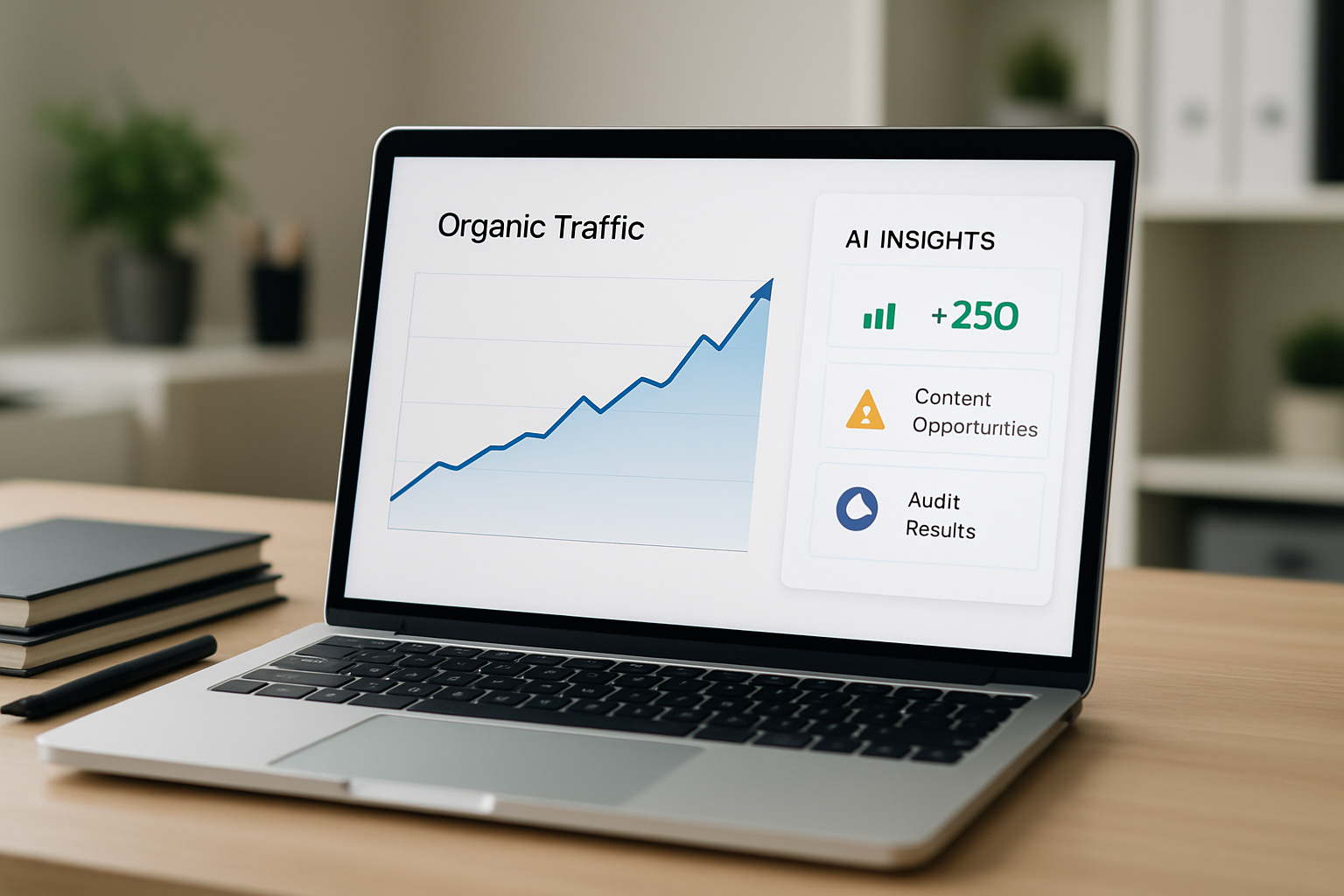
Choosing the right AI SEO tool depends on your goals, team size, technical expertise, and budget. A solo blogger needs different capabilities than an eCommerce brand managing thousands of SKU pages. Identifying your primary use case before evaluating tools will save you significant time and avoid paying for features you’ll never use.
When evaluating options, prioritize these criteria:
- Feature completeness: Does the tool cover keyword research, content optimization, technical auditing, and rank tracking — or do you need multiple platforms?
- Ease of use: Are recommendations actionable and clearly explained, or do they require deep technical knowledge to interpret?
- Data freshness: How frequently does the tool update keyword data, ranking positions, and SERP snapshots?
- Integration support: Does it connect with your CMS, Google Search Console, Google Analytics, or other platforms you rely on?
- Scalability: Can the platform grow with you as your site expands, or will you hit feature walls quickly?
- Support quality: Is there responsive human support available, or are you reliant on documentation and chatbots?
Avoid choosing a tool based on brand recognition alone. Larger, older platforms built their reputations on pre-AI functionality — and many have struggled to meaningfully integrate AI features beyond surface-level additions. Purpose-built AI platforms often outperform legacy tools precisely because they were designed from the ground up with intelligence at their core.
What Is the Role of AI SEO Tools in Generative Engine Optimization?
Generative Engine Optimization (GEO) is defined as the practice of structuring and formatting web content so that AI-powered search engines — like Google’s AI Overviews, ChatGPT Search, and Perplexity — are more likely to cite, summarize, and feature that content in generated responses. As AI answers increasingly replace traditional blue-link results, GEO has become an essential companion discipline to classic SEO.
AI SEO tools are now incorporating GEO-specific features, such as FAQ schema suggestions, structured answer formatting, and entity optimization. These features help your content appear not just in traditional SERPs but in AI-generated answer panels — a rapidly growing source of organic visibility. According to data from SparkToro published in early 2026, AI-generated answer features now influence over 40% of all informational search queries.
The overlap between strong SEO and strong GEO is significant. Content that is well-structured, directly answers questions, uses clear definitions, and includes specific data points performs well in both environments. AI SEO tools that guide you toward this type of content are investing in your long-term discoverability across both current and emerging search formats. This article itself follows those principles — and you can see how they apply to broader strategy in this resource on how to increase organic visibility with AI SEO software.
Frequently Asked Questions
Start Growing Smarter with the Right AI SEO Tools
The shift toward AI-powered search optimization isn’t a trend — it’s the new baseline for competitive digital marketing. Businesses that adopt intelligent tools now are building advantages that will compound for years. Those that wait are conceding ground that becomes harder to reclaim with every passing month.
Choosing the right AI SEO tool is one of the most consequential decisions you can make for your website’s long-term performance. You need a platform that combines comprehensive features, genuine AI intelligence, and a user experience that empowers action rather than creating analysis paralysis. For concrete steps you can take right now alongside your tool stack, this guide on how to improve search engine ranking with proven strategies that drive real results is essential reading.
RankBloom SEO is built for exactly this moment — a purpose-built AI SEO platform designed to give individuals, small businesses, and growing brands the same intelligence advantage that enterprise teams have always enjoyed. From AI-powered keyword discovery and content optimization to automated technical audits and rank tracking, RankBloom SEO brings everything you need into one intuitive, affordable platform.
If you’re ready to stop guessing and start growing, RankBloom SEO is the smarter way to do it. Your competitors are already using AI — the only question is whether you’ll let them get further ahead, or start closing the gap today.