
An AI driven keyword research and content optimization tool is software that uses artificial intelligence and machine learning to identify high-value search terms, analyze competitor content, and provide real-time recommendations to help your pages rank higher on search engines. These tools have fundamentally changed how marketers, bloggers, and SEO professionals approach content creation. Instead of guessing what works, you get data-backed direction at every step of the writing process.
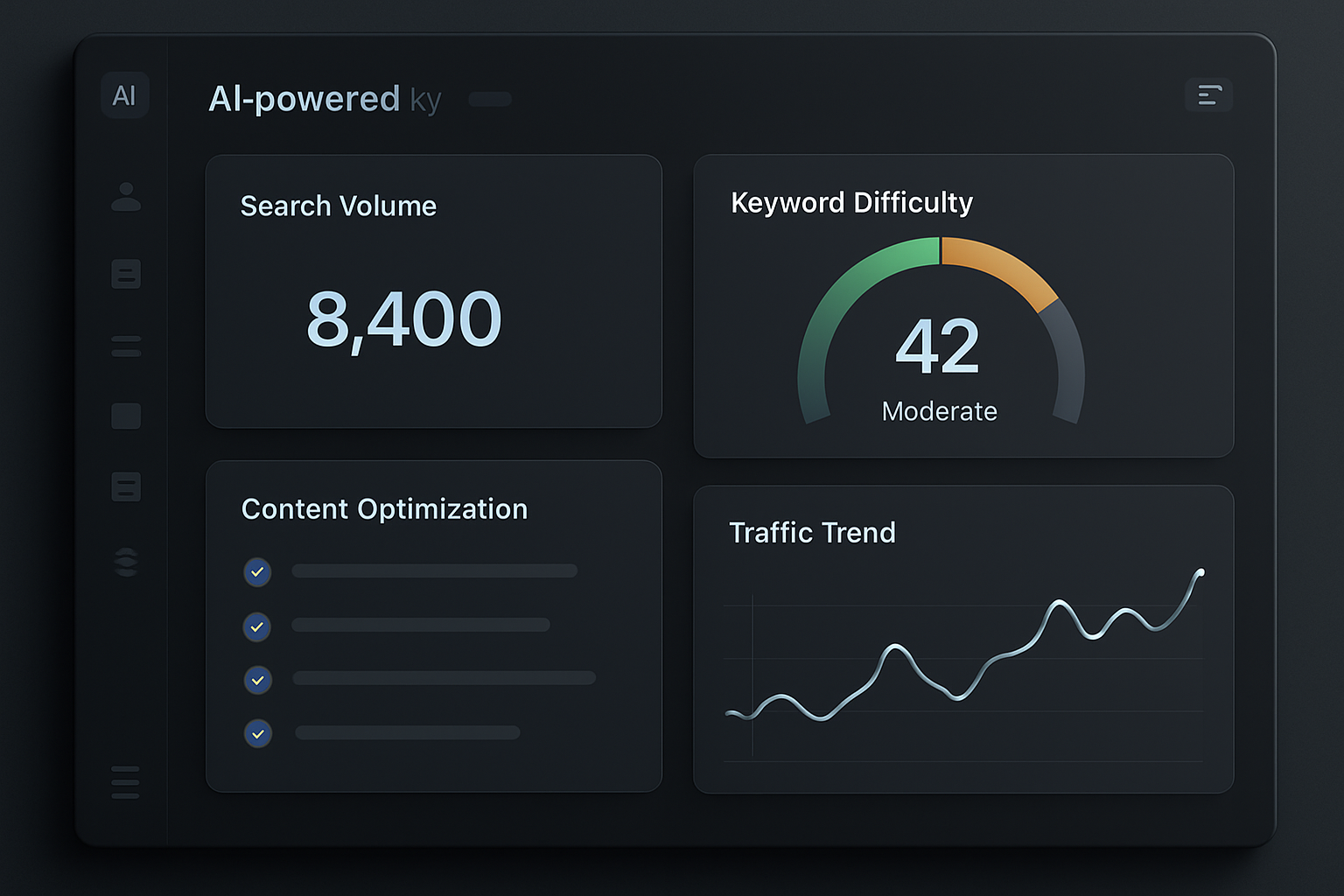
Traditional SEO tools were built for a different era of search. They required hours of manual research, spreadsheet juggling, and guesswork about what content would actually satisfy user intent. Today’s AI-powered alternatives do the heavy lifting automatically, processing millions of data points in seconds and turning them into actionable insights you can use right now.
Studies show that businesses using AI-powered SEO tools see up to 47% faster content production cycles compared to teams relying on manual research methods alone. That speed advantage directly translates into more published content, more indexed pages, and ultimately, more organic traffic. Understanding how these tools work — and what to look for when choosing one — is essential for any serious content marketer in today’s competitive landscape.
What Is an AI Driven Keyword Research and Content Optimization Tool?
An AI driven keyword research and content optimization tool is defined as a platform that combines natural language processing (NLP), machine learning algorithms, and large-scale search data to automate the most time-consuming parts of SEO content strategy. These tools go far beyond simply listing keywords with search volumes. They analyze search intent, evaluate topical authority gaps, score your existing content, and suggest improvements that align with how modern search engines evaluate quality.
Keyword research is defined as the process of identifying the exact words and phrases your target audience uses when searching for information, products, or services online. In the AI context, this process is enhanced by intent mapping, semantic clustering, and predictive trend analysis. Rather than showing you one keyword at a time, AI tools surface entire topic clusters your content should cover.
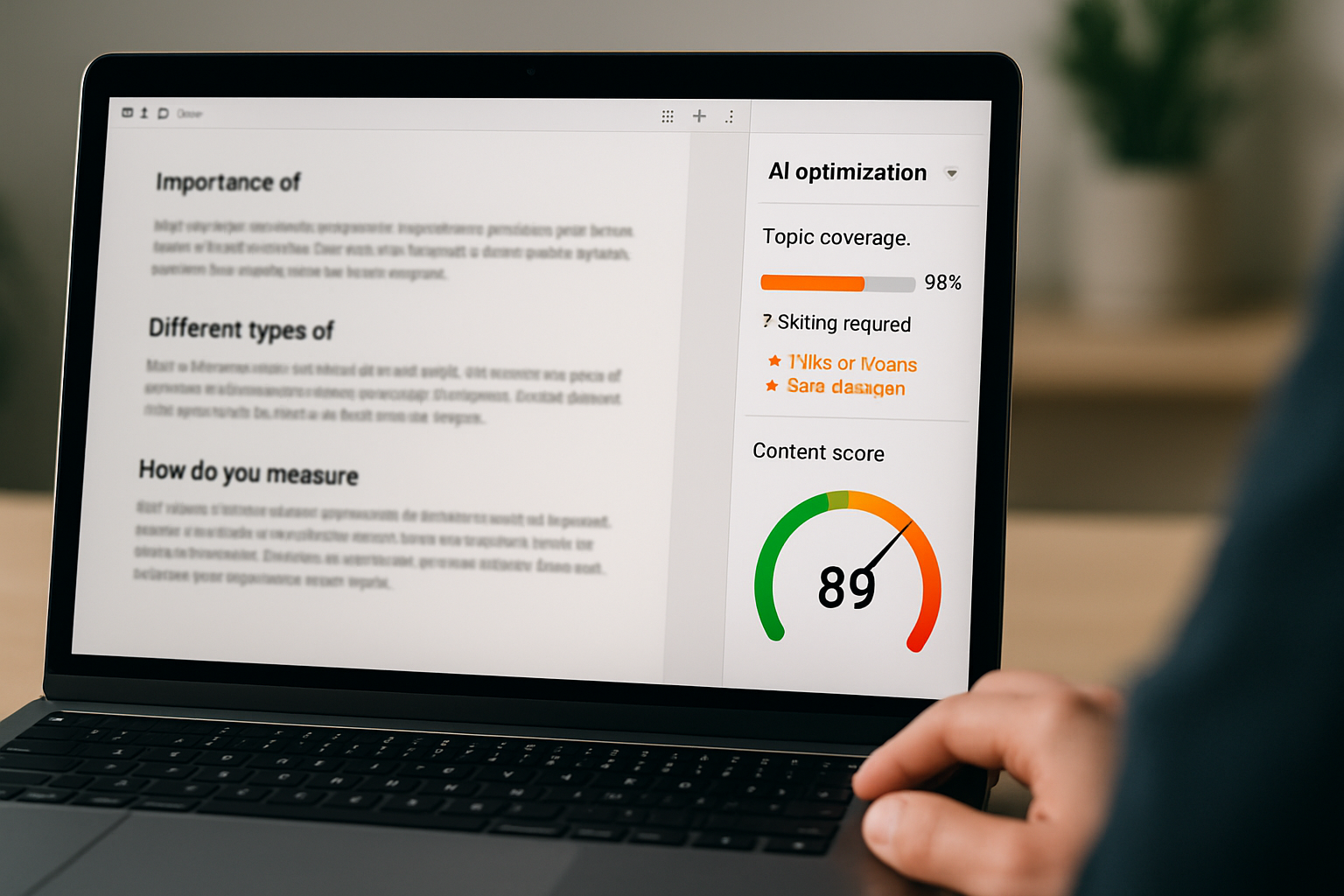
Content optimization is defined as the practice of refining your written content to improve its relevance, depth, readability, and alignment with search engine ranking signals. AI tools make this process measurable by giving your content a real-time score based on how well it covers a topic compared to top-ranking pages. You can see exactly what’s missing before you even publish.
How Does AI Change the Way Keyword Research Works?
AI changes keyword research by shifting from a keyword-by-keyword approach to a topic-level strategy. Instead of targeting one search phrase in isolation, AI tools analyze the semantic relationships between hundreds of related queries simultaneously. This gives you a much clearer picture of what a complete, authoritative piece of content needs to include.
Here are the core ways AI enhances keyword research compared to legacy platforms:
- Intent classification: AI categorizes keywords by informational, navigational, commercial, or transactional intent automatically
- Semantic clustering: Related keywords are grouped into logical topic clusters rather than presented as disconnected lists
- Competitive gap analysis: AI identifies keywords your competitors rank for that your site does not yet target
- Trend prediction: Machine learning models forecast which emerging keywords are likely to grow in search volume
- Long-tail discovery: AI surfaces highly specific, low-competition phrases that traditional tools often miss entirely
The result is a keyword strategy that feels less like guesswork and more like a structured roadmap. You understand not just what to write about, but why specific topics matter to your audience right now. If you want to understand the broader context behind these strategies, reading about what SEO is and how it works to grow your website traffic provides a strong foundation to build on.
Why Does Content Optimization Matter More Than Ever in AI Search?
Content optimization matters more than ever because search engines — especially AI-powered ones like Google’s Search Generative Experience — now evaluate content at a semantic and contextual level, not just a keyword-matching level. A page that mentions your target keyword twenty times but fails to comprehensively address the topic will consistently lose to a page that thoroughly covers every angle of the subject. AI content optimization tools are built to close that gap.
According to a 2025 content benchmarking study, pages optimized using AI content scoring tools ranked on page one 3.2 times more often than pages written without any optimization guidance. That statistic alone explains why so many marketing teams have made AI tools a non-negotiable part of their content workflow. The search landscape has simply become too competitive to rely on instinct alone.
AI optimization tools typically analyze your draft against the top 10 to 20 ranking pages for your target keyword. They identify which subtopics, entities, and related terms those pages include that yours currently lacks. Then they give you specific, prioritized recommendations to fill those gaps before publication.
What Features Should You Look for in an AI Keyword and Content Tool?
The best AI driven keyword research and content optimization tools share a core set of features that separate genuinely useful platforms from those that simply slap “AI” onto outdated functionality. Knowing what to prioritize before you evaluate any platform saves you significant time and money. Here is what matters most:
Keyword Intelligence Features
- Search intent labeling for every keyword in the database
- Keyword difficulty scores calibrated to your domain’s current authority level
- Monthly search volume trends over 12-month rolling periods
- SERP feature analysis showing which keywords trigger featured snippets, People Also Ask boxes, or image carousels
- Question-based keyword discovery to capture voice search and conversational queries
Content Optimization Features
- Real-time content scoring as you write, based on topical coverage
- NLP entity recommendations showing which related concepts your content must mention
- Readability analysis aligned with your target audience’s reading level
- Competitor content benchmarking comparing your draft to currently ranking pages
- Internal linking suggestions to strengthen your site’s topical authority signals
Workflow and Integration Features
- Direct integration with your CMS or document editor
- Team collaboration tools for content briefs and approvals
- Automated content audit capabilities for existing pages
- Rank tracking tied directly to optimized content performance
For a deeper look at choosing the right platform based on your specific marketing needs, the guide on choosing the best SEO software for digital marketers walks through a practical evaluation framework worth bookmarking.
How Do You Use an AI Tool to Build a Content Strategy from Scratch?
The best way to use an AI driven keyword research and content optimization tool to build a content strategy is to start with a seed topic, let the AI expand it into a full topic cluster, then prioritize based on search volume, competition, and your site’s current authority. This approach ensures every piece of content you create serves a strategic purpose rather than existing in isolation. Here is a step-by-step process you can follow immediately:
- Enter your core topic or seed keyword into the AI research tool and let it generate related keyword clusters
- Filter by search intent to separate informational content opportunities from commercial landing page targets
- Identify quick-win keywords — moderate search volume, lower difficulty — where you can rank within 60 to 90 days
- Build content briefs for each target keyword using the AI’s topical recommendations and competitor analysis
- Write or commission content using the AI optimization tool’s real-time scoring to guide depth and coverage
- Publish and monitor rankings, returning to the tool monthly to refresh and update content that slips in position
- Expand your cluster by targeting new supporting keywords as your authority in that topic grows
This systematic approach is what separates sites that grow consistently from those that publish randomly and hope for results. AI tools make the process repeatable, scalable, and measurable at every stage. If you want to pair this strategy with proven off-page tactics, learning the proven strategies to improve your search engine ranking will help you accelerate results significantly.
Why Choose an AI Powered Approach Over Traditional Manual Research?
X is not always better than Y — but in this case, AI-powered keyword and content tools offer clear, measurable advantages over traditional manual research methods that are simply too significant to ignore. Manual research using spreadsheets and disconnected tools might have worked when search results were simpler and competition was lower. In today’s environment, the speed and depth advantage of AI is decisive.
Consider this comparison:
| Capability | Traditional Manual Research | AI Driven Tool |
|---|---|---|
| Keyword discovery time | 4–8 hours per topic | Under 10 minutes |
| Intent classification | Manual and inconsistent | Automated and standardized |
| Content scoring | Subjective editorial judgment | Data-driven, real-time scoring |
| Competitor gap analysis | Requires multiple separate tools | Unified, single-platform view |
| Content refresh alerts | Requires manual rank monitoring | Automated performance tracking |
Research from a 2026 digital marketing productivity report found that content teams using integrated AI tools complete keyword research and content briefs 68% faster than teams using fragmented manual workflows. That time saving compounds dramatically across a full year of content production. The ROI case for upgrading to an AI driven approach has never been stronger.
How Does AI Content Optimization Help You Rank in Featured Snippets and AI Overviews?
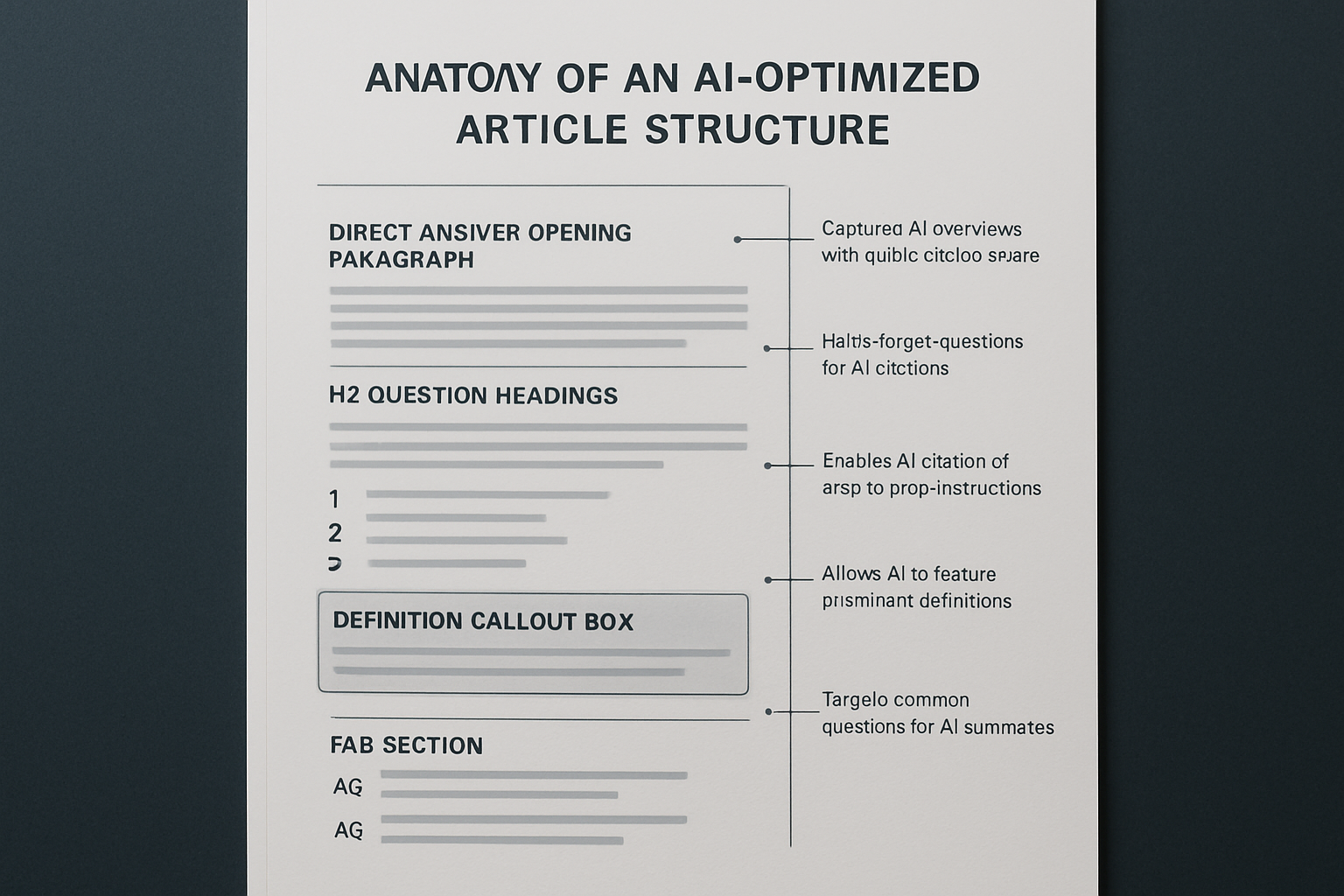
AI content optimization helps you capture featured snippets and appear in AI-generated search overviews by training you to structure your content in the exact format search engines prefer when selecting passages to highlight. Featured snippets are defined as the boxed summary answers that appear at the top of Google search results, above all other organic listings. AI overview responses — the synthesized answers generated by Google’s AI search experience — pull from content that is clear, authoritative, and well-structured.
To optimize specifically for these high-visibility positions, your AI tool should help you:
- Write direct, concise answers to target questions within the first 40 to 60 words of a section
- Use proper heading hierarchy (H2 for main questions, H3 for sub-questions) that signals content structure
- Include definition-style sentences that clearly explain concepts (“X is defined as…”)
- Format step-by-step processes as numbered lists that AI systems can easily extract
- Add FAQ sections with direct Q&A formatting that matches how users ask questions
This style of writing — often called Answer Engine Optimization or AEO — is becoming as important as traditional SEO for driving traffic in 2026 and beyond. An AI tool that actively scores your content against these criteria gives you a significant structural advantage over competitors who are still optimizing for an older version of search.
What Results Can You Realistically Expect from Using These Tools?
Realistic expectations matter as much as ambition when adopting any new tool. An AI driven keyword research and content optimization tool is not a magic button — it is a systematic advantage that compounds over time. Most sites begin to see measurable ranking improvements within 60 to 90 days of publishing AI-optimized content, with more significant traffic gains at the 4 to 6 month mark as domain authority builds around well-structured topic clusters.
Common outcomes reported by content teams using AI optimization tools include:
- 20–35% improvement in average content quality scores within the first month of adoption
- Significant reduction in time spent on keyword research per content piece
- Higher percentage of published articles ranking in the top 20 within 90 days
- More consistent content output due to AI-generated briefs reducing writer uncertainty
- Better internal linking structure as tools surface relevant connection opportunities automatically
The teams that see the best results are those that treat AI tools as a disciplined part of their workflow, not a one-time experiment. Consistency in applying AI recommendations, refreshing older content, and expanding topic clusters is what drives compounding organic growth over time.
Frequently Asked Questions
Frequently Asked Questions
What makes an AI driven keyword research tool different from a standard keyword tool?
An AI driven keyword research tool uses machine learning and natural language processing to analyze search intent, cluster related topics, and predict trends automatically — going far beyond the basic search volume and difficulty data that standard keyword tools provide.
Can beginners use an AI content optimization tool effectively without SEO experience?
Yes — most modern AI content optimization tools are designed with guided workflows and plain-language recommendations that make them accessible to beginners. The AI translates complex SEO signals into simple, actionable steps like "add a section covering this subtopic" or "your introduction needs a direct answer within the first two sentences."
How often should I use an AI tool to update my existing content?
You should audit and refresh existing content at least every three to four months, or immediately when you notice a drop in rankings for key pages. AI tools can automate alerts when content begins to underperform so you never have to rely on guesswork about when a refresh is needed.
Will using an AI content optimization tool make my writing feel robotic or formulaic?
No — AI optimization tools provide structural and topical guidance, but the actual writing remains entirely yours. They tell you what to cover and how to structure it, not how to say it. Your brand voice, storytelling, and original insights are what make AI-guided content stand out from generic output.
How does AI keyword research help with targeting voice search and conversational queries?
AI keyword tools excel at surfacing question-based and long-tail conversational phrases that match how people speak naturally when using voice assistants. By identifying these queries and structuring content to answer them directly, you significantly improve your visibility for voice search results and AI-generated answer panels.
Start Growing Smarter with the Right AI Tool
Choosing an AI driven keyword research and content optimization tool is one of the highest-leverage decisions you can make for your content marketing strategy today. The combination of automated keyword discovery, real-time content scoring, intent analysis, and competitive benchmarking gives you a systematic edge that compounds with every piece of content you publish. You stop guessing and start making informed decisions backed by data.
If you are ready to move beyond fragmented manual workflows and outdated legacy platforms, RankBloom SEO is built to be exactly that modern, intelligent alternative. RankBloom SEO integrates AI-powered keyword research with real-time content optimization, rank tracking, and automated content auditing in a single unified platform — designed for marketers who want results without the complexity. It brings together everything covered in this guide into one streamlined workflow that scales with your ambitions.
The organic traffic you want is already being captured by competitors who have made the switch to smarter tools. Start using an AI driven approach today, build your topic authority systematically, and watch your rankings reflect the quality and depth of your work. Your next great-performing article starts with the right research — and the right tool makes all the difference.